
 Save 15% on your 1st Autoship learn more

 Email us
 Live Chat
 FAQs
FAQs





Introduction
You lean in for a happy morning nuzzle only to be met with a puff of breath that smells like old gym socks. Every dog owner knows that specific moment. It is the realization that your dog's oral hygiene needs more attention than it is currently getting. At BaxterBoo, we talk to owners every day who want to keep those pearly whites sparkling without relying solely on expensive clinical procedures. While professional cleanings have their place, your daily choices at home are what truly prevent plaque from turning into painful dental disease. We will look at how whole foods, specific textures, and safe additives can transform your dog's mouth. This post covers effective natural strategies to maintain your dog's oral health and keep their breath fresh.
Quick Answer: The most effective way to naturally clean a dog's teeth is a combination of mechanical scrubbing and enzymatic action. Daily brushing with dog-safe paste is the gold standard. You can supplement this with crunchy vegetables, VOHC-approved dental chews, and safe rubber chew toys.
The Importance of Preventative Dental Care
Dental health is not just about a pretty smile or better breath. It is a critical component of your dog's overall physical wellness. Bacteria in the mouth do not stay there. They can enter the bloodstream through inflamed gums. This can lead to serious issues with the heart, liver, and kidneys over time.
Most dogs show signs of gum disease by the time they are three years old. This happens because plaque constantly forms on the teeth. If it is not removed, it hardens into tartar within about 48 hours. Once tartar forms, you cannot simply brush it away at home. It requires a professional scaling from a veterinarian.
Natural cleaning methods focus on removing that soft plaque before it hardens. This involves a mix of physical abrasion and ingredients that break down bacterial films. By being proactive, you reduce the risk of extractions and systemic infections. You also save your dog from the hidden pain that often accompanies rotting teeth. For additional guidance, read about warning signs of dental disease in dogs.
Brushing Is the Natural Foundation
Brushing is the most direct way to clean teeth. It mimics the natural way wild canines might have used fibrous materials to scrub their teeth. For a modern dog, you need the right tools. Never use human toothpaste. It often contains xylitol, which is highly toxic to dogs. It also contains foaming agents that dogs should not swallow.
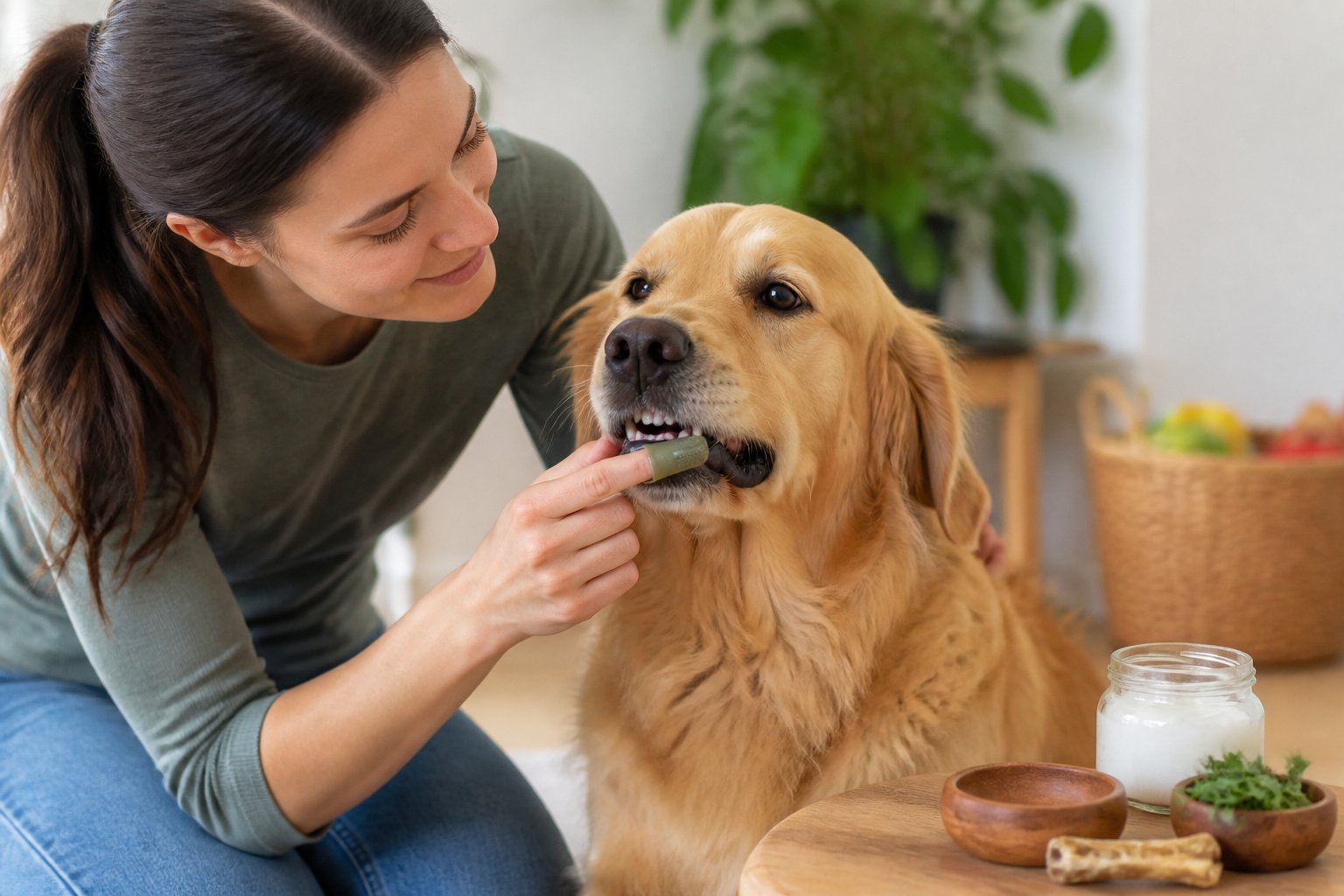
Instead, look for enzymatic toothpastes designed for pets. These pastes contain enzymes that break down food particles and bacteria even if you do not get a perfect scrub. You can use a soft-bristled pet toothbrush or a silicone finger brush. If your dog is nervous, even a piece of clean gauze wrapped around your finger can work. Browse our dog dental care collection for pet toothpaste, toothbrushes, and other oral-care supplies.
How to Start a Brushing Routine
Transitioning a dog to brushing takes patience. Do not expect to clean every tooth on the first day.
Step 1: Let them taste the paste. / Place a small dab on your finger and let them lick it off. Most dog pastes are flavored like poultry or beef to make this easier.
Step 2: Desensitize the mouth. / Gently rub your finger along their outer gums and teeth. Keep these sessions very short.
Step 3: Introduce the brush. / Put paste on the brush and let them lick it. Slowly start moving the brush in a circular motion on the front teeth.
Step 4: Reach the back. / Most plaque accumulates on the upper back molars. Gently lift the lip to reach these areas as your dog becomes more comfortable.
Vet Tip: If your dog's gums bleed significantly during brushing, stop and call your vet. While minor redness can happen if you are just starting, heavy bleeding is a sign of advanced gingivitis or periodontal disease. This may require a professional cleaning before you can safely resume a home routine.
Using Whole Foods for Natural Abrasion
Diet plays a massive role in dental health. While many people believe dry kibble cleans teeth, most kibble is too small and brittle to do much. Dogs often swallow it whole or the pieces shatter instantly. To get a real cleaning effect from food, you need items that require significant chewing.
Raw Carrots
Raw carrots are a fantastic natural toothbrush. They are crunchy and fibrous. As your dog chews, the carrot fibers scrape against the surface of the teeth. This helps rub away soft plaque. Carrots are also low in calories and high in Vitamin A. For an extra challenge, you can give your dog a whole large carrot. If they are a fast eater, try freezing the carrot first. This makes it harder and increases the time they spend scrubbing their teeth.
Sliced Apples
Apples work similarly to carrots. The skin and the firm flesh provide a mechanical cleaning action. Be sure to remove all seeds and the core before giving them to your dog. Apple seeds contain trace amounts of cyanide which can be harmful over time. Sliced apples are a hydrating, sweet treat that helps freshen breath naturally.
The Myth of Dry Kibble
It is a common misconception that dry food is better for teeth than wet food. Most standard kibble provides almost no dental benefit. There are specific prescription dental diets that have a larger, fibrous kibble structure. These are designed not to shatter. Instead, the tooth sinks into the kibble, which scrubs the surface. At BaxterBoo, we recommend checking if your dog needs a specialized diet if they are prone to heavy tartar buildup.
The Power of Chewing and Texture
Dogs are biologically driven to chew. This behavior is not just for entertainment. It is a primary way they maintain their mouths. The act of chewing stimulates saliva production. Saliva contains natural enzymes and antibacterial properties that help protect the enamel.
Natural Rubber Toys
Selecting the right toy can make a big difference. Toys with nubs, ridges, or "dental" textures are best. As the dog bites down, these ridges slide against the teeth and gums. This acts like a squeegee for plaque. Brands like Kong or RC Pets often design toys specifically for this purpose. You can even smear a little enzymatic toothpaste inside the grooves of a rubber toy to combine mechanical and chemical cleaning. Explore our dental dog toys for textured options, including the KONG Dental Dog Toy with Rope.
Safe Edible Chews
Edible dental chews are a popular way to supplement brushing. When shopping, look for the VOHC (Veterinary Oral Health Council) seal. This seal means the product has been scientifically tested to reduce plaque or tartar.
- Look for chews that are flexible. If you cannot indent the chew with your fingernail, it might be too hard and could fracture a tooth.
- Avoid items like dried hooves or antlers if your dog is an aggressive chewer. These are common causes of broken carnassial teeth.
- Monitor the calorie count. Some dental chews are high in calories, so you may need to adjust their daily meal portions.
Key Takeaway: Chewing is a mechanical process that removes plaque. To be effective, the object must be firm enough to scrub but soft enough to not break the tooth. Always supervise your dog with new chews to ensure they do not swallow large chunks.
Supplements and Water Additives
If your dog absolutely refuses to have their teeth touched, additives can be a helpful backup. These are not a replacement for brushing, but they provide a baseline of protection. For more ideas, see these top pet dental care tips.
Dental Water Additives
These are flavorless liquids you add to your dog's water bowl. They often contain ingredients like zinc gluconate or enzymes that prevent bacteria from sticking to the teeth. Since your dog drinks throughout the day, their mouth gets a frequent "rinse" of these protective agents. This is an excellent option for multi-pet households or for senior dogs who find brushing stressful.
Seaweed Supplements
Certain types of brown seaweed, specifically Proden PlaqueOff, have been shown to improve oral health. When ingested, the compounds in the seaweed enter the bloodstream and come out through the saliva. This changes the composition of the saliva so that plaque cannot easily stick to the teeth. It also helps soften existing tartar over several weeks, making it easier to brush away. ProDen PlaqueOff Powder Dog and Cat Teeth Care can be added to food as part of a daily dental routine.
Recognizing the Limits of Natural Cleaning
While natural methods are powerful, they cannot fix everything. It is important to know when home care is no longer enough. If your dog already has thick, brown, or orange crust on their teeth, that is tartar. No amount of carrots or brushing will remove that.
Signs of Dental Distress
Check your dog's mouth once a week for these red flags:
- Persistent foul breath that does not improve with brushing.
- Red, swollen, or receding gums.
- Yellow or brown buildup near the gum line.
- Missing or loose teeth.
- Dropping food while eating or favoring one side of the mouth.
- Pawing at the face or mouth.
If you see these signs, it is time for a veterinary visit. A professional exam can identify hidden problems under the gum line that are invisible to the naked eye.
Our Pharmacy and Prescription Care
Sometimes, a dog needs more than just a cleaning. If your vet discovers an infection or advanced gum disease, they may prescribe medications or specific diets. Through our dog pharmacy, we offer access to prescription medications and veterinary care products. We carry FDA-approved medications and prescription dental foods like Farmina Vet Life or Royal Canin. Having access to these through our pharmacy makes it easy to manage your dog's long-term health after their professional dental procedure is complete.
Creating a Weekly Dental Schedule
Consistency is the most important factor in natural dental care. Plaque turns to tartar quickly, so a "once in a while" approach will not work. A varied routine ensures all surfaces of the teeth are addressed.
- Daily: Add a dental supplement to their water or food.
- Daily: Brush for at least 30 to 60 seconds.
- 3-4 Times a Week: Provide a crunchy vegetable like a frozen carrot.
- 2 Times a Week: Give a VOHC-approved dental chew or spend time with a textured chew toy.
- Monthly: Perform a full "mouth check" to look for any new chips, redness, or growths.
Bottom line: A successful dental routine combines daily brushing with the mechanical scrubbing of toys and whole foods to prevent tartar buildup.
Senior Dog Dental Considerations
As dogs age, their teeth may become more brittle. Their immune systems also change, making them more susceptible to gum infections. For a senior dog, you may need to soften your natural approach.
If your senior dog has missing teeth, they might not be able to handle a whole raw carrot. Instead, try steamed carrots that are still slightly firm. You should also switch to an extra-soft toothbrush. Senior dogs are also more likely to require prescription support. If your older dog is managing a chronic condition, our pharmacy can help provide the specific medications your vet recommends. We want to ensure your senior pet stays comfortable and pain-free in their golden years. For related feeding considerations, read Should Senior Dogs Eat Wet or Dry Food?.
Common Mistakes to Avoid
Many owners have the best intentions but inadvertently cause issues. One common mistake is using "natural" bones that are too hard. While raw, meaty bones can clean teeth, they carry risks like salmonella or splintering. If you choose to use bones, never use cooked ones. Cooking makes bones brittle and prone to shattering, which can cause internal punctures.
Another mistake is relying solely on breath fresheners. Sprays and foams can make a mouth smell better, but they do nothing to remove the bacteria causing the smell. Always pair a freshener with a mechanical cleaning method like brushing or a chew toy. Finally, do not wait until your dog is old to start. The earlier you begin, the easier it is for your dog to accept the routine.
Checklist for Starting Your Natural Routine
Before you begin, gather the right supplies to ensure success. Having everything ready makes it easier to stick to the habit.
- Dog-specific enzymatic toothpaste (poultry or beef flavor)
- A soft-bristled brush or silicone finger brush
- A bag of large raw carrots (keep them in the crisper drawer)
- A textured rubber chew toy suited for your dog's size
- A VOHC-approved water additive for daily use
- A quiet, brightly lit spot in your home for weekly mouth checks
By following these steps, you are doing more than just cleaning teeth. You are extending your dog's life and improving their daily comfort. We see the results of good dental care every day in the happy, healthy pets that visit us.
Conclusion
Taking a natural approach to your dog's dental health is a rewarding commitment. By combining the mechanical action of raw vegetables and toys with the consistency of daily brushing, you can significantly reduce the need for invasive dental surgeries. Remember that every dog is different. What works for a toy breed with crowded teeth might be different for a large breed with a powerful jaw. We are here to support that journey with the best gear and expert advice. Whether you are earning rewards through our MVP Rewards programme or setting up our Autoship programme for your favorite dental chews, we make it simple to keep your dog's health on track. Start with a carrot or a quick brush tonight and watch your dog's oral health improve one day at a time.
FAQ
Can I use baking soda to clean my dog's teeth?
While baking soda is a common ingredient in human DIY toothpaste, it is not ideal for dogs. It has a high alkaline content that can upset a dog's stomach if swallowed in large amounts. It also has a salty taste that most dogs find unpleasant, which may make them resist future brushing attempts. It is much safer and more effective to use an enzymatic paste formulated specifically for canines.
How often should I realistically brush my dog's teeth?
Ideally, you should brush your dog's teeth every single day to stay ahead of plaque formation. If your schedule is too busy, aiming for at least three times a week can still provide significant benefits. Plaque begins to harden into tartar within 48 hours, so any gap longer than two days allows tartar to start building up. Consistency is more important than the length of each individual brushing session.
Are dental chews enough to replace brushing?
Dental chews are a helpful supplement, but they are rarely enough to replace brushing entirely. Most chews only clean the chewing surfaces of the teeth and may miss the gum line where most disease starts. Brushing allows you to target the specific areas where plaque accumulates most, such as the upper back molars. Think of chews as a helpful tool in a larger toolkit rather than a total solution.
My dog's breath still smells after brushing. What should I do?
If your dog's breath remains foul despite regular brushing and a healthy diet, it is time to see a veterinarian. Persistent bad breath is often a sign of an underlying issue like a tooth root abscess, gum infection, or even internal health problems like kidney disease. A vet can perform a thorough exam and determine if a professional cleaning or medical intervention is necessary. Early detection is key to preventing more serious complications.






