
 Save 15% on your 1st Autoship learn more

 Email us
 Live Chat
 FAQs





Introduction
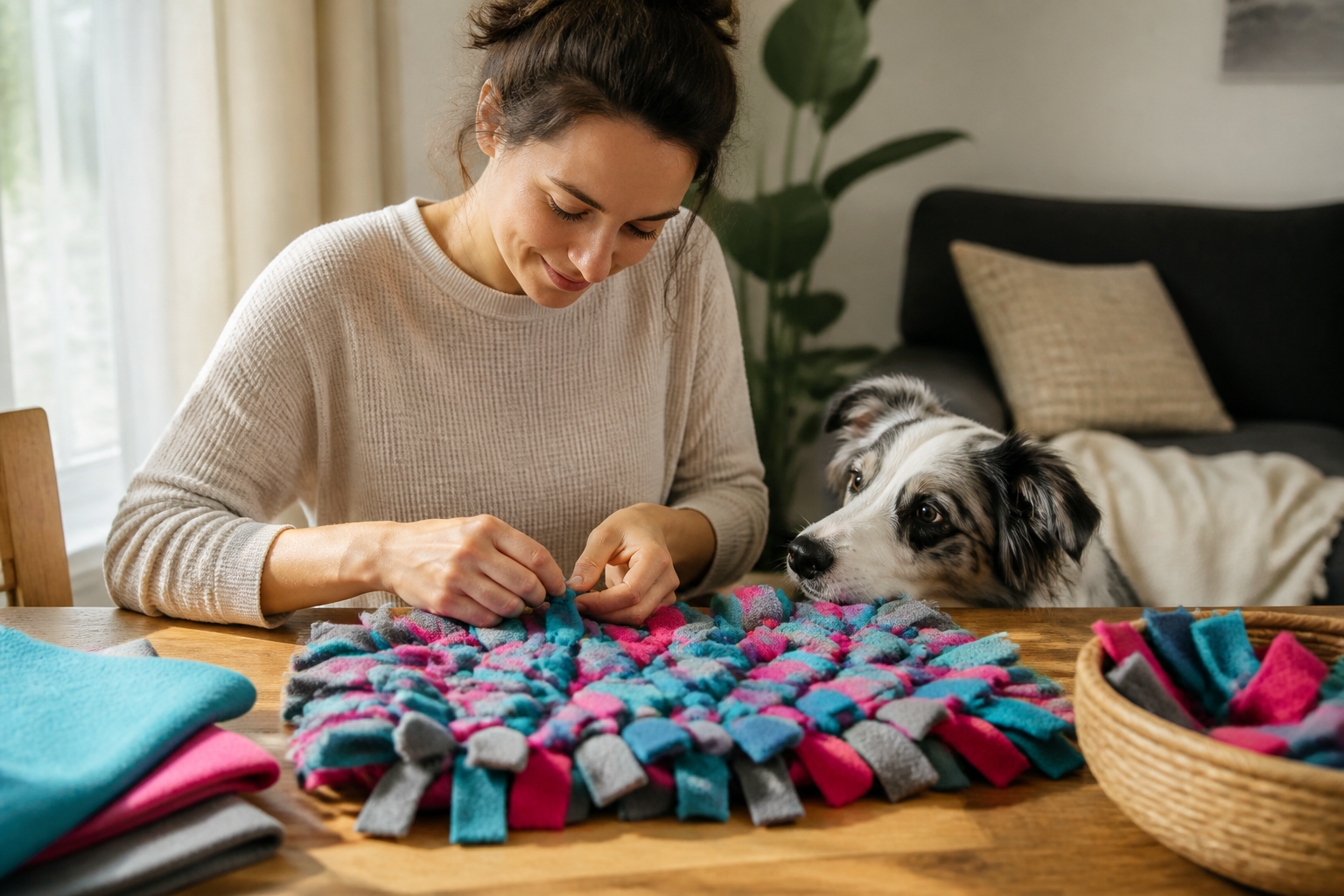
You just filled the bowl, and before you can even put the scoop away, your dog has already licked the dish clean. This "vacuum cleaner" style of eating is a common sight for many pet owners, but it can lead to digestive upset or weight gain. If your cat or dog is a fast eater, or if they simply seem bored during the day, a snuffle mat is a fantastic solution. These mats use fabric strips to hide kibble or treats, forcing your pet to use their nose to forage for their meal. At BaxterBoo, we love projects that combine mental stimulation with practical health benefits. In this guide, we will walk you through the process of sewing a durable, washable snuffle mat from scratch. You will learn how to choose the right fabrics, prepare your base, and use a sewing machine to create a high quality enrichment tool that lasts for years.
Why Sewing a Snuffle Mat is Better than the No-Sew Version
Many people start with the no-sew version of this project. That usually involves tying fleece strips to a rubber sink mat. While that is a great entry point, a sewn snuffle mat offers several advantages for the long term.
First, durability is significantly higher. When you sew the fabric strips directly onto a heavy canvas or denim base, they are much harder for a determined dog to pull off. Some dogs treat no-sew mats like a "pull toy," which results in a floor covered in loose fleece and a ruined mat. A sewn mat stays intact even with enthusiastic foragers.
Second, washability is a major factor. Rubber sink mats can get brittle in the washing machine, and the tied knots often come loose during a spin cycle. A fully fabric, sewn mat can be tossed into the laundry regularly. This is essential because snuffle mats naturally collect saliva, food dust, and hair. Keeping it clean ensures your pet stays healthy and your home stays fresh.
Key Takeaway: Sewn snuffle mats provide superior durability and are much easier to keep clean than no-sew versions, making them a better long-term investment for high-energy pets.
Interactive Dog Toys








Gathering Your Materials
Before you sit down at your sewing machine, you need to select the right materials. The goal is to create something that can withstand tugging, sniffing, and frequent washing.
The Best Fabrics for the Strips
Fleece is the absolute gold standard for snuffle mats. It has several properties that make it ideal for this project:
- No Fraying: Fleece does not unravel when cut. This means you do not have to hem hundreds of tiny strips.
- Softness: It is gentle on your pet’s nose and face as they root around for food.
- Bulk: Fleece is thick enough to hide kibble effectively without requiring a massive amount of fabric.
- Washable: It holds up well to repeated cycles in the washer and dryer.
Choosing a Base Fabric
The base needs to be heavy and sturdy. If the base is too light, your dog will just flip the mat over to get the treats out. We recommend:
- Canvas or Duck Cloth: These are heavy, durable, and easy to sew.
- Denim: Old jeans can be upcycled to make an excellent, tough base.
- Heavy Upholstery Fabric: Any thick fabric that can handle a lot of needle penetrations will work.
Essential Tools
- Sewing Machine: A standard home machine can handle this, but you will need a heavy duty needle (size 90/14 or 100/16).
- Rotary Cutter and Mat: While scissors work, a rotary cutter will save you hours of time when cutting hundreds of fleece strips.
- Polyester Thread: This is stronger than cotton and less likely to rot if it gets damp from saliva.
- Walking Foot (Optional): If your machine has one, it helps feed the thick layers of fleece through evenly.
Preparing Your Patterns and Pieces
The size of your mat depends on the size of your pet. For a cat or a small dog, an 8 inch by 10 inch mat is often sufficient. For a large breed like a Labrador, you might want to go as big as 18 inches by 24 inches.
Cutting the Base
Cut two pieces of your base fabric to your desired size, adding a half-inch seam allowance on all sides. You can sew these together right sides facing, leave a small gap, flip them inside out, and topstitch to create a finished edge. This gives the mat weight and a professional look.
Cutting the Fleece Strips
This is the most time-consuming part of the project. You will need a lot of strips to create a dense mat.
- Cut your fleece into long rows that are 4 to 6 inches wide.
- Sub-cut those rows into strips that are about 1 inch wide.
- If you want a "looped" look, you can keep the rows long and loop them as you sew, but individual strips usually provide better hiding spots for food.
Note: If you are making a mat for a cat, consider making the strips slightly shorter, around 3 inches. Cats have shorter muzzles and may get frustrated if they have to dig too deep for their rewards.
Step-by-Step Sewing Instructions
Once your pieces are cut, it is time to assemble the mat. We recommend sewing the strips in rows.
Step 1: Marking Your Grid
Use a fabric marker or chalk to draw straight lines across the top of your base. Space these lines about 1 inch to 1.5 inches apart. These lines will serve as your guide for sewing the fleece down.
Step 2: Positioning the First Row
Take a handful of your fleece strips. Lay them across the first marked line. You want them to be perpendicular to the line, with the line running right through the center of each strip.
Step 3: Sewing the First Row
Using a straight stitch or a narrow zigzag stitch, sew right down the center of the fleece strips, following your marked line. Backstitch at the beginning and end of each row to ensure the strips are locked in place.
Step 4: Repeating the Process
Move to the next line. Push the previous row of fleece out of the way, and repeat the process. Continue until the entire base is covered in rows of fleece.
Step 5: The "Bald Spot" Check
Once you finish your planned rows, pick up the mat and give it a shake. Look for any areas where the base fabric is visible. If you see a gap, simply sew a few extra strips into that spot. A dense mat is more challenging and rewarding for your pet.
Bottom line: Density is the key to a good snuffle mat; the more strips you add, the harder your pet has to work to find their food.
Advanced Design: The Spiral Method
If you want to try something different than straight rows, the spiral method is a popular choice. This works best on a circular base.
Instead of marking straight lines, draw a spiral starting from the center and moving outward to the edge. Sew your fleece strips along this spiral path. This creates a "flower" look that is very effective at hiding small treats. It also prevents the "avenue" effect where kibble can sometimes roll down the long straight gaps between rows.
Maintenance and Cleaning
Because snuffle mats are used with food, they require regular maintenance.
Washing Instructions
One of the best things about a sewn mat is that it can go in the washing machine. Use a gentle, fragrance-free detergent. Avoid fabric softeners, as the strong scents can be overwhelming for a pet's sensitive nose and might discourage them from using the mat.
Air drying is usually best for fleece. While it can go in the dryer on low heat, high heat can sometimes melt the polyester fibers or cause the base fabric to shrink unevenly.
Safety Inspections
Every time you pull the mat out of the wash, check the stitching. Look for loose threads or any strips that are hanging by a thread. If a dog swallows a large piece of fleece or a long string, it can cause a dangerous intestinal blockage. If you see damage, repair it immediately or retire the mat.
Vet Tip: Always supervise your pet when they are using a snuffle mat. While these are safe enrichment tools, determined chewers can occasionally bite off pieces of fabric. If your pet starts trying to eat the mat itself rather than the treats inside, remove it and consult a trainer or veterinarian about appropriate chew toys.
Integrating the Snuffle Mat into a Health Routine
A snuffle mat is more than just a toy. It is a tool that can help manage several common pet health issues.
Managing Weight and Digestion
If your pet is on a weight management plan, every calorie counts. Using their regular kibble in a snuffle mat turns mealtime into a 20-minute workout rather than a 30-second gulp. This slower pace allows their brain to catch up with their stomach, helping them feel full on less food.
If your dog or cat is struggling with obesity or requires a specific diet for digestive health, our pet pharmacy offers a variety of prescription pet foods. Through our partnership with Pet's Choice, we provide FDA-approved prescription diets that can be shipped directly to your door. You can use these specialized kibbles in your homemade snuffle mat to combine medical nutrition with mental exercise.
Reducing Anxiety
Sniffing is a naturally calming activity for dogs. It lowers their heart rate and releases endorphins. For pets with separation anxiety or those who get nervous during thunderstorms, 10 minutes with a snuffle mat can help ground them and provide a healthy distraction. For more enrichment ideas, explore other indoor activities for pets.
Maximizing Your Enrichment Budget
Creating DIY gear like snuffle mats is a smart way to save money, allowing you to spend more on high quality nutrition and preventative care. We want to help you make those dollars go further.
When you purchase the treats or kibble to fill your new mat, consider using our Autoship programme. Not only do you save on your first order, but you also receive a free MVP Gold membership. This helps you earn rewards faster on the brands you already trust, like our selection of Open Farm products, Zesty Paws, Stella and Chewy's, or Open Farm. Using these high-value treats sparingly in your snuffle mat makes a single bag last much longer while keeping your pet highly motivated.
| Feature | Sewn Snuffle Mat | No-Sew (Tied) Mat |
|---|---|---|
| Durability | High - strips are stitched down | Moderate - strips can be pulled off |
| Washability | Easy - machine washable | Difficult - knots may loosen |
| Time to Make | 2-3 hours | 1-2 hours |
| Base Material | Canvas, Denim, or Upholstery | Rubber Sink Mat |
| Safety | High - fewer loose parts | Moderate - plastic base can be chewed |
Troubleshooting Common Sewing Issues
Fleece and canvas together can be quite thick. If your sewing machine is struggling, try these tips:
- Change Your Needle: A fresh, sharp needle designed for denim or heavy fabrics makes a world of difference.
- Adjust Tension: You may need to loosen your top tension slightly to accommodate the bulk.
- Use a Longer Stitch: A longer stitch length (3.0mm to 3.5mm) moves through the thick layers more easily and is less likely to bunch up.
- Go Slow: Do not try to race through the rows. Taking it slow prevents needle breakage and ensures your rows are straight.
Tips for High-Level Foragers
Once your pet becomes an expert at the snuffle mat, they might start finding the treats too quickly. You can increase the difficulty without making a new mat.
- The "Shake" Method: After hiding the treats, give the mat a vigorous shake. This causes the kibble to settle deep against the base fabric, hidden under the weight of the fleece.
- Layering: Place a few larger, flat pieces of fleece over certain sections of the mat. Your pet will have to move these "blankets" before they can start sniffing the strips below.
- Freezing (for Summer): You can lightly dampen the fleece, hide treats, and freeze the mat for a few minutes. This provides a cooling activity, though it should be done sparingly to protect the fabric.
Encouraging Success
When you first introduce the mat, make it easy. Sprinkle some treats right on top of the fleece so your pet understands that the mat equals food. As they get the hang of it, start tucking the treats deeper into the strips.
If your pet gets frustrated and tries to flip or bite the mat, go back a step. Show them where a treat is, and then let them get it. The goal is to build confidence and provide a positive outlet for their natural instincts.
Bottom line: A snuffle mat should be a source of fun, not frustration, so always tailor the difficulty to your pet's specific skill level.
For additional ideas, see this guide to dog brain games and scent-based enrichment.
Conclusion
Sewing your own snuffle mat is a rewarding project that provides your dog or cat with essential mental stimulation and physical benefits. By choosing durable materials like fleece and canvas and using a secure sewing method, you create a tool that supports better digestion and reduces stress. We are proud to support pet owners who take an active role in their animals' wellness. Whether you are filling your mat with premium kibble or specialized prescription food from the BaxterBoo pharmacy, you are making a positive impact on your pet's quality of life. For more supplies to keep your pet healthy and happy, explore our dog toys or sign up for the MVP Rewards programme to start earning back on every purchase.
FAQ
Can I use fabrics other than fleece for the strips?
Fleece is recommended because it does not fray, which is a significant safety advantage. If you use cotton or flannel, the edges will eventually unravel into long strings that your pet could accidentally swallow. If you must use another fabric, ensure it is a non-fraying variety like felt, though felt is much less durable than fleece over time.
How often should I wash my snuffle mat?
It depends on how often you use it and whether you use "dry" kibble or "moist" treats. For daily use with dry kibble, washing the mat once every two weeks is usually sufficient. If you use high-value treats that are slightly oily or crumbly, you should wash it weekly to prevent bacteria buildup and odors.
My dog just tries to chew the mat instead of sniffing. What should I do?
This is a common behavioral challenge. It usually means the dog is frustrated or has a high prey drive triggered by the fabric. Try using higher-value treats to keep them focused on the "find" rather than the "chew." If the behavior persists, use the mat only for short, supervised sessions and put it away as soon as the food is gone.
Is a snuffle mat safe for cats?
Yes, cats are natural foragers and often enjoy snuffle mats just as much as dogs. It is a great way to keep indoor cats active. For cats, you can use dry treats, kibble, or even a little bit of dried catnip sprinkled deep into the fibers to encourage them to explore the mat.


- Site & Contents BaxterBoo.com. BaxterBoo is located in the United States.
- Privacy & Security
- Terms of Use
- Accessibility Statement
