
 Save 15% on your 1st Autoship learn more

 Email us
 Live Chat
 FAQs





Introduction
You have likely seen it happen right after you fill the food bowl. Your dog rushes over and inhales the entire meal in seconds without even stopping to breathe. This habit can lead to digestive upset or weight gain. Perhaps you have a high-energy pup who stares at you on a rainy afternoon, begging for a job to do. This is where scent work becomes a lifesaver. At BaxterBoo, we have spent years helping pet owners find ways to keep their dogs mentally sharp and physically healthy. A snuffle mat is one of the most effective tools for this. It mimics the natural foraging behavior dogs use in the wild. While you can buy them, sewing your own allows you to customize the size and durability. This guide covers how to sew a snuffle mat for dogs using basic materials and simple techniques.
Quick Answer: A snuffle mat is a fabric puzzle that hides kibble or treats within layers of fabric strips. You can sew one by attaching long rows of fleece fringe to a heavy canvas or denim base. This forces your dog to use their nose to find their food, which provides mental stimulation and slows down fast eaters.
Understanding the Benefits of Scent Work
Dogs experience the world primarily through their noses. Their sense of smell is significantly more powerful than ours. When a dog engages in scent work, it burns a surprising amount of mental energy. Ten minutes of sniffing is often compared to an hour of walking in terms of how much it tires out a dog. This makes the snuffle mat an excellent option for senior dogs with limited mobility or puppies who need a calm activity.
Slowing down the eating process is the other major benefit. When dogs eat too fast, they swallow excess air. This can lead to discomfort or even dangerous conditions like bloat in large breeds. By hiding the kibble in a mat, you turn a thirty-second meal into a fifteen-minute activity. This helps the brain register fullness, which is a key part of managing weight for less active dogs. For more ideas, explore dog brain games and scent-based enrichment activities.
Interactive Dog Toys








Gathering Your Sewing Materials
Before you sit down at your machine, you need to select the right fabrics. Since this item will be handled, sniffed, and occasionally tugged by your dog, durability is essential. You want materials that can withstand frequent washing and the enthusiastic rooting of a dog’s snout.
The Base Fabric
The base needs to be heavy so the mat does not slide around the floor or bunch up too easily. Duck cloth, heavy canvas, or even an old pair of denim jeans work well. You will need two squares or rectangles of this fabric to create a sturdy, double-layered bottom.
The Snuffle Strips
Fleece is the gold standard for snuffle mats. It does not fray when you cut it, which means you do not have to hem hundreds of tiny strips. It is also soft on a dog’s nose and can be tossed in the washing machine repeatedly. You can use new fleece by the yard or upcycle old fleece blankets.
Essential Tools
- A sewing machine with a heavy-duty or denim needle (size 90/14 or 100/16).
- Strong polyester thread to handle the tension of the fabric layers.
- A rotary cutter and self-healing mat to make cutting the strips faster.
- A clear acrylic ruler for consistent strip sizing.
- Fabric pins or clips to hold the fleece in place while sewing.
Key Takeaway: Always choose fleece for the strips because it won't unravel or shed threads that a dog might accidentally swallow.
Preparing the Base and Cutting Strips
Start by deciding how large you want your mat to be. For a small dog, a 12-inch by 12-inch square is usually plenty. For larger breeds, aim for something closer to 18 inches by 24 inches. Cut two pieces of your base fabric to this size.
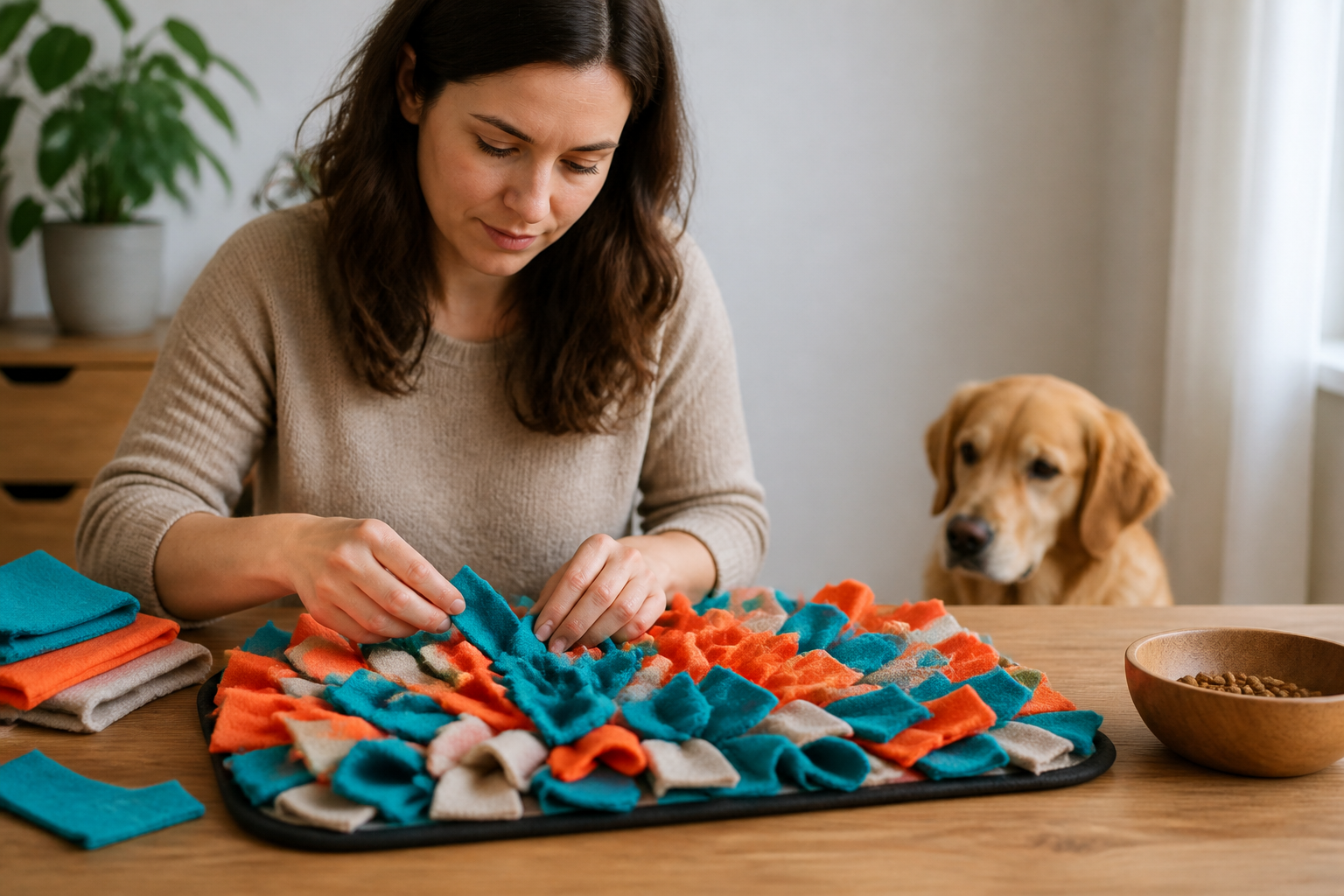
Step 1: Prep the base fabric. / Place the two base pieces right sides together and sew around three sides. Turn the piece right side out and tuck the raw edges of the fourth side inward. Topstitch around the entire perimeter to seal the base.
Step 2: Calculate your fleece needs. / You will need enough strips to cover the base in dense rows. For a medium mat, plan for strips that are about 3 inches wide and 8 to 10 inches long. You will likely need 50 to 100 strips depending on how full you want the mat to be.
Step 3: Cut the fleece strips. / Using your rotary cutter, slice the fleece into your 3-inch by 10-inch rectangles. Do not worry about being perfectly straight. Once they are sewn and ruffled, small imperfections will not be visible to you or your dog.
The Sewing Process: Row by Row
Sewing a snuffle mat requires patience because you are dealing with a lot of fabric bulk. The goal is to create rows of fleece that stand up and lean against each other. This creates the "grass" that hides the treats.
Marking Your Lines
Use a fabric marker or a piece of tailor’s chalk to draw horizontal lines across your base. Space the lines about 1 inch to 1.5 inches apart. These lines act as your guide for where to stitch the fleece strips.
Stitching the Strips
Take a fleece strip and fold it in half widthwise to find the center. Place that center point on your first marked line. Lower your sewing machine needle through the center of the strip. Sew a straight line across the center of the strip to secure it to the base.
As you move down the line, place the next strip right next to the first one. Some people prefer to overlap them slightly for extra density. Continue this until the entire row is filled with strips. When you finish a row, the fleece ends will flop over. This is normal.
Managing the Bulk
As you move to the second and third rows, the fabric will get heavy. Roll the finished portion of the mat to the left of your needle to keep it from dragging. Use a long stitch length (3.0mm or 3.5mm) to help the machine move through the layers of canvas and fleece.
Vet Tip: If your dog is a known "shredder" who likes to pull at threads, use a triple stitch or a very tight zigzag stitch for added security. Regularly inspect the mat for loose threads or pieces of fleece that have been chewed off.
Advanced Sewing Techniques for Variety
Once you master the basic row of strips, you can experiment with different textures. Variety keeps the sniffing game interesting for your dog. Different shapes of fabric require different movements of the snout and tongue to retrieve the food. You can also compare your project with other DIY enrichment ideas for dogs.
The Book Page Block
Instead of long strips, cut larger squares of fleece. Stack four or five squares on top of each other and sew down the middle of the stack. This creates a "book" where treats can be hidden between the pages. This is often more challenging than the basic strips because the dog has to flip the pages with their nose.
The Looped Design
Fold your fleece strips into loops instead of laying them flat. Sew the raw edges of the loops onto the base. This creates a tube-like structure. If you use this method, make sure the loops are large enough that your dog's snout cannot get stuck, but small enough to hold a piece of kibble.
The Spiral Pattern
Instead of rows, you can sew one continuous long strip of fleece in a spiral starting from the center of the mat. This creates a different foraging pattern. It is often easier to sew if you have a smaller machine because you are constantly turning the fabric rather than pushing a long row through.
- Materials needed for a standard mat:
- 1/2 yard of heavy base fabric.
- 1 to 2 yards of fleece (different colors make it look better).
- High-quality polyester thread.
- Heavy-duty sewing machine needle.
Integrating the Snuffle Mat into a Health Routine
A snuffle mat is a great way to deliver a meal, but it is also a tool for wellness. Many owners use them for dogs who are on restricted exercise due to injury or surgery. It provides the mental drain they need without the physical impact on joints.
For dogs managing specific health conditions, a snuffle mat can be used with prescription diets. If your veterinarian has prescribed a specific food for weight management or kidney health, you can find those through our pet pharmacy. We work with Pet's Choice to provide FDA-approved medications and prescription diets. Using a snuffle mat with these specialized kibbles can make a strict diet feel more rewarding for your pet.
Weight management is a common reason owners turn to foraging toys. When a dog eats slowly, their body has more time to process the "I am full" signal. This can prevent the begging behavior that often follows a meal that was eaten too quickly. If you are concerned about your dog's weight or digestive speed, we always recommend talking to your veterinarian to rule out underlying issues.
Key Takeaway: Snuffle mats are excellent for weight management because they extend mealtime and provide mental stimulation that reduces boredom-induced begging.
Introducing the Mat to Your Dog
The first time you give the mat to your dog, you want them to be successful. If you hide the food too deeply at first, a frustrated dog might decide it is easier to just pick up the whole mat and shake it. This could damage your hard work or teach them the wrong way to interact with the toy.
Start by placing a few high-value treats right on top of the fleece. Let your dog see you put them there. Once they understand that the mat contains good things, start tucking the treats slightly under the top layer of fringe. Over several sessions, you can work up to burying the kibble at the very bottom of the rows. For additional options, browse our dog treats.
If your dog starts trying to bite and pull the base of the mat, gently redirect them. The goal is "snuffling," not "tugging." If they get too rowdy, take the mat away for a few minutes and try again when they are calmer. Most dogs catch on very quickly to the sniffing game.
Cleaning and Maintenance
Because your dog will be drooling on this and food particles will get trapped in the fibers, you must wash it regularly. This is why using high-quality fleece and a sturdy base is so important. A poorly made mat will fall apart in the first wash cycle.
To clean your sewn snuffle mat, shake it out thoroughly outside to remove any leftover crumbs or hair. Wash it in cold water on a gentle cycle. Use a pet-safe, scent-free detergent. Heavy perfumes can be overwhelming for a dog’s sensitive nose and might discourage them from using the mat.
Air drying is usually the safest option to prevent the base fabric from shrinking. If you must use a dryer, use the lowest heat setting possible. Once it is dry, fluff the fleece strips with your hands to make them stand back up. If any strips have come loose, you can easily sew them back on.
Bottom line: Regular washing and air drying will keep your DIY snuffle mat hygienic and durable for years of use.
Using a Snuffle Mat for Anxiety and Stress
Many dogs struggle with anxiety during thunderstorms, fireworks, or when guests come over. Providing a distracting, rewarding task can help them focus on something other than their fear. The act of sniffing actually lowers a dog's heart rate and helps them self-soothe.
In our experience at BaxterBoo, we have seen owners use snuffle mats as part of a broader calming strategy. This might include calming supplements or even prescription anxiety medication from our pet pharmacy. When used together, these tools can help an anxious dog feel much more secure in their environment.
If you find that your dog is too stressed to even look at the mat, that is a sign that their anxiety level is too high for a distraction toy to work. In those cases, a visit to the vet is the best course of action. They can help you determine if a combination of behavior modification and medical support is necessary.
Customizing for Different Breeds
The way you sew your mat might change depending on who is using it. A flat-faced breed like a Pug or a French Bulldog has different needs than a long-snouted Greyhound.
For brachycephalic (flat-faced) breeds, keep the fleece strips a bit shorter, around 2 to 3 inches. If the strips are too long, these dogs can have trouble reaching the food at the bottom. You want them to work for it, but not to the point of physical struggle.
For dogs with long, thin snouts, you can make the strips longer and the rows denser. These dogs are experts at rooting around in deep crevices. You can also vary the textures more for these breeds, adding loops and "pages" to challenge their dexterity.
Final Steps for Your DIY Project
Sewing a snuffle mat is a rewarding afternoon project that provides long-term benefits for your pet. It combines the utility of a slow feeder with the fun of an enrichment toy. By choosing your own fabrics and sewing them securely, you create a high-quality tool that rivals any store-bought version. If you want to compare your DIY mat with ready-made options, browse our dog toys.
Once you have finished sewing your mat, take a moment to inspect all your seams. Trim any long thread tails that your dog might find tempting to pull. Test the density by sprinkling a little kibble and seeing if it disappears into the layers. If you see "bald spots" where the base is visible, simply sew a few extra strips into those areas.
We love seeing pets live their best, most active lives through mental and physical engagement. Whether you are sewing a mat for a new puppy or a senior companion, you are investing in their well-being. This simple DIY project is a great way to show your pet some extra love.
To find more supplies for your dog's health and wellness journey, check out our dog food selection. If you need support for ongoing health needs, our pharmacy is here to provide the prescription diets and medications your veterinarian recommends. You can also explore the MVP Rewards programme for additional value while shopping for recurring pet supplies.
FAQ
Can I use any fabric besides fleece for the strips?
Fleece is recommended because it does not fray when cut. If you use cotton or other woven fabrics, the edges will shed threads as your dog roots around. These threads can become a choking hazard or cause digestive issues if swallowed. Stick to fleece or felt for the safest experience.
How do I stop my dog from just flipping the mat over?
If your dog tries to cheat by flipping the mat, you may need a heavier base. You can sew a piece of non-slip rug padding to the bottom of your mat to help it grip the floor. You can also sit with them during the first few sessions and reward them only when their nose stays on the top of the mat.
Is a sewn mat better than the tied version using a sink mat?
A sewn mat is generally more durable and easier to wash in a machine. Tied mats often use a plastic or rubber sink mat base which can become brittle over time or melt in the dryer. Sewn mats allow for more creativity in the layout and are often more comfortable for the dog's snout.
Can I use a snuffle mat for a dog that eats wet food?
Snuffle mats are designed specifically for dry kibble or hard treats. Wet or raw food will create a significant mess and can lead to bacteria growth within the fabric layers. If your dog eats a wet diet, use the mat for their daily treats or a small portion of dry kibble as a supplement.


- Site & Contents BaxterBoo.com. BaxterBoo is located in the United States.
- Privacy & Security
- Terms of Use
- Accessibility Statement
