
 Save 15% on your 1st Autoship learn more

 Email us
 Live Chat
 FAQs
FAQs





Introduction
You just opened a new bag of premium freeze-dried nuggets and that rich, meaty aroma hits the air. Your dog is already spinning in circles because they know something delicious is coming. Since freeze-dried food is a significant investment in your dog's health, you want to make sure every scoop stays as fresh and nutritious as the day it was packaged. At BaxterBoo, we see many pet owners transition to these minimally processed diets because they offer the benefits of raw nutrition with the convenience of a shelf-stable product. However, that shelf stability depends entirely on how you handle the food once the seal is broken. This guide will explain the best practices for protecting your dog's food from its three biggest enemies: air, light, and moisture. Proper storage ensures your dog gets the full nutritional value from every meal.
Why Freeze Dried Food Needs Special Care
Freeze-drying is a fascinating process that removes about 98 percent of the moisture from raw ingredients through sublimation. This means the water turns from ice directly into vapor without ever becoming a liquid. Because the moisture is gone, bacteria cannot grow, and the food becomes incredibly light and shelf-stable. But this state is delicate. The food is essentially a dry sponge. If it is exposed to the air, it will immediately begin to pull moisture from the environment.
When freeze-dried food absorbs moisture from the air, it loses that signature crisp texture. More importantly, moisture creates an environment where mold or bacteria can finally start to grow. Since brands like Stella & Chewy's or Vital Essentials use raw meat bases, keeping that moisture out is the most important part of your storage routine.
Quick Answer: The best way to store freeze-dried dog food is in its original resealable bag, kept inside an airtight container in a cool, dark, and dry location. Once opened, most freeze-dried food should be consumed within 30 to 45 days for maximum freshness and nutritional integrity.
The Three Main Enemies of Freshness
To keep your dog’s food in peak condition, you have to defend against environmental factors. Most people think about pests like ants or mice, but microscopic threats are often more damaging to the food’s quality.
Moisture and Humidity
As mentioned, moisture is the primary concern. In humid climates, a bag left open for even a few minutes can start to soften. If you live in a coastal area or a place with high seasonal humidity, you need to be even more diligent. Damp food can quickly become a breeding ground for salmonella or listeria. This is why we always recommend a double-layer approach to storage.
Air and Oxidation
Oxygen causes fats to oxidize. Since many freeze-dried recipes are high in healthy animal fats from sources like grass-fed beef or wild-caught salmon, they are prone to becoming rancid if exposed to too much air. Rancid fats do not just smell bad. They can cause digestive upset and lose their anti-inflammatory benefits. Keeping the bag squeezed tight to remove excess air before sealing is a simple but effective habit.
Light and Heat
Sunlight and heat can break down vitamins and minerals. If you store your dog’s food in a clear container on a sunny countertop, the UV rays will slowly degrade the nutritional profile of the ingredients. Heat can also cause the natural oils in the food to seep out, changing the texture and making the food less palatable for picky eaters.
Selecting the Right Storage Location
The "cool, dry place" label on the bag is not just a suggestion. Where you put the food in your home matters just as much as the container you use.
- The Pantry: A dedicated pantry or a kitchen cabinet away from the oven is usually the best spot. It stays dark and the temperature remains relatively consistent.
- Avoid the Garage: Many owners store large bags of pet food in the garage. For freeze-dried food, this is a mistake. The temperature swings in a garage are too extreme, and the humidity can be very high.
- Keep it Off the Floor: Even in a pantry, try to keep the food on a shelf. Concrete floors can sometimes "sweat" or hold cold, which can lead to condensation inside your storage bins.
Key Takeaway: Consistent temperature is the secret to longevity. Avoid storing food near appliances that generate heat, such as dishwashers, refrigerators, or ovens.
Choosing the Best Containers
While the original packaging for brands like Open Farm or NutriSource is high quality, adding an extra layer of protection is a smart move.
The Original Bag
Most freeze-dried dog food comes in Mylar-lined bags with heavy-duty zip seals. These bags are designed specifically to block out light and moisture. One of the biggest mistakes pet owners make is pouring the food out of the bag and directly into a plastic bin. Plastic is actually porous. Over time, oils from the food can seep into the plastic and turn rancid, contaminating the next batch of food you pour in.
Airtight Plastic Bins
If you want to use a secondary bin to keep out pests or keep your kitchen organized, place the entire original bag inside the bin. This gives you the benefits of the Mylar lining and the airtight seal of the bin. Look for bins with a foam or rubber gasket in the lid. This creates a true airtight seal that standard "snap-on" lids cannot provide.
Glass Jars
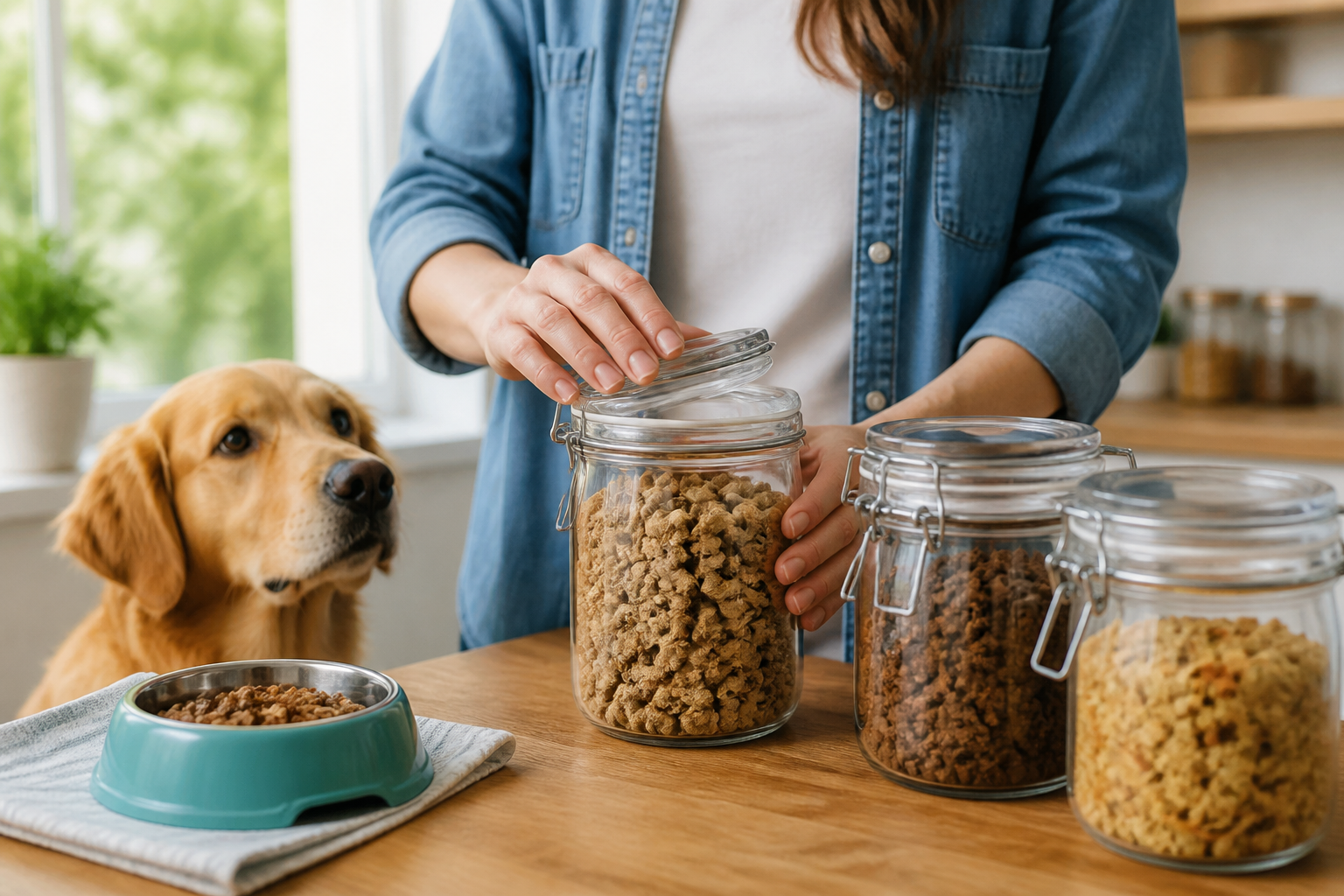
For smaller bags or treats, glass is an excellent option. It is non-porous and easy to clean. However, glass is clear, so you must store these jars inside a dark cabinet. If you like the look of jars on your counter, choose amber or opaque glass to protect the food from light.
Metal Canisters
Stainless steel canisters with locking lids are another great choice. They are durable, easy to sanitize, and naturally block out all light. Just make sure the seal is tight and the metal is food-grade.
Vet Tip: If your dog has a history of food allergies or a sensitive stomach, always keep the original packaging. It contains the lot number and expiration date, which are essential if you need to contact the manufacturer or your vet about a reaction.
Managing Shelf Life and Freshness
Freeze-dried food is famous for having a long shelf life when unopened. Many bags are good for 12 to 18 months from the date of manufacture. However, that clock speeds up significantly once you break the seal.
Most manufacturers recommend using the food within one month of opening. While the food might not "spoil" in the sense of rotting by day 31, the nutritional potency begins to decline. To manage this, consider buying bag sizes that match your dog's eating habits. If you have a toy breed, a massive 25-ounce bag might last too long. It is often better to buy two smaller bags so the second half of the food stays factory-sealed while you use the first half.
For additional storage guidance, read how long dry dog food stays fresh once opened.
Bottom line: Use the "Permanent Marker Method" by writing the date you opened the bag directly on the label to ensure you use it within the 30-day freshness window.
Handling Rehydrated Food
One of the best things about freeze-dried food is that you can add water, bone broth, or goat milk to create a fresh, "living" meal. Once you add moisture, however, the food is no longer shelf-stable. It is now fresh meat.
For more serving guidance, see this freeze-dried dog food feeding guide.
Step 1: Portion out only what your dog will eat in one sitting. / Most dogs prefer the food when it is freshly mixed.
Step 2: Add your warm liquid and let it sit for 3 to 5 minutes. / This allows the moisture to reach the center of the nuggets.
Step 3: Refrigerate any leftovers immediately. / If your dog does not finish their bowl, you can put it in the fridge for up to 24 hours.
Step 4: Discard any rehydrated food left at room temperature for more than two hours. / Bacteria thrive in moist, room-temperature environments.
Safety and Hygiene for Pet Parents
It is easy to forget that freeze-dried food is raw meat because it is dry and doesn't feel "messy." But the pathogens associated with raw meat, like Salmonella, can still be present. Freeze-drying inhibits growth but does not always kill every single bacterium.
Always wash your hands with warm, soapy water after handling the food or your dog's bowl. Use a dedicated scoop for the food rather than your own measuring cups. If you use a storage bin, wash it thoroughly with hot water and soap every time you finish a bag of food. Make sure the bin is completely dry before putting a new bag inside.
Our pet pharmacy at BaxterBoo offers various health supports through our partnership with Pet's Choice, but prevention is always the best medicine. Proper food hygiene is the first step in keeping your household safe from foodborne illness.
Tips for Travel and On-the-Go Feeding
Freeze-dried food is the ultimate travel food because it is lightweight. To keep it fresh while on the road, follow these steps:
- Use Small Airtight Bags: Instead of bringing the whole large bag, portion out meals into high-quality silicone or plastic freezer bags. Squeeze out all the air before sealing.
- Avoid the Trunk: Do not store the food in a hot car trunk or on the floorboard where the sun hits it. Keep it in the climate-controlled cabin of the car.
- Pack a Travel Bowl: Bring a collapsible silicone bowl that is easy to wash. Clean it after every meal to prevent bacteria buildup while you are away from home.
Dealing with Damp Food
Sometimes, despite your best efforts, a bag might get left open on a rainy day or a spill might occur. If the food feels soft or "bendy" rather than crisp, it has absorbed significant moisture. If it is just a few nuggets that got wet, it is best to feed those immediately or throw them away. Do not put damp nuggets back into a bag of dry food, as the moisture will spread to the rest of the batch.
If the entire bag has become damp or smells "off," it is safer to discard it. The cost of a new bag is much lower than a visit to the vet for a dog with food poisoning.
Key Takeaway: Trust your nose. Freeze-dried food should smell like dried meat or hay. If it smells sour, musty, or like old oil, discard it immediately.
Summary of Best Practices
Storing freeze-dried food is not complicated, but it requires consistency. By protecting the food from the elements, you ensure your dog gets the premium nutrition you paid for.
- Keep the food in its original Mylar bag.
- Place the bag inside an airtight container with a gasket seal.
- Store in a cool, dark pantry, never the garage or near the stove.
- Discard any rehydrated leftovers after 24 hours in the fridge.
- Wash your hands and your dog's bowls regularly.
If you are looking for the best selection of freeze-dried dog food, explore our full range of dog food at BaxterBoo. We carry the brands you trust and offer our Autoship programme to make sure you never run out of your dog's favorite meals. Plus, the MVP Rewards programme lets you earn points on every bag you buy.
FAQ
Can I store freeze dried dog food in the refrigerator?
While it might seem like a good idea, you should not store dry freeze-dried food in the fridge. The constant opening and closing of the refrigerator door creates condensation inside the bag. This added moisture will make the food soggy and can lead to mold growth. Keep it in a dry pantry instead.
How can I tell if my dog's freeze dried food has gone bad?
The most obvious signs are a change in smell, texture, or appearance. If the nuggets are no longer crunchy or have developed a sour or rancid odor, they should be tossed. You should also look for any signs of mold, which can appear as fuzzy spots or dark discolorations on the surface of the food.
Is it okay to pour the food directly into a plastic storage bin?
It is better to keep the food in its original bag and place the whole bag inside the bin. Plastic containers can hold onto old fats and oils that eventually go rancid and spoil new food. The original bags are specifically designed with liners that act as a barrier against oxygen and light.
Does freeze dried dog food expire?
Yes, every bag will have a "best by" date printed on it by the manufacturer. While the food may be safe for a short time after that date if it has remained sealed, the vitamins and fats will have begun to break down. For the best health outcomes for your dog, always try to use the food before the expiration date.






