
 Save 15% on your 1st Autoship learn more

 Email us
 Live Chat
 FAQs
FAQs





Introduction
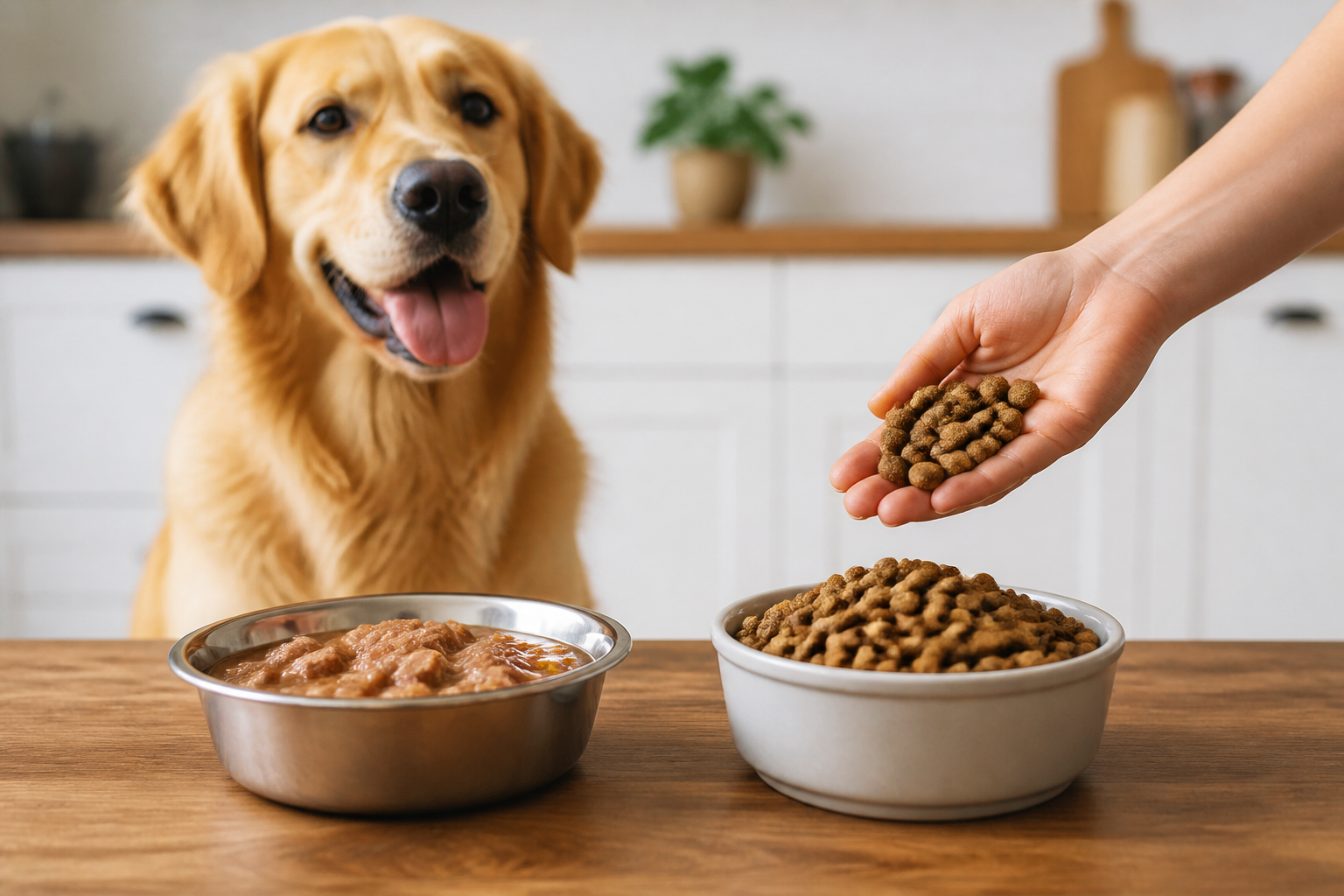
You stand in the kitchen with a bag of premium kibble and a dog that is used to the rich aroma of canned pâté. Many owners reach this moment when their budget changes, their schedule gets busier, or their vet suggests a dental-friendly crunch. Moving your dog from a moisture-rich wet diet to a dry one is more than just a change in flavor. It involves a shift in texture, hydration, and how your dog’s digestive system processes nutrients.
At BaxterBoo, we have helped thousands of pet parents navigate dietary shifts since 2006. We know that a sudden change can lead to a messy floor or a stubborn pup who refuses to eat. This guide explains how to manage the transition safely while keeping your dog excited about mealtime. Our goal is to move your dog to a high-quality dry food without causing any tummy trouble.
Why Move From Wet to Dry Food
Wet food is often a favorite for dogs because of its strong smell and soft texture. However, dry food offers practical benefits that make it a staple for many households. Understanding these benefits can help you stay patient during the transition period.
Dry kibble is significantly more convenient for busy families. It does not require refrigeration after opening and can stay in the bowl longer without spoiling. This is helpful if your dog likes to graze throughout the day. Dry food is also generally more cost-effective per serving than canned options. Browse our dog food category to compare dry and wet formulas.
Dental health is another major factor. While it is not a replacement for regular brushing, the mechanical action of chewing crunchy kibble can help reduce plaque and tartar buildup. Many senior dogs or puppies with specific needs benefit from the concentrated nutrition found in a high-quality dry formula.
Quick Answer: The best way to switch a dog from wet to dry food is a gradual transition over 7 to 10 days. Start by mixing 25 percent dry food with 75 percent wet food and slowly increase the dry portion every few days.
Choosing the Right Dry Food
The success of your switch depends heavily on the kibble you choose. If your dog is used to a specific protein like beef or salmon in their wet food, try to find a dry food with the same primary ingredient. This makes the new flavor profile feel familiar.
Look for brands that prioritize real meat as the first ingredient. We carry a wide variety of trusted names like Orijen, Acana, and Stella and Chewy's that offer high-protein options. These brands often use techniques like freeze-drying or slow-baking to keep the flavor intense.
Consider the size of the kibble as well. A small breed dog might struggle with large, hard nuggets. Conversely, a large dog might swallow tiny kibble whole without chewing. Matching the "mouthfeel" to your dog's size will make the new texture less intimidating for them.
Key Takeaway: Match the protein source and kibble size to your dog’s current preferences to increase the chances of a successful transition.
The 7 to 10 Day Transition Schedule
You should never switch your dog's food overnight. Their digestive tracts contain specific enzymes and bacteria that adapt to what they eat. A sudden change can overwhelm their system and cause diarrhea or gas. A slow, week-long process gives the gut time to adjust.
Days 1 to 3: The Introduction
Start with a ratio of 25 percent dry food and 75 percent wet food. Mix them thoroughly so the dry bits are coated in the juices of the wet food. This helps the kibble absorb some of the familiar aroma and softens the texture.
Days 4 to 6: The Halfway Point
If your dog’s stool remains firm, move to a 50/50 split. At this stage, your dog is getting used to the extra chewing required for dry food. Watch for any signs of hesitation or picking around the dry pieces.
Days 7 to 9: The Final Stretch
Shift to 75 percent dry food and 25 percent wet food. By now, the dry food is the primary source of nutrition. Most dogs will have fully adapted to the texture by this point.
Day 10: Full Transition
Offer a bowl of 100 percent dry food. If your dog eats it happily and their digestion is normal, you have successfully completed the switch.
Vet Tip: If your dog has a history of a sensitive stomach or chronic health issues, extend the transition to 14 days. If they develop loose stools at any point, go back to the previous ratio for two days before trying to increase the dry food again.
Tips for the Picky Eater
Some dogs are "wet food enthusiasts" who might turn their noses up at a bowl of plain dry biscuits. If your dog is stubborn, you can use a few tricks to make the kibble more enticing.
- Add Warm Water: Adding a splash of warm water to the kibble creates a savory gravy. It also releases the aroma of the fats in the food, making it smell more like the wet food they love.
- Use a Topper: A small amount of a high-quality topper can bridge the gap. Brands like The Honest Kitchen or Zesty Paws offer meal boosters that add flavor without a massive calorie jump.
- Hand Feeding: Treat the new kibble like a reward. Hand-feeding a few pieces can make the new food feel special rather than a chore.
- Establish Meal Times: If you usually leave wet food out, switch to structured meal times. A dog with a healthy appetite is much less likely to be picky about texture.
For additional ideas, read how to wet dry dog food for better digestion and hydration.
Bottom line: Hydration and aroma are the two most important factors in making dry food appealing to a dog used to canned meals.
Monitoring Hydration and Health
Wet food is roughly 70 to 80 percent water. Dry food is usually around 10 percent moisture. When you make the switch, your dog is losing a significant source of daily hydration. You must ensure they are drinking enough water to compensate for this loss.
Keep a close eye on their water bowl. You will likely notice them drinking more often. If they seem reluctant to drink, consider a pet fountain or adding low-sodium broth to their meals. Proper hydration is essential for kidney health and smooth digestion.
You should also monitor their weight. Dry food is much more calorie-dense than wet food. A small scoop of kibble might contain the same calories as a large can of wet food. Follow the feeding guidelines on the bag, but adjust based on your dog's activity level and body condition.
For more guidance on combining textures and managing portions, see our guide to mixing wet and dry dog food.
When to Consult Your Veterinarian
Most food transitions go smoothly, but sometimes a dog's body reacts poorly. If your dog experiences persistent vomiting, severe diarrhea, or refuses to eat for more than 24 hours, stop the transition and call your vet. These could be signs of a food intolerance or an underlying issue.
If the switch is being made because of a medical condition like allergies or kidney issues, your vet might recommend a prescription diet. Our dog pharmacy carries a wide range of prescription foods and medications through our partnership with Pet's Choice. These specialized diets often require a transition period as well, and your vet can provide a specific plan tailored to your dog's health needs.
Vet Tip: Always consult your veterinarian before switching to a dry food if your dog has missing teeth or advanced gum disease. They may need a specific kibble size or a permanently softened diet to eat comfortably.
Using Toppers to Ease the Transition
Sometimes the jump from 100 percent wet to 100 percent dry is too big for a dog's palate. Toppers serve as a middle ground. They provide the moisture and intense flavor of wet food but are designed to be used in smaller quantities.
We see great success when owners use freeze-dried raw nuggets as a topper. You can crumble these over the kibble. This adds a boost of protein and a different texture that encourages the dog to finish the bowl. Brands like Vital Essentials or Stella and Chewy's are perfect for this.
As the transition progresses, you can reduce the amount of topper until the dog is eating the kibble on its own. This method is often more sustainable than buying expensive cans of wet food to mix in forever.
Step-by-Step Summary for Success
Step 1: Pick a high-quality dry food.
Choose a protein that matches their current wet food. Ensure the kibble size is appropriate for your dog.
Step 2: Start the 10-day mix.
Follow the 25/50/75 ratio plan. This protects the digestive system from shock.
Step 3: Increase water access.
Ensure your dog has fresh water available at all times. They will need more than they did on a wet diet.
Step 4: Watch the stool and energy.
If your dog remains active and their stools are firm, the transition is working.
Step 5: Move to 100 percent dry.
Once the 10 days are up, serve only kibble. Use toppers only if necessary for picky behavior.
Managing the Cost of Premium Kibble
While dry food is generally cheaper than wet food, high-quality kibble is still an investment. We offer several ways to make this more affordable for your family. Our MVP Rewards program lets you earn up to 5 percent back on your purchases.
If you find a brand your dog loves, consider our Autoship program. This provides recurring delivery so you never run out of food, and it includes a discount on your first order. It also grants you a free MVP Gold membership. This is a great way to ensure your dog stays on their new diet without the stress of last-minute trips to the store.
Key Takeaway: Quality nutrition is an investment in your dog’s long-term health. Programs like Autoship and MVP Rewards make premium dry food more accessible.
Common Mistakes to Avoid
One of the biggest mistakes owners make is "giving in" too early. If your dog refuses the dry food for one meal, don't immediately open a can of wet food. This teaches the dog that if they wait, they will get the "better" food. As long as your dog is healthy, missing one meal will not hurt them.
Another mistake is overfeeding. Because kibble looks like less food in the bowl, it is tempting to add an extra scoop. Always use a standard measuring cup. Obesity in dogs can lead to joint issues and a shortened lifespan, so portion control is vital from day one.
Lastly, don't forget to check the expiration date. Dry food stays fresh longer than wet, but the fats in the kibble can still go rancid if stored in a hot garage or an unsealed bag. Store your dry food in its original bag inside an airtight container for the best results.
Conclusion
Switching your dog from wet to dry food is a practical move that can benefit your budget and your dog’s dental health. The key to a happy dog and a healthy gut is patience. By following a 10-day transition and using techniques like adding warm water or healthy toppers, you can make the switch without the drama.
We are here to support you through every stage of your pet's life. Whether you need a specific protein-rich kibble from Acana or a prescription diet from our pharmacy, we have the selection and expertise to help. Our warehouse in Vernon Hills is stocked with over 500 brands to ensure you find exactly what your dog needs.
Bottom line: A slow transition is the most reliable way to move your dog to dry food while avoiding digestive upset.
Check out our full collection of dog food and start your transition today.
FAQ
How long does it take for a dog's stomach to adjust to dry food?
Most dogs require about 7 to 10 days for their digestive enzymes to fully adapt to a new food source. If your dog has a very sensitive stomach, this process can be extended to 14 days to prevent gas or loose stools. Watching your dog's stool consistency is the best way to tell if their system has adjusted.
Why is my dog drinking so much more water after switching to dry food?
Wet food contains a high percentage of water, which helps keep your dog hydrated during meals. Dry food lacks this moisture, so your dog must drink significantly more water from their bowl to stay hydrated. This is a normal and necessary change in behavior after the switch.
Can I mix wet and dry food forever?
Yes, many owners choose to feed a "mixed" diet indefinitely. This provides the dental benefits of kibble with the hydration and flavor of wet food. If you do this, just ensure you are calculating the total calories of both the wet and dry portions to prevent unwanted weight gain.
What if my dog refuses to eat the dry food even after a week?
If your dog is healthy but stubborn, try adding a tablespoon of warm water or a low-sodium broth to the kibble. This enhances the smell and softens the texture. If they still refuse to eat after 24 hours, consult your vet to rule out any dental pain or underlying health issues that might make chewing hard kibble difficult.






