
 Save 15% on your 1st Autoship learn more

 Email us
 Live Chat
 FAQs
FAQs





Introduction
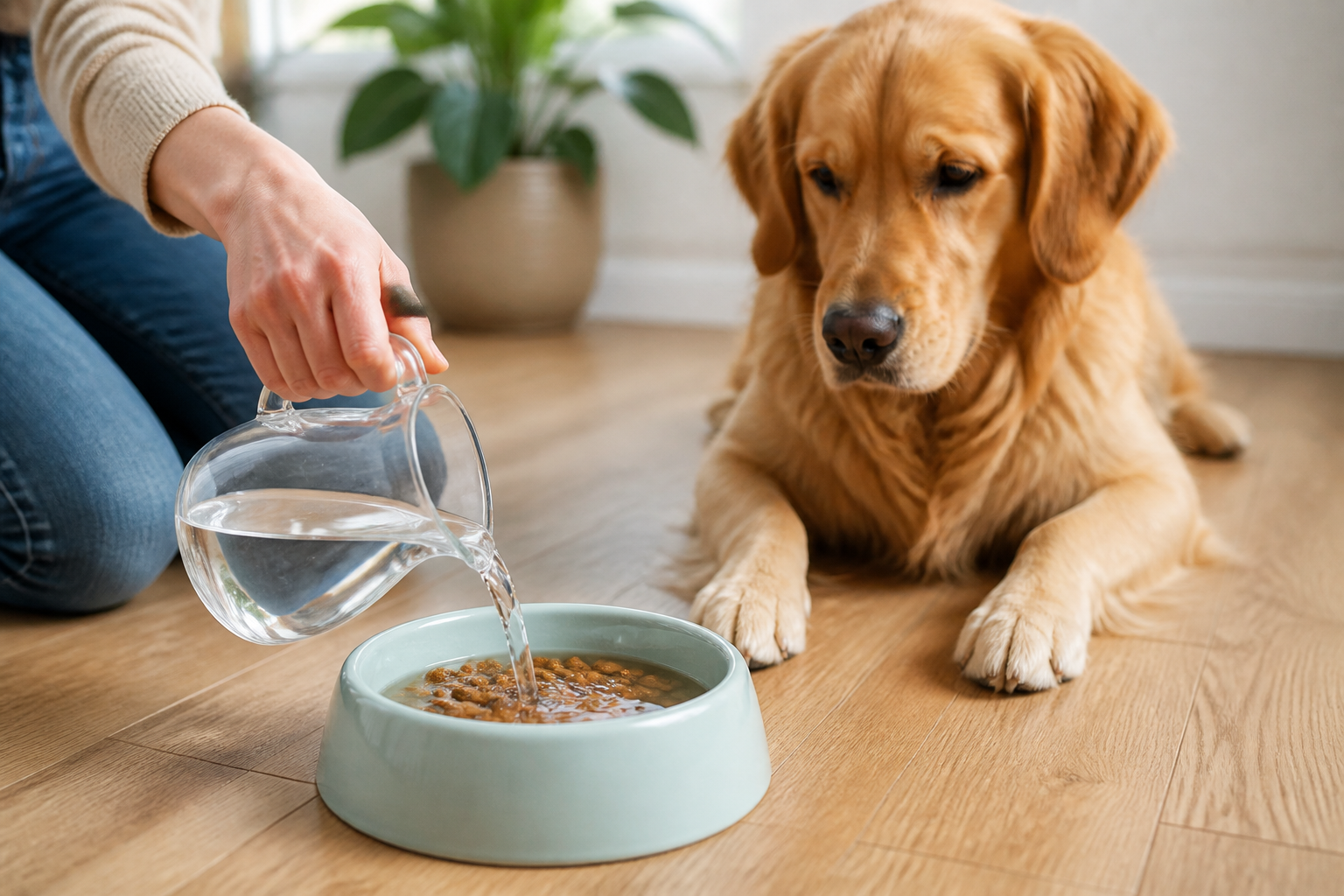
You are standing in your kitchen and watching your dog stare at a bowl of dry kibble. Maybe they take a few bites and walk away. Perhaps you noticed the water bowl has been full all day and you worry about their hydration. You might even have a senior dog who seems to struggle with the hard texture of a standard meal. These are moments when many pet owners wonder if a simple splash of water could improve their dog's health and happiness. At BaxterBoo, we help pet parents in our Vernon Hills warehouse and across the country navigate these daily nutritional choices. This article covers the benefits of hydrating kibble, the potential safety risks like bacterial growth, and how to choose the best liquids for your dog. Adding water to dry food is often a smart move for digestion and hydration when done correctly.
The Major Benefits of Adding Water to Kibble
Dry dog food is convenient and shelf stable because it has a very low moisture content. Most kibble contains only about 10 percent water. In contrast, a dog's natural diet would contain significantly more moisture. Adding water back into the bowl helps bridge this gap. This small change can have a ripple effect on your dog's overall wellness. Explore our dog food category to compare dry, wet, and topper options.
Improved Hydration and Kidney Support
Many dogs do not drink enough standing water from a bowl to meet their biological needs. This is especially true for active dogs or those living in dry climates. When you add water to their food, you ensure they consume a specific amount of moisture with every meal. This hydration is vital for the kidneys. The kidneys filter waste from the blood, and they need plenty of fluid to flush those toxins out as urine.
Proper hydration also helps with temperature regulation. Dogs do not sweat like humans. They rely on panting and internal fluid balance to stay cool. A well-hydrated dog can manage heat more effectively. If your dog has a history of urinary crystals or kidney issues, increasing moisture is often the first recommendation from a veterinarian.
Quick Answer: Adding water to dry dog food is generally better for hydration, digestion, and palatability. It is particularly helpful for picky eaters, senior dogs with dental issues, or pets with kidney and urinary concerns.
Enhancing Aroma for Picky Eaters
Kibble is made through a process called extrusion. After the pieces are formed and dried, manufacturers often spray them with fats and flavor enhancers to make them taste better. These scents are "locked" into the dry surface. When you add warm water, you release those aromas.
The heat from the water helps the fats on the kibble surface melt slightly. This creates a savory scent that is much stronger than dry food alone. For a picky eater or a dog with a fading sense of smell, this aromatic boost can be the difference between a full bowl and a skipped meal. For more ideas, read our guide to mixing wet and dry dog food.
Managing Weight and Digestion
Adding water increases the volume of the food without adding calories. This is a helpful trick for dogs that always seem hungry. The extra liquid fills the stomach faster and sends signals to the brain that the dog is full. This can prevent "scrounging" behavior between meals.
Hydrated food is also easier for the body to break down. The digestive process starts with moisture. When kibble is already soft, the stomach does not have to work as hard to hydrate the food before processing it. This can lead to more consistent bowel movements and less gas for some dogs.
Potential Drawbacks and Safety Concerns
While wetting food has many benefits, it is not a perfect solution for every household. There are safety and health trade-offs to consider. You must change how you handle the food bowl once moisture is introduced. Our food topper and broth selection can provide additional options when plain water is not appealing.
The Risk of Bacterial Growth
Dry kibble is safe to leave out for hours because bacteria need moisture to grow. As soon as you add water, you create a perfect environment for mold and bacteria like Salmonella or Listeria. This is the biggest risk of wetting dry food. If your dog is a "grazer" who likes to snack on a bowl throughout the day, you cannot wet their food.
Any hydrated kibble that is not eaten within 30 to 60 minutes must be thrown away. You cannot save it for the next meal. You also need to wash the bowl with hot, soapy water after every hydrated meal. Slime and biofilm can build up quickly in the corners of the bowl.
Impact on Dental Health
There is a long-standing belief that dry kibble cleans teeth by scraping away plaque. While most standard kibble is too brittle to provide much cleaning, some specific dental diets are designed to do exactly that. Brands like Royal Canin or Hill's Science Diet offer dental-specific formulas with a texture that resists crumbling.
When you soak these kibbles, you lose that mechanical cleaning action. If your dog is on a prescription dental diet, you should consult your vet before adding water. For a typical dog on standard kibble, the dental benefit of dry food is often minimal. You should rely on tooth brushing and dental treats rather than the "crunch" of dry food for oral hygiene. For another perspective, see our article on whether wet or dry food is better for dogs.
How to Safely Wet Your Dog's Food
If you decide to start hydrating your dog's meals, you should follow a consistent routine. This ensures the food stays safe and the dog's stomach stays settled.
Step 1: Use the right liquid.
Clean, filtered water is the safest and easiest choice. You do not need to use anything fancy to see results. If your dog needs more calories or has a very poor appetite, you can use a pet-safe bone broth. Avoid human broths from the grocery store. These often contain onions, garlic, and high levels of salt which are toxic or unhealthy for dogs. Our dog food supplement category includes broth-based toppers.
Step 2: Check the temperature.
Use warm water, not boiling water. Boiling water can destroy some of the heat-sensitive vitamins and probiotics added to the kibble. It also creates a burn risk for your dog's mouth. The water should be about the temperature of a baby bottle. This is warm enough to release aromas but safe to touch.
Step 3: Find the right ratio.
Start with a small amount of water. A good starting point is one part water to four parts kibble. For example, if you feed one cup of food, add a quarter cup of water. If your dog enjoys the texture, you can increase this until the food is floating. Some owners prefer to let the food sit for 10 minutes to turn into a soft mash. Others serve it immediately so there is still some crunch.
Step 4: Monitor the time.
Set a timer if you have to. If the bowl is not empty in 30 minutes, pick it up. This prevents the dog from eating spoiled food later. If your dog is used to grazing, you will need to transition them to scheduled meal times before you start adding water.
Key Takeaway: Hydrating kibble increases its volume and aroma, but it also makes the food spoil quickly. Only wet the food if your dog eats their entire meal in one sitting.
When Hydrated Food is a Medical Necessity
For some dogs, wetting dry food is more than just a preference. It is a necessary part of their care plan. This is frequently the case for senior pets or those managing chronic health conditions.
Senior Dogs and Dental Challenges
As dogs age, they often develop periodontal disease. Missing teeth, receding gums, and oral pain make it difficult to crunch through hard kibble. These dogs might start skipping meals not because they aren't hungry, but because eating hurts.
Soaking kibble until it is the consistency of oatmeal allows senior dogs to get the nutrition they need without the pain. If your senior dog is losing weight or dropping food from their mouth, it is time for a veterinary checkup. They may need a professional cleaning or extractions.
Vet Tip: If your dog is reluctant to eat or shows signs of mouth pain, consult your veterinarian for an oral exam. They can help determine if a softened diet or a prescription recovery food is necessary for your pet's comfort.
Kidney and Urinary Issues
Dogs with kidney disease or a history of bladder stones need to flush their systems constantly. For these dogs, every extra ounce of water is beneficial. Many veterinarians will prescribe a specific diet, such as Royal Canin Urinary SO or Farmina Vet Life, to manage these conditions.
Our pharmacy carries a wide range of FDA-approved prescription pet foods and medications through our partnership with Pet's Choice. If your vet has recommended a specific diet for a medical condition, you can often find both the dry and wet versions to help manage their hydration. Explore our pet pharmacy when your veterinarian recommends prescription products.
Alternatives to Plain Water
If your dog is not interested in water-soaked kibble, you can try other mixers to provide moisture and nutrition. This adds variety to their diet and can provide extra health supports.
- Bone Broth: High-quality pet broths from brands like Honest Paws or Open Farm provide collagen and amino acids. These support joint health and gut integrity.
- Goat's Milk: Often called "universal milk," raw or fermented goat's milk is packed with probiotics. It is much easier for dogs to digest than cow's milk.
- Wet Food Toppers: Adding a spoonful of canned food is a great way to introduce moisture. Brands like Tiki Cat or Stella and Chewy's offer pouches specifically designed as mixers.
- Pureed Pumpkin: A tablespoon of plain, canned pumpkin (not pie filling) adds moisture and fiber. This is excellent for dogs with occasional digestive upset.
For a focused selection, browse our Native Pet food toppers.
Comparing Dry vs. Hydrated Kibble
| Feature | Dry Kibble | Hydrated Kibble |
|---|---|---|
| Shelf Life | High (in bag) | Very Low (must discard after 1 hour) |
| Hydration | Low | High |
| Aroma | Mild | Strong |
| Ease of Chewing | Hard | Soft |
| Convenience | High (can use auto-feeders) | Low (requires prep and cleaning) |
| Dental Benefit | Minimal | None |
Transitioning Your Dog to Wet Food
You should never change a dog's diet overnight. Even adding water can change the way the food sits in the stomach.
- Start with a splash. On day one, add just a tablespoon of water to the bowl.
- Observe the response. Watch for any signs of loose stool or gas. Most dogs handle water well, but broth or milk might require a slower introduction.
- Increase the volume. Over the course of a week, slowly increase the amount of liquid until you reach your desired consistency.
- Establish the routine. Make sure the dog knows that the bowl stays down for a limited time. This prevents them from waiting for the food to "dry out" or spoil.
Bottom line: Wetting dry dog food is a simple, low-cost way to improve your dog's hydration and mealtime enjoyment as long as you maintain strict bowl hygiene.
Conclusion
Deciding whether to wet your dog's dry food depends on their individual needs. For many, the added hydration and enhanced flavor make it a clear choice. It supports kidney health, makes meals more exciting for picky eaters, and helps senior dogs eat without pain. However, you must be diligent about cleaning the bowl and discarding leftovers to avoid bacterial growth. If your dog has specific health concerns like kidney disease or severe allergies, we recommend speaking with your veterinarian about specialized diets. You can find many of these prescription options through the BaxterBoo pharmacy and our Pet's Choice partnership.
- Hydration supports vital organ function and temperature control.
- Warm water releases savory aromas that entice picky eaters.
- Soaked food is essential for dogs with dental pain or missing teeth.
- Safety is key: throw away wet food after 30 to 60 minutes.
If you are ready to start improving your dog's mealtime, check out our food topper and broth collection in our Food and Treats category. You can even set up an Autoship order to ensure you never run out of your dog's favorite hydrating mixers.
FAQ
Does adding water to dry dog food cause bloat?
There is no definitive evidence that adding water to kibble directly causes bloat. Some studies suggest that for large, deep-chested breeds, eating too quickly can increase risk. Hydrating food can actually help slow down some fast eaters by making the food more of a mash that is harder to gulp. Always talk to your vet about bloat prevention for high-risk breeds.
Can I use chicken broth instead of water?
You can use chicken broth if it is specifically made for pets. Most chicken broths sold for humans contain onions, garlic, and excessive sodium, all of which can be harmful to dogs. Pet-safe broths are formulated without these ingredients and often contain added nutrients like turmeric or parsley for extra health support.
Should I let the food soak or serve it right away?
This depends on your dog's preference and dental health. If your dog has trouble chewing, let the food soak for 10 to 15 minutes until it is soft. If you are just trying to improve flavor and hydration for a healthy dog, you can serve it immediately. The "gravy" created by the water and kibble dust is usually enough to entice them.
Will wetting the food make my dog's breath smell worse?
Wet or softened food is more likely to stick to a dog's teeth and gums than dry kibble. This can lead to increased plaque buildup over time, which may cause bad breath. If you choose to wet your dog's food, it is even more important to maintain a regular dental care routine, including brushing their teeth or providing dental chews.






