
 Save 15% on your 1st Autoship learn more

 Email us
 Live Chat
 FAQs
FAQs





Introduction
Standing in front of a massive wall of dog food bags and cans can make any pet owner feel a bit lost. You want the best for your dog, but the sheer variety of textures and formulas is enough to cause a headache. Some people swear by the crunch of kibble for clean teeth. Others believe the high moisture and meat content of canned food is the only way to go.
At BaxterBoo, we have been helping pet owners navigate these choices since 2006. We see every kind of dog come through our doors, from tiny puppies starting their first meals to seniors needing a little extra help at the bowl. There is no one-size-fits-all answer to whether wet or dry food is better. Both options offer complete nutrition when you choose high-quality brands. The right choice depends on your dog's age, health needs, and even your own daily schedule. This guide will break down the differences to help you decide what belongs in your pup's bowl, and our dog food collection is a helpful place to start.
Understanding the Core Differences
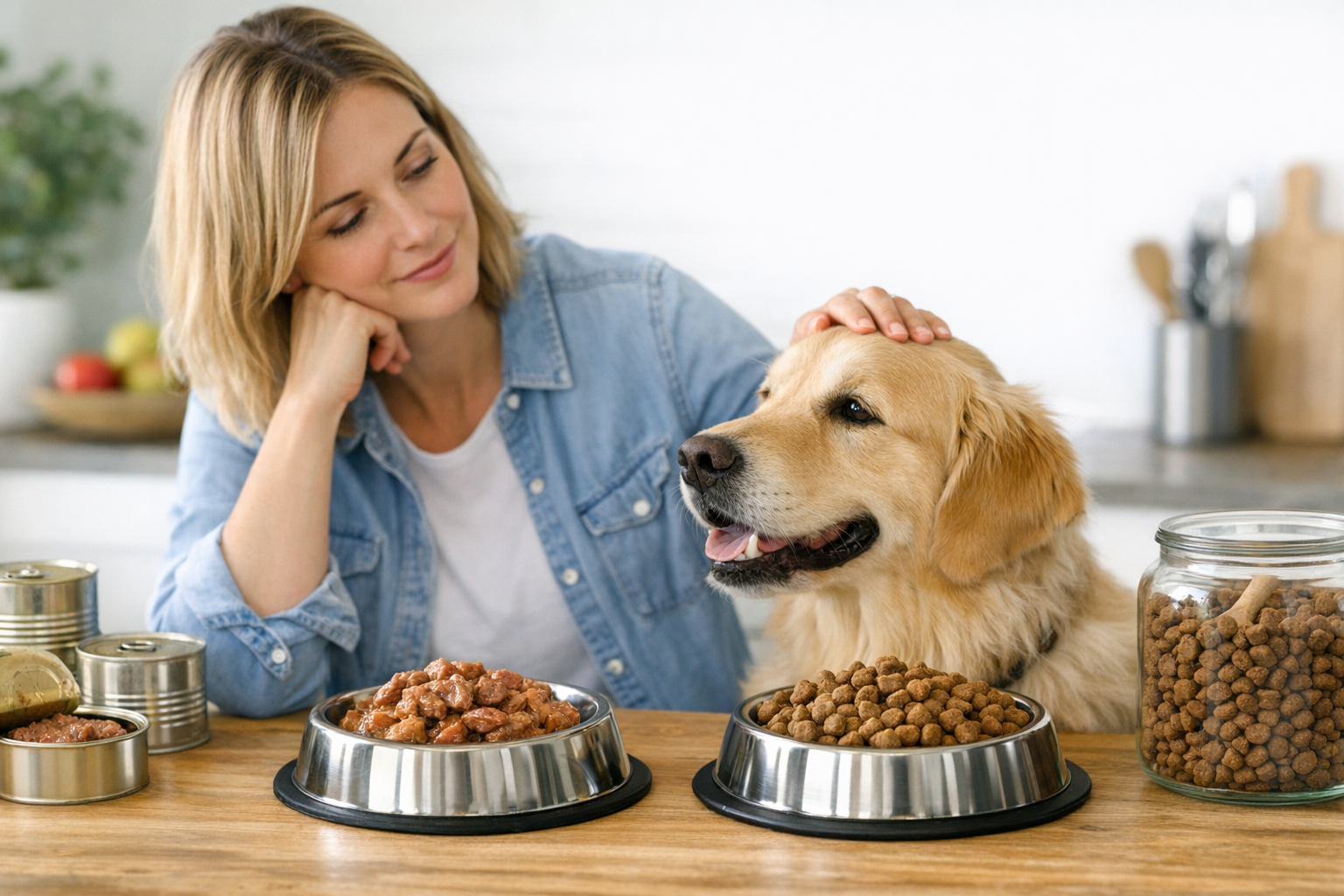
The primary difference between wet and dry dog food is moisture content and the way the food is processed. Dry food, or kibble, usually contains about 10 percent moisture. Wet food, which includes cans, pouches, and trays, is typically 75 to 80 percent water. This single factor changes everything from the way the food smells to how long it stays fresh on the shelf, and our wet dog food collection shows just how many options are available.
Dry food starts as a dough made from proteins, grains, vitamins, and minerals. This dough is cooked and then pushed through a machine called an extruder. The extruder cuts the dough into specific shapes, which are then dried. To make it more appealing, many manufacturers spray the finished kibble with fats or oils. Some brands we carry, like our NutriSource selection or our PureVita selection, even add probiotics to the outside of the kibble to support gut health.
Wet food takes a different path. The ingredients are ground up and mixed with a gravy or gel that contains essential nutrients. Once the mixture is packed into its container, it is sealed and sterilized using heat. This process creates a shelf-stable product without needing a lot of artificial preservatives.
Quick Answer: Neither food is inherently "better" for every dog. Dry food offers convenience and dental support, while wet food provides superior hydration and palatability for picky eaters.
The Pros and Cons of Dry Kibble
Dry dog food remains the most popular choice for many American households. It is the foundation of the industry for several practical reasons. For most owners, the biggest draw is convenience. You can measure out a scoop, pour it into the bowl, and go about your day.
Convenience and Cost
Kibble is generally more affordable than wet food when you look at the cost per calorie. Because it is concentrated, you do not need to feed as much volume to meet your dog's energy needs. It also has a much longer shelf life. A bag of dry food can stay fresh for several weeks after opening if you store it in a cool, dry place. This makes it ideal for owners who prefer to buy in bulk to save money.
Dental Health Benefits
The texture of kibble can provide a mechanical cleaning action. As your dog crunches down on the hard pieces, the friction helps scrape away some of the soft plaque from the surface of the teeth. Some specialized dental diets, like those from our Royal Canin selection, are designed with a specific shape and density to maximize this scraping effect.
Mental Enrichment
Dry food is perfect for interactive feeders and puzzle toys. You can put kibble inside a Kong toy or a snuffle mat to make your dog work for their meal. This provides mental stimulation and slows down dogs that tend to inhale their food.
The Downside of Dry Food
The biggest drawback is the lack of moisture. Dogs that eat only dry food must drink plenty of water to stay hydrated. Additionally, kibble is higher in carbohydrates because starches are necessary to hold the pieces together during the extrusion process. For some dogs, this higher carb count can contribute to weight gain if portions are not carefully managed.
The Benefits of Wet and Canned Food
While kibble is convenient, wet food offers several nutritional and sensory advantages that dry food simply cannot match. If you have a dog that is less than enthusiastic about mealtime, wet food is often the solution.
Superior Palatability
Wet food smells like real meat because it has a much higher protein and fat content by volume once the water is accounted for. The rich aroma is often enough to entice even the pickiest eaters. This is especially helpful for dogs that are sick, stressed, or losing their sense of smell as they age.
Hydration Support
Many dogs do not drink enough water on their own. Wet food acts as a hidden source of hydration. This is a major benefit for dogs prone to urinary tract issues or kidney concerns. The extra water helps flush the system and keeps the kidneys functioning properly.
Weight Management
It might seem counterintuitive, but wet food can actually help with weight loss. Because it is mostly water, it has a lower "caloric density" than kibble. Your dog can eat a larger, more satisfying volume of food while consuming fewer calories. This helps them feel full without overdoing the energy intake.
Ease of Eating
For puppies with tiny teeth or senior dogs with dental disease, the soft texture of wet food is a relief. It requires almost no chewing, making it much easier to swallow for dogs with missing teeth or sore gums.
Key Takeaway: Wet food is an excellent tool for hydration and palatability, making it a top choice for seniors, picky eaters, and dogs needing weight management support.
Matching Food to Your Dog's Life Stage
Your dog's nutritional needs change as they grow. What worked for them as a rambunctious puppy might not be the best choice when they are a calm senior.
Puppies and Growth
Puppies need a high concentration of calories and nutrients to support their developing bones and muscles. Many owners start with wet food or a mixture because it is easier on puppy teeth. If you are using kibble, you might need to soak it in warm water to soften it at first. Look for brands like Orijen or Acana that offer life-stage-specific formulas to ensure your puppy gets the right calcium and phosphorus levels.
The Active Adult
Most healthy adult dogs do well on either food or a combination. If your dog is a "grazer" who likes to eat small amounts throughout the day, dry food is the safer choice. Wet food cannot sit out for more than two or four hours before it begins to grow bacteria. If you're figuring out portion sizes, our How Much Dry Food to Feed a Dog for Daily Health guide is a useful next step.
Senior Dogs
Senior dogs often face two common problems: a decreasing appetite and dental issues. A shift toward wet food can solve both. If your senior dog is starting to slow down, they might also benefit from the lower calorie count of wet food to prevent obesity.
Vet Tip: If your senior dog suddenly stops eating their dry food, it could be a sign of dental pain or a underlying health issue. Always consult your veterinarian before assuming they are just being picky.
Mixing Both for the Best Results
You do not have to choose just one. Many pet owners find that a "best of both worlds" approach works perfectly. Mixing wet and dry food can provide the dental benefits and convenience of kibble with the taste and hydration of wet food.
Step 1: Consult a calorie chart. Do not simply add a scoop of wet food on top of a full serving of dry food. This is a fast track to weight gain. You need to reduce the amount of kibble to account for the calories in the wet food.
Step 2: Use wet food as a "topper." A few tablespoons of canned food mixed into the kibble can make the entire meal more exciting. This is a cost-effective way to get the benefits of wet food without the high price tag of an all-canned diet.
Step 3: Keep it consistent. Dogs have sensitive stomachs. Once you find a ratio that works, try to stick with it. Changing the mix every day can lead to digestive upset or make your dog even pickier as they wait for the "better" version of the meal.
Bottom line: Mixing wet and dry food is a great way to improve palatability and hydration while staying within a budget.
When Health Matters: The Role of Prescription Diets
Sometimes, the choice between wet and dry is dictated by a medical condition. If your veterinarian diagnoses your dog with a specific health issue, they may recommend a prescription diet. These are formulated to manage conditions like kidney disease, urinary stones, or severe food allergies.
Our pet pharmacy provides access to these specialized foods through a prescription from your vet. We carry prescription diets like Farmina Vet Life and Royal Canin Veterinary Diet. For example, a dog with kidney disease almost always benefits from a wet prescription diet because the extra hydration is critical for their organ function. Conversely, a dog with severe tartar issues might be prescribed a specific kibble designed to scrub teeth more aggressively than standard food.
Because these foods are considered medical treatments, you will need a valid prescription from your vet to order them. Having a reliable source for these items ensures your dog gets exactly what they need to manage their long-term health.
How to Transition Safely
Whether you are switching from dry to wet or just changing brands, you must go slowly. A sudden change in diet is the most common cause of diarrhea and vomiting in dogs. Their gut bacteria need time to adjust to new protein levels and fiber sources.
- Days 1-2: Feed 25% new food and 75% old food.
- Days 3-4: Feed 50% new food and 50% old food.
- Days 5-6: Feed 75% new food and 25% old food.
- Day 7: Feed 100% new food.
If your dog has a particularly sensitive stomach, you can stretch this process over 10 or 14 days. If you notice any loose stools, go back to the previous ratio for a few extra days.
Storage and Safety Tips
The way you store your dog's food is just as important as the food itself. Improper storage can lead to nutrient loss or even food poisoning.
For dry food, keep the kibble in its original bag. These bags are designed with barriers to keep out moisture and air. You can place the entire bag inside a plastic or metal bin for extra protection. Try to use a bag within six weeks of opening it. After that, the fats in the food can begin to go rancid, even if it looks fine.
For wet food, any unopened cans should be stored in a cool, dark place. Once you open a can, it must be refrigerated. Use a silicone lid or plastic wrap to keep it airtight. Any unused portion must be thrown away after three days. If your dog does not finish their bowl of wet food within half an hour, pick it up and throw it away to prevent bacteria growth.
- Check the "Best By" date before purchasing.
- Wash food bowls daily with hot, soapy water.
- Keep dry food bins clean to avoid old fat buildup.
- Never leave wet food out in a warm room.
Finding Value with Quality Brands
Choosing the right food is also a matter of balancing your budget with quality. At BaxterBoo, we curate our selection to include brands that prioritize real ingredients. You will find names like Stella and Chewy’s, The Honest Kitchen, and NutriSource that offer both wet and dry options.
If you find a brand your dog loves, consider using our Autoship programme. This ensures you never run out of food and usually provides a discount on your recurring orders. Plus, every purchase helps you earn points through our MVP Rewards programme, which can be used for future savings on treats or gear.
Final Thoughts on Dog Food Choices
There is no single "right" answer to the wet versus dry debate. For a healthy, active dog that enjoys their kibble and drinks plenty of water, dry food is a fantastic and convenient option. For a senior dog with a fickle appetite or a pup needing extra hydration for their kidneys, wet food can be a life-saver.
- Dry food is best for: Budget, convenience, dental health, and enrichment toys.
- Wet food is best for: Picky eaters, hydration, weight loss, and dogs with dental issues.
- Mixing is best for: Added variety and extra flavor without the full cost of canned food.
Key Takeaway: The best food is the one that meets your dog's specific nutritional needs and that they will eat consistently.
If you are managing a chronic health condition, remember to check our pharmacy section for prescription options. For everyone else, our wide selection of premium dog food brands offers something for every pup. Consult your vet to determine the best caloric intake for your dog, and then enjoy the process of finding the flavor they love most. For more budget-friendly ways to shop, our Discounted Dog Food: How to Feed Your Dog for Less guide can help.
FAQ
Does wet food cause more dental problems than dry food?
Wet food does not inherently "cause" dental issues, but it lacks the mechanical scraping action that kibble provides. Since wet food is soft, it can more easily stick to the teeth and gums, which may lead to plaque buildup if you do not brush your dog's teeth. Regardless of what you feed, regular toothbrushing and dental treats are necessary for good oral health.
Can I leave dry food out all day but only give wet food at night?
Yes, this is a common strategy known as "free feeding" for the dry portion. However, it only works if your dog can self-regulate their appetite. If your dog is prone to overeating, it is better to provide scheduled meals for both types of food to prevent obesity.
Is wet food more expensive to feed than dry food?
Generally, yes, wet food is more expensive on a per-meal basis. This is because wet food is mostly water, meaning you have to buy and ship more volume to provide the same amount of nutrition and calories. Many people use wet food as a topper to keep costs down while still providing the benefits of a high-moisture diet.
Why does my dog have diarrhea after eating wet food?
Wet food is much richer in fat and protein than many dry foods. If your dog's digestive system is used to a high-carbohydrate kibble, the sudden influx of rich ingredients can cause a stomach upset. Always transition slowly over at least a week to allow their gut to adjust to the new nutrient profile.






