
 Save 15% on your 1st Autoship learn more

 Email us
 Live Chat
 FAQs
FAQs





Introduction
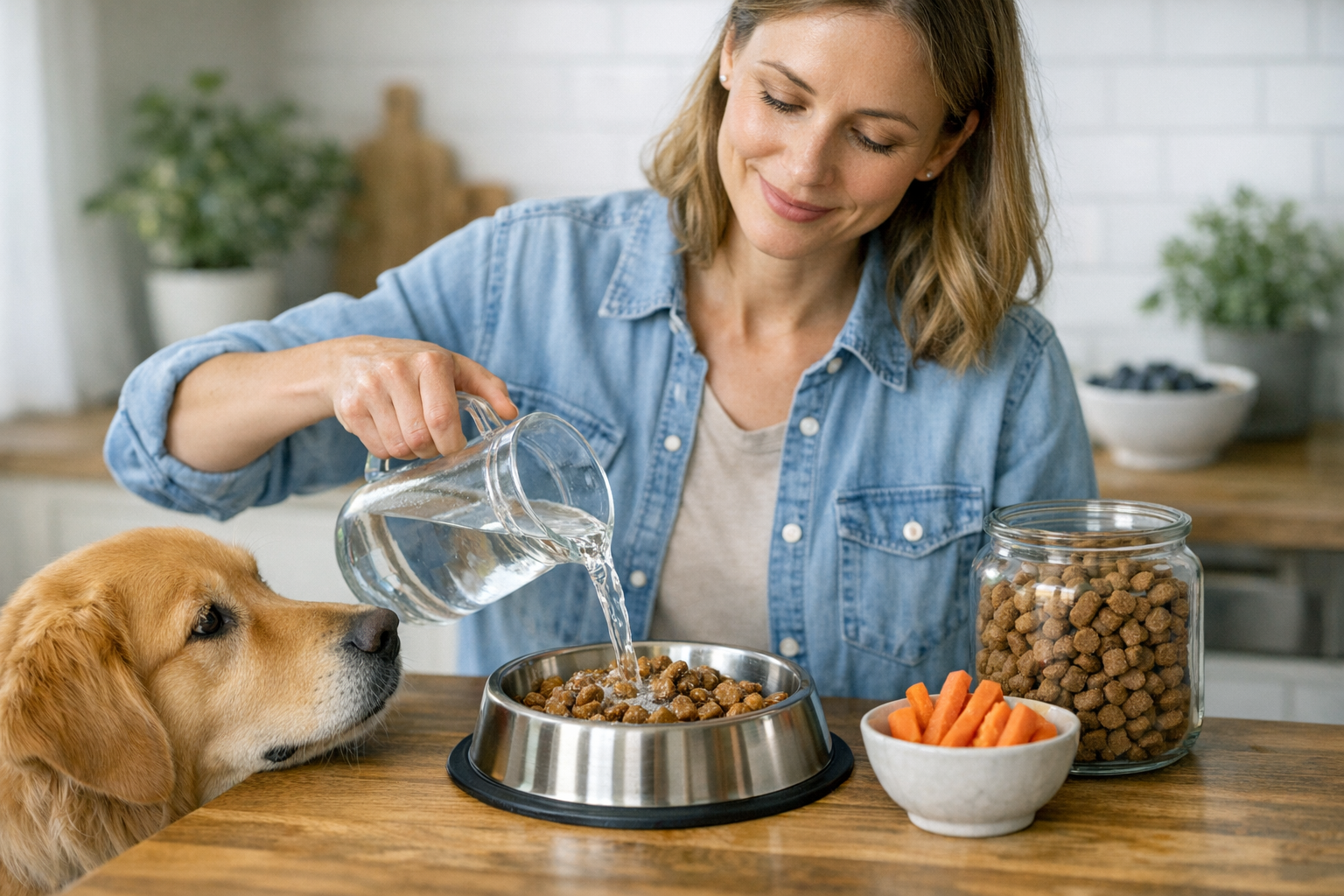
You are standing over the kitchen counter with a bag of dry kibble. Your dog is waiting patiently at your feet. You might wonder if those hard, crunchy pellets are enough on their own. It is a common question we hear at BaxterBoo from pet parents who want to make mealtime better. If you are exploring meal options, our dog food collection is a good place to start. Adding water to dry dog food is a simple step that can change your dog's eating experience. It can help with hydration and make the food more appealing to a picky eater. However, there are a few rules to follow to keep the food safe and healthy. This post covers the benefits, the potential risks, and the best ways to moisten your dog's dinner. We want to help you decide if this habit is right for your specific dog.
Quick Answer: Yes, adding water to dry dog food is generally good for most dogs. it improves hydration, aids digestion, and can make the food smell more appetizing to picky eaters. You must serve it immediately to prevent bacteria growth and spoilage.
The Major Benefits of Adding Water
Most dry kibble only contains about 6 to 10 percent moisture. In the wild, a dog's natural diet would have a much higher water content. By adding a splash of water to the bowl, you are bringing that moisture level closer to what their bodies expect. This simple act supports several internal systems.
Improved Hydration
Some dogs are not great at drinking enough water from their bowls. They might be busy playing or just naturally less thirsty. Adding water directly to their food ensures they get a significant amount of fluids twice a day. This is particularly helpful during hot summer months or for active dogs that lose moisture through panting. Proper hydration supports every organ in the body. It helps the blood flow and keeps the skin healthy.
Better Urinary and Kidney Health
The kidneys are responsible for filtering waste from the blood. They need plenty of water to do this job effectively. When a dog is chronically slightly dehydrated, it puts more stress on the kidneys. This can lead to issues like kidney stones or urinary tract infections over time. For cats and dogs alike, more water in the diet means more diluted urine. This makes it easier for their system to flush out minerals that might otherwise form painful stones.
Enhanced Digestion
Kibble is very dense. When a dog eats dry pellets, their stomach has to work hard to break them down. The stomach actually draws moisture from the dog's own body to help soften the food for digestion. If you add water before they eat, you are doing some of that work for them. This can be especially helpful for dogs with sensitive stomachs. It allows the food to move more smoothly through the digestive tract. It may also reduce the chance of gas or discomfort after a meal.
Key Takeaway: Adding water turns a dry, processed meal into a more biologically appropriate, hydrating experience that supports kidney and digestive health.
Helping Your Dog Feel Full
If you have a dog that always seems hungry, water might be your new best friend. Many pet owners struggle with weight management for their dogs. High quality dry food is very nutrient dense. This means the actual volume of food in the bowl might look quite small for a larger dog.
When you add water, the kibble pieces often swell. This increases the physical volume of the meal without adding a single calorie. A "full" stomach sends signals to the brain that the meal is over. This can stop your dog from begging for treats immediately after they finish their dinner. It is a practical way to manage a dog's weight while keeping them satisfied.
Preventing Gulping and Bloat
Some dogs eat like they are in a race. They gulp down dry kibble so fast that they swallow a lot of air. This can lead to a dangerous condition called bloat or Gastric Dilatation-Volvulus. When you add water to the food, it changes the texture. It makes it harder for the dog to simply inhale the pellets. The moisture forces them to lap up the food and water mixture more slowly. This slower pace can be a literal lifesaver for breeds prone to stomach issues.
For the Picky or Senior Eater
As dogs age, their senses can start to fade. A senior dog might not be as interested in their food because they cannot smell it as well as they used to. Dry kibble does not have a very strong scent on its own.
Releasing the Aroma
Adding warm water to dry food acts like a "scent booster." The heat from the water helps release the fats and aromas trapped inside the kibble. This makes the bowl much more enticing for a dog that has lost its appetite. If your dog is recovering from an illness or just seems bored with their food, this trick often works better than switching brands.
Comfort for Dental Issues
Dental health is a major concern for many pet parents. Some dogs have missing teeth, sore gums, or advanced dental disease. Crunching down on hard kibble can be physically painful for them. Softening the food with water makes it easy to chew. It allows a senior dog to get the nutrition they need without the discomfort.
Vet Tip: If your dog suddenly stops wanting to eat hard kibble, it could be a sign of a dental infection or a broken tooth. Consult your veterinarian for a dental exam. Our pet pharmacy also carries prescription diets specifically formulated for oral health if your vet recommends them.
The "Kibble Cleans Teeth" Myth
A common argument against adding water is that dry food cleans a dog's teeth. The idea is that the crunching action scrapes away plaque. However, many experts agree that this is not entirely true. Most dogs swallow kibble whole or break it into only a few pieces. Additionally, kibble is often high in carbohydrates. When these carbs mix with saliva, they can actually form a sticky film that clings to the teeth and contributes to plaque.
While some specific dental diets are engineered to be abrasive, standard kibble does very little for oral hygiene. You are much better off brushing your dog's teeth or using specific dental chews. Do not let the fear of "soft teeth" stop you from hydrating your dog's food.
Potential Downsides and Safety Risks
While adding water is generally great, it does come with some responsibilities. You cannot treat moistened kibble the same way you treat dry kibble.
The Risk of Spoilage
Dry food is shelf stable because the moisture has been removed. Once you add water back in, the clock starts ticking. Bacteria love warm, wet environments. If you leave moistened food out all day, it can quickly become a breeding ground for mold or harmful bacteria. This is especially dangerous for "grazers" who like to take a bite and come back hours later.
Managing the Mess
Let's be honest: wet food is messier than dry food. Dogs with long ears or "beards" might end up with soggy food stuck to their fur. It can also splatter on the floor if your dog is an enthusiastic eater. You will need to wash the food bowl thoroughly after every single meal to prevent slime and bacteria buildup.
Bottom line: Moistened food must be treated like fresh food; serve it immediately and throw away any leftovers after thirty minutes.
How to Add Water Correctly
If you want to start this routine, do not just dump a bucket of water in the bowl. Following a few simple steps will make the transition easier for your dog's stomach.
Step 1: Use the right ratio.
Start with about one part water to two parts kibble. For example, if you feed one cup of food, add half a cup of water. You can adjust this based on your dog's preference. Some dogs like a "soup" while others just want a light glaze.
Step 2: Choose the right temperature.
Use warm water, not boiling water. Boiling water can destroy some of the vitamins in the food and can burn your dog's mouth. Warm water is best for releasing the aroma and softening the pieces quickly.
Step 3: Let it soak.
Wait about two to five minutes before putting the bowl down. This gives the kibble time to absorb the moisture. It prevents the water from just sitting at the bottom of the bowl while the top stays dry.
Step 4: Watch for spoilage.
If your dog does not finish the meal within 20 to 30 minutes, pick the bowl up. Do not leave it sitting out on the floor.
What to Use Instead of Plain Water
If you want to add even more nutrition, you do not have to stick to plain tap water. Many pet owners use other liquids to entice their dogs. If you want more ideas for mixing and topping meals, our food topper collection is a helpful next stop.
- Bone Broth: This is packed with collagen and minerals. Make sure it is specifically made for dogs. Human broth often contains onions and garlic, which are toxic to dogs.
- Goat Milk: This is very easy for dogs to digest and provides a boost of probiotics for gut health.
- Wet Food Toppers: You can mix a spoonful of canned food with water to create a gravy. We carry a wide variety of canned options at BaxterBoo that pair perfectly with dry kibble.
Transitioning Picky Eaters
Some dogs are suspicious of changes. If your dog looks at the wet kibble like it is a foreign object, start very slowly. On the first day, just add a tablespoon of water. Gradually increase the amount over a week. This gives them time to get used to the new texture. Most dogs eventually grow to prefer the moistened version because of the increased smell and flavor. If you want a related read, our guide to helping picky dogs eat dry food covers more ways to encourage mealtime interest.
Special Considerations for Life Stages
Different dogs have different needs when it comes to their food consistency.
Puppies
When puppies are transitioning from milk to solid food, their teeth are small and their jaws are weak. Adding water is almost essential during this stage. It creates a "mush" that is easy for them to lap up. It also ensures they stay hydrated during a period of rapid growth.
Senior Dogs
As mentioned, seniors benefit the most from the softer texture. However, they are also more prone to kidney issues. Increasing water intake is one of the best things you can do for an aging dog's internal health. If your senior dog is on a prescription diet for a condition like kidney disease or heart issues, adding water is usually encouraged. For age-specific meals, our senior dog food collection can help you compare options built for this stage of life.
Dogs on Prescription Diets
If your vet has prescribed a specific food for a health condition, always ask them before adding anything to it. Some prescription kibbles are designed to work in a very specific way within the digestive system. At our pharmacy, we work closely to provide prescription diets and therapeutic options. Our team is always happy to help you find the specific products your vet has recommended for chronic conditions.
Vet Tip: If you notice your dog is suddenly drinking significantly more water than usual, or if they seem excessively thirsty even after you add water to their food, schedule a checkup. This can be an early sign of diabetes or kidney issues that require a professional diagnosis.
Common Mistakes to Avoid
Even though it seems simple, a few common errors can ruin the benefits of adding water.
- Using cold water: Cold water does not release the aroma and takes a long time to soften the kibble. This can leave the center of the pellet hard and the outside slimy.
- Adding too much at once: Turning the meal into a swimming pool can be overwhelming. Start with a small amount.
- Leaving the bowl out: This is the biggest safety risk. If you are a person who leaves a bowl of food out all day for a "free-feeding" dog, you cannot add water to that food.
- Ignoring the bowl's cleanliness: Moist food leaves behind a residue. If you do not scrub the bowl with soap and water daily, a biofilm of bacteria will form.
Hydration and the BaxterBoo Community
At BaxterBoo, we believe that the best way to care for your pet is to understand their unique needs. We have been in business since 2006, and we have seen how small changes in a daily routine can lead to big improvements in a dog's quality of life. Whether you are shopping for a new puppy or looking for ways to keep a senior dog comfortable, we are here to provide the gear and the guidance you need.
Our warehouse in Vernon Hills is full of products designed to make mealtime easier. From slow-feed bowls that work perfectly with moistened kibble to high-quality bone broths and toppers, we carry over 500 brands that we trust for our own pets. We also offer an Autoship programme that gives you a discount on your first order and a free MVP Gold membership. This ensures you never run out of your dog's favorite food or the supplies you need to keep them healthy.
Final Thoughts
Adding water to dry dog food is a simple, cost-effective way to improve your pet's health. It supports their kidneys, helps them digest their food more easily, and can even help them maintain a healthy weight. While it requires a bit more cleanup and attention to food safety, the benefits for your dog's long-term wellness are well worth the effort.
- Start with warm water to release healthy aromas.
- Soak for a few minutes to soften the dense kibble.
- Always wash the bowl after every meal.
- Consult your vet if your dog's appetite or thirst changes suddenly.
Key Takeaway: Moistening kibble is a great way to support hydration and digestion, especially for puppies and seniors. Just remember to serve it fresh and keep the bowl clean.
If you are looking for specific toppers, bone broths, or prescription diets to help your dog thrive, visit our MVP Rewards programme or check out our pharmacy. We are dedicated to providing everything you need for a happy, hydrated pet.
FAQ
Does adding water to kibble cause bloat?
Actually, for many dogs, it may help prevent the gulping that leads to bloat. By softening the food and creating a more textured meal, it forces dogs to eat more slowly. However, if your dog is a breed highly prone to bloat, you should always discuss feeding techniques and bowl heights with your veterinarian.
How long should I let the water soak in the dog food?
A soak time of two to five minutes is usually perfect. This is long enough for the warm water to penetrate the hard outer shell of the kibble and release the flavors without turning the entire meal into a featureless mush. If your dog has severe dental issues, you can let it soak for up to ten minutes for a softer consistency.
Can I add water to my dog's food if they are a "grazer"?
No, it is not recommended to add water if your dog likes to eat small amounts of food throughout the day. Moistened kibble can grow bacteria or mold if left at room temperature for more than an hour. If you want to add water, you should transition your dog to a scheduled feeding routine where they eat their meal in one sitting.
Is it better to use chicken broth instead of water?
Low-sodium, dog-specific bone broth can be a great alternative to water because it adds extra nutrients like collagen. However, you must avoid human-grade canned broths or soups. These often contain high levels of salt, onions, and garlic, all of which can be dangerous or even toxic to your dog.






