
 Save 15% on your 1st Autoship learn more

 Email us
 Live Chat
 FAQs
FAQs





Introduction
You are standing in your kitchen, watching your dog sniff at their bowl of dry kibble before walking away with a sigh. Perhaps you have a senior dog who seems to struggle with those hard nuggets, or you are simply worried about their daily water intake during a hot summer afternoon. At BaxterBoo, we hear these concerns from pet owners every day who want to know if a simple splash of water can improve their dog's mealtime experience. Adding water to dry dog food is not only okay, but it is often a highly recommended practice for boosting hydration and making meals more enticing. This guide will walk you through the benefits, the proper ratios, and the safety precautions you need to take to keep your dog healthy and satisfied. Adding moisture can transform a boring meal into a hydrating feast while supporting long term wellness.
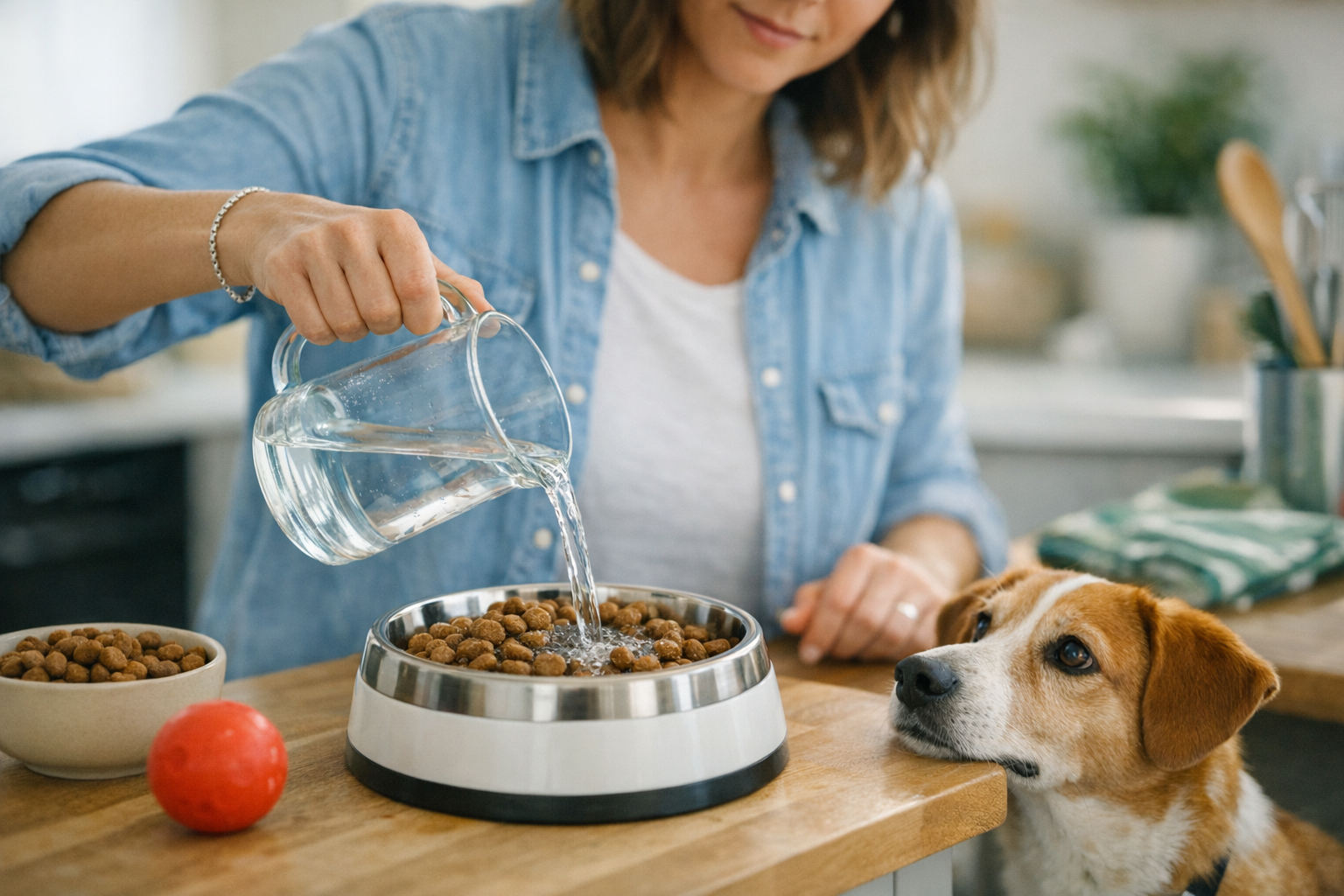
Quick Answer: Yes, it is perfectly safe and often beneficial to add water to dry dog food. It improves hydration, helps with digestion, enhances aroma for picky eaters, and makes kibble easier for senior dogs or puppies to chew.
The Benefits of Adding Water to Kibble
Adding water to your dog's food bowl serves several purposes beyond just changing the texture. Most dry dog foods are incredibly efficient for storage and cost, but they are lacking in one major area: moisture. Standard kibble usually contains only about 6 to 10 percent water. In the wild, a dog's natural diet would consist of much higher moisture levels, often closer to 70 percent. By adding water back into the bowl, you are helping to bridge that gap.
Improved Hydration and Kidney Function
Many dogs are "lazy drinkers" who do not visit the water bowl as often as they should. This can lead to chronic low level dehydration, which puts a significant strain on the kidneys and urinary system. When you add water directly to the food, you ensure your dog is taking in fluids with every single bite.
This is especially helpful for dogs prone to urinary stones or infections. Increased fluid intake helps flush the bladder and kidneys regularly. If your dog has a history of urinary issues, our pharmacy for dogs carries specialized prescription diets and wellness items that can help support those therapeutic goals.
Enhanced Palatability for Picky Eaters
If you have a dog that turns their nose up at plain dry food, water might be the simplest solution. Adding warm water to kibble triggers a release of fats and aromas that are otherwise "locked" inside the hard pellet. The scent becomes much stronger and more appealing to a dog’s sensitive nose.
This technique is a staple for pet owners dealing with dogs recovering from illness or those who have lost their appetite due to age. A warm, slightly mushy meal is often far more tempting than a bowl of cold, hard crackers.
Key Takeaway: Adding water to kibble mimics the moisture content of a more natural diet, supporting kidney health and making the food more aromatic for picky eaters.
Supporting Different Life Stages
The physical texture of dry kibble can be a barrier for certain dogs. While young, healthy adults usually have no trouble crunching through their meals, puppies and seniors often have different requirements.
Helping Puppies Transition to Solids
When puppies move from mother’s milk or milk replacer to solid food, their teeth and jaws are still developing. Hard kibble can be intimidating and even painful for their small mouths. By soaking the kibble in warm water, you create a soft mash that is easy for them to lap up. This ensures they get the concentrated nutrition found in puppy formulas without the physical struggle of chewing.
For readers in that stage of life, our puppy food category is a practical place to start.
Comfort for Senior Dogs
Senior dogs frequently deal with dental issues, such as missing teeth, gum sensitivity, or receding jawbones. Crunching on hard kibble can be a chore for them. Softening the food with water allows them to continue eating the dry food they enjoy without the discomfort. Additionally, senior dogs are at a higher risk for dehydration and kidney decline, making that extra water even more vital for their golden years.
If you are also thinking about texture and chewability, our slow feed dog bowls can be a useful next step for dogs who need a little help pacing meals.
Improving Digestion and Weight Management
Adding water does more than just help the food go down. It also changes how the food interacts with the digestive system.
Preventing Bloat and Fast Eating
Some dogs "inhale" their food, swallowing kibble whole without chewing. This can lead to digestive upset or a dangerous condition known as bloat (GDV). Adding water to the bowl can naturally slow down a fast eater. The moisture creates a more voluminous meal that requires more effort to consume, preventing them from gulping air along with their food.
For more on that topic, our guide to dogs prone to bloat is a helpful read.
Managing Weight Through Satiety
If your dog is on a weight loss plan, they might act like they are constantly starving. Kibble is very nutrient dense, meaning a small volume of food contains a lot of calories. By adding water, you increase the physical volume of the meal without adding a single calorie. This helps your dog feel "fuller" after their meal, which can reduce begging and help them stick to their diet.
Vet Tip: If your dog is a "gulper" who eats too fast, adding water can help slow them down, but you should also consult your vet about using a slow feeder bowl to further reduce the risk of bloat.
Safety and Storage: Avoiding Spoilage
While adding water is beneficial, it does introduce a new set of rules for food safety. Dry kibble is shelf stable because it lacks moisture. Once you add water, you have essentially turned it into a fresh food product that can spoil quickly.
The 30 Minute Rule
Bacteria love moisture and warmth. If you add warm water to kibble and leave it sitting out, it becomes a breeding ground for pathogens. You should never leave moistened kibble in the bowl for more than 30 to 60 minutes. If your dog has not finished their meal within that timeframe, you must discard the remains and wash the bowl thoroughly.
Dental Health Considerations
There is a common belief that dry kibble cleans a dog's teeth through mechanical abrasion. While some specific dental diets are designed to do this, standard kibble often crumbles too quickly to provide much benefit. However, adding water does remove any remaining "crunch" that might have helped scrape away a tiny amount of plaque. If you choose to hydrate your dog's food, it is even more important to maintain a regular dental care routine, such as brushing or using dental chews.
If dental upkeep is top of mind, our dog dental care category is a sensible place to shop next.
How to Properly Hydrate Your Dog's Food
To get the most out of this practice, you should follow a consistent method. Using the right temperature and ratio will ensure the food is appetizing and safe.
Step 1: Measure the portion. / Place your dog's standard amount of dry kibble into a clean stainless steel or ceramic bowl.
Step 2: Use warm water. / Avoid boiling water, as it can destroy sensitive vitamins and minerals in the food. Use warm, filtered water to help release the aromas.
Step 3: Follow the ratio. / A good starting point is one part water to every two or three parts kibble. For a soupier consistency, you can use a 1:1 ratio.
Step 4: Let it soak. / Give the bowl about five to ten minutes to sit. This allows the water to penetrate to the center of the kibble, making it soft throughout rather than just wet on the outside.
Step 5: Stir and serve. / Give the mixture a quick stir to distribute the moisture and any "gravy" that has formed before letting your dog eat.
Healthy Alternatives to Plain Water
If you want to provide even more nutrition, you do not have to stick to plain tap water. There are many liquid toppers that can provide extra protein, electrolytes, and joint support.
- Bone Broth: Products like those from The Honest Kitchen or Brutus Broth are specifically made for dogs. They are low in sodium and high in collagen, which supports joint health.
- Goat Milk: Often called "universal milk," goat milk is easy for dogs to digest and provides a boost of probiotics and healthy fats.
- Canned Food Toppers: Mixing a spoonful of wet food with water creates a flavorful gravy that coats every piece of kibble.
Our warehouse team at BaxterBoo stocks a variety of these mixers. Using our Autoship programme for these toppers is a great way to ensure you always have a way to make mealtime exciting while saving money on every order.
When to Consult Your Veterinarian
While adding water is generally safe, there are times when you should talk to a professional first. If your dog is on a therapeutic or prescription diet, the formulation is very precise.
Some prescription foods, such as those for severe allergies or specific metabolic issues, rely on a very specific concentration of nutrients. Adding too much water could theoretically dilute the effectiveness of certain medications if they are mixed into the food. Through our pharmacy for dogs, we provide many of these specialized diets from brands like Royal Canin and The Honest Kitchen. Always ask your vet if hydrating these specific formulas is recommended for your dog's unique health profile.
Bottom line: Hydrating kibble is a simple, effective way to improve your dog's health, provided you maintain strict bowl hygiene and watch for spoilage.
Summary
Adding water to dry dog food is an easy and cost effective way to improve your dog’s daily life. It supports vital organ function by increasing fluid intake, helps senior dogs eat comfortably, and can even assist with weight management by helping your dog feel full. Just remember to use warm (not hot) water, stick to a safe soaking time, and always pick up the bowl after an hour to prevent bacterial growth.
Whether you are trying to help a picky eater or simply want to support your dog’s long term kidney health, this small change in your routine can make a big difference. For those looking to upgrade from plain water, consider exploring our collection of bone broths and goat milks. We also recommend joining our MVP Rewards programme, which allows you to earn points on every purchase of food and toppers, making it easier to provide the best for your pet.
FAQ
Does adding water to dry dog food cause dental problems?
Adding water does not directly cause dental disease, but it does remove the slight abrasive benefit that hard kibble provides. If you soften your dog's food, you should be extra diligent about regular teeth brushing and providing dental treats to manage plaque and tartar buildup.
Can I add cold water instead of warm water?
You can use cold water, but it will take much longer to soften the kibble and will not release the fats and aromas as effectively as warm water. Warm water is generally preferred because it makes the meal more appetizing and speeds up the soaking process.
How much water should I add to a cup of dog food?
A common recommendation is to add about one quarter to one half cup of water for every one cup of dry food. You can adjust this based on your dog's preference; some dogs like a thick mash, while others prefer their kibble floating in a "soup."
Can adding water to kibble help prevent bloat?
It can help by slowing down dogs that tend to eat too quickly, as the added volume and changed texture make it harder to gulp. However, bloat is a complex condition with many factors, so while hydration helps, it is not a guaranteed prevention method on its own.






