
 Save 15% on your 1st Autoship learn more

 Email us
 Live Chat
 FAQs
FAQs





Introduction
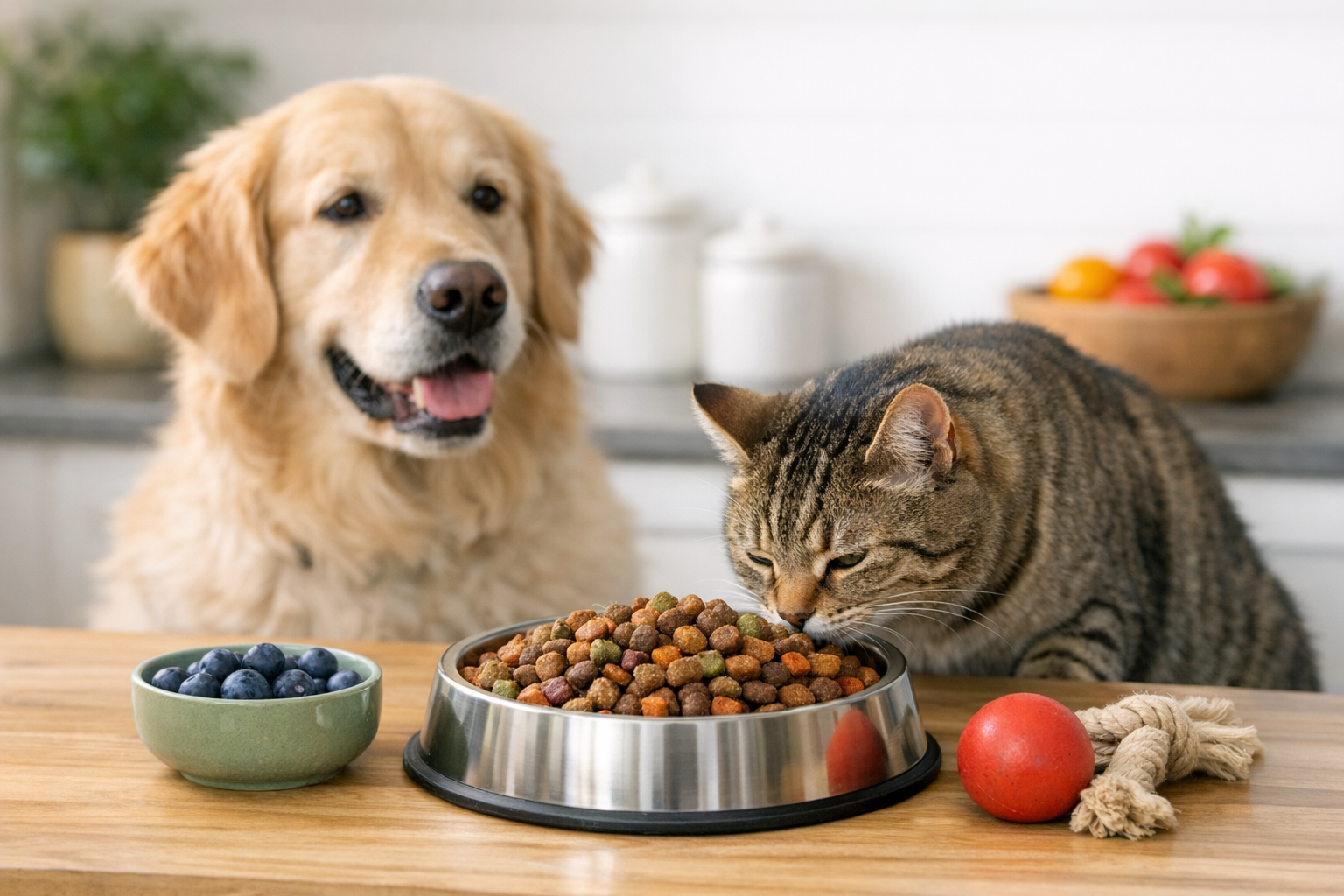
Feeding time in a house with both cats and dogs often feels like a balancing act. You might find yourself staring at two different bags of kibble and wondering if there is a simpler way. Many pet owners look for a single dry food that meets the needs of every four legged family member to save on storage space and shopping trips. At BaxterBoo, we understand the desire for convenience in a busy household. This article explores whether a universal pet food actually exists and why nutritional requirements vary so much between species. We will also look at the specific risks of sharing meals and how to manage a multi pet kitchen. Understanding these biological differences is the first step in keeping both your dog and cat thriving, and it starts with the basics in our cat food category.
Quick Answer: While rare products like Wysong Fundamentals are formulated for both species, most pet foods are not interchangeable. Cats are obligate carnivores with specific needs for taurine and high protein, while dogs are omnivores who require a different nutrient balance.
The Biological Divide Between Species
To understand if a shared food is a good idea, you have to look at the biology of your pets. Dogs and cats may live together in our homes, but their internal chemistry is worlds apart. Dogs are classified as scavenging omnivores. This means their bodies are designed to process a wide variety of nutrients from both animal and plant sources. They can adapt to different protein levels and even produce certain vitamins on their own, which is why our dog food category includes such a broad range of formulas.
Cats are obligate carnivores. This term means they absolutely must eat meat to survive. Their bodies have lost the ability to manufacture several key nutrients that dogs can create internally. A cat’s metabolism is strictly tuned to process animal tissues. If a cat does not get these specific animal based nutrients, their health can decline rapidly.
Because of these differences, pet food manufacturers usually create two very different recipes. Dog food often contains more carbohydrates and plant based fibers. Cat food is significantly denser in protein and fats. Using one food for both animals usually means one pet is getting too much of something while the other is not getting enough.
Nutritional Requirements Comparison
When you look at the back of a bag of kibble, you see a long list of vitamins and minerals. For a food to be safe for both species, it must hit the minimum requirements for the more demanding pet without harming the other.
| Nutrient | Dog Requirement | Cat Requirement |
|---|---|---|
| Minimum Protein | 18 percent | 26 percent |
| Minimum Fat | 5.5 percent | 9 percent |
| Taurine | Not required in diet | 0.1 percent (dry) |
| Vitamin A | Can convert from plants | Must come from animal source |
| Arachidonic Acid | Can produce internally | Must come from animal source |
As you can see from this table, cats require much higher levels of almost everything. They also need specific amino acids like taurine and arginine in much higher quantities. A food meant for both would need to be very high in protein and fat to satisfy the cat. While this might be fine for some active dogs, it can lead to health issues for others.
The Wysong Exception
There is at least one brand that has tackled the challenge of a universal food. We carry brands like Ketogenic Pet Foods that approach pet nutrition from a different angle. Their Keto-Kibble™ Protein Cat & Dog Food is a limited ingredient dry food designed for both dogs and cats. They argue that in the wild, both species would eat similar prey animals like birds or small rodents.
Ketogenic Pet Foods Keto-Kibble uses a high protein base, often around 40 percent. It includes organic chicken and brown rice along with added taurine and micronutrients. By making the food meet the strict requirements of a cat, it becomes a high protein option for a dog. This can be a practical choice for owners who want one bag of food.
However, this approach is not for every pet. A high protein and high fat diet may be too rich for a senior dog or a dog prone to weight gain. It is a specialized solution that requires careful monitoring of your pets' body condition. Most mainstream brands still recommend keeping diets separate to ensure precision.
Key Takeaway: Shared foods like Wysong Fundamentals work by meeting the higher nutritional thresholds of cats, making the food safe for dogs but potentially too calorie dense for some.
Why "All Life Stages" is Not "All Species"
It is easy to get confused by the labels on pet food bags. You will often see the phrase "All Life Stages." This means the food is formulated to meet the nutritional needs of a growing puppy or kitten as well as an adult or senior. It does not mean the food is for both dogs and cats, which is why shoppers looking for flexibility often turn to our Autoship programme instead of assuming one bag works for every pet.
An "All Life Stages" dog food is still only for dogs. It contains the calcium and phosphorus levels needed for bone growth in puppies. Similarly, an "All Life Stages" cat food has the high taurine levels kittens need. Never assume that a label about life stages applies across different species.
Using a puppy food for an adult dog can lead to obesity because the calorie count is so high. Using a dog food for a cat, even if it is for "All Life Stages," can lead to life threatening deficiencies. Always look for the specific animal silhouette or the words "Dog Food" or "Cat Food" on the packaging.
The Dangers of Cats Eating Dog Food
If a cat exclusively eats dog food, the results can be devastating. The most famous issue is taurine deficiency. Dogs can make their own taurine, so many dog foods do not add extra. Cats cannot make it. Without enough taurine, a cat can develop dilated cardiomyopathy. This is a condition where the heart becomes thin and weak. It can also lead to permanent blindness through retinal degeneration.
Cats also have a unique need for Vitamin A. Dogs can turn beta carotene from carrots or potatoes into Vitamin A. Cats lack the enzyme to do this. They need preformed Vitamin A that only comes from animal tissues like liver. A cat eating dog food may eventually suffer from a dull coat, skin weakness, and poor night vision.
Another critical nutrient is arachidonic acid. This is an essential fatty acid found in animal fats. Dogs can produce it from other fats, but cats cannot. It is vital for a cat's inflammatory response and blood clotting. A cat on a dog food diet is essentially starving for these specific chemicals even if they are eating a full bowl every day.
Vet Tip: If your cat has accidentally eaten dog food for more than a few days, watch for signs of lethargy or stumbling. Consult your veterinarian immediately to check for nutritional deficiencies or heart health issues.
What Happens When Dogs Eat Cat Food?
Dogs usually love cat food. It smells stronger and tastes meatier because of the high fat content. While a single stolen bite is rarely an emergency, making cat food a dog's primary diet is a bad idea. The most immediate risk is weight gain. Cat food is much more calorie dense than dog food. A dog eating cat food every day will quickly become overweight.
The high fat content also poses a risk for pancreatitis. This is a painful inflammation of the pancreas that can be life threatening. Some dogs are very sensitive to rich foods. A bowl of cat food can trigger a bout of vomiting, diarrhea, and intense abdominal pain.
Over the long term, the high protein levels in cat food can put unnecessary strain on a dog's kidneys and liver. This is especially true for senior dogs. While young, active dogs might handle the extra protein for a while, it is not a balanced long term strategy for canine health.
Tips for Managing a Multi Pet Household
If you decide to keep your pets on species specific diets, feeding time can be a challenge. You have to prevent the dog from vacuuming up the cat's dinner. You also have to make sure the cat doesn't get picky and hold out for the dog's food.
Step 1: Set a schedule. / Stop free feeding your pets. Put the bowls down for twenty minutes and then pick them up. This teaches your pets to eat their own food when it is offered.
Step 2: Use height to your advantage. / Feed your cat on a sturdy counter, a tall cat tree, or a dedicated feeding shelf. Most dogs cannot reach these areas, which keeps the cat's food safe.
Step 3: Create separate zones. / Feed the dog in a crate or behind a baby gate. This gives the cat peace to eat without feeling rushed by a hungry dog.
Step 4: Consider technology. / Use microchip activated feeders. These bowls only open for the specific pet programmed into the system. They are excellent for preventing food theft.
The Role of Prescription Diets
Sometimes the question of shared food comes up because of a health condition. If both your dog and cat have kidney issues or skin allergies, you might hope for one diet to rule them all. However, medical needs make species specific nutrition even more important. A prescription kidney diet for a dog has very different mineral ratios than one for a cat.
Our pet pharmacy at BaxterBoo offers a wide range of FDA approved prescription foods and medications. Through our partnership with Pet's Choice, we can help you manage chronic conditions like urinary crystals, obesity, or food sensitivities. These therapeutic diets are designed by veterinary nutritionists to treat specific illnesses.
Mixing up prescription diets can be dangerous. A cat with urinary issues needs a food that carefully controls pH levels and magnesium. A dog's urinary diet will not have the correct balance for a feline's unique urinary tract. Always follow your veterinarian's specific instructions for medical diets and medications.
Bottom line: Prescription diets are highly specialized tools for health management and should never be shared between different species.
Transitioning Your Pets Safely
If you find a food like Wysong that is cleared for both species, you cannot switch overnight. A sudden change in diet can cause major digestive upset. This is true whether you are moving to a shared food or just switching brands of dog food.
Start by mixing about 10 percent of the new food into the old food. Watch your pets for any signs of soft stools or gas. Over the course of seven to ten days, slowly increase the amount of new food while decreasing the old. This gives the gut bacteria time to adjust to the new protein and fiber levels.
During this transition, pay close attention to your dog's energy levels and your cat's appetite. If the cat refuses the new shared food, do not try to starve them into eating it. Cats can develop liver issues if they go without food for even a few days. If you see any persistent vomiting or diarrhea, go back to the original food and talk to your vet.
Making the Right Choice for Your Home
While the idea of one dry food for both dogs and cats is tempting, it is rarely the best choice for every pet. The biological requirements of an obligate carnivore and an omnivore are simply too different for most "one size fits all" recipes. Most pet owners find that the small inconvenience of two bags of food is worth the peace of mind that comes with proper nutrition.
We carry over 500 trusted brands at our warehouse, from premium grain free options to specialized health formulas. Whether you choose a rare universal food or stick to species specific kibble, the goal is a long and healthy life for your pets. Keeping them at a healthy weight and ensuring they get their essential amino acids will save you on vet bills in the long run.
If you are looking to simplify your routine, consider our Autoship programme. You can set different delivery schedules for your dog and cat food so you never run out. This gives you the convenience of a single delivery without compromising the specific health needs of your pets.
Key Takeaway: Quality nutrition is the foundation of pet health, and for most households, that means serving species specific meals.
Summary of Feeding Guidelines
- Cats need meat: Ensure their food has high protein and added taurine.
- Dogs need balance: Look for a mix of proteins, healthy fats, and digestible carbohydrates.
- Watch the calories: Cat food is often too rich for dogs and can cause rapid weight gain.
- Safety first: Never let a cat live on dog food, as it lacks the vitamins they need to survive.
- Consult the experts: Talk to your vet before switching to a shared diet or a prescription food.
Our team at BaxterBoo is here to help you find the right gear and nutrition for your multi pet home. From elevated feeders that keep dogs out of the cat's bowl to the best premium kibble on the market, we handpick every product we stock. We invite you to explore our selection of MVP Rewards savings and see why we have been a trusted name in pet care since 2006.
Bottom line: Most pets do best on food designed specifically for their species, but high quality shared options exist for specific situations.
FAQ
Can my dog eat cat treats instead of dog treats?
Most cat treats are very small and low in calories, so an occasional treat from our cat treats category is usually safe for a healthy dog. However, because cat treats are very rich in protein and fat, you should not give them in large quantities. Always ensure that treats make up less than 10 percent of your dog's daily calorie intake to prevent weight gain or digestive upset.
What should I do if my cat refuses to eat cat food and only wants the dog's food?
Cats can be very stubborn, but eating dog food long term will lead to serious health problems. Try mixing a small amount of wet cat food or a topper into their dry cat food to make it more appealing. You should also feed your pets in separate rooms so the cat is not distracted or tempted by the dog's bowl. If the pickiness continues, consult your vet to rule out dental issues or other health concerns.
Are there any human foods that both my dog and cat can share as a snack?
Yes, there are several plain, cooked foods that are safe for both species in moderation. Unseasoned chicken breast, boiled white fish, and plain scrambled eggs are excellent high protein snacks for both dogs and cats. Avoid using any onions, garlic, salt, or oils, as these can be toxic or cause stomach issues for your pets.
How can I tell if a shared food is actually meeting my cat's taurine needs?
Check the guaranteed analysis on the back of the pet food bag for a taurine percentage. For dry cat food, it should typically be at least 0.1 percent. If you are using a shared food like Wysong Fundamentals, the label will explicitly state that it meets the AAFCO nutritional profiles for both cats and dogs. For more reading on kibble quality, see Is Dry Dog Food Bad? What You Need to Know About Kibble. When in doubt, ask your veterinarian to review the ingredient list to ensure it is safe for your cat's heart and eye health.
Can I add water to shared dry food to make it easier to eat?
Yes, a little moisture can help with palatability and hydration, especially for picky pets. Just make sure the food still stays species-appropriate and that you follow safe storage habits. If you want more tips for improving a dry diet, read Can I Add Water to My Dogs Dry Food?.






