Save 15% on your 1st Autoship learn more

 Email us
 Live Chat
 FAQs
FAQs





Introduction
You run your hand down your cat’s back and expect a smooth, silky feel. Instead, your palm is covered in loose fur and tiny white flakes. Seeing a cat shedding a lot and dandruff appearing on their coat is a common worry for many pet owners. It often happens quite suddenly, leaving you wondering if it is just a seasonal change or something more serious. At BaxterBoo, we have helped pet parents find the right solutions for skin and coat health since 2006. This post covers the differences between normal dander and dandruff, the common environmental triggers, and the health conditions that cause these symptoms. Understanding the connection between skin health and grooming habits is the best way to help your cat feel comfortable again.
Understanding the Difference Between Dander and Dandruff
Before addressing the flakes, it is important to know what you are looking at. Every cat produces dander. These are microscopic bits of dead skin that shed naturally as part of a healthy skin cycle. You typically cannot see dander with the naked eye. It is the protein in this dander that usually triggers human allergies.
Dandruff is different because it is visible. These are larger, white or yellowish flakes that cling to the fur or fall off onto your furniture. When you notice a cat shedding a lot and dandruff visible along the spine, it means the skin's natural turnover process is out of balance. This is often called seborrhea by veterinarians. It can be dry, which creates those classic white flakes, or oily, which makes the fur feel greasy and clumped.
Quick Answer: Cat dandruff consists of visible skin flakes caused by an imbalance in skin oils or rapid cell turnover. While some shedding is normal, excessive hair loss combined with flakes often signals underlying issues like poor nutrition, low humidity, or medical conditions.
Why Your Cat Is Shedding and Flaky
Shedding and skin health are closely linked. The skin is the largest organ of the body, and it requires a huge amount of protein and nutrients to stay healthy. If a cat is shedding excessively, it is often because the hair follicles are under stress. When the coat is thin or falling out in clumps, the skin underneath is often exposed and dry.
Several factors can lead to this double-trouble of fur loss and flakes. The most common reasons include:
- Low humidity in the home.
- Inadequate grooming by the cat.
- Nutritional deficiencies in their daily diet.
- External parasites like fleas or mites.
- Underlying systemic illnesses.
Environmental Factors and Humidity
Indoor environments can be very taxing on feline skin. During the winter, heaters run constantly and pull moisture out of the air. This creates a dry environment that saps the natural oils from your cat’s skin. If your cat spends a lot of time near a heat vent, you may notice more flakes in that specific area.
In the summer, air conditioning can have a similar drying effect. If the skin becomes too dry, it loses its elasticity and starts to crack and flake. This irritation often leads to more scratching, which pulls out more fur and worsens the shedding.
Managing Your Home Environment
To help your cat, you can take simple steps to improve the air quality in your home.
- Use a humidifier in the rooms where your cat sleeps most often.
- Keep your cat away from direct contact with heating vents.
- Offer multiple water sources to encourage hydration from the inside out.
- Use a damp microfiber cloth to gently wipe down the coat and remove loose flakes.
The Role of Grooming Habits
Cats are famous for their cleanliness, but sometimes they stop grooming as effectively as they should. When a cat stops grooming, dead hair and skin cells stay trapped against the body. This leads to matting, heavy shedding, and a buildup of dandruff.
If your cat is overweight, they may simply be unable to reach certain spots. You will often see a line of dandruff and loose fur right down the center of the lower back and near the base of the tail. This is the hardest area for a rounder cat to reach. Senior cats also struggle with grooming if they have arthritis. Bending and twisting to clean their back can be painful, so they eventually give up.
Key Takeaway: A sudden increase in dandruff often points to a grooming gap. If your cat is older or overweight, they may need your help to maintain the areas they can no longer reach.
You can find brushes, combs, wipes, and other supplies in our cat grooming collection.
Identifying Parasites and Walking Dandruff
Not all flakes are just dry skin. There is a specific parasite called the Cheyletiella mite that is often mistaken for simple dandruff. This condition is actually nicknamed walking dandruff because if you look closely at the flakes, you might see them moving. These mites are highly contagious and cause intense itching and hair loss.
Fleas are another major contributor. Many cats are allergic to flea saliva, a condition known as flea allergy dermatitis. Even one or two bites can cause a massive skin reaction. The cat will lick and bite at their fur, leading to bald spots and flaky, scabby skin.
Our cat pharmacy offers a wide selection of flea and tick preventives to keep these pests away. Through our partnership with Pet's Choice, we can help you fulfill prescriptions for medical-grade parasiticides. Keeping your cat on a year-round preventive is the most effective way to rule out parasites as the cause of shedding and flakes.
Parasite Warning Signs
- Small black specks in the fur (flea dirt).
- Flakes that appear to move or wiggle.
- Red, crusty bumps along the neck or base of the tail.
- Intense, frantic scratching or biting at the skin.
- Thinning hair on the hindquarters.
For additional prevention ideas, read about flea and tick prevention products.
Nutrition and Skin Health
What goes into your cat’s bowl shows up on their coat. Cats are obligate carnivores, meaning they need high-quality animal protein to thrive. If their food is full of fillers or lacks essential fatty acids, the skin is usually the first place to show signs of malnutrition.
Omega-3 and Omega-6 fatty acids are vital for maintaining the skin barrier. These healthy fats help the skin retain moisture and keep the fur shiny and strong. We carry several premium brands like Farmina, Orijen, and Acana that focus on nutrient-dense ingredients. If your cat has a dull coat and constant flakes, it may be time to look at a food with higher levels of fish oils or supplemented biotin.
Explore our cat food selection when reviewing your cat’s daily diet.
Essential Nutrients for a Healthy Coat
- Omega-3 Fatty Acids: Reduces inflammation and moisturizes the skin.
- Vitamin E: Acts as an antioxidant to protect skin cells.
- Zinc: Helps with skin cell turnover and repair.
- Biotin: Strengthens the hair shaft to reduce shedding.
Vet Tip: If you notice skin changes like crusting, redness, or a foul odor along with the dandruff, consult your veterinarian. These can be signs of a secondary bacterial or fungal infection that requires prescription medication from a pharmacy.
When to Consult Your Veterinarian
While many cases of dandruff are environmental, some are symptoms of internal health problems. Conditions like hyperthyroidism, diabetes, and kidney disease can all affect the quality of a cat’s skin and coat. These diseases change the way the body processes nutrients and stays hydrated.
A veterinarian can perform blood tests to see if an internal issue is causing the excessive shedding and flakes. They may also take a skin scraping to check for mites or fungal infections like ringworm. If your cat is diagnosed with a chronic condition, our pharmacy can provide the necessary prescription medications and therapeutic diets. We work directly with your vet through the Pet's Choice partnership to ensure your cat gets exactly what they need for long-term management.
Practical Steps to Reduce Shedding and Flakes
You do not have to wait for a vet appointment to start helping your cat feel better. A consistent grooming routine and the right supplies can make a massive difference in a matter of weeks.
Develop a Brushing Routine
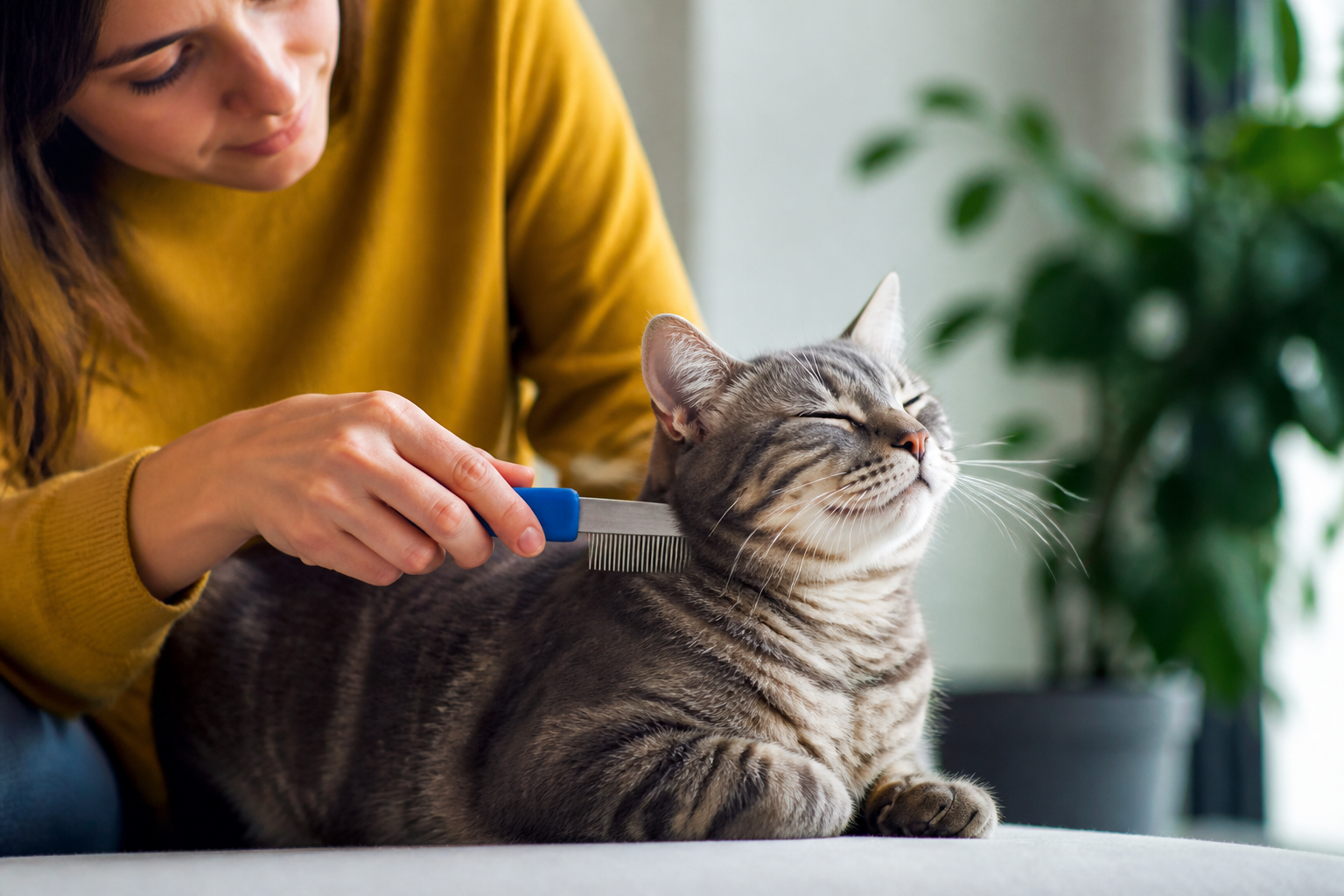
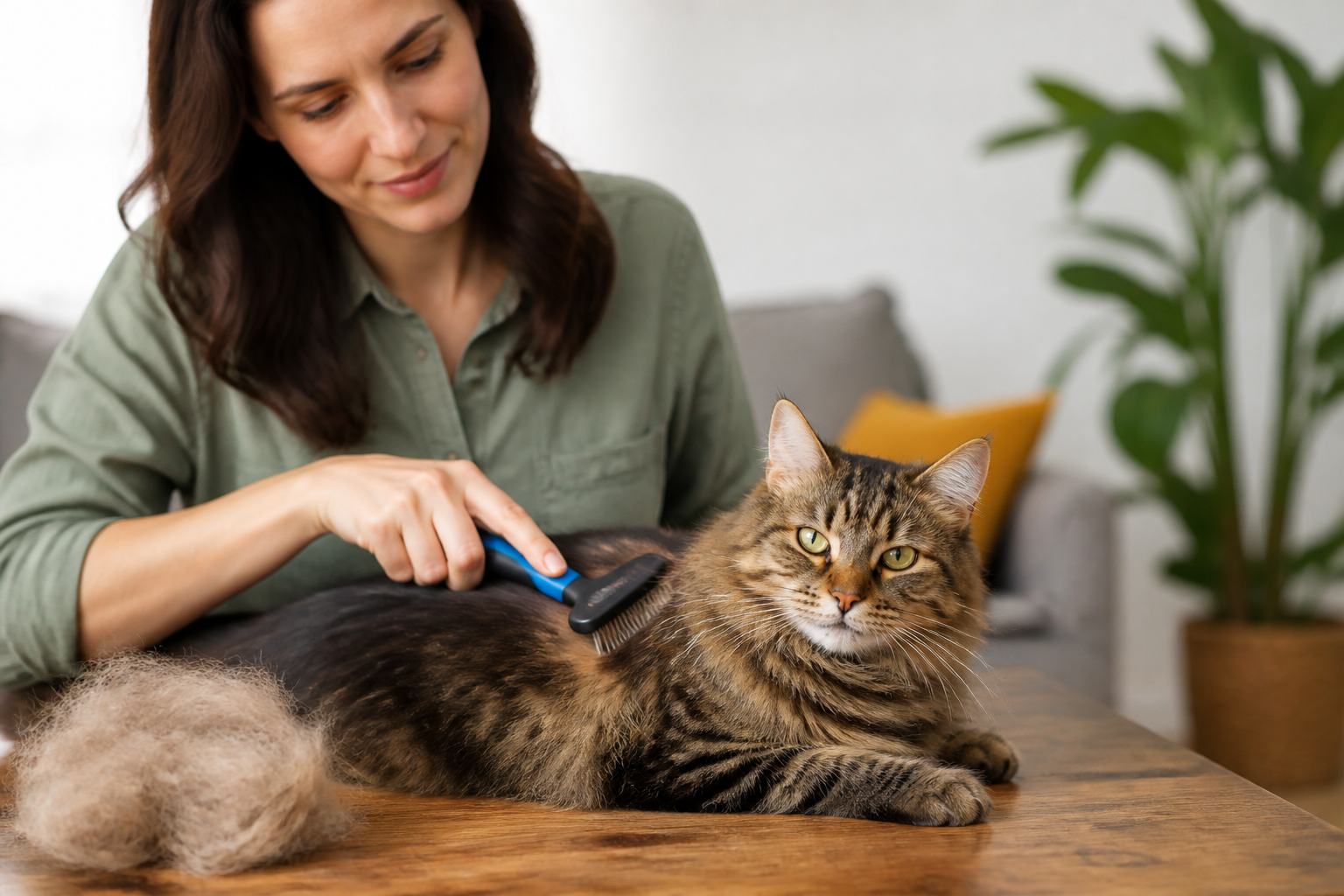
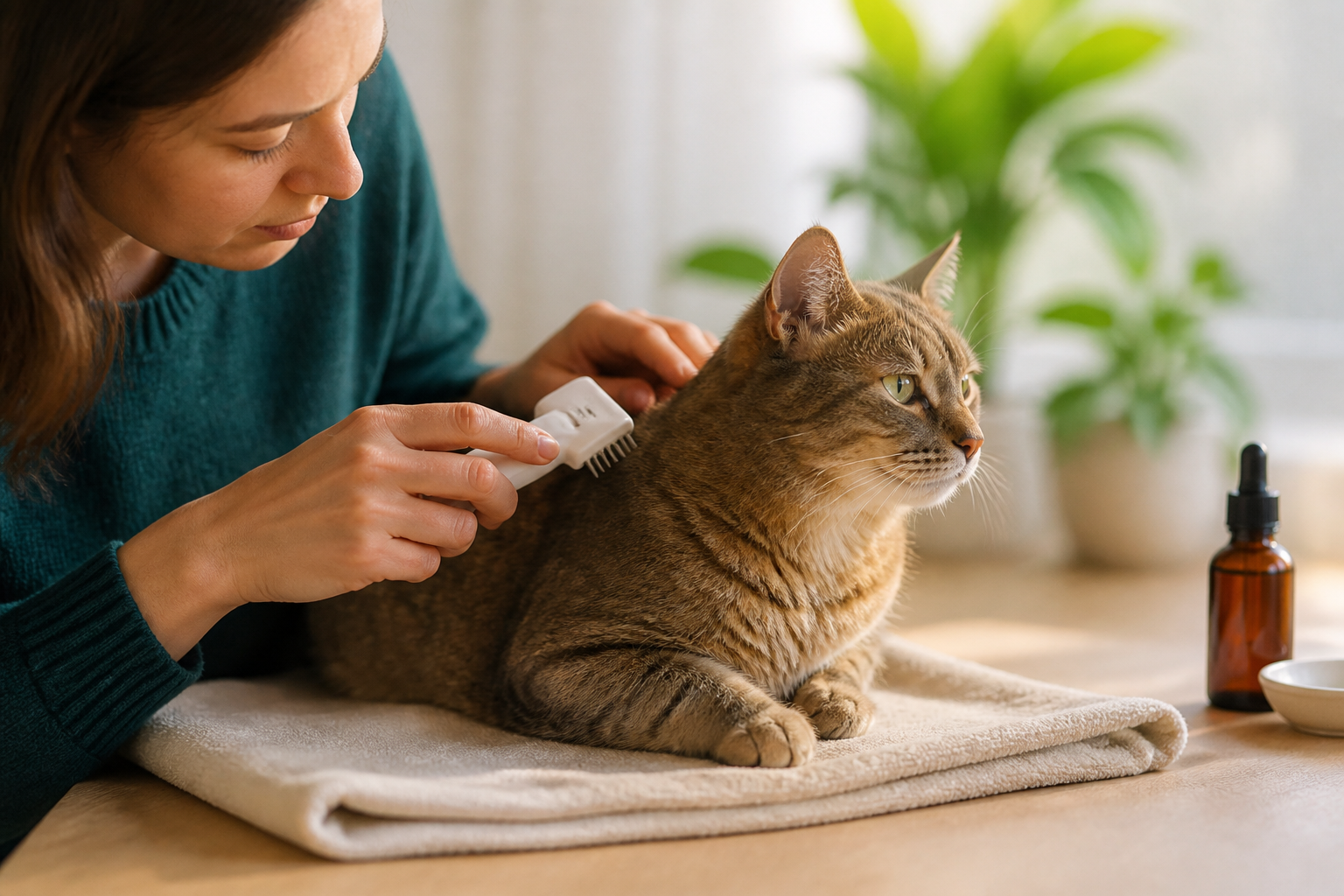
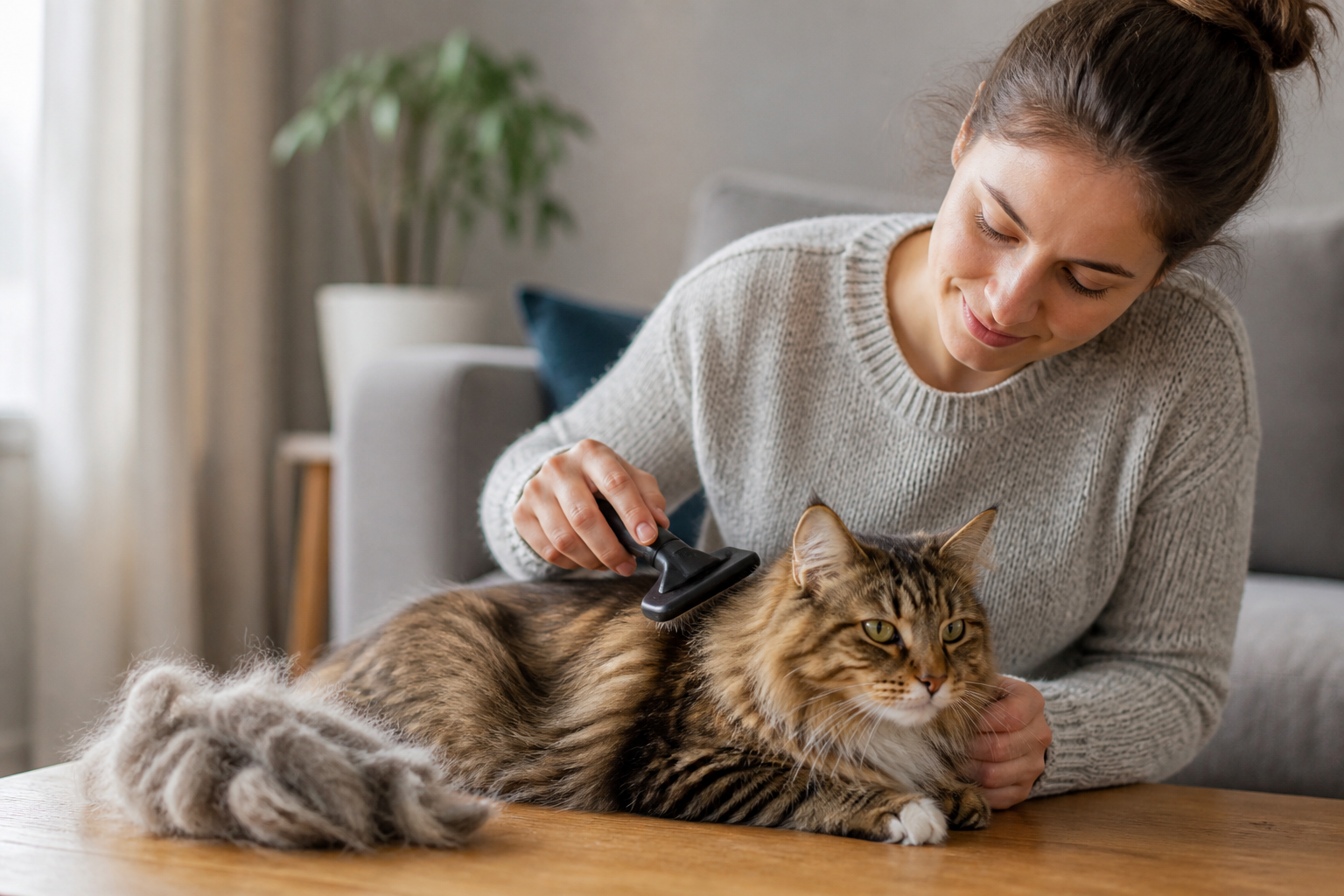
Brushing does more than just remove loose hair. It stimulates the skin and helps distribute natural oils across the entire coat. For short-haired cats, a soft bristle brush or a rubber grooming mitt works well. For long-haired cats, you may need a stainless steel comb to get through the undercoat where flakes and loose fur get trapped.
The U-Groom Combo Brush for Dogs and Cats offers both stainless-steel pins and boar bristles for everyday coat care.
Use Waterless Shampoos and Wipes
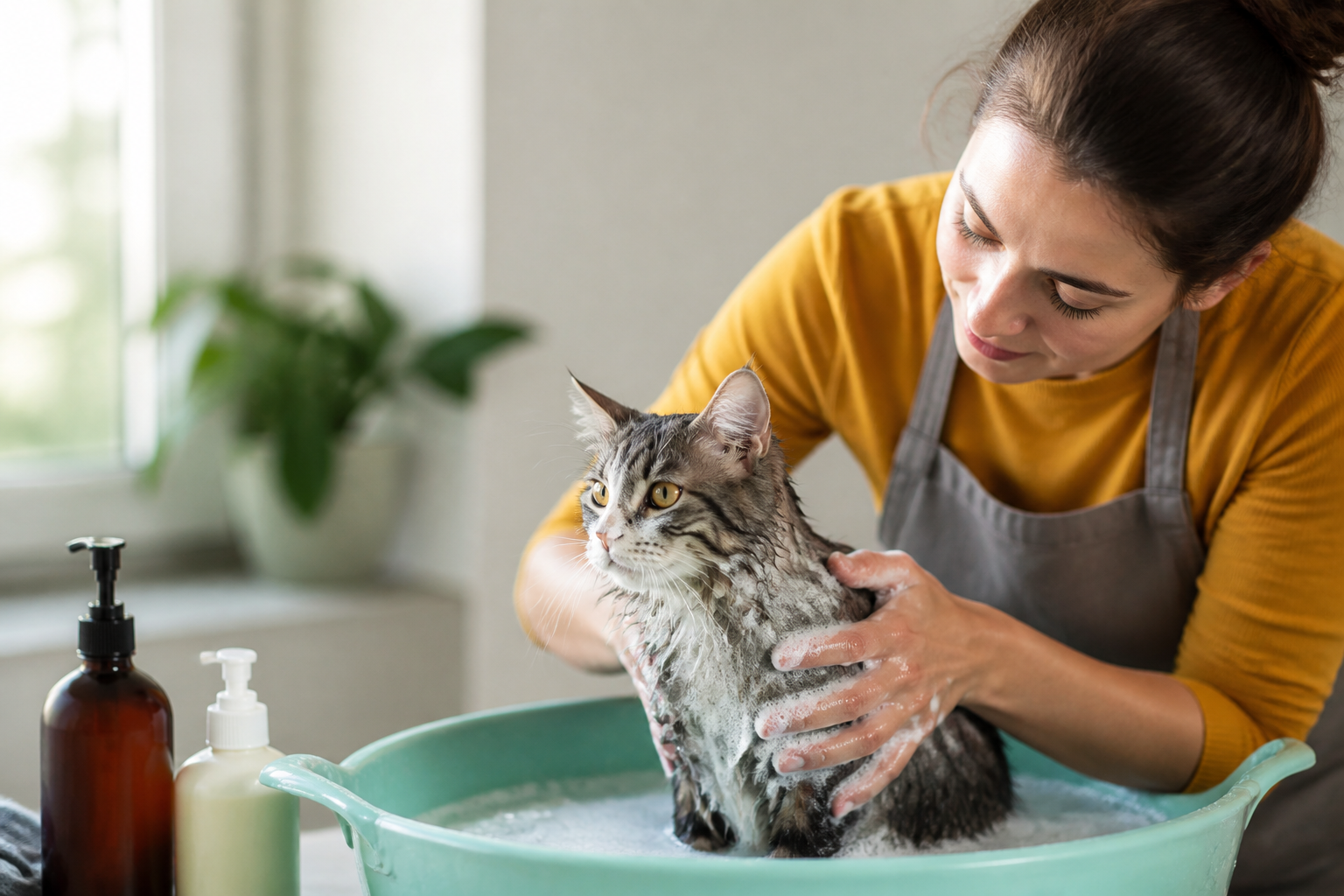
Most cats are not fans of traditional baths. Fortunately, you can use grooming wipes or waterless foam shampoos to clean the skin. These products are formulated to break up dander and soothe dry skin without the stress of a tub. Look for ingredients like aloe vera or oatmeal, which are known for their calming properties.
For low-stress cleanup, browse waterless grooming options for cats.
Add a Supplement
If your cat's food is already high-quality but the skin is still dry, a liquid fish oil supplement can help. Most cats love the taste of salmon or pollock oil. You can simply pump it over their dinner. Within three to four weeks, you should notice a decrease in flakes and a much softer texture to the fur.
Bottom line: Consistent brushing and high-quality nutrition are your best defenses against the buildup of loose fur and visible skin flakes.
Managing Senior Cat Skin Care
As cats age, their skin becomes thinner and less elastic. They also tend to groom less due to physical limitations. For a senior cat, shedding a lot and dandruff can lead to painful mats very quickly. If the fur mats, it pulls on the thin skin, creating a cycle of discomfort.
You may need to take over the grooming duties for an older cat. Focus on the areas they can no longer reach, like the lower back and behind the ears. Be very gentle, as senior skin can tear easily. Using a soft brush daily can prevent the need for more aggressive grooming later on.
If your senior cat has joint pain that prevents grooming, talk to your vet about mobility support. Our pharmacy carries various joint supplements and medications that can help an older cat feel limber enough to start cleaning themselves again.
The Connection Between Stress and Shedding
It is a well-known fact among cat owners that a trip to the vet results in a cloud of fur on the exam table. This is called telogen effluvium. When a cat is stressed, their body enters a "fight or flight" mode that causes hair follicles to release the hair shaft prematurely.
If your home environment has changed recently—perhaps a new baby, a new pet, or a move—your cat may be shedding more than usual due to anxiety. This type of shedding is usually temporary, but it can contribute to a messy coat. Creating a calm environment with plenty of hiding spots and vertical space can help lower their stress levels.
For related nutrition and weight-management guidance, see how to help an indoor cat lose weight.
Checklist for Improving Your Cat's Coat
If you are ready to tackle the flakes and fur, use this simple checklist to get started:
- Switch to a high-quality protein-first diet.
- Add a humidifier to the main living area.
- Brush your cat for at least five minutes every day.
- Apply a feline-safe skin conditioner or waterless shampoo once a week.
- Check for signs of fleas and apply a monthly preventive.
- Schedule a vet checkup if you see bald patches or red skin.
Dealing with Seasonal Shedding
Even the healthiest cats go through seasonal "blow outs" where they lose a significant amount of fur. This typically happens in the spring as they lose their heavy winter undercoat and in the fall as they prepare for new growth. During these times, dandruff can appear more prominent because there is so much loose hair trapping dead skin cells.
During peak shedding seasons, you may need to brush your cat twice a day. This prevents the hair from ending up on your rugs and keeps the skin clear of debris. Once the old coat is fully shed, the dandruff usually subsides on its own.
The Importance of High-Quality Grooming Tools
Using the wrong brush can actually irritate the skin and cause more flaking. Avoid tools with sharp metal teeth that can scratch the skin surface. Instead, look for tools designed specifically for your cat’s coat type. Rubber brushes are excellent for short-haired cats because they "grab" loose fur and massage the skin simultaneously. For cats with thick undercoats, a de-shedding tool can be used sparingly to remove the bulk of the loose fur without cutting the healthy topcoat.
The Master Grooming Tools Ergonomic Slicker Dog and Cat Brush is designed for brush-outs, mat removal, and undercoat care.
Key Takeaway: Proper tools make grooming more effective and less stressful for your cat. Choosing the right brush for their coat length prevents skin irritation and reduces the amount of fur left around your home.
Summary of Coat Care
Managing a cat shedding a lot and dandruff requires a multi-angled approach. You must look at the environment, the diet, and the physical health of the cat. Most cases are easily managed with better humidity, regular brushing, and a boost in healthy fats. However, never ignore persistent flakes that come with other symptoms like lethargy or changes in appetite.
By staying proactive, you can keep your cat’s coat in top condition. Whether it is finding the perfect brush or ordering a prescription skin diet from our pharmacy, we are here to support your journey. Your cat deserves to feel comfortable in their own skin, and with a little extra care, they will be back to their sleek, shiny self in no time.
FAQ
Is it normal for a cat to have a little dandruff?
A few occasional flakes can be normal, especially during seasonal changes or in very dry winters. However, if the flakes are persistent, cover large areas of the body, or are accompanied by heavy shedding and itching, it usually indicates an underlying issue. It is best to monitor your cat's grooming habits and skin moisture levels to see if the flakes improve with basic home care.
How can I get rid of my cat's dandruff fast?
The fastest way to reduce visible flakes is through daily brushing and using grooming wipes to remove the buildup. Increasing the humidity in your home and adding a high-quality Omega-3 fish oil supplement to their food can also show results within a few weeks. If these home remedies do not work, a trip to the vet is necessary to rule out parasites or medical conditions.
Can a cat's diet cause dandruff and excessive shedding?
Yes, nutrition is one of the most common causes of poor skin and coat health in cats. If a diet is low in high-quality animal proteins or essential fatty acids, the skin becomes dry and the hair follicles weaken. Switching to a premium, nutrient-dense food can often resolve dandruff issues and significantly reduce non-seasonal shedding.
What is walking dandruff in cats?
Walking dandruff is the common name for an infestation of Cheyletiella mites. These mites live on the skin surface and look like white flakes, but they are actually tiny parasites. If you notice "dandruff" that seems to move or causes intense itching, you should contact your vet immediately for a prescription treatment from a pharmacy.