
 Save 15% on your 1st Autoship learn more

 Email us
 Live Chat
 FAQs
FAQs





Introduction
You lean in for a happy puppy kiss only to be met with a scent that reminds you of an old gym locker. We have all been there. While bad breath is often laughed off as a standard dog trait, it is usually a sign that bacteria are making themselves at home. At BaxterBoo, we know that keeping those pearly whites clean is about more than just a fresh smelling snout. It is about preventing long term health issues that can affect your dog's heart, liver, and kidneys. This guide explores the most effective ways to manage oral hygiene using natural tools like raw vegetables, specialized toys, and gentle brushing habits. You will learn how to build a routine that fits your lifestyle while keeping your dog comfortable.
Quick Answer: You can clean your dog's teeth naturally by providing crunchy raw vegetables like carrots, using rubber dental toys to scrape away plaque, and adding enzyme based supplements to their water. While these methods help, regular brushing with dog safe toothpaste remains the most effective way to prevent tartar buildup.
The Importance of Natural Dental Maintenance
Maintaining your dog's mouth does not always require a trip to the vet for a deep cleaning under anesthesia. Natural dental care focuses on prevention and daily maintenance. Plaque is a sticky film of bacteria that forms on the teeth after eating. If it is not removed within a few days, it mineralizes into tartar. Tartar is much harder to remove and typically requires professional tools.
By focusing on natural methods, you are essentially using mechanical and biological tools to disrupt that plaque. Mechanical methods involve physically scraping the tooth surface through chewing. Biological methods involve using enzymes or natural additives that change the chemistry of your dog's saliva to make it harder for bacteria to stick.
Brushing the Natural Way
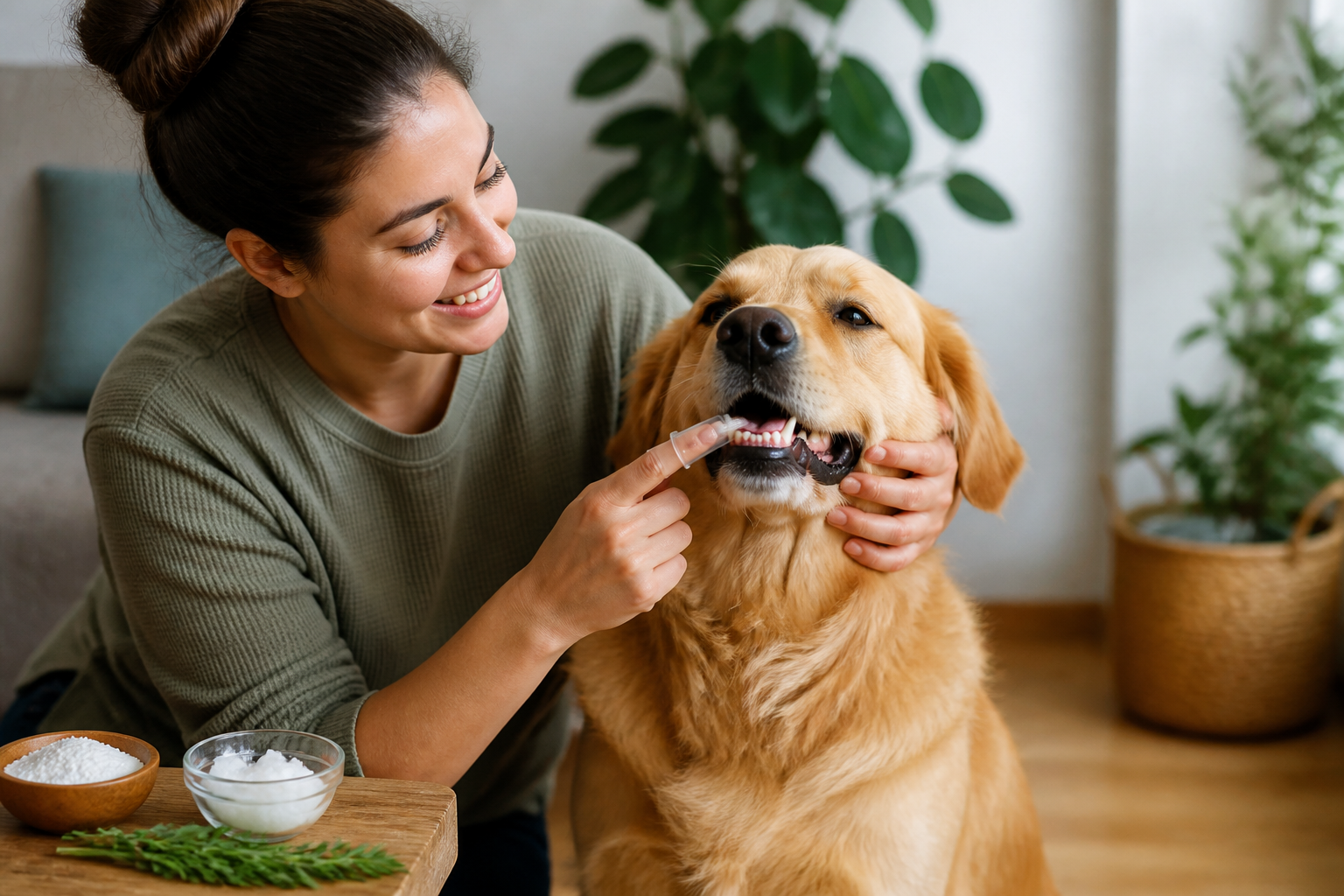
Many owners feel intimidated by the idea of brushing a dog's teeth. However, it is the single most effective way to keep the mouth healthy. You do not need fancy electronic gadgets to get the job done. A simple finger brush or a soft bristled brush designed for pets is all you need.
Never use human toothpaste on your dog. Most human brands contain fluoride or xylitol, both of which are highly toxic to pets. Natural dog toothpastes often use enzymes like glucose oxidase to break down food particles. You can even use organic coconut oil as a simple, natural alternative. Coconut oil has antimicrobial properties and most dogs love the taste, which makes the process much easier.
A Step by Step Brushing Routine
Step 1: Introduce the flavor. / Put a small amount of pet toothpaste or coconut oil on your finger and let your dog lick it off.
Step 2: Touch the teeth. / While your dog is enjoying the taste, gently rub your finger along their gums and teeth to get them used to the sensation.
Step 3: Introduce the brush. / Apply the cleaner to a soft pet brush and focus on the outside surfaces of the back molars where plaque builds up fastest.
Step 4: Keep it short. / Aim for thirty seconds per side and always end the session with praise or a healthy treat.
Key Takeaway: Consistency is more important than duration. Brushing for one minute every day is far more effective than a ten minute deep clean once a month.
For additional brushing guidance, read our post on pet dental care tips.
Using Crunchy Vegetables and Fruits
One of the easiest ways to help clean your dog's teeth naturally is to change up their snack routine. Certain raw vegetables act like a natural toothbrush. When a dog crunches into a firm vegetable, the fibers scrape against the surface of the tooth.
Carrots for Dental Health
Raw carrots are a fantastic tool for dental hygiene. They are high in fiber and require a lot of chewing, which stimulates saliva production. Saliva is the body's natural way of washing away food debris. For a teething puppy or a dog with inflamed gums, you can freeze large carrot sticks. The cold temperature helps soothe the tissue while the chewing action cleans the teeth.
Apple Slices
Apples are another great natural option. They contain malic acid, which can help dissolve some of the stains on the teeth. Always make sure to remove the seeds and the core before giving apple slices to your dog. The seeds contain small amounts of cyanide, and the core can be a choking hazard.
Avoid Sugary Treats
While fruits are natural, they do contain fructose. If your dog eats a lot of sugary fruit, the sugar can sit on the teeth and actually feed the bacteria you are trying to eliminate. Limit fruit snacks to a few times a week and stick to crunchy vegetables for daily treats.
Vet Tip: If your dog has existing dental disease or loose teeth, hard vegetables might cause discomfort. Always have your veterinarian check for underlying issues before introducing very crunchy foods to a senior dog's diet.
You can also explore our dental treats for dogs for additional options.
The Role of Dental Toys and Textures
Not every dog will sit still for a brushing session. This is where dental toys become a valuable part of your toolkit. We carry a wide variety of toys at BaxterBoo specifically designed with nubs, ridges, and grooves. These textures are not just for fun. As your dog chews, the rubber ridges slide between the teeth and along the gumline to lift away soft plaque.
Look for toys made from durable, non toxic rubber. Some toys are designed to hold pet safe toothpaste or coconut oil in their grooves. This allows the dog to essentially brush their own teeth while they play. For the best results, provide these toys after meals when plaque is most likely to be sitting on the tooth surface.
For more options, browse our dental dog toys.
Choosing the Right Texture
- Rubber Nubs: Best for massaging the gums and increasing blood flow.
- Rope Toys: Act like dental floss to clean between the teeth, but must be monitored for fraying.
- Woven Fabric: Provides a gentle abrasive surface for sensitive mouths.
Bottom line: A toy that encourages active chewing for fifteen minutes a day can significantly reduce the amount of plaque that turns into tartar.
A product example is the Busy Buddy Bristle Bone Dental Toy, which combines bristles and rubber nubs for chewing sessions.
Natural Water Additives and Supplements
If your dog is particularly picky, you might consider water additives. These are liquid solutions that you pour directly into your dog's water bowl. They are often tasteless and odorless, making them an easy "set it and forget it" option for busy owners.
Most natural water additives use ingredients like green tea extract or enzymes to neutralize the bacteria that cause bad breath. Some supplements come in powder form and are sprinkled over food. These often contain a specific type of brown seaweed called Ascophyllum nodosum. Clinical studies have shown that this seaweed can help soften existing tartar over time by changing the composition of the saliva.
We often recommend checking for the VOHC (Veterinary Oral Health Council) seal on these products. This seal means the product has met specific standards for reducing plaque or tartar.
Safe Chewing vs. Dangerous Hardness
While chewing is natural, not all chews are safe. There is a common misconception that very hard items like cow hooves, antlers, or large cooked bones are good for teeth. In reality, these items are often harder than the tooth enamel itself. This can lead to "slab fractures," where a large chunk of the tooth breaks off, exposing the nerve.
A good rule of thumb is the "fingernail test." If you cannot leave a small dent in the chew with your thumbnail, it is likely too hard for your dog's teeth. Natural rawhide alternatives made from sweet potato or collagen are much safer options that still provide the mechanical cleaning action your dog needs.
For additional ideas, see our guide to the best dental chews for dogs.
Safe Natural Chew Checklist
- Bends slightly under pressure
- Does not splinter or break into sharp shards
- Appropriate size for your dog's jaw
- Free from artificial dyes and preservatives
Recognizing the Signs of Dental Disease
Even with the best natural routine, some dogs are genetically predisposed to dental issues. Small breeds, such as Pugs or Chihuahuas, often have crowded teeth that trap food more easily. It is important to know when your natural home care needs to be supplemented with professional help.
If you notice any of the following, a visit to the vet is necessary:
- Red, swollen, or bleeding gums
- A thick, brown layer of tartar near the gumline
- Loss of appetite or dropping food while eating
- Excessive drooling
- A sudden change in breath odor that smells like rot
For more warning signs, read how to recognize bad teeth in dogs.
Professional Care and Pharmacy Support
Sometimes, natural cleaning is not enough to reverse years of buildup. If your veterinarian recommends a professional cleaning, they may also suggest a prescription dental diet. These diets use kibble with a specific fiber matrix that does not crumble immediately. Instead, the tooth sinks into the kibble, allowing the fibers to scrub the tooth surface.
Our pet pharmacy offers access to these prescription diets and FDA approved medications. If your dog requires a specific diet or medication to manage oral infections, we can help you get those essentials delivered to your door. Professional cleaning under anesthesia is the only way to clean beneath the gumline, which is where the most serious bacteria hide.
Maintaining the Routine
The key to success is making dental care a habit rather than a chore. You do not have to do everything every day. You might brush on Monday, provide a frozen carrot on Tuesday, and give a dental toy on Wednesday.
Weekly Dental Schedule Example
- Monday: Gentle brushing with coconut oil.
- Tuesday: Large raw carrot snack.
- Wednesday: Playtime with a textured rubber toy.
- Thursday: Water additive in the fresh water bowl.
- Friday: Apple slices (no seeds).
- Saturday: Full mouth inspection for redness or swelling.
- Sunday: Gentle brushing session.
By rotating these methods, you keep your dog interested and cover all the bases of oral hygiene. This variety ensures that different areas of the mouth receive attention throughout the week.
For regularly purchased dental supplies, consider our Autoship programme.
Conclusion
Cleaning your dog's teeth naturally is a marathon, not a sprint. By combining mechanical actions like chewing on toys and vegetables with biological supports like water additives, you can significantly improve your dog's quality of life. Remember that bad breath is more than a nuisance. It is a window into your pet's overall health. Start slow, stay consistent, and always keep an eye out for signs that it might be time for a professional checkup.
- Switch to crunchy, raw vegetable treats like carrots.
- Use textured rubber toys to help scrape away daily plaque.
- Introduce a weekly brushing routine using pet safe paste or coconut oil.
- Monitor your dog's gums for any signs of redness or irritation.
For more specialized care, explore our dog healthcare category or visit our pharmacy for prescription needs. We are here to help you keep your dog's smile bright and healthy for years to come.
FAQ
Can I use baking soda to clean my dog's teeth?
While baking soda is not toxic in very small amounts, it has a very high salt content and an unpleasant taste for most dogs. If swallowed in large quantities, it can cause an upset stomach or electrolyte imbalances. It is much safer and more effective to use a specially formulated pet toothpaste or organic coconut oil.
How often should I give my dog dental chews?
Most high quality dental chews are designed to be given once a day. However, you must account for the calories in these treats to prevent weight gain. If you are using natural vegetables like carrots, you can be a bit more flexible, but always ensure treats do not make up more than ten percent of your dog's daily caloric intake.
Does dry kibble really clean a dog's teeth?
Standard dry kibble provides very little dental benefit because it usually shatters as soon as the tooth hits it. It does not provide the sustained scraping action needed to remove plaque. Specialized dental diets are different because the kibble is larger and more fibrous, but regular dry food is not a substitute for brushing or dental toys.
My dog's gums bleed a little when I brush. Is this normal?
If you are just starting a brushing routine, a very small amount of spotting can be common if the gums are slightly inflamed from plaque buildup. However, if the bleeding is heavy or persistent, it is a sign of gingivitis or more advanced periodontal disease. You should stop brushing and consult your veterinarian to ensure there is no infection present.






