
 Save 15% on your 1st Autoship learn more

 Email us
 Live Chat
 FAQs
FAQs





Introduction
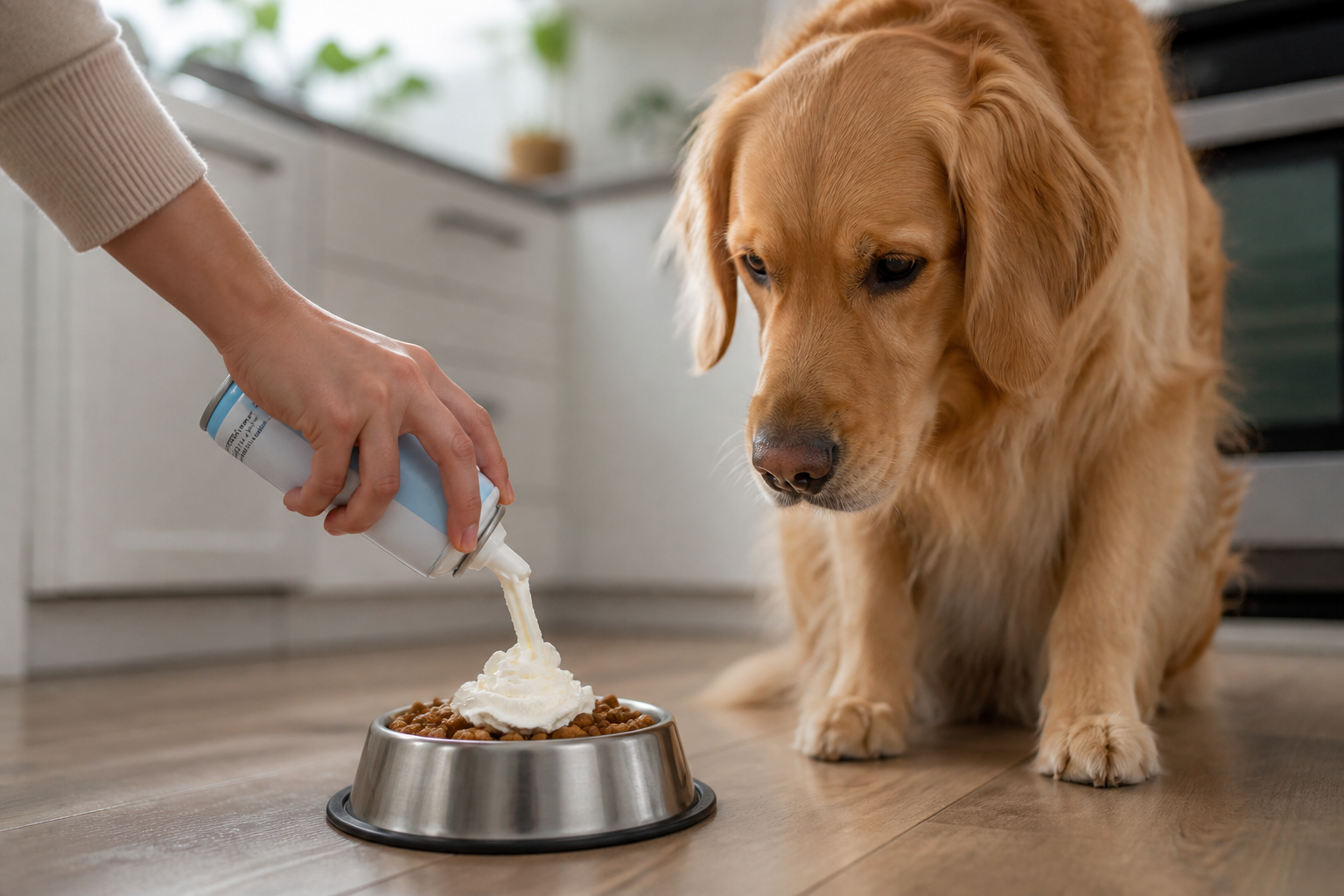
You are standing in your kitchen with a bowl of dry kibble that your dog refuses to touch. You reach into the fridge for a can of whipped cream and wonder if a quick spray might finally get them to eat. At BaxterBoo, we hear from pet owners every day who are looking for ways to entice a picky eater or add a bit of joy to their dog's routine. While a tiny dollop of whipped cream is not usually toxic, using it as a regular meal topper is not a great idea for your pet's long term health. This article covers the risks of feeding dairy, the hidden dangers of sugar substitutes, and how to find healthier ways to spice up a boring bowl of food. You can support your dog's appetite without causing digestive upset.
Is Whipped Cream Safe for Dogs?
The short answer is that most dogs can handle a small amount of plain whipped cream as a rare treat. It is not on the list of toxic foods like grapes or chocolate. However, being non-toxic is not the same as being healthy. Whipped cream is essentially aerated heavy cream and sugar. Neither of these ingredients provides the nutrition a dog needs to thrive.
Most commercial whipped creams are loaded with sugar or corn syrup. While a healthy dog can process a small amount of sugar, it can lead to hyperactivity and an eventual energy crash. Over time, frequent sugar intake contributes to tooth decay and weight gain. If you choose to give your dog a taste, it must be the plain variety. Never use whipped cream that contains cocoa, coffee, or macadamia nut flavors. These are dangerous for dogs and require an immediate call to your veterinarian.
Quick Answer: You can technically put a small amount of plain whipped cream on your dog's food as a one time treat. However, it is not recommended as a regular topper because the high fat and sugar content can lead to obesity and digestive issues.
The Danger of Xylitol
The most significant risk with whipped cream is not the cream itself but the sweeteners used in sugar free versions. Many "light" or "zero sugar" whipped toppings use xylitol. This is a sugar alcohol that is extremely toxic to dogs. Even a small amount of xylitol can cause a rapid drop in blood sugar. This leads to seizures, liver failure, and death if not treated immediately.
Always read the ingredient label before letting your dog lick the spoon. If you see xylitol or "birch sugar" listed, keep it far away from your pet. If your dog accidentally consumes a product with xylitol, this is a medical emergency. You should contact an emergency vet right away.
Dairy and Lactose Intolerance
Many adult dogs are lactose intolerant. As puppies grow into adults, they often lose the enzyme needed to break down the lactose found in milk and cream. Feeding whipped cream as a topper can lead to a very messy afternoon. Common signs of dairy sensitivity include:
- Excessive gas and bloating.
- Loose stools or diarrhea.
- Abdominal pain or gurgling sounds.
- Vomiting.
If you notice your dog has any of these symptoms after a "pup cup," it is best to remove dairy from their diet entirely.
Why Whipped Cream Is a Poor Meal Topper
Using whipped cream to fix a picky eater often backfires. Dogs are smart and they quickly learn that if they hold out on their plain kibble, you might add something sweeter. By putting whipped cream on dry dog food, you may be accidentally training your dog to become even more demanding. This creates a cycle where the dog refuses healthy food in hopes of getting a dessert topping.
Empty Calories and Nutrition
Dry dog food is formulated to be a complete and balanced diet. When you add a large amount of whipped cream, you are adding "empty calories." These are calories that provide energy but no vitamins, minerals, or proteins. If a dog fills up on whipped cream, they may eat less of their nutritious kibble. For a small dog, even a few tablespoons of whipped cream can represent a significant portion of their daily calorie limit.
High Fat Content and Pancreatitis
Whipped cream is very high in fat. While dogs need healthy fats for their skin and coat, the saturated fats in dairy are hard on the digestive system. For some dogs, a high fat meal can trigger a condition called pancreatitis. This is a painful inflammation of the pancreas that requires veterinary intervention.
Vet Tip: If your dog has a history of digestive issues or belongs to a breed prone to pancreatitis, such as Miniature Schnauzers, avoid high fat treats like whipped cream entirely. Consult your vet if your dog shows signs of lethargy or abdominal pain after eating.
Healthier Alternatives to Entice Picky Eaters
If your goal is to make dry food more appealing, there are many options that are better for your dog's gut health than whipped cream. We carry a wide variety of dog food toppers and mixers that add flavor and moisture without the sugar crash.
Bone Broth
Unsalted bone broth is a fantastic way to soften dry kibble and add a burst of meaty flavor. It provides collagen and amino acids that support joint health. Make sure the broth is specifically made for pets to ensure it does not contain onions or garlic.
Canned or Wet Food
Mixing a spoonful of high quality wet food into the dry kibble is a classic solution. Brands like Stella and Chewy's or Open Farm offer nutrient dense options that most dogs find irresistible. This adds protein and hydration rather than just fat and sugar. For more guidance, read our comparison of wet food versus dry food for dogs.
Pumpkin Puree
Plain, canned pumpkin (not pumpkin pie filling) is a great fiber source. Many dogs love the taste and it can actually help soothe an upset stomach. It is low in calories and much safer for a daily addition than dairy products.
Dehydrated or Freeze-Dried Toppers
Freeze-dried raw toppers are very popular for a reason. They provide the taste of raw meat in a convenient, shelf-stable form. You can crumble these over the kibble to provide a scent and flavor that gets most dogs excited about mealtime. We recommend looking at options from The Honest Kitchen or Vital Essentials for clean, simple ingredients. You can explore additional food toppers and broths for dogs when comparing options.
Key Takeaway: Instead of using sugary dairy, look for protein-based toppers or moisture-rich mixers like bone broth and pumpkin to safely encourage your dog to eat.
How to Handle a Picky Eater Without Using Sweets
If your dog suddenly stops eating their dry food, it is important to figure out why before you start adding treats like whipped cream. Sometimes the solution is a change in routine rather than a change in ingredients. Our guide to what dry dog food is best for picky eaters covers additional mealtime strategies.
Step 1: Check the food freshness. / Kibble can go rancid if the bag is left open or stored in a hot garage. Smell the food to ensure it hasn't gone bad.
Step 2: Rule out dental issues. / If your dog has a sore tooth or inflamed gums, crunching on hard kibble can be painful. A vet visit can confirm if dental health is the reason for the sudden pickiness.
Step 3: Establish a feeding schedule. / Avoid leaving food out all day. Put the bowl down for 15 to 20 minutes and then take it away. This teaches your dog that food is only available at certain times.
Step 4: Use warm water. / Adding a splash of warm water to dry food releases the natural aromas of the fats in the kibble. This makes the food smell more appetizing without adding any extra calories.
When Whipped Cream Is Most Dangerous
There are certain life stages and health conditions where you should never put whipped cream on dog food.
- Senior Dogs: Older dogs often have slower metabolisms and are more prone to weight gain. They may also have underlying kidney or heart issues that make high fat or high sodium diets dangerous.
- Puppies: A puppy's digestive system is very sensitive. Introducing heavy dairy can cause severe diarrhea, which leads to dehydration in small bodies.
- Overweight Dogs: If your dog is already carrying extra weight, every calorie counts. Whipped cream will only make the weight loss journey harder.
- Diabetic Dogs: The high sugar content in most whipped creams can cause dangerous spikes in blood glucose levels.
If your pet is managing a chronic condition, you should stick strictly to the diet recommended by your veterinarian. Our pet pharmacy provides a range of prescription medications for dogs with specific health needs. If your vet has prescribed a specific food for weight management or allergies, adding whipped cream could interfere with the treatment.
Bottom line: Whipped cream should be viewed as a dessert for healthy dogs, not a nutritional supplement or a tool for daily feeding.
Treating Safely as an Occasional Reward
If you really want to share a "pup cup" moment with your dog, keep it separate from their meals. Use a tiny amount of plain, unsweetened whipped cream as a reward for a job well done or a special outing.
Serving Sizes
A serving for a dog should be much smaller than what you would put on a piece of pie.
- Small Dogs: No more than a teaspoon.
- Medium Dogs: One tablespoon.
- Large Dogs: Two tablespoons.
Monitor your dog for at least 24 hours after they have dairy for the first time. If they have a firm stool and no gas, they likely handle lactose okay. If they have a runny stomach, you know to avoid it in the future.
Homemade Alternatives
If you want the texture of whipped cream without the junk, you can make a dog-friendly version at home. Use a blender to whip up some plain, non-fat Greek yogurt. It has a similar fluffy texture but provides probiotics that are actually good for your dog's digestion. You can also freeze small dollops of yogurt to make "fro-yo" bites for a cooling summer treat.
Conclusion
While whipped cream is not a toxic substance for dogs, it is far from an ideal addition to their daily diet. The high levels of sugar and fat can lead to obesity, dental problems, and painful conditions like pancreatitis. Using it as a topper for dry food often creates a finicky eater who refuses to eat healthy meals without a sweet treat. At BaxterBoo, we believe in supporting your pet’s health through high quality nutrition and safe, functional toppers. If your dog is struggling with their appetite or has a sensitive stomach, check out our selection of healthy meal mixers and probiotics. For pets with chronic health concerns, remember that our pharmacy carries FDA-approved medications and prescription foods to keep them feeling their best.
FAQ
Can whipped cream cause diarrhea in dogs?
Yes, many dogs are lactose intolerant and cannot properly digest the proteins and sugars in dairy. Feeding whipped cream can lead to gas, bloating, and loose stools within a few hours of consumption. If your dog has a sensitive stomach, it is best to avoid dairy entirely.
Is sugar-free whipped cream safer for dogs?
No, sugar-free whipped cream is often more dangerous because it may contain xylitol. Xylitol is a sweetener that is highly toxic to dogs and can cause life-threatening drops in blood sugar or liver failure. Always check the label for xylitol or birch sugar before giving any human treat to your pet.
Will whipped cream make my dog gain weight?
Whipped cream is very high in calories and fat, which can contribute to rapid weight gain if fed regularly. Even a small amount can represent a large percentage of a small dog's daily caloric needs. For dogs prone to obesity, it is much safer to use low-calorie toppers like pumpkin or green beans.
How can I make my dog's dry food taste better safely?
The safest way to entice a picky eater is to use toppers designed specifically for dogs, such as bone broth, freeze-dried meat mixers, or a spoonful of canned food. You can also try adding a little warm water to the kibble to enhance the natural aroma. These options provide extra nutrition and hydration without the risks associated with sugar and dairy.






