Save 15% on your 1st Autoship learn more

 Email us
 Live Chat
 FAQs
FAQs





Introduction
The rain is pouring and your dog is pacing the hallway with a hopeful look in their eyes. You know they need to burn off some steam, but a long walk in the mud is not appealing. Many pet parents find themselves in this exact spot when the weather or a busy work schedule gets in the way of outdoor time. You might have heard that using a scent-based toy can tire them out just as effectively as a trip to the park. At BaxterBoo, we focus on providing tools that satisfy your pet's natural instincts while fitting into your real-life routine. This article explains the actual exercise equivalent of a snuffle mat and how to use one to keep your dog calm and satisfied. Understanding the balance between mental work and physical movement is the key to a well-behaved pet.
Quick Answer: Most canine experts agree that 15 to 20 minutes of focused sniffing on a snuffle mat is roughly equivalent to a one-hour walk in terms of mental fatigue. While it does not replace the cardiovascular benefits of running, it provides the deep neurological stimulation that leaves a dog feeling relaxed and tired.
The Science of the Snuffle Mat Exercise Equivalent
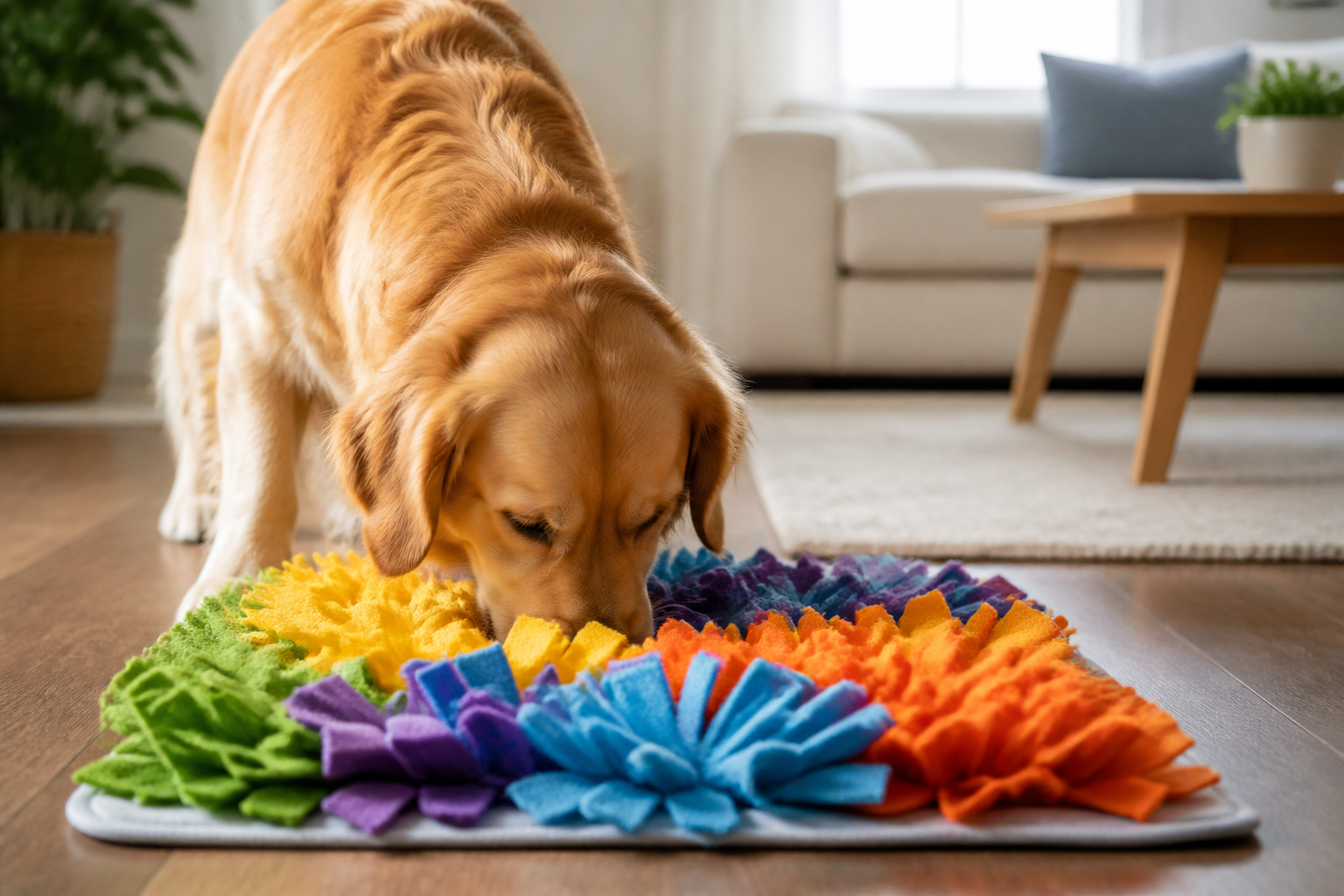
To understand why a small piece of fabric can tire out a large dog, you have to look at how their brain works. A dog's primary way of processing the world is through their nose. Their sense of smell is roughly 10,000 to 100,000 times more sensitive than ours. When a dog uses a snuffle mat, they are not just looking for a snack. They are performing complex data analysis.
Every time your dog identifies a scent, their brain sends signals to the olfactory bulb. This part of the canine brain is significantly larger than the human equivalent relative to total brain size. Processing these scents requires a lot of energy. This is why a dog might seem "wiped out" after a session on a mat even if they never left the living room rug.
The mental effort involved in discriminating between different smells is high. It is like the difference between you walking on a treadmill while watching TV versus solving a difficult math problem. Both burn calories, but the math problem creates a specific type of fatigue that leads to better sleep and less anxiety.
Key Takeaway: Mental stimulation through scent work is a high-energy activity for a dog's brain that can reduce the need for excessive physical cardio.
Comparing Mental and Physical Fatigue
It is a common myth that the only way to tire a dog is to run them until they drop. In reality, physical exercise often builds stamina. If you only rely on long runs, you may find your dog needs longer and longer sessions to reach the same level of tiredness. Mental enrichment, like foraging, does the opposite. It meets an instinctual need that calms the nervous system.
A one-hour walk provides physical benefits like muscle toning and cardiovascular health. However, many walks are "patrol" walks where the dog is on high alert. A snuffle mat session allows them to focus intensely on a single task. This focus lowers their heart rate and reduces cortisol levels.
| Activity Type | Primary Benefit | Mental Burn | Physical Burn |
|---|---|---|---|
| Snuffle Mat | Cognitive Focus | High | Low |
| Standard Walk | Physical Movement | Moderate | Moderate |
| Fetch/Running | Cardiovascular | Low | High |
| Scent Work | Problem Solving | Very High | Moderate |
For many high-energy breeds, the "off switch" is only found through their nose. If your dog is physically fit but still restless, they are likely missing this mental component. Using a mat for 15 minutes before you leave for work can be more effective at preventing destructive chewing than a quick sprint in the yard.
Why Sniffing Is Low Impact But High Reward
One of the best features of using a snuffle mat as an exercise equivalent is its low impact on the body. This makes it a perfect tool for specific life stages or health conditions. Senior dogs with arthritis may not be able to walk for an hour anymore. Their minds are still sharp, and they still feel the need to "work."
A mat allows a senior dog to engage in a natural behavior without stressing their joints. The same applies to puppies who are too young for long, strenuous hikes that could damage developing growth plates. It is also a vital tool for dogs recovering from surgery. If your vet has ordered crate rest or restricted movement, a snuffle mat can save your dog's sanity.
Vet Tip: If your dog is recovering from an injury or managing a chronic condition like hip dysplasia, consult your veterinarian about using scent work as a safe activity. Our pet pharmacy offers prescription medications and other products for dogs under veterinary guidance.
Managing Weight and Calories During Enrichment
Since snuffle mats involve food, many owners worry about weight gain. If you are adding treats on top of daily meals, the calories can add up fast. The best way to use a snuffle mat is to use your dog's actual meal. Instead of a bowl, put their kibble in the mat.
This turns a 30-second "gulp" into a 15-minute foraging adventure. It slows down fast eaters, which can help prevent bloat and indigestion. If you use treats for extra sessions, choose low-calorie options like freeze-dried lung or small pieces of carrot. We carry brands like Stella and Chewy's or Vital Essentials that offer high-protein, low-carb treats perfect for this.
- Measure your dog's daily food allotment in the morning.
- Subtract a handful of kibble to use for the mat.
- Use high-value, smelly treats only for difficult hiding spots.
- Monitor your dog's body condition score regularly.
Bottom line: Using a snuffle mat for daily meals provides exercise equivalents without requiring extra caloric intake.
Behavioral Benefits of Scent Work
Beyond just tiring your dog out, snuffling has specific behavioral advantages. When a dog puts their head down to sniff, it is a naturally calming posture. It is very difficult for a dog to be "on alert" or aggressive while they are deeply engaged in foraging.
For dogs with anxiety, the mat acts as a grounding tool. It gives them a job to do when they feel overwhelmed by loud noises or new visitors. This is why we often recommend them for dogs who struggle with separation anxiety or reactivity.
The repetitive motion of the nose moving through the fabric releases endorphins. These are the "feel-good" chemicals in the brain. A dog that has regular access to scent work is generally more resilient to stress. They are less likely to bark at every passing car because their brain has already done its "work" for the day.
How to Introduce the Mat
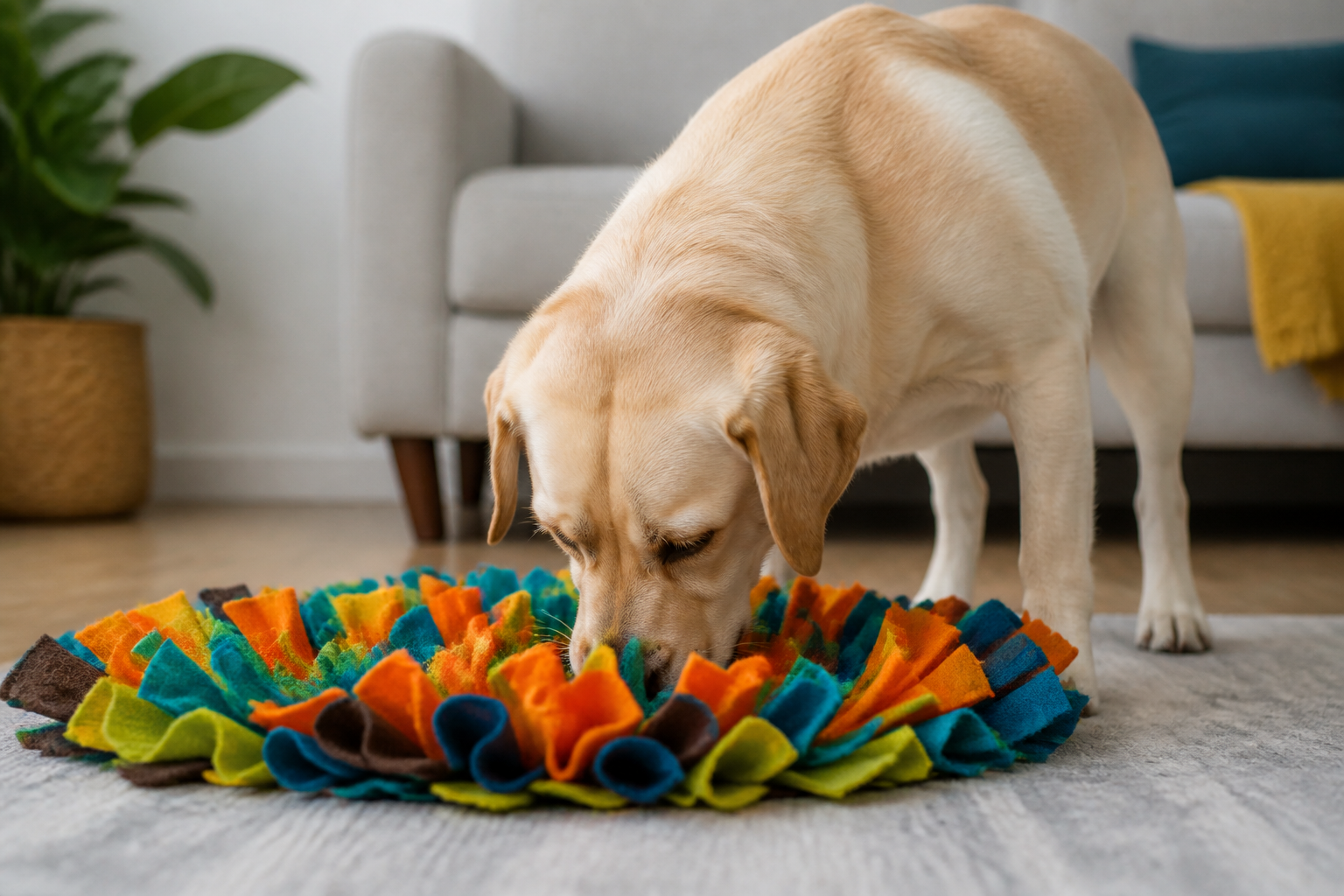
Step 1: Make it easy. / Place a few high-value treats right on top of the fabric while your dog is watching. Use a release command like "find it" so they know they are allowed to start.
Step 2: Increase the depth. / Once they understand the game, tuck the treats slightly under the first layer of fabric. This requires them to use their nose to move the material aside.
Step 3: Hide and seek. / Bury the food deep within the folds and pockets. At this stage, your dog should be working for several minutes to find every last piece.
For more ideas, explore brain games and scent-based enrichment for dogs.
When the Mat Is Not a Substitute
While the mental burn is significant, a snuffle mat is not a complete replacement for the outdoors. Dogs still need to stretch their legs and move their large muscle groups. They also need the social enrichment of seeing the world.
Think of the snuffle mat as a supplement or a "bad weather" backup. It is excellent for meeting the cognitive needs of your pet. It does not provide the sun exposure, fresh air, or heavy panting that a true outdoor adventure offers. A balanced routine includes both.
If you have a working breed like a Border Collie or a German Shepherd, they need the high-intensity physical work. The mat helps them "shut down" after that work is done. It is the transition from a high-arousal state to a calm state that many owners find most valuable.
Choosing the Right Gear for Your Dog
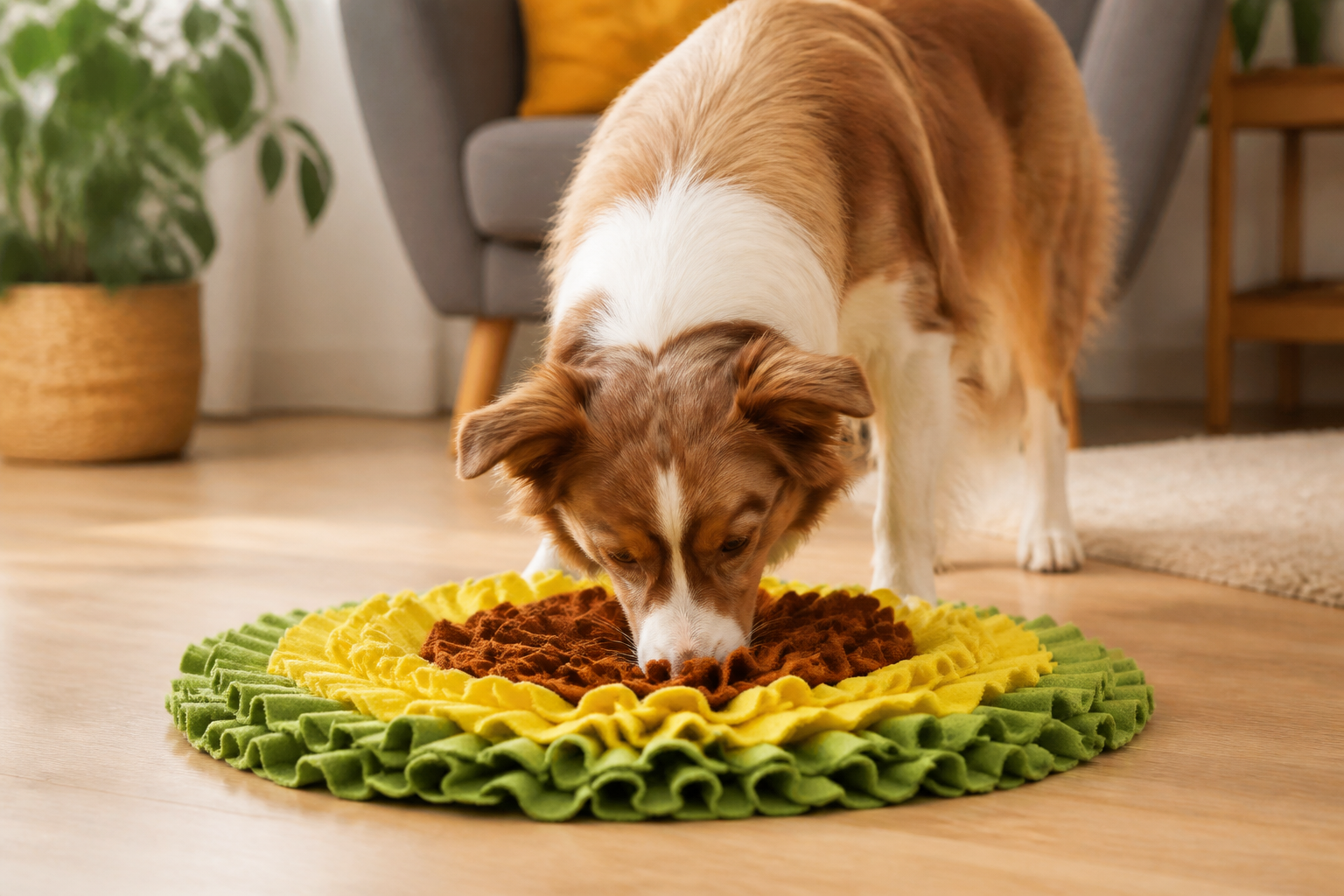
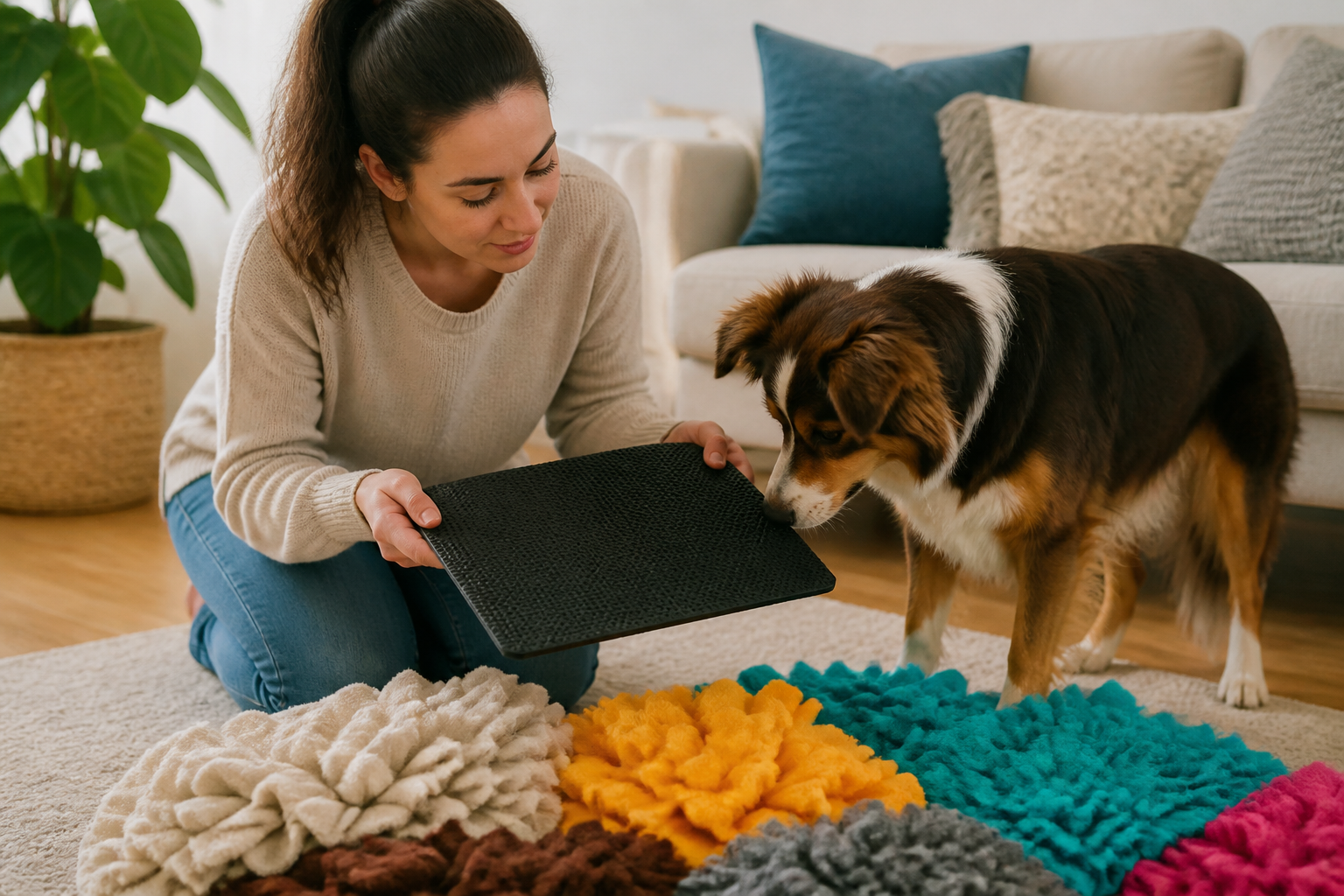
At BaxterBoo, we have been helping pet owners find the right gear since 2006. When selecting a mat, you need to consider your dog's size and "playing style." A delicate sniffer might do well with a soft fleece mat. A "power sniffer" who likes to dig might need something with a heavier base.
Look for mats that are machine washable. Saliva and food crumbs will build up quickly. A dirty mat can harbor bacteria that lead to skin issues or digestive upset. We recommend having two mats in rotation so one is always clean and ready to use.
If your dog is a known "shredder" who likes to eat fabric, you must supervise them closely. Some dogs see the mat as a giant plush toy rather than a foraging tool. In these cases, a rubber-based puzzle toy or a Kong might be a safer alternative for unsupervised time.
You can compare options in our dog toys category, including the P.L.A.Y. Pet Snuffle Mat Dog Toy.
Key Takeaway: Quality materials and ease of cleaning are the most important factors when choosing a snuffle mat for long-term use.
Advanced Scent Games for High-Energy Dogs
Once your dog masters the snuffle mat, you can expand their scent work. This keeps the "exercise equivalent" high by preventing the activity from becoming too easy. If a task is too easy, the brain does not have to work as hard, and the fatigue benefit drops.
You can create a "scent trail" leading up to the mat. Rub a piece of food on the floor in a path through the house. Hide the mat at the end of the trail. This forces the dog to start their "work" long before they reach the actual toy.
You can also try "shell games" with cardboard boxes or muffin tins. Place the snuffle mat inside a larger box filled with crumpled packing paper. This adds layers of problem-solving to the session. The more obstacles the dog has to think through, the more tired they will be at the end.
- Hide the mat in different rooms of the house.
- Use "scent distractions" like a drop of diluted lavender nearby.
- Layer different types of food to keep the nose guessing.
- Pair the mat with a brief training session to double the mental burn.
For additional indoor ideas, read our guide to indoor enrichment activities.
Implementation in Small Spaces
One of the biggest reasons people search for an exercise equivalent is living in an urban environment. If you live in an apartment, you may not have a yard for fetch. A long walk on a leash is often the only option, but it can be stressful in a crowded city.
The snuffle mat turns a tiny living room into a vast foraging field. It allows your dog to fulfill their biological drives without needing square footage. It is the ultimate tool for apartment dwellers who want to ensure their pets stay happy and calm.
Many of our customers use these mats during their own meal times. It gives the dog a rewarding task to do while the family eats, which prevents begging. This creates a peaceful environment for everyone. If you travel with your pet, a mat is easy to pack and provides a familiar, calming activity in a new hotel or guest house.
Safety and Supervision
Even though this is a low-impact activity, safety is paramount. Always watch your dog during the first several sessions. Some dogs get frustrated and try to flip the mat over to get the treats out faster. If they do this, the mental work stops.
Gently redirect them back to sniffing. You want to encourage the methodical use of the nose. If the dog begins to chew the fabric strips, take the mat away for a few minutes. This teaches them that the "game" only continues if they use their nose.
Remove the mat once the treats are gone. This prevents the dog from associating the fabric itself with chewing. It also keeps the mat "special." If it is left on the floor all day, it becomes part of the furniture and loses its value as a high-level enrichment tool.
Summary of Enrichment Benefits
A snuffle mat is a powerful addition to any dog's life. It provides a level of exhaustion that physical exercise alone often cannot reach. By tapping into the olfactory system, you are giving your dog a healthy, natural outlet for their energy.
Whether you are managing a senior dog, a high-energy puppy, or a rainy afternoon, the mat is a reliable tool. It is about more than just food. It is about the satisfaction of a job well done. At BaxterBoo, we love seeing pets thrive through smart, practical care.
- 15 minutes of sniffing equals roughly an hour of walking.
- Mental fatigue leads to better behavior and less anxiety.
- It is a safe, low-impact option for injured or senior dogs.
- It can be used for daily meals to slow down fast eaters.
Bottom line: Incorporating a snuffle mat into your routine is one of the easiest ways to meet your dog's complex needs for mental and physical wellness.
FAQ
Is a snuffle mat enough exercise for a dog?
While it provides an excellent mental workout, it is not a complete substitute for physical movement. A snuffle mat tires out the brain and satisfies foraging instincts, but dogs still need to move their bodies for joint health and cardiovascular fitness. Think of it as a way to supplement their routine or provide relief on days when outdoor exercise is not possible.
How often should I use a snuffle mat with my dog?
You can use a snuffle mat every day, especially if you use it to serve their regular meals. Most dogs benefit from one to two 15-minute sessions per day to keep their minds sharp. Rotating the mat with other puzzles or change-of-scenery walks helps prevent boredom and keeps the enrichment high.
Can snuffle mats help with dog anxiety?
Yes, sniffing is a naturally calming behavior for dogs that lowers their heart rate and cortisol levels. Many owners find that using a mat before stressful events, like a vet visit or a thunderstorm, helps the dog stay grounded. For chronic anxiety, we recommend consulting a vet. Our pet pharmacy offers medications and supplements that may be used under veterinary guidance alongside enrichment.
What are the best treats to hide in a snuffle mat?
Dry, crunchy treats or your dog's regular kibble are the best options because they do not leave a messy residue on the fabric. Small, smelly treats like freeze-dried liver or broken-up jerky are excellent for making the game more challenging. Avoid wet or greasy foods unless you plan to wash the mat immediately after the session to prevent bacteria growth. You can browse our dog treats collection for suitable options.