Save 15% on your 1st Autoship learn more

 Email us
 Live Chat
 FAQs
FAQs





Introduction
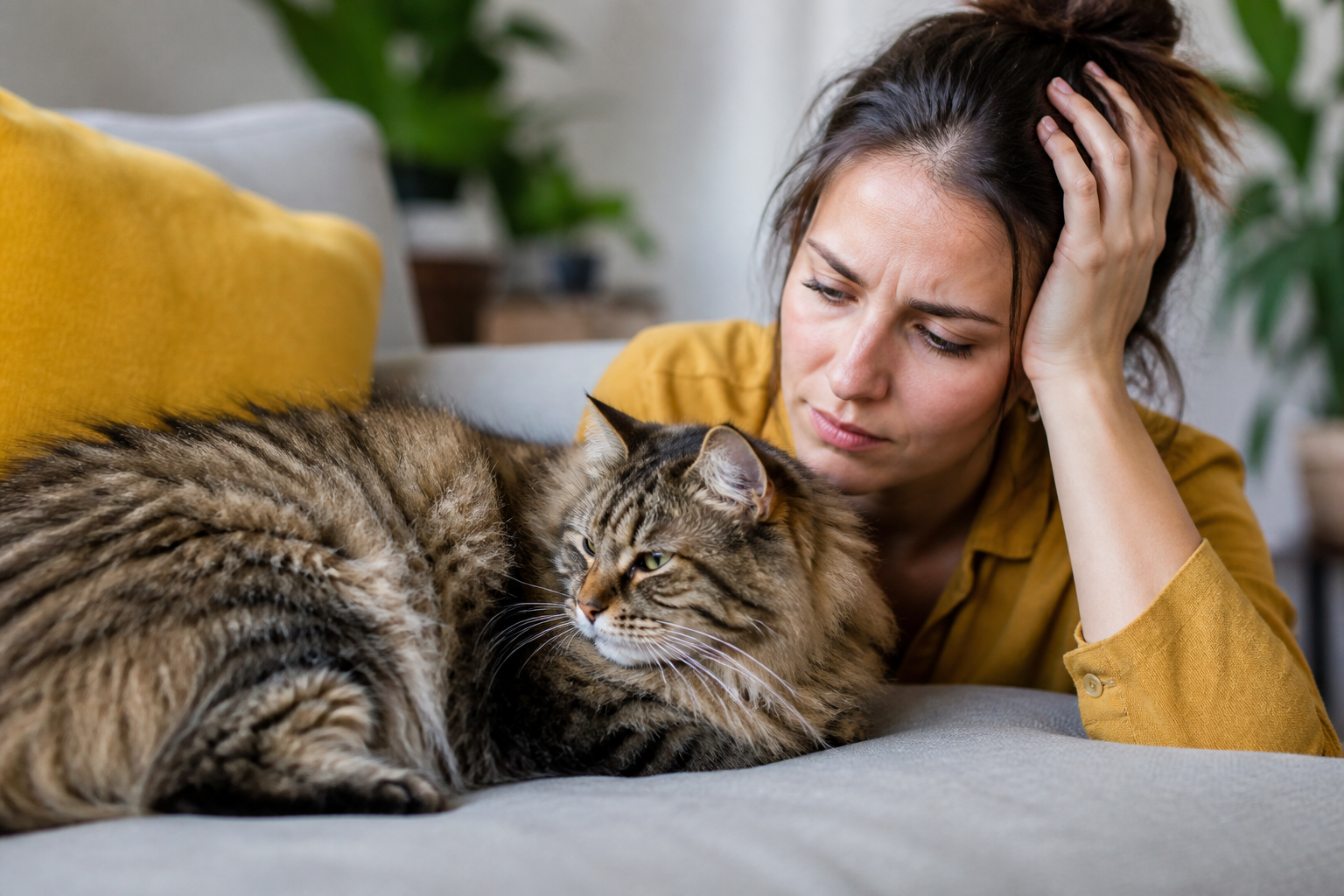
You are petting your cat and notice small white flakes scattered across their glossy fur. These flecks often cluster near the base of the tail or along the spine. While it might look like simple dry skin, you may wonder if your cat is feeling anxious or unwell. At BaxterBoo, we know that a cat's coat is a direct window into their overall well-being. This guide explains how stress and skin health are linked in felines. We will explore the causes of flaky skin and how to help your pet feel comfortable again. Understanding the root of these flakes is the first step toward a healthier coat.
Quick Answer: Stress can cause cat dandruff by triggering inflammation or causing a cat to stop grooming. Environmental changes often lead to physiological shifts that affect skin oil production and shedding cycles.
What Exactly Is Cat Dandruff
Dandruff is the visible buildup of dead skin cells that have shed from the top layer of the skin. In the veterinary world, this is often called seborrhea. It is not just a cosmetic issue. It is a sign that the skin's natural renewal process is out of balance. Most cats are meticulous groomers. They usually lick away these cells before you ever see them. When flakes become visible, it means the skin is shedding too fast or the cat is not cleaning themselves effectively.
You might hear people use the terms dander and dandruff interchangeably. They are actually different things. Dander refers to microscopic skin cells that all cats shed naturally. Dander is what usually triggers human allergies. You cannot see dander with the naked eye. Dandruff consists of larger flakes that are easy to spot. If you can see it on the fur or your furniture, it is dandruff.
The Connection Between Cat Dandruff and Stress
Cats are creatures of habit. They prefer a predictable environment and a steady routine. When something disrupts their peace, their bodies react. Stress triggers a hormonal response that can impact the skin. High levels of cortisol can interfere with the skin's ability to maintain a healthy moisture barrier. This leads to dryness and flaking.
Stress also changes behavior. An anxious cat might hide more and groom less. If a cat stops their daily tongue-wash routine, dead skin cells accumulate quickly. Conversely, some cats over-groom when they are stressed. This obsessive licking can irritate the skin and cause it to flake or even develop sores.
Common stressors for cats include:
- Moving to a new home or rearranging furniture.
- Adding a new pet or a new human to the household.
- Loud noises or construction nearby.
- Changes in their feeding schedule or food brand.
- Conflict with other cats in the house.
Key Takeaway: Stress disrupts the natural oil production of a cat's skin. This often leads to a cycle of dryness and poor grooming that results in visible dandruff.
Identifying Symptoms Beyond the Flakes
Dandruff is often a secondary symptom. You should look for other clues that might point to the cause. If your cat has flakes along with red skin, they might have an allergy. If the flakes are paired with thinning hair, it could be a sign of a parasite or a hormonal imbalance.
Pay attention to where the dandruff is located. Flakes near the tail are common in cats that have trouble reaching that area. This is often seen in cats that are overweight or have mobility issues. If the flakes are everywhere, it is more likely a systemic issue like stress or a poor diet.
Watch for behavioral changes too. A cat that is stressed might stop eating as much. They might also become more vocal or avoid social interaction. If you notice these signs along with skin changes, stress is a likely culprit.
Vet Tip: If your cat has dandruff that lasts more than two weeks, consult your veterinarian. Flaky skin can sometimes signal underlying issues like hyperthyroidism, diabetes, or kidney disease that require a professional diagnosis.
Environmental Factors and Skin Health
Your home environment plays a massive role in your cat's skin health. During the winter, indoor heating strips moisture from the air. This dry air pulls moisture from your cat's skin. This is a very common cause of seasonal dandruff in US households.
Low humidity causes the skin to become brittle. The skin then cracks and sheds in larger pieces. You can combat this by using a humidifier in the rooms where your cat spends the most time. Keeping the air moist helps the skin stay supple.
Water intake is also vital. Dehydration shows up on the skin very quickly. If a cat is not drinking enough water, their skin loses its elasticity and starts to flake. Encourage your cat to drink by using a water fountain or adding a bit of moisture to their dry food. For additional nutrition ideas, explore our cat food selection.
Parasites and the Walking Dandruff Mystery
Sometimes what looks like dandruff is actually alive. Cheyletiellosis is a condition caused by mites. These mites are large enough to be seen with the naked eye. They look like white flakes moving across the fur. This is why the condition is nicknamed walking dandruff.
These mites are highly contagious. They can move between cats, dogs, and even humans. If you see moving flakes, you need to act quickly. Fleas can also cause skin irritation that leads to dandruff. When a cat has a flea allergy, their skin becomes inflamed and sheds rapidly.
Our cat healthcare collection includes products for everyday wellness and parasite-related concerns. Many effective treatments require a prescription from your veterinarian. Regular prevention is the best way to ensure your cat does not suffer from parasite-related skin issues.
The Role of Nutrition in Coat Quality
What goes into your cat's body determines the health of their skin. A diet low in essential fatty acids is a frequent cause of a dull, flaky coat. Omega-3 and Omega-6 fatty acids are the building blocks of healthy skin oils. They help maintain the moisture barrier and reduce inflammation.
Many commercial cat foods provide a basic balance of nutrients. However, some cats need more support. If your cat is eating a low-quality diet, they might not be getting enough protein or healthy fats. This leads to dry skin and brittle fur.
Look for foods that list high-quality animal proteins as the first ingredient. Brands like Farmina, Orijen, and Acana focus on nutrient-dense ingredients that support coat health. If your vet suspects a food allergy is causing the dandruff, they may recommend a prescription diet. These specialized foods are available through the BaxterBoo pharmacy with a valid prescription.
For more ideas about dietary sensitivities, read this guide to sensitive-stomach cat food.
Grooming Techniques to Reduce Flakes
Regular grooming is a great way to bond with your cat and manage dandruff. Brushing removes dead hair and skin cells before they can clump together. It also stimulates the skin to produce natural oils. Brushing then spreads those oils across the fur.
Use the right tools for your cat's coat type:
- For short-haired cats: A soft bristle brush or a rubber grooming mitt works well.
- For long-haired cats: Use a metal comb or a slicker brush to reach the undercoat.
- For senior cats: Be very gentle. They may have thinner skin or sensitive joints.
Most cats do not need regular baths. In fact, bathing a cat too often can strip their skin of essential oils and make dandruff worse. If you must bathe your cat, use a moisturizing shampoo specifically formulated for felines. Never use human shampoo on a cat as the pH balance is completely different.
Find brushes, combs, shampoos, and other essentials in our cat grooming supplies.
Bottom line: Daily brushing is the most effective way to manually remove dandruff and improve skin circulation.
How to Help a Stressed Cat
If you suspect stress is the cause of the flakes, you need to address the environment. Create a "safe zone" for your cat. This should be a quiet area with their favorite bed, some toys, and a scratching post. When the house gets busy, your cat can retreat here to feel secure.
Pheromone diffusers can also help. These devices release a synthetic version of the calming chemicals cats produce naturally. This can lower anxiety levels during transitions like a move or the arrival of a new pet. Explore cat stress and anxiety support for calming-care options.
Interactive play is another great stress reliever. Using toys from Jackson Galaxy or Kong can help your cat burn off nervous energy. A cat that feels like a successful hunter is usually a more relaxed cat. Consistency is key. Try to keep feeding and play times the same every day.
Supplements for Skin and Coat Support
If your vet confirms that your cat is healthy but just has dry skin, supplements can help. Fish oil is a popular choice for improving coat quality. It is rich in EPA and DHA, which are types of Omega-3 fatty acids that fight inflammation.
You can find these in liquid form to pump over food or in tasty chewable treats. Brands like Zesty Paws and Honest Paws offer options designed specifically for feline needs. Always start with a small dose to make sure it does not upset your cat's stomach.
For a product designed around feline skin and coat support, consider the Pet Honesty Skin & Coat Health Dual Texture Cat Supplement.
Supplements should not replace a good diet. They are meant to fill in the gaps. It can take several weeks of consistent supplementation to see a change in the skin. Be patient and stick to the routine.
Veterinary Diagnosis and Professional Care
When home remedies are not enough, it is time for a professional opinion. A veterinarian will look at your cat's health history and perform a physical exam. They might take a small sample of the skin flakes to look at under a microscope. This helps them rule out mites or fungal infections like ringworm.
In some cases, blood work is necessary. This can check for systemic issues that affect the skin. For example, a cat with an overactive thyroid often has a greasy or flaky coat. Managing the thyroid condition will usually clear up the skin.
If your cat is diagnosed with a medical condition, follow the treatment plan strictly. This might include topical ointments, oral medications, or a change in diet. The BaxterBoo pharmacy partnership with Pet's Choice ensures you have access to the medications your vet prescribes for chronic or acute skin conditions.
For prescription and veterinarian-directed options, visit our pet pharmacy.
Vet Tip: Never give your cat human medications for stress or skin issues. Many human products contain ingredients that are toxic to felines. Always use products specifically labeled for cats.
Creating a Long-Term Care Plan
Managing cat dandruff is about consistency. You cannot fix a flaky coat overnight. It requires a combination of good food, a calm environment, and regular grooming.
Start by assessing your cat's current stress levels. Make small changes to help them feel more secure. Then, look at their diet and hydration. Finally, implement a grooming schedule that your cat enjoys. This multi-layered approach ensures the best results for your pet.
Keep a log of when you see the dandruff. If it flares up during certain times of the year, you will know to increase humidity or grooming efforts in advance. Being proactive is the best way to keep your cat's coat looking its best.
Managing Mobility and Grooming
Senior cats or overweight cats often have dandruff on their lower back. This is because they physically cannot reach that spot to groom. If your cat is struggling with weight, a vet-supervised diet is important.
If arthritis is the issue, your cat might be in pain when they try to twist and groom. This pain adds to their stress levels. Talk to your vet about joint supports or pain management. Once your cat feels better, they may return to their normal grooming habits. In the meantime, you will need to step in and brush those hard-to-reach areas for them.
For more information about feline mobility concerns, read this guide to arthritis medicine for cats.
Key Takeaway: If a cat cannot groom themselves due to pain or weight, dandruff will accumulate. Assisting them with daily brushing is essential for their comfort and hygiene.
Summary of Steps to Tackle Dandruff
If you notice flakes on your cat, follow these steps to help them recover:
- Check for parasites like fleas or moving mites.
- Evaluate the home for recent changes that might cause stress.
- Increase the humidity in your home during dry months.
- Brush your cat daily to distribute oils and remove dead skin.
- Ensure your cat is eating a high-quality diet with healthy fats.
- Consult a veterinarian if you see redness, hair loss, or behavior changes.
Taking these steps will help you identify if the issue is a simple case of dry skin or something that needs more attention. Most cases of cat dandruff are manageable with a little extra care and attention to the cat's emotional and physical environment.
Conclusion
Cat dandruff is a common sign that something in your pet's life is out of balance. Whether it is a dry winter house, a stressful move, or an underlying health condition, these flakes are your cat's way of telling you they need help. By addressing their stress and supporting their skin with the right nutrition and grooming, you can restore their coat to its natural shine. We at BaxterBoo are committed to helping you provide the best care for your feline friends. For specific skin treatments and professional guidance, our pharmacy through Pet's Choice is here to support your cat's health needs.
Bottom line: A healthy coat starts with a happy, stress-free cat and a consistent grooming routine.
FAQ
Can my cat get dandruff just from being stressed?
Yes, stress can cause a physiological reaction that leads to dandruff. Stress increases cortisol, which can dry out the skin, and an anxious cat may also stop grooming themselves effectively. When a cat stops grooming, dead skin cells build up on the surface of the fur instead of being licked away.
Is cat dandruff the same thing as dander?
No, they are different skin issues. Dander refers to microscopic dead skin cells that all healthy cats shed as part of their normal skin renewal. Dandruff consists of much larger flakes that are visible to the naked eye. While all cats have dander, visible dandruff is usually a sign of an underlying issue like stress, poor diet, or dry air.
What is the best way to get rid of my cat's dandruff at home?
The most effective home remedy is daily brushing combined with increasing the humidity in your home. Brushing removes the dead flakes and helps spread the cat's natural skin oils. You should also ensure your cat is eating a high-quality diet rich in Omega-3 fatty acids and drinking plenty of water to stay hydrated.
When should I take my cat to the vet for dandruff?
You should see a vet if the dandruff is accompanied by other symptoms like red skin, hair loss, or excessive scratching. If the flakes seem to be moving, it could be a mite infestation called walking dandruff. Additionally, if your cat's behavior or appetite changes significantly along with the skin issues, a professional exam is necessary to rule out health conditions.