
 Save 15% on your 1st Autoship learn more

 Email us
 Live Chat
 FAQs
FAQs





Introduction
You lean in for a happy morning lick from your dog and realize their breath could peel paint off the walls. Bad breath is often the first sign that oral hygiene has slipped. At BaxterBoo, we know that keeping those pearly whites clean is about much more than just fresh kisses. It is a vital part of preventing systemic health issues that can affect your dog's heart, liver, and kidneys.
This guide covers everything you can use to maintain your dog's mouth. We will look at traditional brushing, dental chews, water additives, and the role of professional veterinary care. Our goal is to help you build a routine that works for your schedule and your dog's personality. Managing dental health early can prevent painful extractions and expensive surgeries later in life.
The Gold Standard: Toothbrushes and Pet-Safe Paste
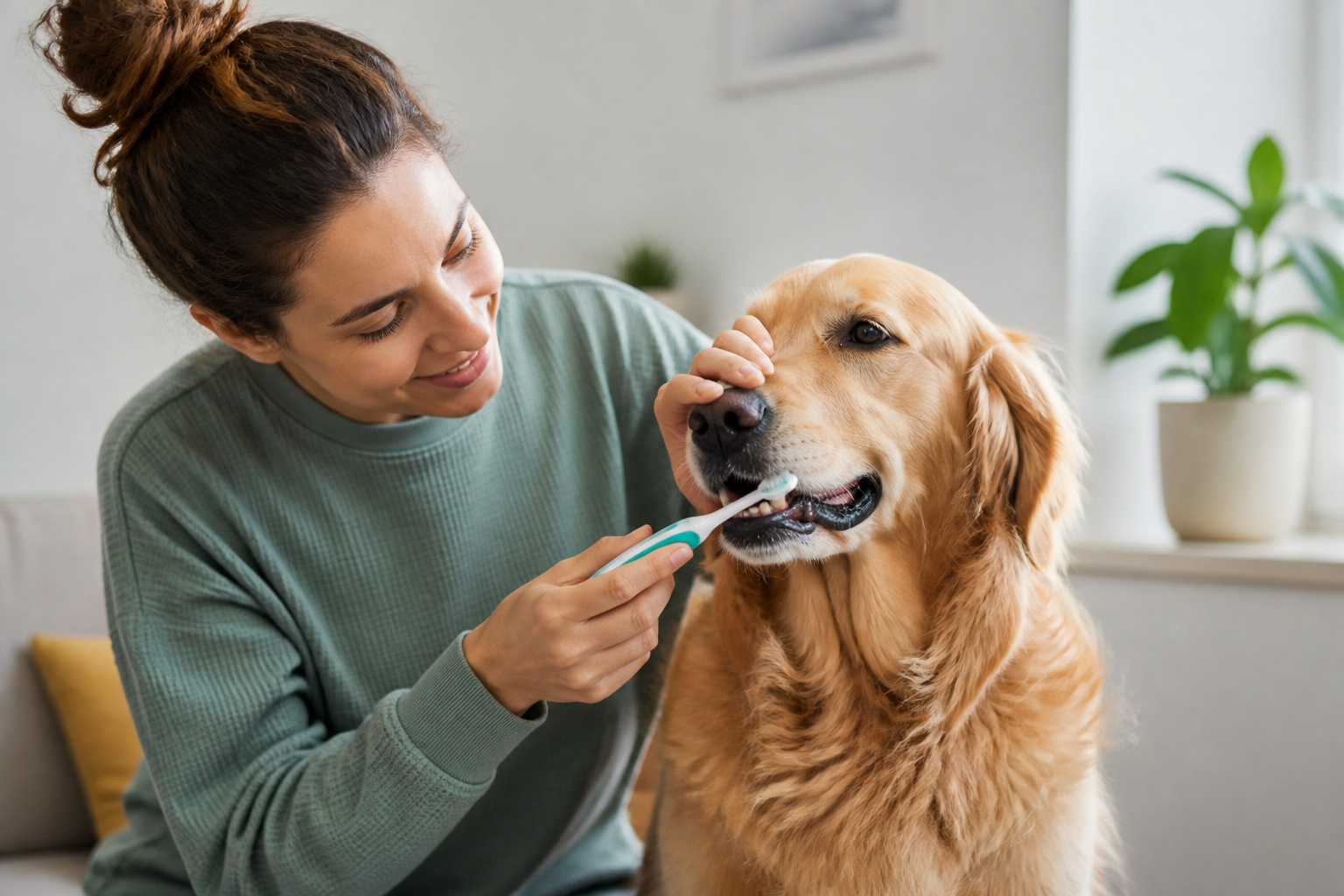
When you ask what you can use to clean a dog's teeth, brushing is always the top answer. It is the only way to physically break up the film of plaque before it hardens into tartar. You cannot use your own supplies for this task. Human toothpaste contains xylitol or fluoride, both of which are toxic to dogs.
Choosing the Right Brush
The type of brush you choose depends on the size of your dog's mouth and their comfort level. A standard pet toothbrush has a long handle and angled heads to reach the back molars. These are excellent for large breeds with plenty of room in their mouths.
If your dog is small or nervous, a finger brush is often a better starting point. These soft silicone caps slip over your pointer finger. They allow you to feel exactly where you are cleaning. For very tiny mouths, a piece of sterile gauze wrapped around your finger can also work.
Selecting a Toothpaste
Dog toothpastes come in flavors like poultry, beef, or peanut butter. This makes the experience feel like a treat rather than a chore. Most formulas are enzymatic. This means they use proteins to break down the bacteria that cause plaque even after you stop brushing. You can also explore Vets Preferred Enzymatic Dog Toothpaste - Peanut Butter as one available option.
Vet Tip: Never use human toothpaste or baking soda to clean your dog's teeth. Human paste contains foaming agents that cause stomach upset, and baking soda has high sodium levels that can be dangerous if swallowed.
Step-By-Step: How to Brush Your Dog's Teeth
If your dog is not used to having their mouth handled, you need to move slowly. Rushing the process will only make them fear the toothbrush. Consistency is more important than perfection in the beginning. For additional guidance, read The Top 10 Pet Dental Care Tips.
Step 1: Get them used to touch. / Spend a few days gently lifting your dog's lips and touching their teeth with your bare finger.
Step 2: Introduce the flavor. / Let your dog lick a small amount of pet toothpaste off your finger so they associate the taste with a positive experience.
Step 3: Test the brush. / Apply a small dab of paste to the brush and let them sniff it. Rub it gently against one or two front teeth.
Step 4: Use circular motions. / Angle the bristles at 45 degrees toward the gum line. Move in small circles, focusing on the outside of the teeth where the most buildup occurs.
Step 5: Keep it short and sweet. / End the session after 30 seconds and give them a high-value treat or praise.
Key Takeaway: Aim to brush your dog's teeth at least three times a week. Daily brushing is the best way to prevent the transition of plaque into permanent tartar.
Dental Chews and Toys
Not every dog will sit still for a toothbrush. This is where mechanical cleaning tools like dental chews and toys come into play. These items are designed to scrape the surface of the teeth as your dog bites down. For more ideas, browse our dog dental care collection.
How Dental Chews Work
The best dental chews have a specific texture that allows the tooth to sink into the treat. This creates friction against the tooth surface, rubbing away soft plaque. Brands like Greenies or KONG dental toys are specifically shaped to reach into the crevices of the mouth. You can compare options in 10 Best Dental Chews for Dogs.
We carry a wide variety of these options at BaxterBoo to suit different chewing styles. If your dog is a "gulper" who swallows treats whole, you must be careful. Choose a size that is large enough to force them to chew thoroughly. This ensures the mechanical action actually happens and prevents a choking hazard.
Hard Rubber Toys and Ropes
Rubber toys with ridges or "nubs" can also help. As your dog gnaws on these, the rubber massaged the gums and wipes the teeth. Cotton rope toys act like a giant piece of floss. As the fibers slide between the teeth, they can help dislodge bits of trapped food. Always supervise your dog with these toys to ensure they do not swallow any loose threads or broken rubber pieces.
Quick Answer: You can use pet-safe toothbrushes, enzymatic toothpaste, dental wipes, and water additives to clean your dog's teeth. Mechanical options like dental chews and textured toys also help remove plaque through friction.
Water Additives and Oral Rinses
If your dog's mouth is too sensitive for brushing or they are highly resistant to touch, water additives are a low-stress option. These are liquid solutions you pour directly into your dog's water bowl. They usually contain ingredients like chlorhexidine or stabilized chlorine dioxide. One example is Synergy Labs Dental Fresh Water Additive Dog Original Formula.
These chemicals work by reducing the overall bacterial load in the mouth. They do not remove existing tartar, but they can slow down the rate at which new plaque forms. They are also highly effective at neutralizing the sulfur compounds that cause bad breath.
Oral rinses are similar but are applied directly to the gums. You simply squirt a small amount of the liquid inside the cheek. The dog's natural saliva will spread the solution around the teeth. This is a great middle-ground for dogs that tolerate their face being touched but hate the sensation of a brush.
Dental Wipes for Quick Care
Dental wipes are pre-moistened pads designed to be swiped across the teeth. They are an excellent tool for busy mornings or for dogs that find a toothbrush too invasive. You can find additional options in our dog dental breath care selection.
- They remove surface film and food debris.
- They are easier to use on small or crowded teeth.
- Most contain mint or baking soda for immediate breath freshening.
- They allow you to get a close look at the gums for signs of redness.
While wipes are better than doing nothing, they cannot reach the deep grooves in the back molars as well as a brush can. Think of them as a supplement to your main routine.
The Impact of Diet on Dental Health
What you put in the bowl every day affects your dog's oral environment. There is a long-standing debate about wet food versus kibble. While kibble is often touted as better for teeth, standard dry food usually crumbles too quickly to provide much cleaning.
Specialty Dental Diets
If your dog is prone to heavy tartar buildup, your veterinarian might recommend a prescription dental diet. These kibbles are much larger and have a fibrous matrix. Instead of shattering when bitten, the kibble stays intact longer. This forces the tooth to penetrate the piece, which scrubs the surface.
Our pharmacy partnership with Pet's Choice allows you to easily fulfill these prescription diet needs. We carry trusted brands like Royal Canin and Farmina Vet Life that offer formulas specifically for oral health. You can explore our selection of Farmina Vet Life products when discussing dietary options with your veterinarian. You can have these delivered directly to your door through our Autoship program. This ensures you never run out of the food your dog needs to stay healthy.
Raw Bones and Natural Chews
Some owners use raw, meaty bones to keep teeth clean. The act of tearing meat and crunching through cartilage provides significant mechanical cleaning. However, this comes with risks. Cooked bones are strictly forbidden as they can splinter and puncture the digestive tract. Even raw bones can cause tooth fractures if your dog is an aggressive chewer. Always talk to your vet before introducing raw bones to your dog's routine.
Identifying Signs of Dental Disease
Even with the best home care, problems can still arise. You should perform a "mouth check" once a week. Lift the lips and look at the back molars and the gum line. For more warning signs, read Is Your Dog Hiding Bad Teeth? Warning Signs and What to Do.
Signs of trouble include:
- Red, swollen, or bleeding gums.
- Heavy brown or yellow deposits on the teeth.
- Loose or broken teeth.
- Excessive drooling.
- Pawing at the mouth or face.
- Dropping food while eating.
If you notice any of these symptoms, it is time for a professional exam. Chronic dental infections are painful and can lead to tooth loss. Bacteria from infected gums can also enter the bloodstream and cause damage to internal organs.
Professional Cleanings and Veterinary Support
Home cleaning is about prevention, but it cannot cure established periodontal disease. Once plaque has hardened into tartar, or calculus, it cannot be brushed away. It requires professional scaling by a veterinarian.
The Importance of Anesthesia
Many owners are nervous about anesthesia, leading them to look for "anesthesia-free" cleanings. While these might make the teeth look white, they are largely cosmetic. A vet needs your dog to be still so they can clean under the gum line. This is where the most dangerous bacteria live.
Anesthesia also allows the vet to take dental X-rays. These images reveal what is happening beneath the surface. Many dogs have painful abscesses or bone loss that are invisible to the naked eye. A professional cleaning under anesthesia is a medical procedure that includes scaling, polishing, and a full oral health assessment.
Pharmacy and Medication
If your dog has a gum infection or requires an extraction, they may need antibiotics or pain medication. Our pharmacy carries a full range of FDA-approved medications for these situations. Through our partnership with Pet's Choice, you can get the exact treatment your vet prescribes. This includes specialized rinses or gels that help the gums heal after a professional cleaning.
Bottom line: Home care stops new plaque from forming, but only a veterinarian can safely remove hardened tartar and treat underlying infections.
Summary of Tools for Dog Dental Care
Maintaining your dog's teeth requires a multi-layered approach. No single tool is a perfect solution on its own. By combining physical brushing with chemical additives and mechanical chews, you provide the best defense against dental disease.
| Tool | Benefit | Best For |
|---|---|---|
| Toothbrush & Paste | Physical removal of plaque | Regular maintenance |
| Dental Chews | Mechanical scraping and fun | Dogs that love to chew |
| Water Additives | Reduces bacteria and odors | Busy owners or difficult dogs |
| Dental Wipes | Quick surface cleaning | Travel or sensitive gums |
| Prescription Diets | Scrubbing action during meals | Dogs prone to fast tartar buildup |
Managing Long-Term Dental Health
The best time to start thinking about dental health was when your dog was a puppy. The second best time is today. At BaxterBoo, we believe that consistent care is the key to a long, happy life for your pet. Whether you are just starting to brush or are looking for the best dental treats, we have the expert-vetted supplies you need.
Start by introducing one new habit this week. Maybe it is a dental wipe after dinner or adding a water additive to their bowl. Small steps lead to big results over time. If you find a product your dog loves, consider our Autoship program. You will save on your orders and ensure you always have your dental supplies on hand.
Don't forget to reward your dog for their cooperation. A little bit of praise and a healthy treat can turn a dental routine into a bonding moment. Your dog's health is worth the effort, and their fresh breath will be a reward for both of you.
Key Takeaway: A successful dental routine combines at-home brushing, mechanical chews, and regular veterinary checkups to ensure your dog remains pain-free.
FAQ
Can I clean my dog's teeth without brushing?
Yes, you can use dental wipes, water additives, and dental chews to help manage plaque. These methods are helpful for dogs that do not tolerate a brush, but they are generally less effective at removing deep-seated plaque. Combining these alternatives is better than providing no dental care at all.
Is human toothpaste safe for dogs?
No, you should never use human toothpaste on your dog. It contains ingredients like xylitol and fluoride that are toxic to pets. Always use a toothpaste specifically formulated for dogs, which is safe to swallow and comes in flavors they enjoy.
How often do dogs need professional dental cleaning?
Most dogs benefit from a professional cleaning once a year, though some breeds may need it more frequently. Small dog breeds often have crowded teeth and are more prone to dental disease. Your veterinarian will assess your dog's mouth during their annual wellness exam to determine if a cleaning is necessary.
Why does my dog still have bad breath after brushing?
If your dog's breath remains foul after cleaning, they may have tartar buildup under the gum line or an underlying health issue. Persistent bad breath can be a sign of tooth decay, gum disease, or even digestive and kidney problems. You should consult your veterinarian for a thorough oral examination to rule out infection.






