
 Save 15% on your 1st Autoship learn more

 Email us
 Live Chat
 FAQs
FAQs





Introduction
You are relaxing on the couch when your dog hops up to give you a friendly lick. Suddenly, you are hit with a wave of breath that smells less like kibble and more like a swamp. Bad breath is often the first sign that oral hygiene needs attention. At BaxterBoo, we talk to pet owners every day who are surprised to learn that dental health affects a dog's heart, kidneys, and liver.
Cleaning your dog's teeth involves more than just a quick scrub once a year at the vet. It requires a combination of the right tools, consistent habits, and professional support. This post covers the specific products you can use at home, from enzymatic pastes to mechanical chews, and when it is time to call in the professionals. Taking these steps now can help your dog stay comfortable and avoid painful extractions later in life.
Quick Answer: The most effective tool for cleaning a dog’s teeth is a soft-bristled toothbrush paired with dog-specific enzymatic toothpaste. For dogs that resist brushing, you can use dental wipes, water additives, and treats approved by the Veterinary Oral Health Council (VOHC) to reduce plaque.
The Essential Toolkit for Brushing
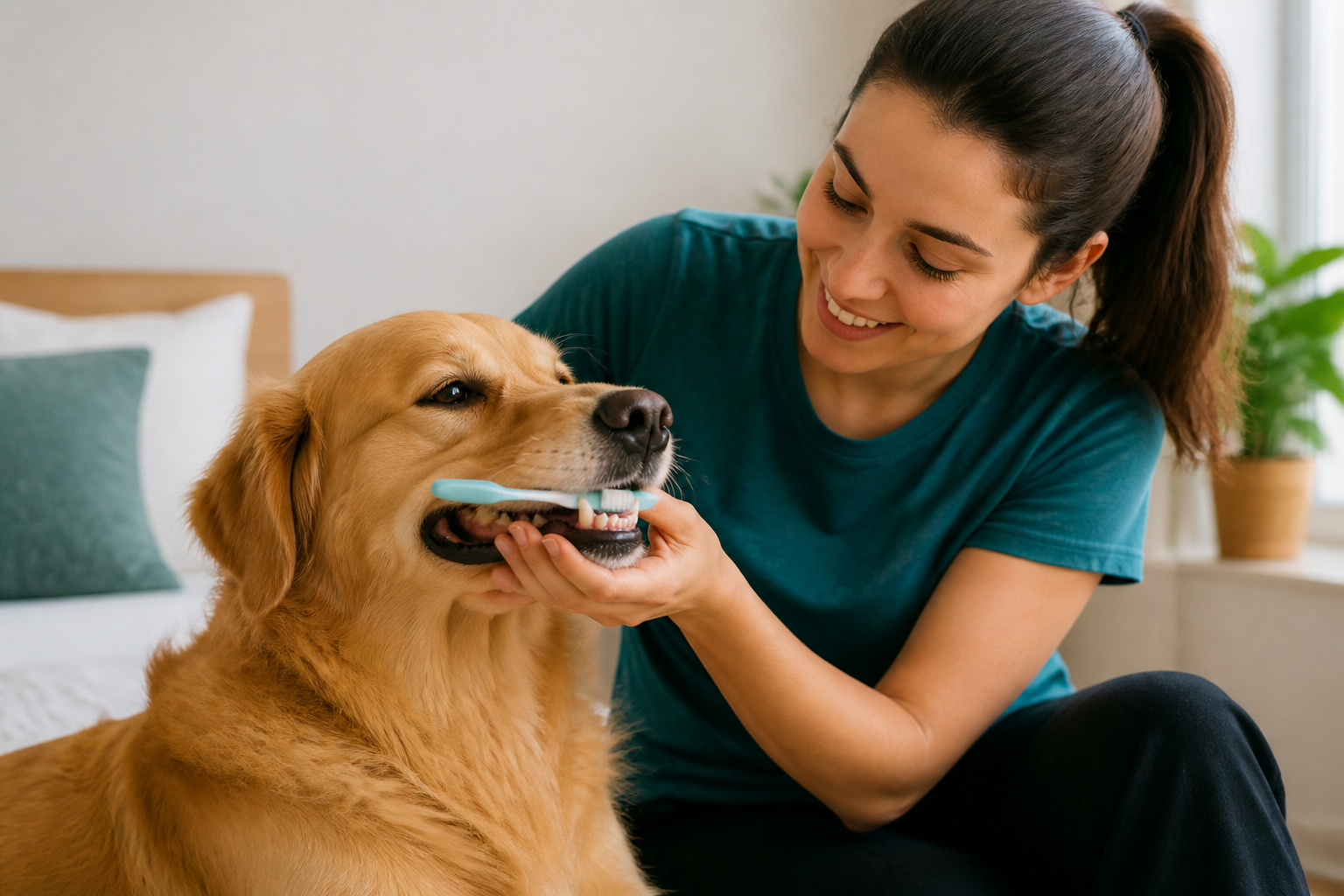
Brushing remains the gold standard for canine oral care. It is the only way to physically break up the film of bacteria known as plaque before it hardens into tartar. You cannot use human products for this task. Human toothpaste often contains xylitol, which is toxic to dogs, or fluoride, which can upset their stomachs since they cannot spit it out.
Dog-Specific Toothpaste
Dog toothpaste is formulated to be swallowed. It usually contains enzymes that work to chemically break down food particles and bacteria. These pastes come in flavors that dogs actually enjoy, such as poultry, beef, or peanut butter. This turns a chore into a treat for the dog. When the paste sits on the teeth and gums, the enzymes continue to work even after you stop scrubbing.
Choosing the Right Brush
The type of brush you choose depends on the size of your dog and their comfort level. A standard pet toothbrush has a long handle and an angled head. This helps you reach the back molars where tartar buildup is most aggressive. Dual-headed brushes allow you to clean the top and sides of the tooth at the same time.
For smaller dogs or pets that are nervous about long objects in their mouths, a finger brush is an excellent alternative. These are silicone or rubber caps with small bristles that fit over your index finger. They give you more control and a better "feel" for where you are cleaning. However, they do put your fingers at risk if your dog is prone to nipping.
Step-by-Step: Introducing the Brush
Step 1: Let them taste the paste. / Put a small amount of flavored toothpaste on your finger and let your dog lick it off.
Step 2: Rub the teeth with your finger. / Once they like the taste, gently rub your finger along their gums and teeth to get them used to the sensation.
Step 3: Introduce the brush. / Add toothpaste to the brush and let them lick it, then gently brush just the front canines in a circular motion.
Step 4: Gradually reach the back. / Over several sessions, work your way toward the back molars where the most plaque accumulates.
Key Takeaway: Consistency is more important than perfection. Brushing for thirty seconds three times a week is much better than a five-minute scrub once a month.
For more practical guidance, read our tips on introducing pets to toothpaste and building a brushing routine.
Alternatives to Traditional Brushing
Not every dog will tolerate a toothbrush. If your dog views the brush as an enemy, you still have options to keep their mouth clean. These methods are not as thorough as brushing, but they are significantly better than doing nothing at all.
Dental Wipes
Dental wipes are textured pads that you wrap around your finger. They allow you to wipe away plaque and food debris from the surface of the teeth. While they do not reach the tiny crevices or the gum line as well as bristles do, they are very effective for dogs that are "mouth shy." They are also convenient for travel or quick cleanups after a messy meal.
Water Additives
Water additives are often called "mouthwash for dogs." You simply add a capful to their water bowl. These solutions contain ingredients that alter the chemistry of the saliva to prevent plaque from sticking to the teeth. Some also contain deodorizers to improve breath instantly. This is a passive way to maintain oral health, though it should be used alongside other mechanical cleaning methods.
Dental Gels
Dental gels are applied directly to the gum line. You do not even need to brush them in. The dog's tongue moves the gel around the mouth, and the enzymes do the rest of the work. These are ideal for senior dogs who might have sensitive gums or for owners with limited mobility who find brushing difficult.
You can compare brushes, wipes, gels, and other options in our dog dental care collection.
Vet Tip: If you notice your dog’s gums are bright red, bleeding, or if there is a thick brown crust on the teeth, skip the home cleaning and head to the vet. These are signs of periodontal disease that require professional treatment.
Mechanical Cleaning with Chews and Toys
Dogs have a natural urge to chew. You can use this instinct to your advantage. Mechanical cleaning happens when a dog bites into a firm object that scrapes against the tooth surface as they chew.
Dental Chews and Treats
Many treats are specifically designed to clean teeth. We carry brands like Greenies and others that are shaped with ridges and nubs to get into hard-to-reach places. When shopping for these, look for the VOHC seal of approval. This seal means the product has been scientifically tested and proven to reduce plaque or tartar.
It is important to remember that dental treats add calories to your dog's diet. If you give a dental chew every day, you might need to slightly reduce their meal portions to prevent weight gain. Always supervise your dog while they enjoy a chew to ensure they do not swallow large chunks.
For additional ideas, browse our selection of Greenies products.
Rubber Toys and Ropes
Certain toys are built for oral health. Hard rubber toys with deep grooves, like those from Kong, can be stuffed with dog toothpaste or dental gel. As the dog works to get the flavor out, their teeth are scrubbed by the rubber. Cotton rope toys also act like a form of "floss" as the fibers slide between the teeth. However, you must inspect rope toys regularly. If they start to fray, your dog might swallow the strings, which can cause serious digestive issues.
Bottom line: Mechanical cleaning through chewing is a great daily supplement to brushing, but it cannot reach the bacteria living under the gum line.
See more options in our dental chews and treats collection.
For a closer look at chew options, explore our guide to dental chews for dogs.
Diet and Its Role in Dental Health
What your dog eats every day has a direct impact on the environment in their mouth. There is a common belief that dry kibble cleans teeth better than wet food because it is crunchy. While kibble does not leave as much residue as canned food, most standard kibble crumbles too quickly to provide real cleaning benefits.
Specialized Dental Diets
For dogs prone to rapid tartar buildup, a prescription dental diet may be necessary. These kibbles are usually larger and have a specific fiber matrix that does not shatter immediately. This forces the dog to chew more, and the kibble "scrubs" the tooth all the way to the gum line before it breaks apart.
Our pharmacy carries a variety of these specialized foods through our partnership with Pet's Choice. If your veterinarian recommends a specific dental diet like Royal Canin Dental or Farmina Vet Life, you can fulfill those needs through the our pet pharmacy. These diets often include minerals that bind calcium in the saliva, preventing it from hardening into tartar.
Rawhide and Bones
Chewing on bones is a traditional way to clean teeth, but it is controversial. Raw, meaty bones can help, but they also carry risks of bacteria or splintering. Cooked bones should never be given as they are brittle and can puncture the digestive tract. Harder items like antlers or nylon bones can actually cause "slab fractures," where a piece of the tooth breaks off because the object is harder than the enamel. If you choose to use these, do so with caution and under supervision.
Recognizing the Signs of Dental Problems
It is easy to miss dental issues because dogs are very good at hiding pain. In the wild, showing pain was a sign of weakness, so our domestic dogs often suffer in silence. You should perform a "flip the lip" check once a week.
Look for these red flags:
- Yellow or brown crust (tartar) near the gum line.
- Gums that look swollen, purple, or bleed when touched.
- Persistent bad breath that does not go away after a meal.
- Drooling more than usual.
- Pawing at the face or mouth.
- Dropping food or refusing to eat hard kibble.
If you see these signs, it is time for a professional exam. Ignoring these symptoms allows bacteria to enter the bloodstream. This can eventually lead to endocarditis, an infection of the heart valves, or permanent kidney damage.
For more warning signs to watch for, read how to recognize hidden dental problems in dogs.
Professional Cleaning and Veterinary Care
Even with the best home care, most dogs will eventually need a professional cleaning. This is similar to how humans still go to the dentist despite brushing and flossing daily. A professional cleaning at a vet clinic is much more thorough than anything you can do at home.
The Role of Anesthesia
Most veterinarians perform dental cleanings under general anesthesia. This is the safest way to ensure a complete cleaning. While the dog is asleep, the vet can take X-rays to see what is happening beneath the gum line. They can also use ultrasonic scalers to remove tartar from deep pockets in the gums without the dog moving or feeling pain.
Some pet owners look for anesthesia-free cleanings. While these can make the teeth look white on the surface, they do not address the bacteria under the gums where the real damage happens. Furthermore, it can be very stressful for a dog to have sharp metal tools in their mouth while they are awake and restrained.
The Importance of X-rays
Did you know that up to 60 percent of a dog's tooth is hidden under the gum? A tooth might look perfectly healthy from the outside but have a rotting root or an abscess underneath. Without X-rays, these painful conditions go unnoticed. Regular professional checkups allow your vet to catch these problems before they require expensive and painful extractions.
Vet Tip: Schedule a dental checkup at least once a year. For certain breeds like Pugs, Yorkies, or Chihuahuas who have crowded mouths, you may need to visit the vet every six months.
Maintaining a Routine for Long-Term Success
The key to cleaning a dog's teeth is not a single product but a consistent routine. Most pet owners find that a combination of several methods works best. You might brush on Monday, Wednesday, and Friday, and give a dental chew on the other days. Adding a water additive to the bowl takes no extra time but provides constant support.
At BaxterBoo, we want to make this routine as easy as possible. Our Autoship program is a great way to ensure you never run out of dental treats or toothpaste. By setting up recurring deliveries, you also earn a free MVP Gold membership, which gives you even more ways to save on your pet's health essentials.
Checklist for a Healthy Mouth
- One enzymatic toothpaste in a flavor your dog loves.
- One soft-bristled brush or finger brush.
- VOHC-approved dental chews for daily "mechanical" cleaning.
- A water additive or dental gel for passive care.
- An annual veterinary dental exam.
Conclusion
Keeping your dog's mouth clean is one of the most impactful things you can do for their overall health. By using the right toothpaste, brushes, and supplemental treats, you can prevent the buildup that leads to pain and disease. Remember that home care is a partnership with your veterinarian. Use your daily brushing sessions as a time to bond with your pet and to check for any new lumps, bumps, or changes in their mouth.
For all your dental care needs, you can browse our dog dental care category for brushes, pastes, and VOHC-approved treats. If your vet has prescribed a specific medication or diet for your dog's oral health, visit our pet pharmacy to have those items delivered right to your door.
FAQ
Can I use baking soda to clean my dog's teeth?
It is best to avoid using baking soda because it has a very high alkaline content. If your dog swallows a significant amount, it can upset the acid balance in their stomach and cause digestive distress. Stick to dog-specific enzymatic toothpastes which are safer and taste much better to your pet.
How often should I clean my dog's teeth at home?
Ideally, you should brush your dog's teeth every single day to prevent plaque from hardening into tartar. If daily brushing is not realistic for your schedule, aim for at least three times a week. Supplementing with dental chews and water additives on the days you do not brush can also help maintain their oral hygiene.
Why does my dog's breath still smell bad after brushing?
If your dog's breath remains foul after you have cleaned their teeth, it may indicate a problem beneath the gum line or a non-dental health issue. Chronic bad breath can be a sign of gum infection, kidney disease, or digestive problems. You should consult your veterinarian for a full exam to rule out underlying conditions.
Are dental wipes as good as brushing?
Dental wipes are a helpful tool, but they are not as effective as a toothbrush. Wipes can only clean the flat surfaces of the teeth and cannot reach the crevices or the area where the tooth meets the gum line. They are a great starting point for dogs that hate brushes, but you should try to work up to using a brush for a more thorough clean.






