
 Save 15% on your 1st Autoship learn more

 Email us
 Live Chat
 FAQs
FAQs





Introduction
You lean in for a happy morning nuzzle only to be met with a cloud of breath that could peel paint. While we often joke about "dog breath," persistent foul odors are usually the first sign of a much deeper health issue. Plaque and tartar do not just sit on the surface of the teeth. They can lead to painful infections, tooth loss, and even systemic problems that affect the heart and kidneys.
At BaxterBoo, we have spent nearly two decades helping pet owners navigate the essentials of daily care. We know that every dog is different. Some will sit patiently for a full tooth brushing session, while others treat a toothbrush like a strange enemy. This guide covers the most effective methods to maintain your dog's oral hygiene, from the gold standard of brushing to passive solutions like water additives and dental diets. Our goal is to give you a clear, actionable plan that keeps your dog's tail wagging and their smile bright.
Why Dental Care Is a Health Requirement
Dental hygiene is not a luxury or a cosmetic concern. It is a fundamental part of your dog's overall wellness. When a dog eats, saliva, food particles, and bacteria combine to form plaque. If this plaque is not removed within 24 to 48 hours, it hardens into tartar. Tartar is porous and provides a perfect home for even more bacteria to grow.
Once tartar forms, it can only be removed by professional tools. This buildup eventually moves under the gumline. This causes inflammation known as gingivitis. If left alone, it progresses to periodontal disease. This stage involves the destruction of the bone and tissues that hold the teeth in place. It is often very painful, though dogs are masters at hiding chronic discomfort.
Key Takeaway: Oral health impacts the entire body. Bacteria from infected gums can enter the bloodstream and damage vital organs like the heart, liver, and kidneys.
For additional guidance on warning signs, read about how to recognize bad teeth in dogs.
The Gold Standard: Brushing Your Dog's Teeth
Most veterinarians agree that brushing is the single most effective way to clean a dog's teeth. It provides the mechanical action needed to scrub away plaque before it calcifies. Ideally, you should brush your dog's teeth every single day. If that feels impossible, aim for at least three times a week to make a meaningful difference.
Choosing the Right Tools
Never use human toothpaste for your dog. Human formulas often contain xylitol, which is a sweetener that is highly toxic to dogs. They also contain foaming agents like sodium lauryl sulfate that are meant to be spit out. Dogs will swallow the paste, so they need a specialized enzymatic pet toothpaste. These are flavored like poultry, beef, or peanut butter to make the experience more enjoyable.
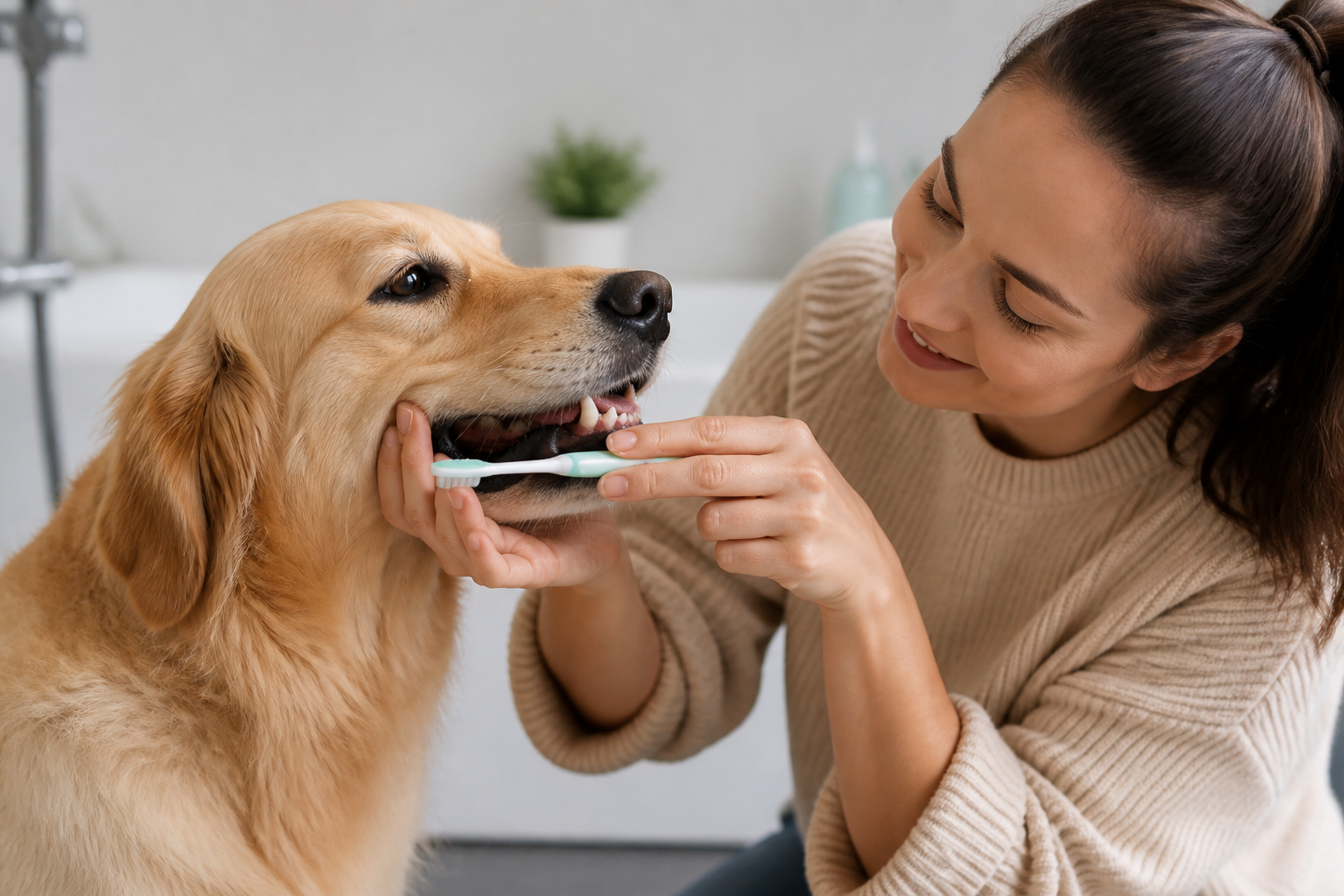
For the brush, you have options. A long-handled pet toothbrush allows you to reach the back molars easily. A finger brush, which fits over your fingertip, offers more control and is often less intimidating for puppies or small dogs. If your dog is particularly small, a soft-bristled baby toothbrush can also work well.
A poultry-flavored option such as Virbac C.E.T. Enzymatic Pet Toothpaste for Dogs and Cats is designed specifically for pets and is currently available.
How to Start a Brushing Routine
Do not expect to do a full cleaning on the first day. It is a process of building trust.
Step 1: Introduce the taste. / Let your dog lick a small amount of pet toothpaste off your finger. Do this for a few days until they see the paste as a treat.
Step 2: Get them used to mouth handling. / Gently lift your dog's lips and rub your finger along their gums. Reward them with praise or a small treat immediately after.
Step 3: Introduce the brush. / Put a bit of toothpaste on the brush and let them lick it. Gently brush one or two front teeth in a circular motion.
Step 4: Gradually increase the area. / Over several weeks, work your way toward the back of the mouth. Focus on the outside surfaces of the teeth, as this is where the most plaque accumulates.
Vet Tip: You do not need to worry about the inside surface of the teeth. A dog's tongue does a decent job of keeping those areas clean. Focus your energy on the outer surfaces near the cheek.
For more routine-building advice, explore these pet dental care tips.
The Role of Dental Chews and Treats
Not every dog will tolerate a toothbrush. This is where dental chews become a valuable tool. These products are designed to be abrasive. As your dog chews, the treat scrapes against the surface of the tooth to help remove plaque. Many high-quality chews also contain ingredients like hexametaphosphate to reduce the formation of new tartar.
When shopping for treats, look for the Veterinary Oral Health Council (VOHC) Seal of Acceptance. This seal means the product has been scientifically tested and proven to reduce plaque or tartar by at least 20 percent. Brands like Greenies and certain Kong dental toys are popular for their effective textures.
You can compare options in our dental and breath care collection, including dental chews, toothpaste, oral gels, and water additives.
However, chews are not a complete replacement for brushing. They mostly target the chewing surfaces and the back molars. They rarely reach the canine teeth or the incisors at the front. Think of chews as a supplement to your main cleaning routine.
Note: Always supervise your dog when they are working on a chew. This prevents choking and ensures they are actually chewing the product rather than swallowing it in large chunks.
For a specific chew option, consider Virbac C.E.T. Enzymatic Oral Hygiene Chews for Dogs.
Dental Diets and Kibble
What your dog eats every day has a significant impact on their oral health. There is a common belief that all dry kibble cleans teeth simply because it is crunchy. This is not always true. Most standard kibble is small and brittle. It shatters the moment a dog's tooth hits it, providing very little scrubbing action.
Specialized dental diets are different. The kibble is usually larger and has a fibrous structure that does not shatter. Instead, the tooth sinks into the piece of food, allowing the fibers to scrub the tooth all the way to the gumline. Some of these diets, like those from Royal Canin or Farmina, also contain minerals that bind calcium in the saliva. This prevents it from hardening into tartar.
If your dog has a history of rapid tartar buildup, ask your vet about a prescription dental diet. We offer a range of these specialized foods through our pharmacy partnership with Pet's Choice. These formulas are specifically engineered to manage oral health in ways that standard over-the-counter foods cannot.
Water Additives and Oral Sprays
For the busiest pet owners or the most stubborn dogs, water additives and oral sprays provide a passive way to fight bacteria. These products are typically tasteless and odorless. You simply add a capful to your dog's water bowl every day.
The active ingredients in these additives work by changing the chemistry of the mouth. They help kill the bacteria that cause bad breath and plaque formation. While they will not remove existing tartar, they are excellent at slowing down new buildup. Oral sprays work similarly but are applied directly to the teeth and gums. They are a good middle ground for dogs that do not mind their mouth being touched but hate the sensation of a brush.
One example is Zymox Oratene Brushless Enzyme Dog and Cat Oral Care Water Additive, although product availability can vary.
Quick Answer: The best way to clean a dog's teeth is a combination of daily brushing with pet-safe toothpaste and regular professional cleanings. Using dental chews and water additives can help maintain hygiene between brushings.
The Necessity of Professional Cleanings
Even with the best at-home care, most dogs will eventually need a professional cleaning. Just like humans go to the dentist for a deep clean despite brushing daily, dogs need a veterinarian to handle the areas that are impossible to reach at home.
A professional dental cleaning, or prophylaxis, must be performed under general anesthesia. Some services offer "anesthesia-free" cleanings, but these are mostly cosmetic. Without anesthesia, a vet cannot safely clean under the gumline, where the real damage occurs. They also cannot take dental X-rays to check for bone loss or infected roots.
During a professional cleaning, the vet will:
- Perform a full oral exam to look for pockets, recession, or growths.
- Take X-rays to see what is happening beneath the gums.
- Scale the teeth to remove all tartar and plaque.
- Polish the teeth to smooth the surface and make it harder for bacteria to stick.
- Extract any teeth that are too damaged or painful to save.
Vet Tip: If you notice your dog dropping food, chewing on only one side of their mouth, or pawing at their face, seek a veterinary consult immediately. These are signs of dental pain that require professional intervention.
Signs of Dental Disease to Watch For
It is helpful to know what "normal" looks like so you can spot problems early. Healthy gums should be a vibrant pink color, similar to a piece of bubblegum. The teeth should be white or off-white without significant brown or yellow staining at the gumline.
Be on the lookout for these warning signs:
- Red or bleeding gums (gingivitis).
- Breath that stays foul even after eating or drinking.
- Loose or missing teeth.
- Excessive drooling.
- Bumps or lumps inside the mouth.
- Discoloration that looks like crusty brown buildup.
If you see these signs, it is time to schedule an appointment. Dental disease is progressive. Catching it at the gingivitis stage is much easier and less expensive than treating advanced periodontal disease later on.
Managing Dental Health Through the BaxterBoo Pharmacy
Maintaining a healthy mouth often requires more than just a brush and paste. For dogs with chronic oral infections or those recovering from dental surgery, medications are often necessary. Our pharmacy provides access to FDA-approved medications through our partnership with Pet's Choice. This includes antibiotics for gum infections and pain relief for post-procedure care.
We also carry prescription dental diets that are specifically formulated to reduce the accumulation of plaque and tartar. These diets require a valid prescription from your veterinarian. Using these specialized tools as part of a long-term plan can significantly reduce the frequency of professional cleanings.
Key Takeaway: Prescription dental diets and medications are powerful tools for managing oral health. Work with your vet to see if these options are right for your dog's specific needs.
Natural Bones and Chew Safety
Many owners turn to raw or cooked bones to help clean their dog's teeth. This is a controversial topic. While the mechanical action of chewing a raw bone can scrape away some plaque, it comes with risks. Hard bones can cause tooth fractures, especially in aggressive chewers. Cooked bones are even more dangerous because they can splinter and cause internal damage to the digestive tract.
If you choose to use bones for dental health, raw "recreational" bones are usually safer than cooked ones. However, you must always supervise your dog. If you notice your dog is biting down with extreme force, it may be safer to switch to a softer dental chew. Always consult your vet before adding bones to your dog's routine, especially if they have sensitive teeth or existing dental work.
Habit Stacking for Success
The hardest part of cleaning a dog's teeth is remembering to do it. The best way to ensure consistency is through a technique called habit stacking. This means you attach the new habit (brushing) to an existing habit.
For example, you could brush your dog's teeth right after you brush your own at night. Or, you could make it part of their evening wind-down routine before they get their final potty break. Keep the toothbrush and paste in a visible spot where you will see it during these times.
The more consistent you are, the faster your dog will accept the process. Over time, many dogs actually look forward to the flavor of the toothpaste and the attention they receive during the session.
Bottom line: Consistency is more important than perfection when it comes to at-home dental care.
Maintaining Your Routine
Setting up a schedule helps keep you on track. We recommend a multi-layered approach for the best results.
- Daily: Brush with pet-safe toothpaste. Add water additive to the bowl.
- Weekly: Inspect the gums for redness or swelling.
- Monthly: Wash any fabric dental toys to keep them free of bacteria.
- Yearly: Schedule a veterinary wellness exam that includes a thorough dental check.
By combining these steps, you are doing more than just freshening their breath. You are protecting their long-term health and preventing the need for more invasive procedures down the line. We are here to support that journey with the supplies and guidance you need.
Conclusion
Cleaning your dog's teeth is one of the most impactful things you can do for their longevity. While brushing is the most effective method, a combination of dental chews, specialized diets, and water additives creates a comprehensive defense against plaque and tartar. Remember that at-home care is a partner to professional veterinary cleanings, not a replacement.
If you are ready to start a routine, we have everything you need to succeed. Our pharmacy carries prescription diets and medications for ongoing health management. You can also take advantage of our Autoship programme to ensure you never run out of your dog's favorite dental treats and toothpaste. Keeping your dog's smile healthy is a lifelong commitment, but the reward is a happier, more comfortable pet.
Key Takeaway: A multi-pronged approach—brushing, chews, and professional care—is the most effective way to prevent dental disease.
FAQ
How often do I really need to brush my dog's teeth?
Ideally, you should brush your dog's teeth every day to prevent plaque from hardening into tartar. If daily brushing is not possible, aiming for at least three times per week is still very beneficial. Consistency is key because plaque can begin to calcify into tartar within 24 to 48 hours.
Can I use baking soda to clean my dog's teeth?
It is not recommended to use baking soda as a regular toothpaste for dogs. While it is not toxic in tiny amounts, it has a high alkaline content that can upset a dog's stomach if swallowed. It also lacks the enzymes found in pet-specific toothpaste that help break down plaque chemically.
Are dental chews as good as brushing?
Dental chews are a great supplement, but they are not as effective as brushing. Brushing allows you to target the gumline and the front teeth, which chews often miss. Think of dental chews as an extra tool in your kit rather than a total replacement for manual cleaning.
Why does my dog need anesthesia for a dental cleaning?
Anesthesia is necessary so the veterinarian can safely clean under the gumline and take accurate X-rays. It also keeps your dog still and pain-free during the procedure. Without it, a deep cleaning is impossible, and the vet cannot address the root causes of dental disease effectively.






