
 Save 15% on your 1st Autoship learn more

 Email us
 Live Chat
 FAQs
FAQs





Introduction
If you have ever stood in a pet supply aisle and wondered why almost every bag of kibble looks like a variation of the same brown nuggets, you are looking at the result of extrusion. This manufacturing method produces about 95 percent of the dry dog food sold today. While most pet owners focus on ingredients, the way those ingredients are cooked also plays a significant role in your dog's daily nutrition. At BaxterBoo, we believe that understanding how your dog’s food is made helps you make better choices for their long term health. This article covers the mechanics of the extrusion process, the nutritional pros and cons of high heat cooking, and how it compares to other feeding options. By the end, you will know exactly what goes into that crunchy kibble and why the process matters for your pet. If you want to start comparing options now, our dog food category is a good place to browse.
The Science of the Extrusion Process
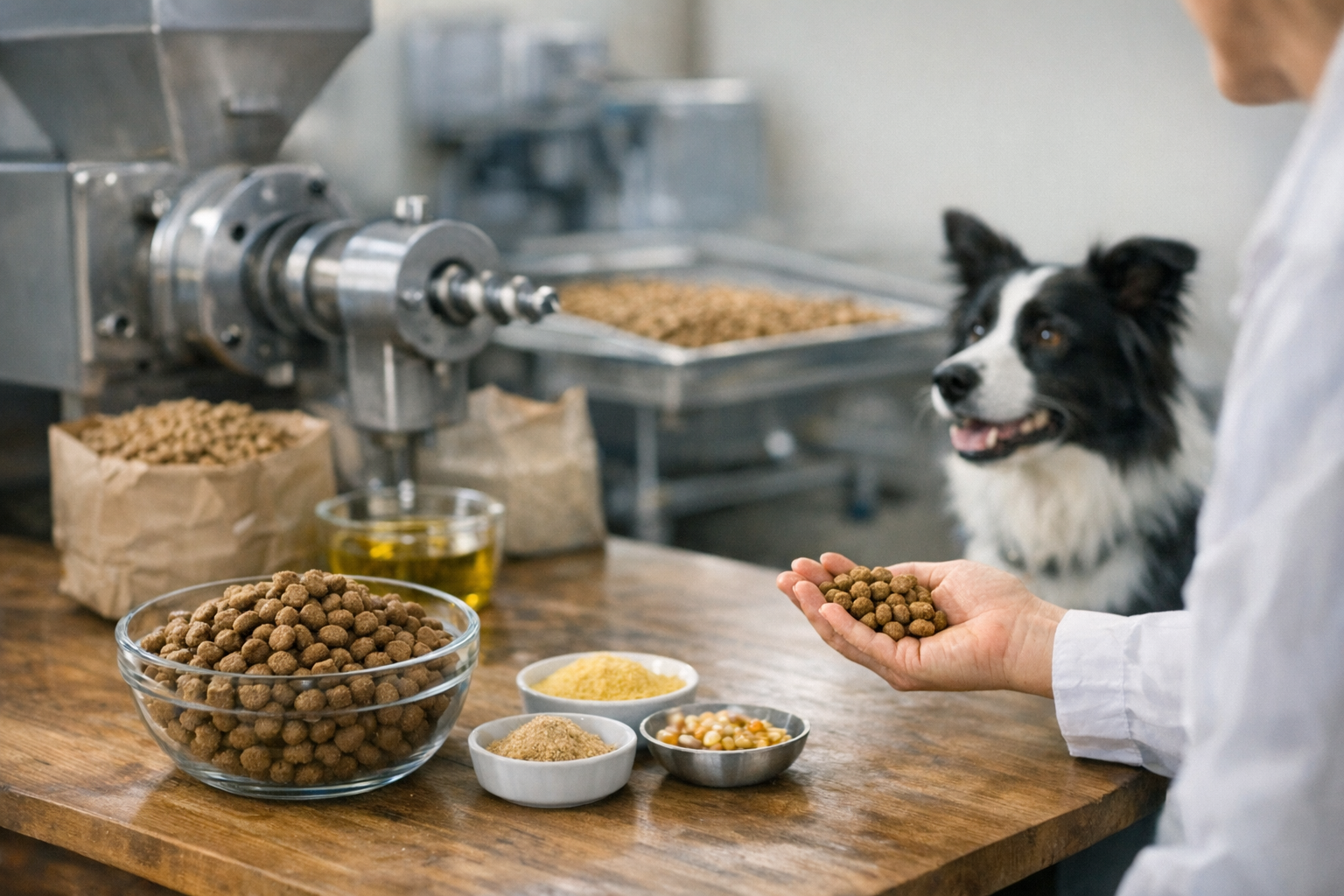
Extrusion is a high pressure, high temperature cooking method used to create shelf stable pet food. It was first adopted by the pet food industry in the 1950s. The process allows manufacturers to produce large quantities of food that stay fresh in a bag for months. It also creates the specific textures and shapes that make kibble easy for dogs to pick up and chew.
The process begins long before the food enters the machine. It starts with a recipe formulated to provide a complete and balanced diet. Most recipes include a mix of proteins, fats, carbohydrates, vitamins, and minerals.
Quick Answer: Dry extruded dog food is kibble made by pushing a dough through a pressurized machine called an extruder. The heat and pressure cook the food and shape it into the familiar nuggets found in most commercial dog food bags.
Step By Step How Kibble Is Created
The manufacturing line is a massive, coordinated system. Every stage is designed to ensure the food is safe, digestible, and consistent.
Step 1: Mixing and Grinding. /
Manufacturers take dry ingredients like grains, meat meals, and vegetable fibers and grind them into a fine flour. They then mix these with liquid ingredients like water or fresh meat to create a thick dough.
Step 2: Preconditioning. /
The dough enters a chamber where it is exposed to steam and hot water. This hydrates the ingredients and starts the cooking process. This stage is vital because it begins to break down starches so your dog can digest them easily.
Step 3: The Extruder Barrel. /
The dough is forced through a long barrel by a large screw. As it moves, the pressure and temperature rise significantly. At the end of the barrel, the dough is pushed through a metal plate with holes called a die. This die determines the shape of the kibble.
Step 4: The Pressure Release. /
When the dough exits the die into the open air, the sudden drop in pressure causes the kibble to puff up. A rotating blade cuts the continuous ribbons of dough into individual pieces.
Step 5: Drying and Cooling. /
The wet kibble pieces travel through a large oven. This reduces the moisture content to around 8 to 10 percent. Low moisture is the key to preventing mold and making the food shelf stable.
Step 6: Coating or Enrobing. /
After cooling, the kibble enters a revolving drum. Here, it is sprayed with fats, oils, and flavor enhancers. Many brands also add vitamins at this stage since some nutrients are lost during the high heat cooking in the extruder.
Why Most Dog Food Is Extruded
There are practical reasons why extrusion is the industry standard. For one, it makes the food very safe. The high heat acts as a kill step for pathogens like Salmonella or E. coli. This gives pet owners peace of mind when handling the food at home.
Extrusion also makes the food more affordable. Because the machines can produce thousands of pounds of food per hour, the cost per serving is much lower than fresh or freeze dried alternatives. We carry many brands at BaxterBoo that utilize this process to provide high quality nutrition at a price point that fits most budgets, including options from Royal Canin and other trusted names.
Key Takeaway: The extrusion process is used because it creates a safe, shelf stable, and cost effective product that is easy for pet owners to store and serve.
How High Heat Affects Nutrition
A common concern among pet owners is whether high heat destroys the nutrients in the food. The truth is a bit more complex. Some nutrients are negatively affected, while others actually become more available to your dog.
The Impact on Starch and Carbohydrates
Raw starch is very difficult for a dog to digest. The heat and pressure of extrusion cause a process called gelatinization. This breaks the starch molecules apart. Once gelatinized, the dog’s digestive enzymes can easily convert the starch into energy. This is one of the main benefits of the extrusion process.
The Impact on Proteins and Amino Acids
High heat can sometimes damage delicate amino acids like lysine. This is often caused by the Maillard reaction, which is the same chemical reaction that browns bread or sears a steak. While this reaction makes the food smell and taste great to your dog, it can make some of the protein less usable. Reputable manufacturers account for this by adding extra amino acids back into the recipe to ensure the food remains balanced.
Vitamin Degradation
Vitamins like B1 (thiamine), Vitamin A, and Vitamin E are sensitive to heat. A significant percentage of these vitamins can be lost during the cooking and drying stages. To solve this, pet food companies use a vitamin premix. They add a calculated surplus of these vitamins so that even after the cooking loss, the final product meets the required nutritional levels.
Vet Tip: If your dog has a specific health condition that requires a specialized diet, ask your veterinarian about prescription kibble. Our pet pharmacy carries prescription pet foods for conditions like kidney disease or severe food allergies.
Comparing Extruded Kibble to Other Formats
While extrusion is common, it is not the only way to make dry dog food. Some owners prefer alternatives like baked or cold pressed foods. Each has a different impact on the density and digestibility of the meal.
| Feature | Extruded Kibble | Baked Dog Food | Cold Pressed Food |
|---|---|---|---|
| Cooking Temp | High (250F - 400F) | Moderate | Low (under 120F) |
| Texture | Crunchy and airy | Denser and biscuit-like | Soft and pellet-like |
| Stomach Action | May expand | Breaks down slowly | Dissolves quickly |
| Shelf Life | Very long | Long | Short to Moderate |
Baked dog food is cooked at lower temperatures for a longer time. This often preserves more of the natural flavor and requires fewer added fats on the outside of the kibble. Cold pressed food uses minimal heat and compresses the ingredients into pellets. Proponents of cold pressed food say it is easier on the stomach because it does not swell when it hits liquid.
Is Extruded Food Right for Your Dog?
For the vast majority of dogs, extruded kibble is a fantastic option. It provides consistent nutrition and the crunchy texture helps scrape away some plaque during meals. However, some dogs may have specific needs that make other formats better.
- For Picky Eaters: Some dogs find the sprayed on fats of extruded kibble very appealing.
- For Sensitive Stomachs: If a dog experiences bloating or gas, a baked or cold pressed food might be easier to digest.
- For Active Dogs: High calorie extruded foods are efficient ways to provide the energy needed for working or sporting dogs.
We stock over 500 brands at BaxterBoo, including many that use specialized extrusion techniques to preserve as much nutrition as possible. Brands like Farmina and Open Farm use precise technology to ensure their kibble meets very strict nutritional standards.
Quality Indicators to Look For
Since you now know that the process is fairly similar across the board, the quality of an extruded food comes down to the ingredients and the manufacturer's quality control.
- Specific Meat Sources: Look for "Chicken" or "Lamb" rather than "Meat By-Products."
- Whole Food Ingredients: Ingredients like sweet potatoes, peas, and blueberries provide natural vitamins.
- AAFCO Statement: Ensure the bag says it is "Complete and Balanced" for your dog's life stage.
- Feeding Trials: Some premium brands go beyond basic math and actually test their food with real dogs to ensure the nutrients are being absorbed correctly.
Bottom line: The quality of the ingredients put into the extruder matters more than the machine itself.
Common Myths About Extruded Dog Food
There are several misconceptions about kibble that often worry pet parents. One common myth is that the high heat makes the food "dead" or void of nutrition. As we discussed, manufacturers use vitamin premixes to ensure the final product is nutritionally complete.
Another myth is that the carbohydrates in extruded food are inherently bad for dogs. While dogs do not have a biological requirement for high levels of carbs, the starch is what allows the kibble to hold its shape. Without starch, the kibble would crumble into dust. When cooked properly via extrusion, these carbs are a safe and efficient energy source for most pets.
Some people worry that the "kill step" makes the food less natural. While the heat does change the ingredients, it also ensures the food is free from dangerous bacteria. For many families, this safety is a major benefit that outweighs the desire for a raw or unprocessed diet.
Maximizing the Benefits of Kibble
If you choose to feed an extruded diet, there are ways to make it even better for your dog. Proper storage is the most important factor. Once a bag is opened, the fats on the outside of the kibble begin to oxidize.
- Keep it in the bag: The original bag is designed to keep moisture and light out. Place the entire bag inside a sealed plastic or metal bin.
- Don't overbuy: Try to buy a bag size that your dog will finish within 4 to 6 weeks.
- Add fresh toppers: You can boost the nutrition of any kibble by adding a little bit of fresh, dog safe vegetables or a splash of bone broth.
If you are looking for ways to save on your dog's favorite food, our Autoship programme is a great choice. It ensures you never run out of food and offers savings on your first order. Plus, recurring deliveries help keep your dog on a consistent feeding schedule, which is better for their digestion.
Conclusion
Dry extruded dog food is a marvel of modern food science. It provides a safe, convenient, and affordable way to give our pets the nutrients they need to thrive. While the high heat does change some of the ingredients, responsible manufacturers use careful formulation to ensure the final product is balanced. Whether you choose a standard kibble or a premium brand like Stella and Chewy's or Open Farm, the key is finding what works for your specific dog. We invite you to explore our extensive collection of dog food at BaxterBoo to find the perfect match for your pup’s needs. If your dog requires a special diet for a health condition, remember to consult your veterinarian and check our pharmacy for prescription options.
FAQ
Does extruded dog food cause bloat?
There is no scientific evidence that the extrusion process itself causes bloat. However, because some kibble expands when it gets wet, fast eaters might swallow a lot of air. If your dog is prone to bloat, using a slow feeder or feeding smaller, more frequent meals is a better strategy than simply changing food types.
Is baked dog food better than extruded dog food?
Neither is objectively better, as they serve different needs. Baked food is often less processed and denser, while extruded food is generally more affordable and has a longer shelf life. The quality of the ingredients in the recipe is usually a more important factor than whether the food was baked or extruded. For more feeding context, our dry dog food for puppies guide is a helpful read.
Why do manufacturers spray fat on the outside of the kibble?
The extrusion process is very drying, which can make the food lose its aroma. Spraying fats and oils on the finished kibble makes it taste better to your dog and provides essential fatty acids for skin and coat health. It also allows manufacturers to add heat sensitive vitamins after the hottest part of the cooking is over.
Can I mix extruded kibble with fresh food?
Yes, many pet owners use kibble as a base and add fresh or wet food as a topper. This provides the convenience and dental benefits of kibble while adding extra moisture and variety to the diet. Just be sure to adjust the overall calorie count so your dog maintains a healthy weight. If you are exploring mix-in ideas, our guide to mixing wet and dry dog food breaks it down in more detail.






