
 Save 15% on your 1st Autoship learn more

 Email us
 Live Chat
 FAQs
FAQs





Introduction
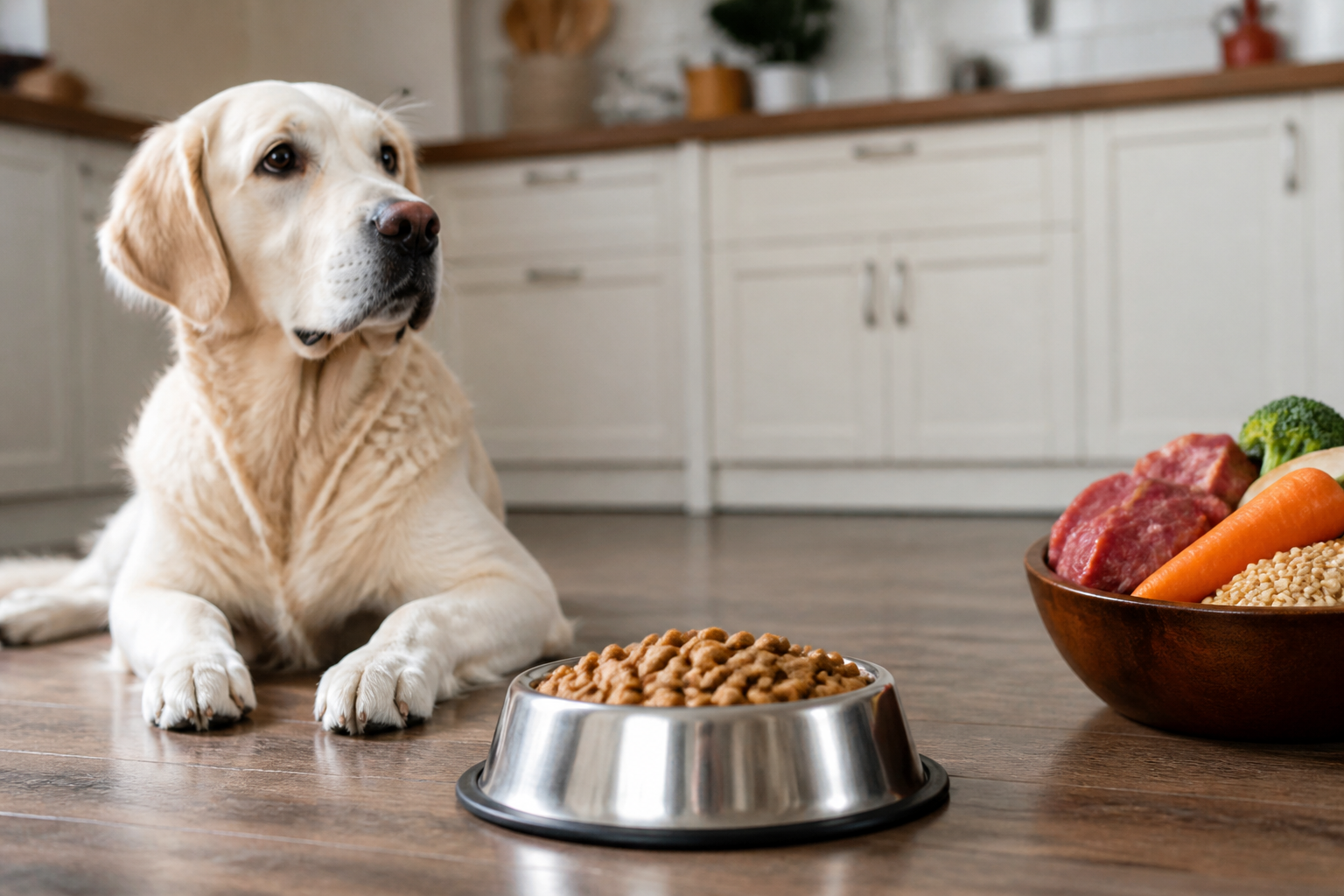
You are standing in the pet food aisle or scrolling through a website trying to decide between two different meals for your dog. On one hand, you have a bag of dry kibble that says it contains 26 percent protein. On the other hand, you have a premium canned food that lists only 9 percent protein. At first glance, it looks like the kibble is the clear winner for muscle building and energy. However, these numbers are actually hiding the truth about what your dog is eating.
At BaxterBoo, we believe that understanding the math behind the label is the best way to be a great pet parent. The protein, fat, and fiber percentages you see on a package are reported as fed, which means they include the water weight. Because wet food is mostly water, its nutrients look much lower than they actually are. This post covers exactly how to calculate dry matter in dog food so you can compare any two products fairly. Understanding this concept is the only way to ensure your dog gets the nutrition they truly need.
If you want to start comparing formulas right away, our dog food category is a helpful place to browse.
Quick Answer: Dry matter basis is the percentage of a nutrient in dog food after all the moisture has been removed. It allows you to compare the nutritional density of wet and dry foods on a level playing field.
The Difference Between As Fed and Dry Matter
When you look at the guaranteed analysis on a dog food label, you are seeing the as fed values. This simply means the percentages represent the food exactly as it sits in the bag or can. For dry kibble, this is not a big deal because kibble only contains about 10 percent moisture. For canned food, it changes everything because those products are often 75 to 84 percent moisture.
Water has no protein, fat, or minerals. It is essential for hydration, but it dilutes the density of the actual food. When you read a canned food label, you are looking at a lot of water weight. To see what your dog is actually getting for their muscles and bones, you have to mentally or mathematically remove that water.
If you are comparing textures often, our dry dog food category can help you see how kibble options differ from wetter meals.
Dry matter basis refers to the nutritional profile of the food once the water is gone. If you took a can of food and put it in a dehydrator until it was a dry powder, the resulting percentages would be the dry matter basis. This is the only way to know if a wet food actually provides more or less protein than a dry one.
Why Comparing Labels Can Be Deceptive
The pet food industry uses a reporting system that can unintentionally mislead shoppers. Most people assume that a higher number on the label always means more of that nutrient. This is rarely true when comparing different formats of food.
Imagine you have two bowls. The first bowl has a small pile of protein powder. The second bowl has that same pile of powder but is filled to the brim with water. If you weighed both bowls, the second bowl would be much heavier, but the amount of protein remains the same. The label on the watery bowl would show a very low percentage of protein because the water takes up most of the weight.
For more on the texture question, this related post on what is better wet or dry food for dogs walks through the basic tradeoffs.
This becomes a major issue when you are looking for specific nutritional targets. If your dog needs a high protein diet for athletic performance, you might overlook a wet food that is actually more protein dense than your current kibble. Conversely, if your dog needs a low protein diet for health reasons, a wet food that looks low might actually be too high once the water is removed.
Key Takeaway: Never compare a canned food label directly to a kibble label. Always convert the wet food to a dry matter basis first to see the real nutrient levels.
How to Calculate Dry Matter Basis
You do not need to be a mathematician to figure this out. The formula is straightforward and only requires the information found in the guaranteed analysis on your dog food packaging. You need two numbers: the percentage of the nutrient you are checking and the percentage of moisture.
The Step-By-Step Formula
Step 1: Find the moisture percentage.
Look at the label and find the maximum moisture content. Subtract this number from 100. This result is the total dry matter in the food.
Step 2: Divide the nutrient by the dry matter.
Take the percentage of the nutrient you want to check (like protein) and divide it by the total dry matter you found in Step 1.
Step 3: Multiply by 100.
Multiply your result by 100 to get the final dry matter percentage.
A Practical Example
Let's say you have a can of wet dog food with 10 percent protein and 75 percent moisture.
- 100 percent minus 75 percent moisture equals 25 percent dry matter.
- 10 percent protein divided by 25 percent dry matter equals 0.40.
- 0.40 times 100 equals 40 percent protein.
In this scenario, that can of food actually has a massive 40 percent protein content. This is significantly higher than almost any dry kibble on the market. Without this calculation, you would have assumed the food was low in protein.
If you are thinking about making that switch, this guide on how to switch from dry to wet dog food is a useful next read.
Vet Tip: If your dog has a medical condition like chronic kidney disease or heart issues, precise nutrient levels are vital. Always ask your veterinarian for the specific dry matter percentages your dog needs for their prescription diet.
The Role of Fillers in Nutritional Math
Understanding dry matter also helps you spot the use of fillers in pet food. Fillers are ingredients that take up space but offer very little nutritional value. Examples include powdered cellulose or excessive amounts of corn and hulls. Some companies use these ingredients to reach a certain percentage on the label while keeping costs low.
When a company uses high quality ingredients, they do not need as many fillers to balance the formula. For example, brands like Weruva often use boneless and skinless meats. Because bone contains high amounts of phosphorus and calcium, removing the bone allows the company to include more meat without exceeding the recommended mineral levels.
If a food uses a lot of bone-in meat or "meat meals" that include ground bone, they may have to add fillers like cellulose to bring the mineral percentages down. This is why looking at the dry matter of minerals like phosphorus is just as important as looking at protein. A food might look low in phosphorus on an as fed basis, but on a dry matter basis, it could be quite high.
Key Takeaway: High quality ingredients usually result in better dry matter nutrient profiles without the need for indigestible fillers.
Dry Matter and Senior Dog Health
As dogs age, their nutritional needs shift. Many senior dogs benefit from higher protein to prevent muscle wasting, but they may also need lower levels of certain minerals to protect their organs. If you are feeding a senior dog, calculating the dry matter of their food is a protective measure.
Many senior dogs also begin to have dental issues, leading owners to switch to wet food. If you make this switch without checking the dry matter protein and fat, you might inadvertently change their calorie intake or protein levels drastically. This can lead to unintended weight gain or a loss of muscle mass.
Using the dry matter calculation allows you to find a wet food that perfectly matches the nutritional profile of the dry food your dog has eaten for years. This makes the transition easier on their digestive system and ensures their senior years are supported by the right fuel.
Managing Special Dietary Needs
For dogs with health conditions, dry matter calculations can be lifesaving. This is especially true for dogs managing obesity, allergies, or kidney health. When a dog has kidney issues, they often need a diet that is low in phosphorus. Because phosphorus is a mineral, it is part of the dry matter.
If you are browsing our pet pharmacy for health specific foods, you might see brands like Farmina Vet Life. These are formulated for specific medical needs. However, even within these specialized lines, you still need to compare the wet and dry versions using the same math.
Our pharmacy provides access to prescription medications and prescription diets through our partnership with Pet's Choice. If your vet has prescribed a specific diet for a chronic condition, the pharmacy is your best resource. These prescription foods are often tested much more rigorously for their "typical" dry matter analysis than standard grocery store brands.
- Check the phosphorus levels for kidney health.
- Check the fat levels for dogs prone to pancreatitis.
- Check the protein levels for working dogs or growing puppies.
- Check the fiber levels for dogs needing weight management support.
Comparing Protein Quality Across Brands
Not all protein is created equal. The dry matter calculation tells you how much protein is there, but the ingredient list tells you where it comes from. A dog food could have a high dry matter protein percentage because it uses a lot of plant based proteins like corn gluten meal or pea protein.
Dogs are biologically designed to thrive on animal proteins. When you are looking at different brands we carry, such as our selection of Farmina products, you will notice a high concentration of animal ingredients. These brands usually have very impressive dry matter protein levels because they use real meat rather than plant based fillers.
When you find two foods with similar dry matter protein, look at the first five ingredients. If the first several ingredients are named animal proteins like "deboned chicken" or "lamb," that protein is likely more bioavailable than a food that lists "soybean meal" or "corn" early on.
The Relationship Between Moisture and Satiety
One benefit of wet food that dry matter math highlights is the ability to feed more volume. Because wet food is so high in moisture, your dog can eat a larger portion of it while consuming fewer calories compared to a small scoop of calorie dense kibble. This is helpful for dogs that always seem hungry.
By calculating the dry matter, you can ensure your dog is still getting the correct amount of nutrients while using the water content of the food to help them feel full. This is a common strategy for weight loss. You can find many weight management formulas in our medical and mobility section that utilize this principle.
If you prefer to feed kibble, you can still use this knowledge. Adding water or a low calorie topper to dry food can increase moisture, but it does not change the dry matter of the original kibble. It simply changes the as fed percentage of the meal in the bowl.
For another practical comparison, is wet dog food healthier than dry covers how moisture affects satiety and hydration.
Vet Tip: If your dog is struggling with weight, consult your vet before switching to a high moisture diet. They can help you determine the exact calorie count your dog needs based on their ideal weight.
Practical Steps for Choosing Your Next Bag or Can
Now that you know how to do the math, you can shop with confidence. You no longer have to wonder if that expensive canned food is actually better than your current bag of kibble. You can prove it with a quick calculation on your phone.
Step 1: Identify your dog's specific needs.
Does your dog need high protein for growth, or are they a senior who needs moderate levels? Use this as your target.
Step 2: Pick three or four brands you trust.
Look at brands like NutriSource, Zesty Paws for supplements, or Farmina for specialized nutrition.
Step 3: Run the math.
Convert the labels of your top choices to a dry matter basis. Ignore the marketing on the front of the bag and look at the numbers on the back.
Step 4: Compare the price per dry ounce.
Since water is cheap, you are really paying for the dry matter. Comparing the cost based on the dry matter weight gives you the best idea of the food's value.
If you want to keep those choices in stock, our Autoship programme helps make repeat buying easy.
Bottom line: The dry matter basis is the only way to accurately compare the nutrient density of different types of dog food.
Using Autoship for Consistent Nutrition
Once you have done the math and found the perfect food for your dog, consistency is key. Switching brands frequently can lead to upset stomachs and make it harder to track how a specific nutritional profile is affecting your dog's health.
We offer an Autoship programme that helps you never run out of your chosen food. When you sign up, you save on your first order and receive a free MVP Gold membership. This makes it easier to keep your dog on a steady diet of high quality, dry matter verified nutrition.
Using the MVP Rewards programme also allows you to earn up to 5 percent back on every purchase. This is a great way to manage the costs of premium foods that have higher dry matter protein and better ingredients. If you have found a high quality food that your dog loves, these programs make it more affordable to stick with it for the long term.
The Importance of Typical Analysis
Some high end brands provide a "typical analysis" in addition to the "guaranteed analysis." While the guaranteed analysis lists the minimums and maximums required by law, the typical analysis gives you the average of what is actually in the food.
If a company provides a typical analysis, use those numbers for your dry matter calculations. They are often more accurate than the legal minimums. Many of the brands we carry at BaxterBoo are transparent about these numbers. If you cannot find them on the bag, you can often find them on the brand's website or by contacting their customer service.
Transparency is a sign of a high quality pet food company. Brands that are proud of their ingredients are usually happy to share their dry matter percentages with you. If a company avoids giving you these numbers, it may be because they are using a lot of fillers to hit their targets.
Final Thoughts on Dry Matter
Learning about dry matter might seem like a lot of work at first, but it is one of the most valuable skills a pet owner can have. It removes the mystery from the pet food aisle and puts the power back in your hands. You can now look at any label and know within seconds exactly what you are paying for.
Whether you are looking for a high protein wet food to top your dog's kibble or a specialized prescription diet for a health condition, the math stays the same. Focus on the dry matter, prioritize high quality animal proteins, and always keep your dog's specific life stage in mind.
If your dog has an ongoing health condition, remember that our pharmacy is here to help with prescription diets and medications. We want to be your partner in pet care, providing both the products and the knowledge you need to help your dog thrive.
You can also explore our selection of NutriSource products if you want to compare another popular brand side by side.
FAQ
Why does my dog's wet food look so low in protein on the label?
Wet food is typically 75 to 84 percent water, which dilutes the visible percentage of other nutrients. When the water is removed for a dry matter calculation, the protein percentage usually triples or quadruples. This is why a can with 8 percent protein may actually have more protein than a bag of kibble with 25 percent protein.
Can I use dry matter to compare two different brands of kibble?
Yes, you can use it to compare kibble, but the difference will be much smaller since most kibbles have a similar moisture content of around 10 percent. However, if one kibble is 6 percent moisture and another is 12 percent, the dry matter calculation will still provide a more accurate comparison. It is always the safest way to ensure you are comparing like for like.
Is dry matter the same as the ingredient list?
No, the dry matter calculation only tells you the percentage of nutrients like protein and fat. The ingredient list tells you the source of those nutrients. You should use both together: the dry matter calculation to find the nutrient density and the ingredient list to ensure those nutrients come from high quality, animal based sources.
How do I find the moisture content if it is not on the bag?
By law, all pet foods sold in the United States must include a guaranteed analysis that lists the maximum moisture percentage. It is usually found near the ingredient list. If it is missing for some reason, you can estimate 10 percent for dry kibble and 80 percent for canned food, but it is always better to get the exact number from the manufacturer.






