
 Save 15% on your 1st Autoship learn more

 Email us
 Live Chat
 FAQs
FAQs





Introduction
You lean in for a happy morning nuzzle only to be met with a cloud of "dog breath" that makes you wince. You might notice a yellowish film along your dog's gum line or see them struggling to chew their favorite toy. These are the moments when most pet owners start searching for a solution that does more than just mask the smell. At BaxterBoo, we know that dental health is a pillar of overall wellness, yet it is often the most overlooked part of a dog's daily routine.
This guide covers how to identify effective dental treats, which ingredients actually work, and how to keep your dog's mouth safe from injury. The best treat to clean your dog's teeth is one that combines mechanical scrubbing action with safe, digestible ingredients.
The Science of the Canine Mouth
To understand why certain treats work better than others, you have to look at the anatomy of your dog. An adult dog has 42 teeth designed primarily for ripping and gnawing. Unlike humans, dogs have very little flat surface on their teeth for grinding food. This means they do not chew their food as thoroughly as we do, which allows plaque to sit undisturbed.
A surprising fact is that dogs have five to ten times less enamel than humans. Their teeth are remarkably strong for biting, but the thinner enamel makes them susceptible to fractures from overly hard objects. When you choose a treat to clean teeth, you are looking for something that is hard enough to scrape away film but soft enough to give way before the tooth breaks.
Quick Answer: The best treat to clean a dog's teeth is a VOHC-approved dental chew that matches your dog's size and chewing style. These treats use mechanical "scrubbing" to remove plaque and often contain ingredients that prevent tartar from hardening.
What Makes a Dental Treat Effective?
Not every treat labeled "dental" actually improves oral health. Many are simply hard biscuits that crumble instantly upon the first bite. To truly clean the teeth, a treat needs to stay in contact with the tooth surface for as long as possible. Explore our dental treats collection to compare options for different chewing styles.
Mechanical Scrubbing Action
The most effective treats have a specific texture that resists crumbling. As the dog bites down, the tooth sinks into the treat. This creates a gentle abrasive action that wipes away plaque from the surface of the tooth and the gum line. Look for treats with ridges, nubs, or a porous "honeycomb" texture. These shapes are designed to reach the crevices where bacteria hide.
Chemical Anti-Plaque Agents
Some premium treats go beyond physical cleaning. They incorporate ingredients like polyphosphates, which help prevent minerals in saliva from hardening into tartar. Tartar is much harder to remove than plaque and usually requires a professional cleaning under anesthesia. By using a treat that addresses both soft plaque and hard tartar, you provide a double layer of protection.
The VOHC Seal of Acceptance
The Veterinary Oral Health Council (VOHC) is an independent organization that reviews data from clinical trials. If a product carries the VOHC seal, it means it has been scientifically proven to reduce plaque or tartar by at least 10 to 20 percent. When you shop at BaxterBoo, looking for this seal is the easiest way to ensure you are buying a product that actually works.
Key Takeaway: Effective dental treats work through a combination of mechanical abrasion and chemical ingredients that stop plaque from turning into permanent tartar.
Choosing the Right Type of Treat
There is no one-size-fits-all answer because every dog chews differently. A treat that lasts ten minutes for a Shih Tzu might disappear in ten seconds for a Labrador. You need to match the product to your dog's jaw strength and weight.
Edible Dental Chews
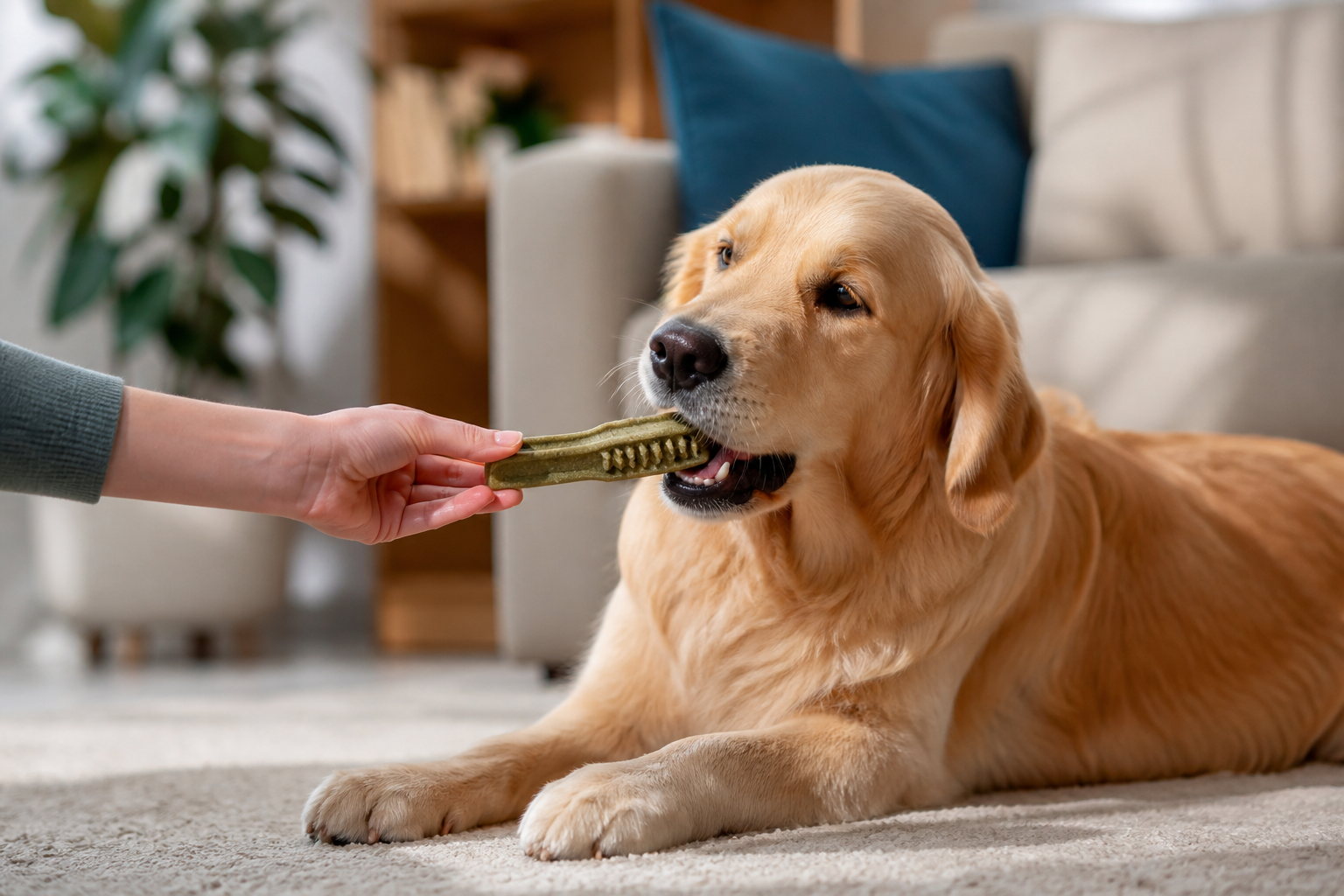
Brands like Greenies and Whimzees are designed to be fully digestible while providing a long-lasting chew. These are excellent for daily maintenance. They are often shaped like toothbrushes or have deep grooves to maximize surface contact. Because they are edible, they also provide a boost of protein or fiber.
Rawhide and Natural Chews
Rawhide can be effective for cleaning teeth because it becomes soft and "leathery" when wet, allowing the teeth to sink in deep. However, standard rawhide can be a choking hazard if your dog swallows large chunks. We recommend high-quality, digestible rawhide or natural alternatives like bully sticks. Bully sticks provide a vigorous workout for the jaw and help scrape the back molars, which are often the hardest teeth to reach.
Raw Vegetables
If you are watching your dog's weight, carrots and green beans are wonderful natural options. While they lack the specialized enzymes of dental chews, the crunch of a raw carrot provides some mechanical cleaning. They are low in calories and high in water, making them a safe daily snack for dogs prone to obesity.
Vet Tip: Always supervise your dog when they are enjoying a chew. If they manage to break off a large piece, remove it immediately to prevent choking or intestinal blockage. If your dog has red gums or loose teeth, consult your veterinarian before starting a new chew routine.
The Fingernail Test for Safety
One of the biggest mistakes pet owners make is choosing treats that are too hard. Many people assume that a harder treat will do a better job of "power washing" the teeth. In reality, objects like antlers, hooves, and sterilized bones are leading causes of fractured teeth in dogs.
Use the fingernail test to check for safety. If you can press your thumbnail into the surface of the treat and leave a small indentation, it is likely safe for your dog's teeth. If the treat is as hard as a rock and offers no "give," it is too dangerous. A broken tooth is not only painful but can lead to infections that enter the bloodstream.
Items to Avoid
- Antlers and Hooves: These are much harder than dog enamel.
- Cooked Bones: These can splinter and cause internal damage.
- Nylon Bones: These are often too rigid for aggressive chewers.
- Ice Cubes: While cold, biting down on ice can cause micro-fractures in the teeth.
Bottom line: If a treat is hard enough that it would hurt if it were thrown at your knee, it is too hard for your dog to chew safely.
Managing the Caloric Impact
It is easy to forget that dental treats are food. Some large dental chews can contain over 100 calories. If you give one every day without adjusting your dog's meals, you might trade dental health for weight gain.
When you start a dental routine, check the packaging for calorie counts. You should reduce your dog's standard kibble by an equivalent amount to keep their weight stable. For dogs that are already overweight, look for "lite" versions of popular dental chews. These often use more fiber to provide the same cleaning action with fewer calories.
Transitioning to a Daily Routine
Step 1: Choose a treat sized correctly for your dog's weight.
Step 2: Introduce the treat once every other day to ensure it does not cause stomach upset.
Step 3: Once your dog is adjusted, move to a daily schedule.
Step 4: Reduce their evening meal slightly to account for the treat's calories.
When Treats Are Not Enough
Treats are a fantastic tool for preventative care, but they are not a substitute for professional medical attention. If your dog already has heavy brown tartar or bleeding gums, treats will not fix the problem. In these cases, the bacteria have already moved under the gum line where a chew cannot reach. For more warning signs, read our guide to bad teeth in dogs.
This is where your veterinarian comes in. A professional cleaning is sometimes necessary to reset your dog's oral health. If your dog is dealing with an active infection or needs extra support, our pet pharmacy offers FDA-approved medications and prescription diets through our partnership with Pet's Choice. We carry specialized foods like Royal Canin Dental or Farmina Vet Life that are formulated specifically for dogs with chronic oral health issues.
Key Takeaway: Dental treats are meant for prevention and maintenance. They cannot "cure" existing gum disease or remove heavy, calcified tartar.
How to Maximize the Benefits
To get the most out of your dental treats, focus on consistency and variety. Using the same treat every day is fine, but rotating between different textures can help clean different areas of the mouth.
- Vary the shapes: Use a ridged bone one day and a textured rubber toy with dental gel the next.
- Timing matters: Give the dental treat after their main meal. This helps "brush" away the food particles that were just deposited.
- Monitor the chew time: If your dog swallows a dental treat in under a minute, they aren't getting much cleaning benefit. Look for a larger size or a tougher texture to slow them down.
We offer several ways to make this routine easier. Our Autoship program is a great way to ensure you never run out of dental supplies. You can set your favorite VOHC-approved treats to deliver right to your door on a schedule that works for you. Plus, signing up for Autoship grants you a free MVP Gold membership, giving you even more ways to save on your pet's health essentials.
Summary Checklist for Dental Treats
- Check for the VOHC Seal of Acceptance.
- Perform the fingernail test to ensure the treat isn't too hard.
- Match the treat size to your dog's current weight.
- Account for the calories in your dog's daily meal plan.
- Supervise every chewing session.
- Schedule an annual dental exam with your veterinarian.
Conclusion
The best treat to clean a dog's teeth is one that your dog enjoys and you can trust. By focusing on mechanical scrubbing action and avoiding treats that are hard enough to break teeth, you can significantly reduce plaque buildup. Remember that treats are just one part of a complete oral care routine that includes regular checkups and, ideally, brushing. For additional at-home guidance, review these pet dental care tips.
Maintaining your dog's dental health prevents pain and saves you from expensive veterinary bills down the road. Whether you choose a classic Greenie or a specialized dental diet, the key is starting today. Explore our dog dental care products to find the perfect fit for your dog's needs.
Bottom line: Consistency is the secret to a healthy mouth; one dental treat a day can keep the tartar away.
FAQ
Do dental treats really work for dogs?
Yes, dental treats work by using mechanical abrasion to scrape plaque off the teeth as the dog chews. Products that carry the VOHC Seal of Acceptance have been clinically tested and proven to reduce plaque and tartar buildup. However, they are most effective when used daily as part of a broader dental care routine.
Can puppies have dental treats?
Most dental treats are designed for adult dogs with their permanent teeth. Puppies have delicate primary teeth and developing jaws, so you should wait until they are at least six months old or have all their adult teeth. Always check the specific age and weight requirements on the treat packaging before giving one to a puppy. For more context, read our guide to puppy teeth.
How often should I give my dog a dental treat?
Most manufacturers recommend one dental treat per day for optimal results. Giving more than one can lead to excessive calorie intake and potential stomach upset. If you are worried about calories, you can break the treat in half or choose a low-calorie version, provided it is still large enough to require significant chewing.
What should I do if my dog has very bad breath despite treats?
Chronic bad breath, or halitosis, is often a sign of underlying dental disease or other health issues like kidney or liver problems. If treats and brushing do not improve the smell, you should schedule a visit with your veterinarian. They can determine if your dog needs a professional cleaning or medical treatment for an infection.






