
 Save 15% on your 1st Autoship learn more

 Email us
 Live Chat
 FAQs
FAQs





Introduction
You are relaxing on the sofa when you hear the familiar sound of a leg thumping against the floor. Your dog is scratching again. When you reach over to give them a pat, you notice a fine dusting of white flakes on their coat. Dry skin is a common frustration for dog owners. It is often a sign that your dog needs a bit of extra support from the inside out. At BaxterBoo, we know how much you want your dog to feel comfortable. A dull, itchy coat is usually more than a cosmetic issue. It can be a signal that the skin barrier is struggling to stay hydrated. This article covers the best natural oils, whole foods, and supplements you can add to the bowl to help. We will also discuss when a skin condition requires a trip to the veterinarian.
Quick Answer: Adding healthy fats like salmon oil or flaxseed oil is the most effective way to help dry skin. You can also mix in whole foods like plain eggs or sardines, which provide biotin and Omega-3 fatty acids to improve moisture.
Recognizing the Signs of Dry Skin
Before you change your dog's diet, you need to be sure you are dealing with dry skin. Many people confuse simple dryness with environmental allergies or flea bites. While the solutions often overlap, dry skin has a specific look and feel.
Keep an eye out for these common symptoms:
- Small white flakes (dandruff) that appear when you brush the coat.
- A coat that feels brittle, coarse, or dusty.
- Persistent scratching that is not focused on just one spot.
- Redness or irritation in areas where the skin is thin, such as the belly.
- A faint, musty odor that persists even after a bath.
In some cases, your dog might lick their paws or rub their face against the carpet. This behavior often suggests that the skin is tight and uncomfortable. If you see scabs, open sores, or significant hair loss, it is time to call your vet. These can be signs of a secondary infection or a more complex health issue.
Key Takeaway: Dry skin usually presents as flaky dandruff and a brittle coat. If you see redness, discharge, or localized hair loss, consult your vet to rule out infections or parasites.
The Power of Fish and Plant Oils
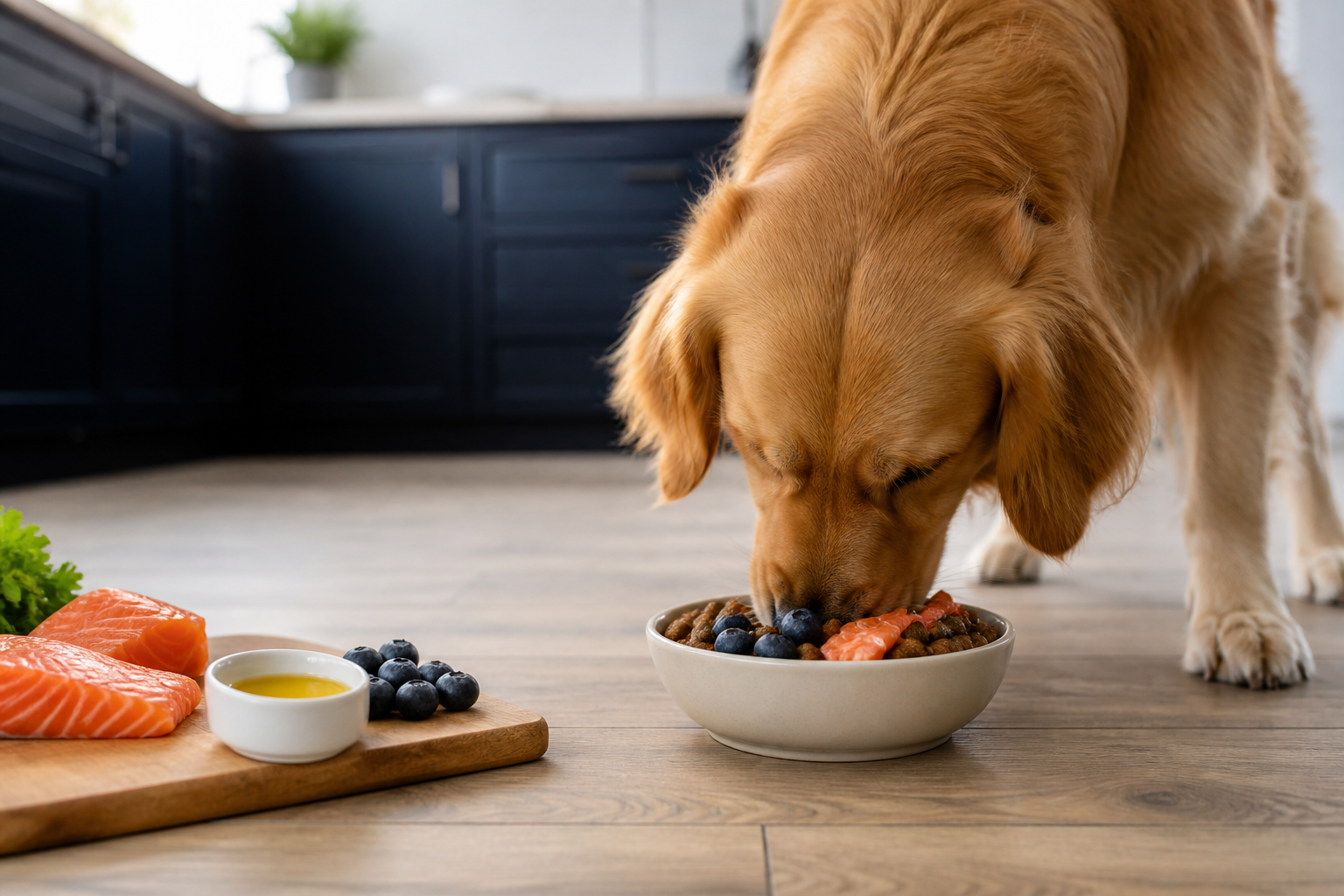
Oils are the most popular additives for a reason. They provide the concentrated fats that a dog's body needs to maintain a healthy skin barrier. Most commercial dog foods contain some fats. However, the high heat used during the kibble making process can sometimes degrade these delicate nutrients. Adding a fresh pump of oil to the bowl can make a visible difference in just a few weeks. You can compare options in our dog skin and coat care category.
Salmon and Pollack Oils
Fish oils are the gold standard for skin health. They are rich in EPA and DHA, which are specific types of Omega-3 fatty acids. These fats are highly bioavailable. This means your dog's body can use them immediately without needing to convert them first. We carry several high quality fish oil supplements from brands like Zesty Paws and Honest Paws. These oils help reduce inflammation and give the coat a deep, healthy shine.
Flaxseed Oil
If your dog has a sensitive stomach or does not like the taste of fish, flaxseed oil is a great plant based alternative. It contains alpha-linolenic acid. This helps support the lipid barrier of the skin. While it is not as potent as fish oil, it is excellent for dogs that need a mild moisture boost.
Coconut Oil
Coconut oil contains lauric acid, which has mild antibacterial properties. You can add a small amount to the food or apply it topically to dry elbows and nose pads. If you feed it, start with a very small amount. Some dogs find it too rich, which can lead to loose stools.
Vet Tip: When adding oils to your dog's diet, always start with a quarter of the recommended dose. Gradually increase the amount over two weeks to prevent digestive upset or diarrhea.
Whole Food Toppers for Skin Support
You do not always need a bottle of a supplement to see results. Many items in your kitchen are packed with the nutrients your dog needs for a healthy coat. These whole food additions provide complex vitamins that isolated oils might miss. For additional meal toppers, you can browse our dog food supplement selection.
The Incredible Egg
Eggs are one of the best sources of biotin you can find. Biotin is a B vitamin that is essential for cell growth and the metabolism of fats. A dog with a biotin deficiency will often have scaly skin and thinning hair. Feeding one plain, cooked egg a few times a week is an easy way to provide a nutrient boost. Avoid raw eggs, as they carry a risk of salmonella and contain a protein that can actually block biotin absorption.
Canned Sardines
Sardines are like a whole food version of fish oil. Look for sardines packed in water with no added salt. These small fish are loaded with Omega-3s and minerals like zinc. Zinc is crucial for skin repair. Adding one or two sardines to a meal a few times a week provides a massive boost to the skin’s health. Most dogs love the smell and taste, which makes it a great choice for picky eaters.
Plain Yogurt or Kefir
Sometimes skin issues start in the gut. If your dog's microbiome is out of balance, it can lead to systemic inflammation that shows up on the skin. A spoonful of plain, unsweetened yogurt provides probiotics. These healthy bacteria help the immune system function properly. Make sure the yogurt contains no xylitol, as this sweetener is toxic to dogs.
Bottom line: Fresh additions like eggs and sardines provide biotin and zinc, which are fundamental building blocks for healthy skin and fur.
Hydration and the Skin Barrier
We often think of dry skin as a lack of oil, but it is just as often a lack of water. A dog that is mildly dehydrated will have skin that loses its elasticity. If you pull up the skin on the back of the neck and it stays "tented" for a second, your dog needs more moisture.
If your dog only eats dry kibble, they may not be getting enough water from their food. You can easily improve this by:
- Adding a splash of warm water to their kibble to create a gravy.
- Mixing in a few spoonfuls of wet food from brands like Tiki Cat or Stella and Chewy's.
- Using low sodium bone broths, such as those from Caru or The Honest Kitchen.
- Offering moisture rich snacks like cucumber or seedless watermelon.
Better hydration helps the body flush out toxins and ensures that nutrients are delivered to the skin cells efficiently. For more ideas, read how to wet dry dog food for better digestion and hydration.
When to Move Beyond Home Remedies
Sometimes, dry skin is a symptom of a deeper medical problem. If you have added oils and eggs for a month and see no improvement, it is time for professional help. Conditions like hypothyroidism or Cushing’s disease can cause chronic skin changes that no amount of salmon oil will fix.
At BaxterBoo, we provide more than just supplements. We have a full pharmacy through our partnership with Pet's Choice. This allows you to access FDA approved medications and prescription diets for chronic skin conditions. Your vet may recommend a therapeutic diet from brands like Farmina Vet Life or Royal Canin. These foods are formulated with specific protein levels and fatty acid ratios to manage severe allergies or skin sensitivities. If your veterinarian prescribes treatment, you can explore our dog pharmacy.
If your vet provides a prescription, you can easily fulfill it through our pharmacy. This is a convenient way to get the specialized care your dog needs delivered right to your door.
Vet Tip: Persistent dry skin combined with increased thirst, lethargy, or a change in appetite requires a veterinary exam. These can be signs of hormonal imbalances that require specific medication.
Environmental Factors and Grooming
While diet is the foundation, the environment plays a big role. In the winter, indoor heating strips moisture from the air. Using a humidifier in the room where your dog sleeps can prevent their skin from drying out overnight.
Your grooming routine also matters. Over-bathing is a leading cause of dry skin. Every time you use a harsh shampoo, you strip away the natural oils that protect the skin. You can find shampoos, conditioners, and other supplies in our dog grooming collection.
- Limit baths to once every four weeks unless your dog gets exceptionally dirty.
- Use a mild, soap free shampoo, such as an oatmeal based formula.
- Always use a conditioner after shampooing to seal in moisture.
- Brush your dog regularly. Brushing moves the natural oils from the skin down the hair shaft, which protects the entire coat.
Step-by-Step Transition to New Additives
Do not overhaul your dog's entire diet in one day. Sudden changes can cause gas, bloating, and diarrhea. This makes it hard to tell if the new additions are actually helping.
Step 1: Choose one additive. / Pick one oil or one whole food to start with. This makes it easy to track results.
Step 2: Introduce a tiny amount. / Start with just a few drops of oil or a small piece of an egg.
Step 3: Monitor for 48 hours. / Watch for any signs of an upset stomach or increased itching.
Step 4: Increase gradually. / If your dog tolerates the small amount, slowly work up to the full serving over the next ten days.
Step 5: Be patient. / It takes about 21 to 30 days for new skin cells to form. You will not see a change in the coat overnight.
Key Takeaway: Patience and consistency are vital. Give any new food additive at least four weeks before deciding if it is working for your dog.
The Role of Quality Kibble
The best additives cannot fix a poor quality base diet. If your dog's primary food is full of fillers and low quality proteins, their skin will suffer. We recommend looking for foods that list a specific animal protein as the first ingredient. Brands like Acana, Orijen, and Open Farm focus on high quality ingredients that naturally support skin health. You can compare formulas in our dog food category.
Check the label for "chelated minerals." These are minerals that are attached to a protein, making them easier for your dog to absorb. Zinc and copper are especially important for maintaining coat color and skin strength. If your current food is lacking, you might consider a slow transition to a premium brand that we carry here at BaxterBoo.
Conclusion
Managing dry skin in dogs requires a two pronged approach. You need to provide the right nutrients internally while protecting the skin externally. Adding healthy fats like salmon oil, biotin rich foods like eggs, and improving hydration can make a significant difference. Remember that skin health is a long term game. It takes time for the body to repair the moisture barrier and grow a shiny new coat.
If your dog's itching persists or seems severe, please consult your veterinarian. They can help identify if your dog needs a prescription diet or medication from our pharmacy. Whether you are looking for a new bag of premium kibble or a soothing supplement, we are here to help you find the right fit for your pet.
To make sure you never run out of your dog's favorite skin support supplements, consider signing up for our Autoship programme. You will save on your first order and earn MVP Rewards on every purchase. It is the easiest way to keep your dog's coat healthy all year long.
FAQ
How long does it take for food additives to fix my dog's dry skin?
It generally takes three to four weeks to see a visible change in your dog's skin and coat. This is because it takes about a month for new skin cells to grow and for the hair to reflect the improved nutrition. Consistency is the most important factor when waiting for results.
Can I give my dog too much fish oil for their dry skin?
Yes, it is possible to overdo it with oils. Giving too much can cause loose stools, weight gain, or even more serious issues like pancreatitis in sensitive dogs. Always follow the dosage instructions on the product packaging and start with a smaller amount to be safe.
Is olive oil safe to add to my dog's food?
Olive oil is safe for most dogs and contains healthy phytonutrients and Vitamin E. It can help improve skin elasticity and coat shine. However, it is very high in calories, so you should only add a teaspoon or two per meal depending on your dog's size.
Should I use a humidifier if my dog has dry skin?
A humidifier is very helpful if you live in a dry climate or use indoor heating during the winter. Dry air can pull moisture directly out of your dog's skin while they sleep. Keeping the humidity in your home between 40% and 50% can provide significant relief for itchy pets.






