
 Save 15% on your 1st Autoship learn more

 Email us
 Live Chat
 FAQs
FAQs





Introduction
You lean in for a happy morning nuzzle only to be met with a cloud of "dog breath" that makes you recoil. This common moment is often the first sign that a dog needs better oral care. Many owners realize they should be doing more but feel overwhelmed by the aisles of brushes, gels, and chews. At BaxterBoo, we see these questions every day from people who want to keep their pets healthy without the stress. This post covers exactly what to clean dogs teeth with to remove plaque and prevent tartar. We will look at brushes, specialized toothpastes, dental chews, and even prescription options for those with existing concerns. Understanding these tools helps you build a routine that keeps your dog comfortable and their breath fresh.
The Essential Tools for Manual Brushing
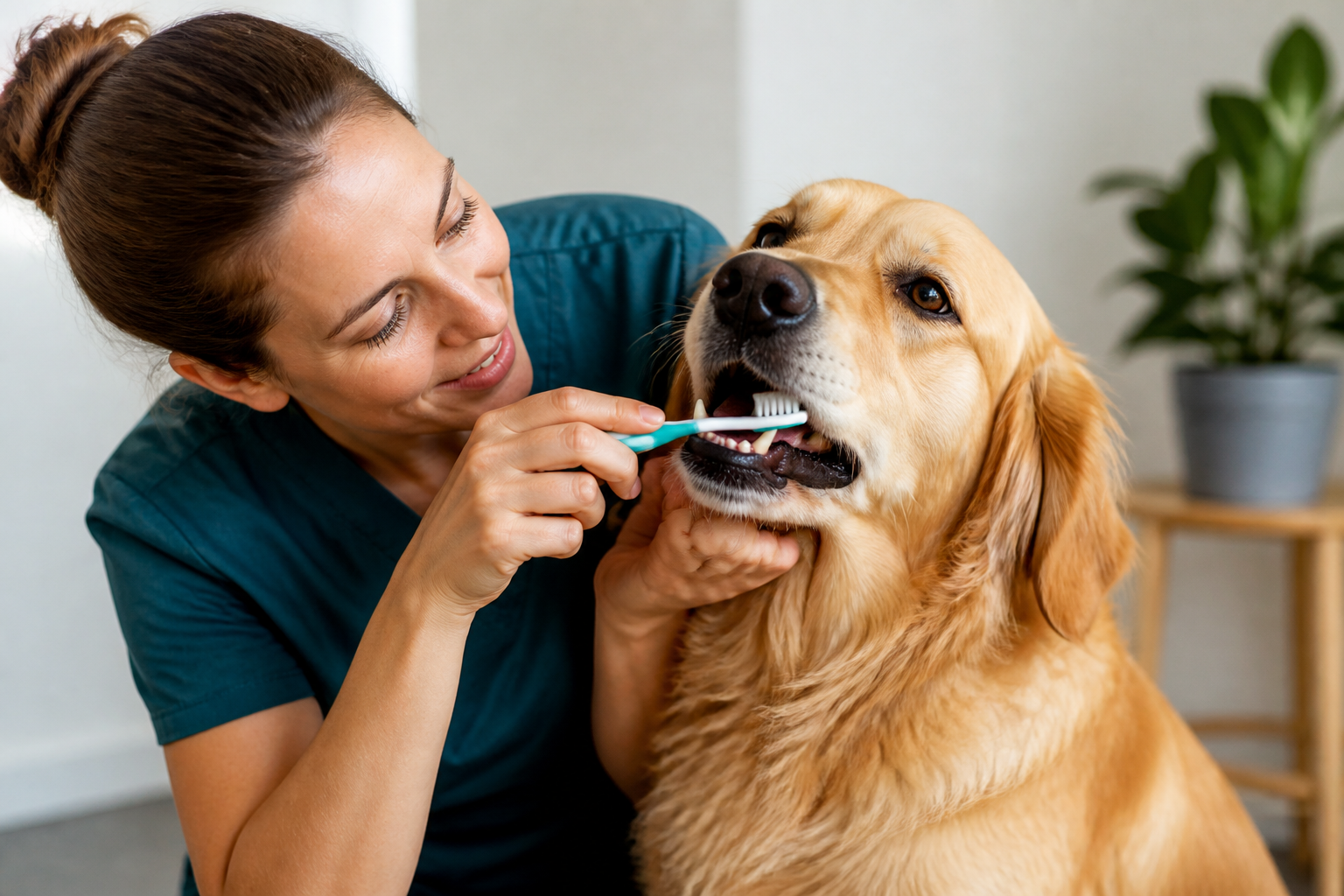
Manual brushing remains the single most effective way to care for your dog's mouth at home. It physically disrupts the sticky film of plaque before it can harden into tartar. If you are starting from scratch, you need two specific items: a dog-safe brush and pet-formulated toothpaste. You can find both in our dog dental care collection.
Choosing the Right Toothbrush
Standard human toothbrushes are usually too stiff for a dog's gums. They also have an angle that makes reaching the back molars difficult. You have three main options when looking for a brush.
The first is a long-handled pet toothbrush. These often have a dual-end design with a large brush head for the canines and a smaller head for the tiny teeth in the front. The second option is a finger brush. These are small silicone or rubber sleeves that slip over your pointer finger. They provide excellent control and are often less intimidating for puppies. The third option is a 360-degree brush. These have bristles all the way around the head to clean multiple surfaces at once.
Why Pet Toothpaste is Non-Negotiable
You must never use human toothpaste on a dog. Human pastes often contain fluoride and xylitol. Both of these ingredients are toxic to dogs. Since dogs cannot spit, they swallow everything you put in their mouth.
Pet toothpaste is designed to be swallowed safely. It also comes in flavors that dogs actually enjoy like poultry, beef, or peanut butter. Many of these pastes contain enzymes. These enzymes work to break down food particles and bacteria even after you stop brushing. Brands like Nylabone or Virbac offer enzymatic options that do a lot of the heavy lifting for you. For a gradual introduction, our pet dental care tips can help.
Quick Answer: The best items to clean a dog's teeth are an enzymatic pet-safe toothpaste and a soft-bristled pet toothbrush or finger brush. These tools physically remove plaque and use enzymes to kill bacteria that cause bad breath and decay.
Alternatives to Traditional Brushing
Not every dog will sit still for a full brushing session. If your dog struggles with the brush, you can use other tools to maintain hygiene. These options are also great for daily maintenance between deeper cleanings.
Dental Wipes
Dental wipes are textured pads treated with antiseptic ingredients. You wrap the wipe around your finger and rub the surface of the teeth and the gum line. They are excellent for removing the daily film of plaque. While they do not get into the deep crevices like bristles do, they are much better than doing nothing. They are a perfect "gateway" tool for dogs who are head-shy.
Dental Gels and Foams
If your dog hates having your fingers in their mouth, dental gels are a helpful alternative. You simply dab a small amount of the gel on the outside of the teeth. Your dog's tongue will naturally spread the gel around as they lick their chops. These products often use natural ingredients like green tea extract or grapefruit seed extract to fight bacteria.
Water Additives
Water additives are the easiest way to support oral health. You pour a measured amount into your dog's water bowl each time you refill it. These liquids contain ingredients that help break down the biofilm on the teeth. They also help freshen breath instantly. Look for additives that are tasteless and odorless so your dog does not stop drinking their water. Explore our dental and breath care products for gels, wipes, and water additives.
Key Takeaway: Consistency matters more than the specific tool. If your dog refuses a brush, using wipes or water additives daily is far more effective than a monthly struggle with a toothbrush.
The Role of Dental Chews and Treats
Many owners wonder if treats can actually clean teeth. The answer is yes, provided you choose the right ones. Dental chews work through mechanical action. As the dog chews, the edges of the treat scrape against the teeth to "scrub" away debris. Our dental chews and treats offer additional options for daily routines.
Identifying Quality Chews
Look for the VOHC seal of acceptance on packaging. The Veterinary Oral Health Council only grants this seal to products that have proven they reduce plaque or tartar in clinical trials. We carry several trusted brands at BaxterBoo like Greenies and Whimzees that carry this seal.
Avoid Extremely Hard Items
It is a common mistake to give dogs very hard items like cow hooves or elk antlers to clean their teeth. While these do scrape off tartar, they are often harder than the tooth enamel itself. This can lead to painful slab fractures. A good rule of thumb is the "fingernail test." If you cannot make a small dent in the chew with your fingernail, it is likely too hard for your dog's teeth.
Choosing the Right Size
Size is critical for safety and effectiveness. If a chew is too small, your dog might swallow it whole. This creates a choking hazard and provides zero dental benefit. The chew should be large enough that the dog is forced to gnaw on it for several minutes. This extended chewing time is what allows the treat to clean the back molars where most decay starts.
Vet Tip: Always supervise your dog when they are enjoying a dental chew. If they tend to gulp their treats, a dental chew can become a choking hazard or cause an intestinal blockage. Choose a size appropriate for their weight.
Using Toys for Dental Hygiene
Playtime can also be a time for cleaning. Certain toys are designed specifically to massage gums and scrape teeth. Our dog toys include options for supervised chewing and interactive play.
- Rope Toys: As the dog chews on the cotton fibers, the rope acts like dental floss between the teeth.
- Rubber Nubby Toys: Brands like Kong make toys with ridges and grooves. You can even smear a little enzymatic toothpaste into the grooves to turn a chew session into a cleaning session.
- Textured Balls: These help clean the front teeth as the dog carries the ball around during fetch.
Bottom line: Interactive toys provide a secondary way to mechanically clean teeth while keeping your dog mentally engaged.
Natural Cleaning Options and Foods
Diet plays a significant role in oral health. While food alone won't keep teeth perfect, certain choices can help.
The Raw Carrot Myth
Many people believe that raw carrots clean teeth like a toothbrush. While carrots are a healthy, low-calorie treat, they are not a replacement for brushing. The crunch provides some mild scraping, but carrots are also high in natural sugars. If pieces get stuck between the teeth, those sugars can actually feed bacteria. Use carrots as a treat, but don't rely on them for hygiene.
Dry Kibble vs. Wet Food
There is a long-standing belief that dry food keeps teeth cleaner than wet food. This is only partially true. Most standard kibble is small and brittle. It shatters almost instantly when a dog bites it. For a food to actually clean teeth, it needs to be a "dental diet." These kibbles are larger and have a fibrous texture that does not shatter. Instead, the tooth sinks into the kibble, allowing the fibers to scrub the tooth surface.
Raw Bones
Raw, meaty bones are a traditional way to clean teeth. The act of tearing meat and gnawing on bone provides excellent mechanical cleaning. However, bones come with risks like bacterial contamination, constipation, or broken teeth. If you choose to use bones, always use raw bones and never cooked ones. Cooked bones become brittle and can splinter, causing internal damage.
When to Consult a Professional
Home care is about prevention, but it cannot fix existing disease. If your dog already has thick, brown tartar buildup, no amount of brushing will remove it. Tartar is as hard as concrete and requires professional scaling. For more warning signs, read how to recognize bad teeth in dogs.
Signs of Dental Disease
If you notice any of the following, schedule a visit with your veterinarian:
- Bleeding or very red gums
- Loose or missing teeth
- Excessive drooling
- Pawing at the mouth
- Dropping food while eating
- A "rotten" smell that persists after brushing
Vet Tip: Most dogs over the age of three have some form of periodontal disease. A professional cleaning under anesthesia is the only way to clean beneath the gum line where the most serious damage happens. Consult your vet annually for a full oral exam.
Prescription Solutions and the BaxterBoo Pharmacy
Sometimes, standard over-the-counter tools are not enough. Dogs with chronic mouth infections or severe breed-related crowding may need specialized help. Our pharmacy for dogs offers prescription medications through our partnership with Pet's Choice.
Prescription Dental Diets
Veterinary-exclusive diets, such as Farmina Vet Life or Royal Canin Dental, are formulated with specific minerals to prevent plaque from calcifying into tartar. They also have a unique kibble shape that maximizes surface contact with the tooth. These diets require a prescription from your veterinarian.
Medicated Rinses
For dogs recovering from oral surgery or managing gingivitis, a vet may prescribe a chlorhexidine rinse. This is a powerful antimicrobial that kills the bacteria responsible for gum disease. You can easily fulfill these prescriptions through our pet pharmacy and have them delivered to your door.
Step-by-Step: Starting a Brushing Routine
- Introduce the taste. Put a dab of pet toothpaste on your finger and let your dog lick it off. Do this for three days.
- Touch the teeth. While they lick the paste, gently rub your finger along their gums.
- Introduce the brush. Put toothpaste on the brush and let them lick it. Don't try to brush yet.
- The first brush. Gently lift the lip and brush one or two side teeth in a circular motion. Stop before the dog gets annoyed.
- Build endurance. Gradually add more teeth each day until you can brush the entire mouth in one sitting.
Key Takeaway: Starting slow prevents the dog from forming a negative association with the toothbrush, making long-term care much easier.
Summary of What to Clean Dogs Teeth With
Caring for your dog's teeth is one of the best ways to ensure they live a long, pain-free life. By combining manual brushing with dental chews and the right toys, you can keep the vet's "dental cleaning" bills to a minimum.
- Toothbrush & Paste: The most effective method for plaque removal.
- Wipes & Gels: Great for dogs who are sensitive to brushing.
- Dental Chews: Look for the VOHC seal for proven results.
- Pharmacy Access: Use our pharmacy for prescription diets and medicated rinses when needed.
The most important step is to start today. Whether it is adding a water additive or trying out a finger brush, your dog will benefit from the extra attention. Visit our dental care section to find the right supplies for your dog's specific needs. For repeat-purchase items, our Autoship programme can help you maintain a consistent routine.
FAQ
Can I use baking soda to clean my dog's teeth?
It is best to avoid using baking soda for your dog's oral care. Baking soda has a very high alkaline content that can upset a dog's stomach if swallowed in large amounts. It also lacks the enzymes found in pet-specific toothpastes that help break down plaque. Stick to formulated pet pastes that are safe for ingestion and taste better to your dog.
How often should I clean my dog's teeth?
Ideally, you should brush your dog's teeth every single day. Plaque can begin to harden into tartar within 24 to 48 hours. If a daily routine is not possible, aim for at least three times a week. Complementing less frequent brushing with daily dental chews or water additives can help fill the gap.
Why does my dog's breath still smell bad after brushing?
If your dog's breath remains foul after cleaning, there may be an underlying health issue. Chronic bad breath can be a sign of deep periodontal disease, kidney issues, or digestive problems. It may also mean that tartar has already formed beneath the gum line where a toothbrush cannot reach. If the smell persists, you should take your dog to the veterinarian for a professional exam.
Do small dogs need more dental cleaning than large dogs?
Yes, small breeds and "flat-faced" breeds often require more frequent dental care. These dogs have the same number of teeth as large dogs but much smaller mouths. This leads to crowding, which allows food and bacteria to get trapped more easily. Small dogs are statistically more prone to early-onset periodontal disease and tooth loss.






