
 Save 15% on your 1st Autoship learn more

 Email us
 Live Chat
 FAQs
FAQs





Introduction
You lean in for a happy morning nuzzle from your dog and suddenly catch a whiff of something less than pleasant. That notorious dog breath is often the first sign that plaque and bacteria are moving into your pet's mouth. Many owners feel overwhelmed when they realize they need to manage their dog's dental hygiene at home. At BaxterBoo, we talk to pet parents every day who want to know which tools actually work and which ones are just fluff. Taking care of those pearly whites is about more than just fresh breath. It is a vital part of preventing long term health issues that can affect the heart and kidneys. This guide explores the most effective tools, from brushes to additives, so you can build a routine that fits your lifestyle.
Quick Answer: To clean a dog's teeth effectively, use a combination of enzymatic pet toothpaste, a soft-bristled toothbrush or finger brush, and dental chews. For dogs that resist brushing, dental wipes and water additives provide helpful secondary support in reducing plaque buildup.
The Foundation of Dental Care: Dog Specific Toothbrushing
Brushing remains the gold standard for pet oral hygiene. It is the only way to physically scrub away the soft biofilm before it hardens into tartar. However, you cannot simply grab your own spare toothbrush and paste from the bathroom cabinet. Human products are not designed for pets and can actually cause harm if swallowed.
Choosing the Right Toothbrush
The size of your dog’s mouth determines which brush will be the most effective. For a large breed like a Labrador, a long handled brush with a dual head allows you to reach the back molars safely. These brushes often have an angled neck to help you navigate the curve of the jaw. If you have a toy breed or a puppy, a standard brush might be too bulky.
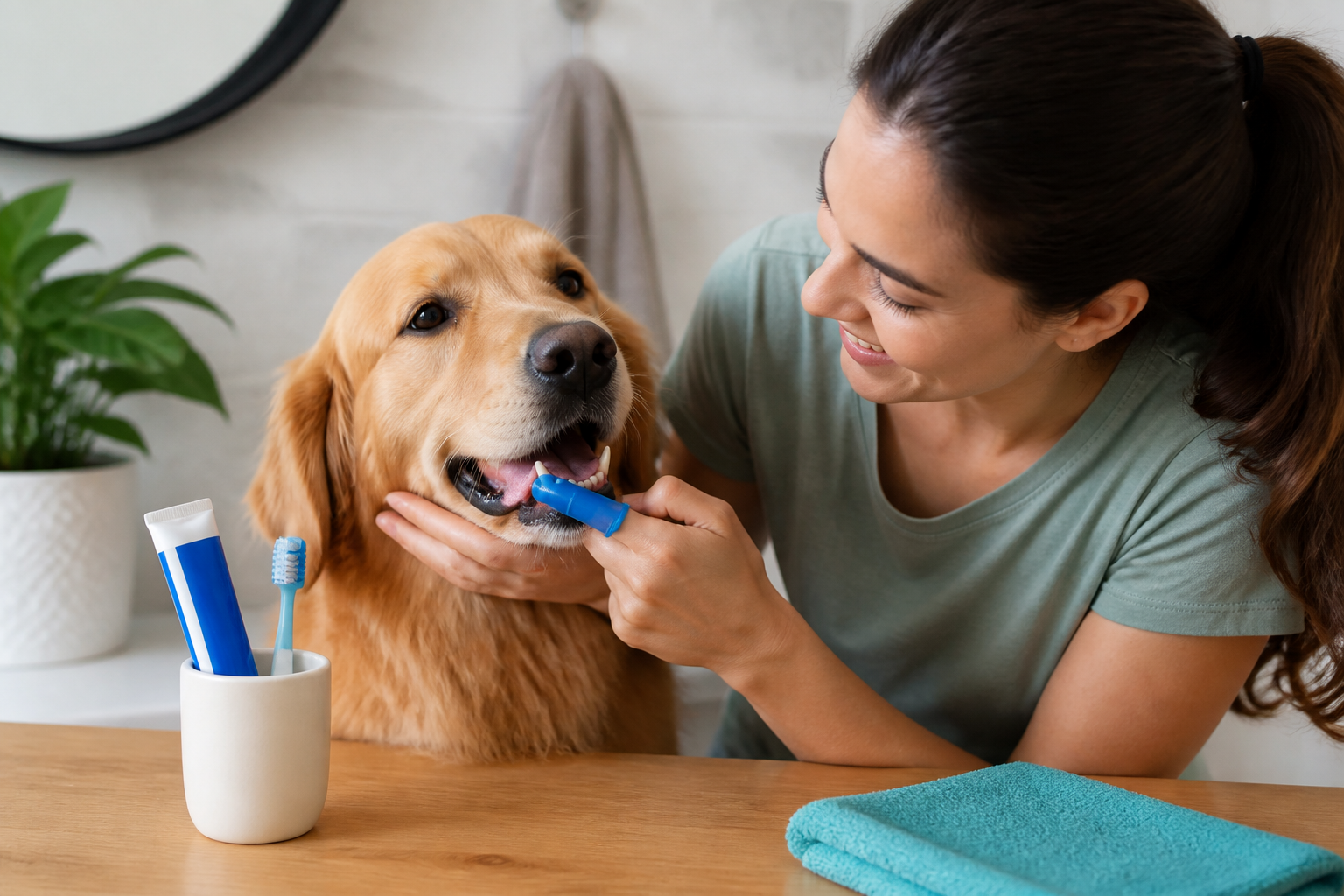
A finger brush is an excellent alternative for smaller dogs or those who are nervous about long objects in their mouth. These are usually made of soft, flexible silicone and fit right over your fingertip. They allow you to feel exactly where you are cleaning. This tactile feedback helps ensure you are hitting the gumline without pressing too hard. Explore our dog dental care collection for brushes, toothpaste, wipes, and other oral hygiene supplies.
Why Enzymatic Toothpaste Matters
Never use human toothpaste on a dog. It often contains fluoride or xylitol, both of which are toxic to dogs. Pet specific toothpaste is formulated to be swallowed safely. Most brands use enzymes that work to break down food particles and bacteria even after you stop brushing.
The flavors are also a huge help in gaining cooperation. Most dogs enjoy the taste of poultry, beef, or peanut butter flavors. This turns the cleaning session into a rewarding experience rather than a struggle. We carry several trusted brands like Zesty Paws and others that focus on palatable, effective formulas.
Key Takeaway: Physical brushing with enzymatic toothpaste is the most effective way to prevent tartar because it manually removes plaque from the gumline.
Alternatives for Brush Resistant Dogs
Not every dog will sit still for a full brushing session. If you have a rescue dog with a sensitive mouth or a high energy pup, you might need to start with easier options. These tools do not replace brushing entirely, but they are significantly better than doing nothing at all.
Dental Wipes for Quick Cleaning
Dental wipes are pre moistened pads designed to be rubbed over the teeth and gums. They are less invasive than a brush. They work well for dogs that have a strong gag reflex or those that try to chew on a traditional toothbrush. While they cannot reach the deep crevices between teeth as well as bristles can, they are excellent for removing surface plaque on the large, flat areas of the canines and premolars.
Dental Sprays and Foams
Oral sprays are a hands off approach to hygiene. You simply pull back the jowls and spritz the solution onto the teeth and gums. These products usually contain antiseptic ingredients or enzymes that help kill bacteria. They are particularly useful for dogs that refuse to let you put your fingers in their mouth. Many owners use these as a midday refresher between morning and evening care.
Water Additives and Their Role
A water additive is essentially a mouthwash for dogs that they drink throughout the day. You add a small, measured amount to their water bowl. These additives are designed to be tasteless and odorless so they do not discourage the dog from drinking.
How They Work
The active ingredients in water additives work by altering the chemistry of the saliva. This makes it harder for plaque to stick to the tooth surfaces. Some formulas also include ingredients that help soften existing tartar over time, making it easier to brush away later.
Selection Criteria
When choosing an additive, look for products that are free from artificial dyes and alcohols. It is also important to ensure the product does not contain xylitol, which is sometimes used as a sweetener in human products but is deadly for dogs. Consistency is key with water additives. You must use them every time you refill the water bowl to see results. You can compare options in our dental supplements category.
Vet Tip: Always monitor your dog’s water intake when starting a new additive. If they seem to be drinking less, stop the additive and consult your vet to ensure they stay hydrated.
The Power of Dental Chews and Treats
Many owners rely on dental treats because they are the easiest way to clean teeth. When a dog bites down on a dense dental chew, the mechanical action scrapes the surface of the tooth. Our dental chews and treats offer options for adding mechanical cleaning to your dog's routine.
What to Look for in a Chew
The best dental treats have a specific texture. They should be firm enough to provide resistance but not so hard that they could break a tooth. Look for the Veterinary Oral Health Council (VOHC) seal on the packaging. This seal indicates that the product has been tested and proven to reduce plaque or tartar by a certain percentage.
Brands like Greenies and RedBarn offer various shapes designed to get into the nooks and crannies of the mouth. Some treats are shaped like brushes or have deep ridges to maximize the surface area that touches the teeth. You can browse our selection of Greenies products.
Calorie Management
Dental treats are still treats. They contain calories that can add up quickly, especially for smaller dogs. If you give a dental chew daily, you may need to slightly reduce your dog's meal portions to prevent weight gain. We often suggest these as a part of a balanced routine rather than the sole method of cleaning.
Using Toys for Mechanical Cleaning
Chewing is a natural behavior for dogs, and the right toys can turn playtime into a cleaning session. Rubber toys with nubs, ridges, or grooves are specifically designed for this purpose. Browse our dental dog toys for playtime options that support your dog's oral care routine.
Rubber and Rope Toys
As the dog chews on a textured rubber toy, the nubs massage the gums and scrape away soft debris. Some toys are designed to hold a bit of dog toothpaste in the center, which gets distributed as the dog plays. Rope toys can also be effective as the cotton fibers act like a form of floss. However, you must supervise your dog with rope toys to ensure they do not shred and swallow the fibers, which can cause intestinal blockages.
Avoiding Hazardous Materials
Be careful with extremely hard toys. Natural bones, antlers, and hard nylon chews can actually cause tooth fractures. If a toy is too hard for you to indent with your thumbnail, it might be too hard for your dog’s teeth. Stick to durable but flexible rubber options from brands like Kong to stay on the safe side. For a product designed around textured chewing, consider the Busy Buddy Bristle Bone Dental Toy.
Diet and Its Impact on Oral Health
What your dog eats every day plays a massive role in how fast plaque builds up. There is a common belief that all dry kibble cleans teeth, but this is not always true. Most standard kibble is small and brittle, shattering as soon as the dog bites it.
Specialized Dental Diets
Some dogs require a specific dental diet to keep their mouths healthy. These kibbles are usually much larger than standard food. They are designed with a fiber matrix that does not shatter. Instead, the tooth sinks into the kibble, allowing the fibers to scrub the tooth surface as the dog bites down.
For dogs with significant dental history or those prone to rapid buildup, we often suggest looking into prescription dental diets. Through our pharmacy partnership with Pet's Choice, we offer access to specialized foods and FDA approved medications that may be necessary for managing chronic oral health issues.
The Role of Wet Food
Wet food tends to stick to the teeth and can contribute to faster plaque accumulation if the teeth are not brushed regularly. If your dog prefers a wet diet, it is even more important to be diligent with daily brushing or the use of dental wipes.
Bottom line: A combination of mechanical cleaning through kibble and active brushing provides the best defense against dental disease.
How to Introduce a Cleaning Routine
Starting a dental routine can be stressful for both you and your dog. The key is to go slowly and use positive reinforcement. You want your dog to associate the toothbrush with something pleasant. For additional guidance, read our pet dental care tips.
Step-by-Step Training Process
Step 1: Let them taste the paste. / Offer a small amount of poultry flavored toothpaste on your finger for several days. Do not try to brush yet.
Step 2: Get them used to mouth handling. / Gently lift their lips and rub your finger over their gums while they lick the paste.
Step 3: Introduce the brush. / Put some paste on the brush and let them lick it off the bristles without moving the brush.
Step 4: Start brushing. / Gently brush the large canine teeth in the front. Once they are comfortable, gradually move to the back teeth.
Step 5: Reward. / Always follow a successful session with praise or a favorite game.
Frequency Recommendations
Ideally, you should brush your dog's teeth every day. Plaque can start to harden into tartar in as little as 24 to 48 hours. If daily brushing is not possible, aim for at least three times a week. Supplement the "off days" with water additives and dental chews to maintain a baseline of cleanliness.
Recognizing Signs of Dental Disease
Even with the best home care, dogs can still develop dental problems. This is especially true for senior pets or breeds with crowded teeth, such as Pugs and Chihuahuas. You should regularly check your dog's mouth for warning signs. This guide to warning signs of dental disease offers another helpful reference.
Symptoms to Watch For
- Extremely foul breath that persists after cleaning.
- Yellow or brown buildup near the gumline.
- Gums that look red, swollen, or bleed during brushing.
- Difficulty eating or dropping food.
- Pawing at the mouth or face.
- Loose or missing teeth.
If you notice any of these symptoms, it is time for a professional evaluation. Home cleaning is a preventive measure, but it cannot fix an active infection or remove hardened tartar that has already formed.
Vet Tip: If your dog's gums bleed every time you brush, they may have gingivitis or periodontal disease. Stop brushing and schedule a visit with your veterinarian for a professional cleaning and assessment.
Professional Cleanings and the Pharmacy
There is a limit to what we can do at home. A professional veterinary cleaning involves scaling the teeth both above and below the gumline while the dog is under anesthesia. This allows the vet to remove tartar in areas you simply cannot reach.
Supporting Recovery
After a professional cleaning, your vet might prescribe oral rinses or even antibiotics if there was an infection. Our pharmacy at BaxterBoo provides a convenient way to get these medications. Because we partner with Pet's Choice, we can help you manage your dog's ongoing health needs with FDA approved prescription products. This is especially helpful for dogs managing chronic conditions like periodontal disease that require long term care.
The Role of MVP Rewards
Maintaining a dog’s dental health is an ongoing expense. From toothpaste and brushes to specialized treats, the costs add up. We created our MVP Rewards program to help. You can earn up to 5% back on these essential purchases. For items you use every day, like dental chews or water additives, our Autoship program offers extra savings and ensures you never run out and break your dog's routine.
Checklist for a Dental Success
- Purchase dog safe enzymatic toothpaste (never human paste).
- Choose a brush size appropriate for your dog's mouth.
- Set a recurring reminder for at least 3 brushing sessions per week.
- Add a VOHC approved dental chew to your daily routine.
- Inspect your dog's gums monthly for redness or swelling.
- Schedule an annual dental checkup with your veterinarian.
Conclusion
Cleaning a dog's teeth does not have to be a daunting task. By choosing the right combination of brushes, enzymatic pastes, and dental treats, you can significantly improve your pet's quality of life. Remember that consistency matters more than perfection. Even a quick wipe down or a dental chew is better than ignoring oral health entirely. We have been helping pet owners find the right gear since 2006, and we know that the right tools make all the difference. For dogs that need extra support, our pharmacy is ready to help with prescription diets and medications.
Key Takeaway: Effective dental care requires a multi faceted approach combining physical brushing, mechanical chewing, and regular professional veterinary checkups.
Start building your kit today by exploring our dog dental care supplies. Whether you need a starter brush set or want to set up an Autoship for your favorite dental treats, we are here to support your dog’s healthy smile.
FAQ
Can I use baking soda to clean my dog’s teeth?
While baking soda is not immediately toxic, it has a high alkaline content and a salty taste that many dogs dislike. If swallowed in large amounts, it can upset a dog’s stomach or disturb their electrolyte balance. It is much safer and more effective to use an enzymatic pet toothpaste that is formulated for their digestive system.
How do I clean the teeth of a dog that bites the toothbrush?
If your dog thinks the toothbrush is a toy or a threat, switch to a silicone finger brush or dental wipes. These allow you to keep your hand closer to their mouth and provide better control. You can also try using a dental spray that requires no contact with the teeth at all while you work on desensitizing them to the brush.
Are bones safe for cleaning a dog's teeth?
Natural bones can help scrape away plaque, but they come with significant risks like cracked teeth or intestinal blockages. Many veterinarians recommend avoiding hard bones and instead using rubber dental toys or VOHC approved chews. If you do choose to give bones, always supervise your dog and choose raw, meaty bones rather than cooked ones which can splinter.
Does dry food really keep a dog's teeth clean?
Most standard dry kibble does very little to clean teeth because it crumbles easily upon contact. Only specific "dental support" diets have a structure designed to scrub the teeth. For most dogs, dry food should be considered just one small part of a larger dental hygiene plan that includes brushing and treats.






