
 Save 15% on your 1st Autoship learn more

 Email us
 Live Chat
 FAQs
FAQs





Introduction
The first few weeks with a new puppy are a whirlwind of tiny barks, soft paws, and plenty of messes. You might notice your puppy starting to chew on their toys or even your shoelaces. This behavior often means they are ready for something more substantial than milk. At BaxterBoo, we know that timing this transition correctly is one of the most important parts of early pet care.
Moving a puppy from mother's milk to solid kibble is not an overnight event. It is a slow process called weaning that requires patience and the right tools. This article covers the specific timeline for introducing solid food. We will explain how to soften kibble safely and how to tell when your pup is ready for a full crunch. Giving your dog the right start ensures they grow into a healthy, strong adult.
The Early Days of Nutrition
For the first few weeks of life, a puppy gets every bit of their nutrition from their mother. This milk is a perfect cocktail of fats, proteins, and antibodies. These components build their immune system and help them double their weight quickly. If a mother is not available, pet owners use a puppy milk replacer to fill the gap.
During this stage, the digestive system is very simple. It is designed to process liquid only. Introducing solid food too early can cause stomach upset or even more serious health issues. You will generally not need to worry about solid food until the puppy is about three or four weeks old. At this point, their tiny "needle" teeth start to peek through the gums.
The Weaning Window
Weaning is the process of moving a puppy from milk to solid food. It typically begins when the puppy is between three and four weeks of age. This is the stage where they become curious about the world around them. They might start sniffing at their mother's food bowl or trying to lick spills on the floor.
By the time a puppy is eight weeks old, they should be fully transitioned to dry food. This timeline is important because most puppies go to their forever homes at eight or ten weeks. They need to be able to eat independently before they leave their mother and littermates.
The Standard Weaning Schedule
- 3 to 4 Weeks: Introduce a very thin, liquid-heavy gruel.
- 5 to 6 Weeks: Increase the thickness of the food to an oatmeal consistency.
- 7 Weeks: Offer mostly solid kibble with just a splash of water.
- 8 Weeks: Most puppies can now handle dry kibble without added liquid.
Quick Answer: Most puppies can start eating dry dog food that has been softened with water around three to four weeks of age. They should be able to eat hard, dry kibble without any liquid by eight weeks of age.
How to Create a Puppy Gruel
You cannot simply put a bowl of hard kibble on the floor for a one-month-old puppy. Their teeth are not strong enough to crunch it. Their stomachs are also not ready for the density of dry food. You must create a mixture called a gruel to bridge the gap.
Start by choosing a high-quality puppy kibble. Our puppy food category includes options such as Stella and Chewy's and NutriSource that offer puppy-specific formulas. Place the kibble in a shallow bowl and add warm water. Do not use boiling water because it can destroy some of the vitamins in the food.
Let the mixture sit for at least 15 to 20 minutes. The kibble will soak up the water and expand. Once it is soft, mash it with a fork until it looks like thick soup. As the weeks go by, you will use less water and leave more texture in the mash.
Why Puppy Food is Different from Adult Food
It might be tempting to feed your puppy the same dry food your adult dogs eat. However, puppies have very different nutritional requirements. They are growing at a rapid rate. Their bodies need more calories and higher levels of certain minerals to support this growth.
Most puppy foods are much higher in protein and fat than adult diets. They also contain specific levels of calcium and phosphorus. These minerals are vital for bone development. If a puppy eats adult food, they might experience stunted growth or bone deformities.
Puppy kibble also contains DHA. This is an omega-3 fatty acid found in mother's milk. It is essential for healthy brain and eye development. Brands like Royal Canin and Farmina create specialized puppy recipes that focus on these exact needs.
Vet Tip: If your puppy is a large or giant breed, such as a Great Dane or a Lab, they need a specific "Large Breed Puppy" formula. These foods have controlled calcium levels to prevent them from growing too fast. Growing too quickly can lead to lifelong joint problems. Always consult your veterinarian to ensure your puppy is growing at a healthy rate.
Recognizing the Signs of Readiness
Every puppy develops at a different pace. While the four-week mark is the standard start time, some puppies are early bloomers. Others might need a few extra days. You can look for specific physical and behavioral signs that your pup is ready for the move to dry food.
First, look at their mouth. You should see the tips of their deciduous teeth breaking through the gums. If the gums are still smooth, they will struggle with even softened food. Second, watch their interest levels. If they are constantly trying to eat out of the mother's bowl, they are ready for their own meal.
Finally, look for steady weight gain. A puppy that is ready for solids will be active and curious. If they seem lethargic or are not gaining weight, they may still need to rely on milk for a bit longer.
The Importance of Shallow Bowls
When you first introduce puppy gruel, the "how" is just as important as the "what." Puppies are clumsy eaters. They often end up walking through their food or falling face-first into the bowl. This is a normal part of the learning process.
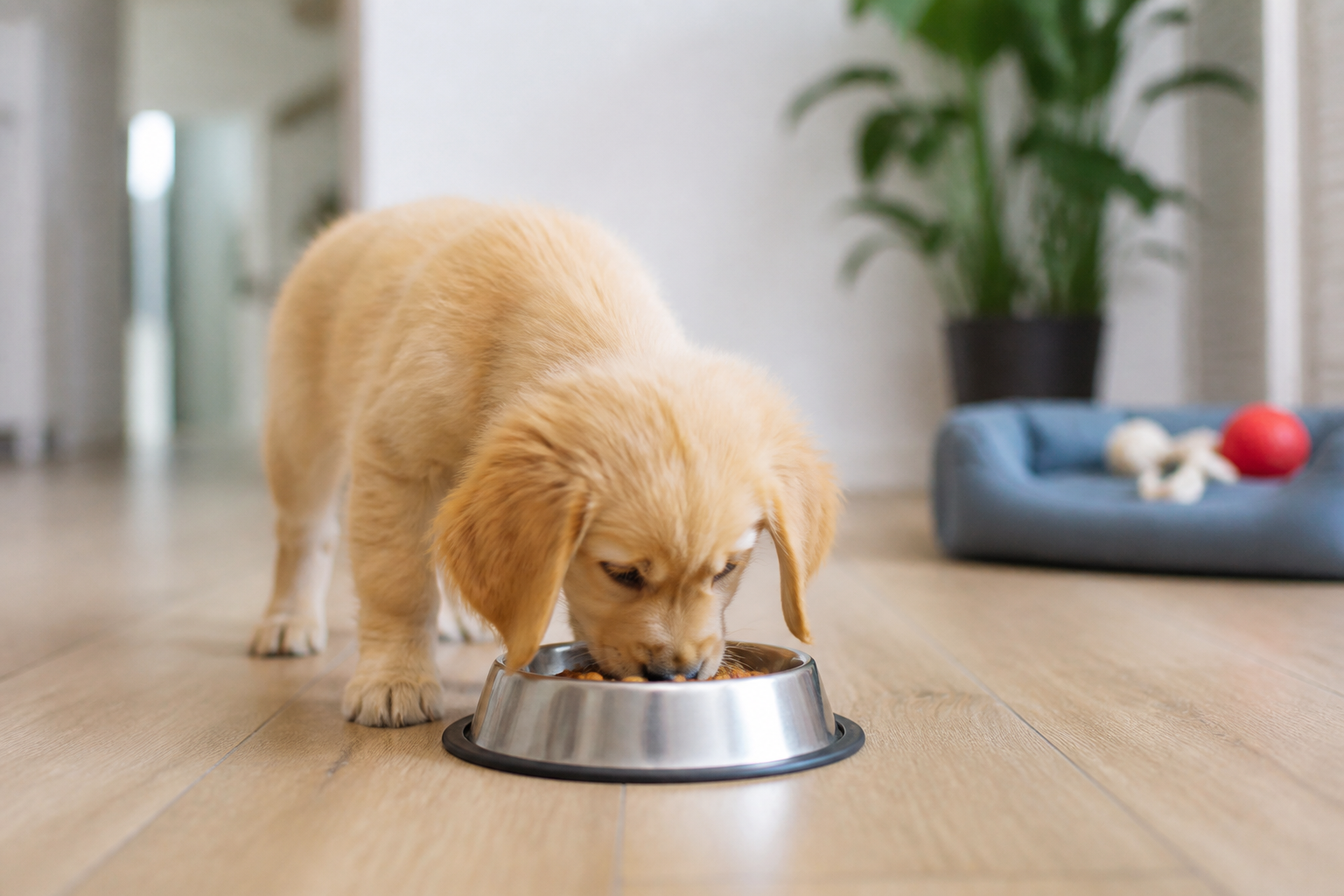
Use a very shallow bowl or even a flat plate for their first few meals. This prevents them from having to climb over a high rim to reach the food. It also reduces the risk of them accidentally inhaling the liquid. As they get taller and more coordinated, you can move to standard bowls. Our selection of puppy gear includes various items for these early stages.
Managing the Transition to Hard Kibble
Once your puppy is eating a thick mash comfortably, you can begin the final stage of the transition. This usually happens between six and seven weeks of age. Slowly reduce the amount of water you add to the bowl each day.
By the time you reach week eight, the kibble should be mostly dry. Some owners choose to add a tiny splash of water or a bit of canned food for flavor. This is perfectly fine as long as the puppy is capable of chewing the hard bits.
Dry kibble has an added benefit for older puppies. The mechanical action of chewing hard food helps clean their teeth. It can also soothe their gums as they begin the teething process. Teething usually starts around three or four months, and having something crunchy to bite can feel good. For more information, read our guide to when dogs lose their puppy teeth.
Hydration and the Move to Solids
When puppies drink mother's milk, they get all the hydration they need from that single source. Once they start eating dry food, their water needs change. Dry kibble has very little moisture. This means you must provide a constant source of fresh, clean water.
Place a water bowl near their feeding area. You might need to show them how to use it. Dip your finger in the water and let them lick it. They will quickly figure out how to lap it up. Monitor their water intake closely during the first few weeks of the transition.
Troubleshooting Common Weaning Issues
Not every weaning process goes perfectly. You might encounter a few hurdles along the way. The most common issue is a lack of interest. If a puppy refuses the gruel, do not force them to eat. They might simply not be ready. Wait a day or two and try again.
Loose stools are another common concern. A puppy's digestive system is very sensitive. If the stool becomes very watery, you might be moving too fast. Slow down the transition and keep the food very soft for a few more days.
When to Call the Vet
- If the puppy refuses to eat anything for more than 12 hours.
- If there is persistent vomiting or diarrhea.
- If the puppy seems extremely weak or cold.
- If you notice blood in the stool.
Our pet pharmacy provides prescription diets through our partnership with Pet's Choice if your veterinarian recommends a medical formula for growth or digestive issues. This can be a life-saver for puppies with particularly sensitive stomachs.
The Role of Canned Food
While this guide focuses on dry dog food, wet or canned food can be a great tool. It is naturally soft and has a strong aroma that many puppies find irresistible. You can mix a spoonful of canned puppy food into the dry kibble to encourage a picky eater.
Brands like Tiki Cat for the feline friends in your home and various dog brands like Caru or Merrick offer high-quality wet options. Just make sure the canned food is also specifically formulated for puppies. Mixing wet and dry food is often called "topper feeding." It provides a variety of textures which can be helpful for brain development and sensory enrichment.
Feeding Frequency for Young Puppies
A puppy's stomach is about the size of a walnut. They cannot eat a large amount of food at one time. However, they have massive energy needs. This means they need to eat small meals very frequently.
Between the ages of eight and twelve weeks, most puppies should eat four times a day. Spread these meals out evenly. A typical schedule might be 7:00 AM, 11:00 AM, 3:00 PM, and 7:00 PM. Feeding too close to bedtime can result in middle-of-the-night bathroom emergencies.
Once they reach four months of age, you can usually move to three meals a day. By the time they are six months old, most dogs do well with two meals a day. Sticking to a consistent schedule helps with house training. Our guide to how much dry dog food to feed a puppy offers additional meal-planning guidance.
Choosing the Best Brands at BaxterBoo
We take pride in curating a selection of foods that we would feed to our own pets. When looking for that first dry food, we recommend looking for brands with transparent ingredient lists. You want to see a high-quality animal protein as the first ingredient.
Some of our favorite options for new puppies include:
- Stella and Chewy's: Known for their raw-coated kibble which adds a burst of flavor.
- NutriSource: Offers highly digestible formulas that are gentle on young stomachs.
- Acana and Orijen: These brands focus on biologically appropriate diets with high meat inclusion.
- Honest Kitchen: A great option if you want a dehydrated food that you can easily turn into a gruel.
For a specific puppy-friendly option, consider The Honest Kitchen Grain Free Whole Food Clusters Puppy Dog Food - Chicken.
Every bag of food we sell is handpicked by people who genuinely love animals. We have been operating since 2006 and have seen many puppies thrive on these brands.
Preparing for the Teething Phase
Just as you get the transition to dry food settled, the teething phase begins. This usually happens between three and six months of age. Your puppy will lose their "milk teeth" and their permanent adult teeth will grow in.
During this time, their gums may be sore. You might notice they are a bit more hesitant to crunch hard kibble. You can briefly return to adding a little warm water to their bowl to make it easier on their mouth. This is also a great time to introduce safe chew toys like those from Kong to give them an appropriate outlet for their chewing urges.
Managing Weight and Growth
It is very easy to overfeed a puppy because they always seem hungry. However, keeping your puppy at a healthy weight is vital for their long-term health. An overweight puppy puts too much stress on developing joints.
You should be able to feel your puppy's ribs but not see them. If you look at them from above, they should have a visible waistline. Use the feeding chart on the back of your food bag as a starting point. Every puppy has a different metabolism, so you may need to adjust the amount up or down.
If you are worried about your puppy's weight or growth rate, a vet visit is the best course of action. They can provide a body condition score and tell you if your puppy is on the right track.
The Role of Supplements
Most high-quality puppy foods are "complete and balanced." This means they already contain the vitamins and minerals your dog needs. In most cases, you do not need to add supplements like extra calcium. In fact, adding too much calcium can be dangerous.
However, some puppies may benefit from probiotics to support their digestive health during the weaning process. We carry supplements like Zesty Paws and Honest Paws that offer puppy-safe options. Always check with your vet before adding any supplement to a puppy's diet.
Key Takeaway: Transitioning to dry food is a journey, not a race. Start with a soft gruel at four weeks and aim for dry kibble by eight weeks. Always prioritize a food formulated specifically for puppies to ensure they get the protein and minerals they need for healthy growth.
Final Steps for Success
Transitioning your puppy to dry food is one of the first big hurdles of pet ownership. By following a gradual schedule, you can avoid the digestive upsets that often come with quick changes. Remember that every puppy is an individual. Some will take to the crunch of kibble immediately, while others will prefer a softer meal for a few extra weeks.
- Start weaning between 3 and 4 weeks of age.
- Use warm water to create a soft, mushy gruel.
- Gradually reduce liquid over a 4-week period.
- Ensure the food is specifically labeled for puppies or "all life stages."
- Keep fresh water available at all times once solids are introduced.
Bottom line: By the time your puppy is two months old, they should be comfortably eating dry kibble and ready to take on the world.
To make sure you never run out of your puppy's favorite food during this critical growth stage, consider signing up for our Autoship program. You will save on your first order and get the convenience of regular deliveries right to your door.
FAQ
Can a 6-week-old puppy eat dry food?
A 6-week-old puppy is usually in the middle of the weaning process and can eat dry food if it is softened with water. At this age, their teeth are still developing, so the kibble should be mashed into a soft consistency. Most puppies are not ready for completely hard, dry kibble until they are 8 weeks old.
What should I do if my puppy won't eat dry food?
If your puppy refuses dry food, try making it more appealing by adding warm water or a small amount of canned puppy food. The warmth releases the aroma of the food, which can stimulate their appetite. If they still refuse to eat for more than a day, consult your veterinarian to rule out any underlying health issues.
Do I need to add milk to my puppy's dry food?
It is better to use warm water or a specific puppy milk replacer rather than cow's milk. Many puppies are lactose intolerant and cow's milk can cause severe diarrhea and stomach pain. Using warm water is the safest and easiest way to soften kibble during the weaning phase.
How many times a day should a puppy eat dry food?
Young puppies between 8 and 12 weeks old should typically eat four small meals a day. Their stomachs are small, and frequent feedings help maintain their blood sugar and energy levels. As they get older, you can gradually reduce the frequency to three meals, and eventually two meals by six months of age.






