
 Save 15% on your 1st Autoship learn more

 Email us
 Live Chat
 FAQs
FAQs





Introduction
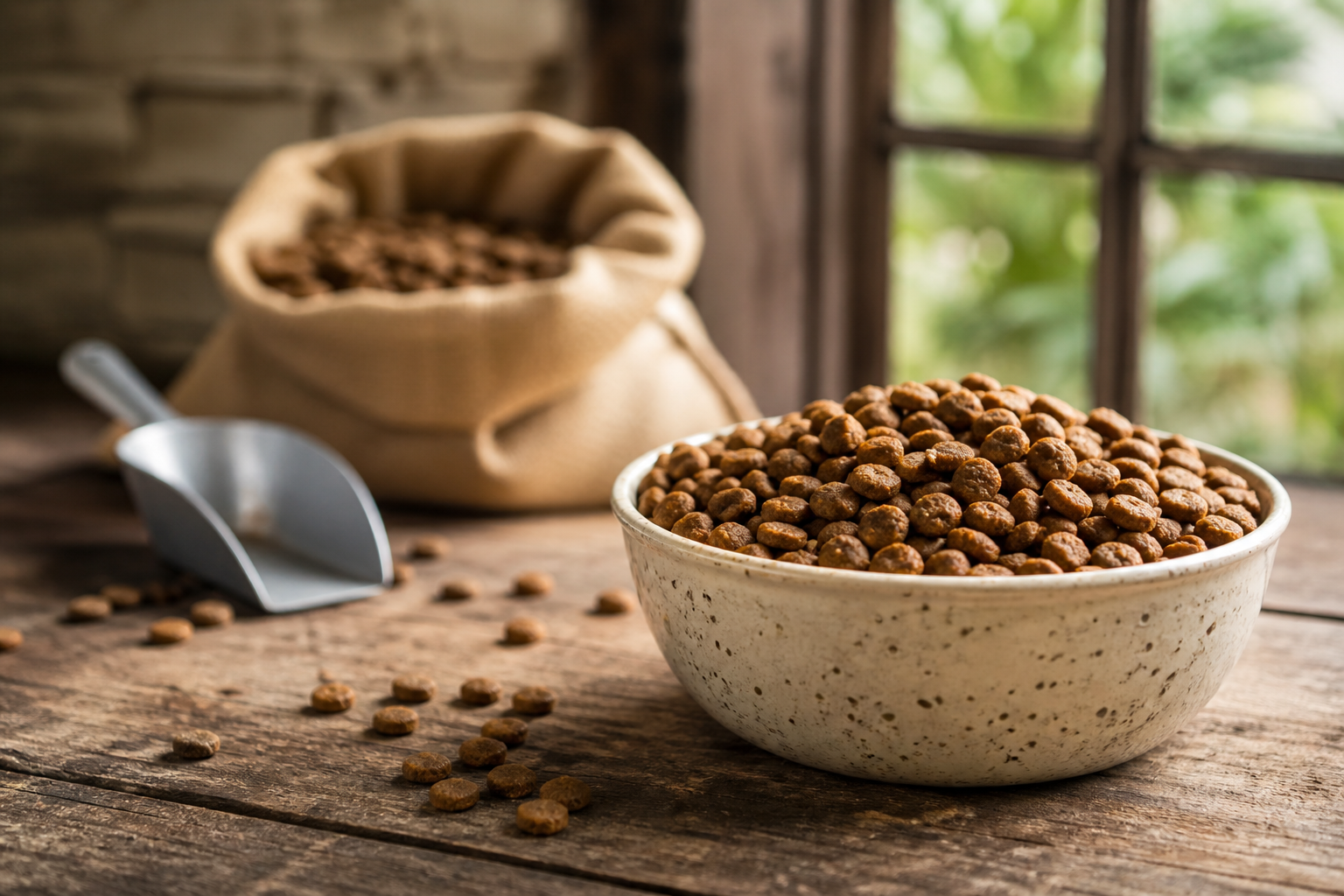
You might be standing in your kitchen right now, scooping a serving of crunchy pellets into a bowl while your dog dances at your feet. It is a ritual performed in millions of American homes every single day. For most of us, this bag of dry food is simply the way things have always been. However, if you took a time machine back just a few generations, your great grandparents would likely be baffled by the sight of those uniform brown nuggets. At BaxterBoo, we talk to pet owners every day who are curious about what goes into their pets' bowls, and often, that curiosity starts with a simple question about where this food even came from. Modern kibble is a relatively new invention born from wartime necessity and industrial cereal technology. This article covers the timeline of commercial pet food, from the first biscuits in the 1800s to the high tech extrusion methods we use today.
The Era Before the Bag
Before the mid 1800s, the concept of a pet food store did not exist. For thousands of years, dogs lived primarily as working partners rather than indoor companions. They guarded livestock, assisted in hunts, or kept vermin away from grain stores. Their diet reflected this lifestyle. Most dogs ate whatever their humans could spare, which usually meant table scraps, organ meats, or whatever they could scavenge in the fields.
In wealthy households, dogs might have been fed intentional meals like thick stews of meat and grains. For the average family, a dog's dinner was a collection of potato peels, cabbage, bread crusts, and the occasional bone. There was no scientific understanding of canine nutrition, and certainly no aisles of brightly colored bags. Dogs were viewed as hardy animals that could thrive on the leftovers of human civilization.
This started to shift during the Industrial Revolution. As a middle class emerged and people moved into cities, dogs began to transition from the barn to the living room. This new class of pet owners had more disposable income but less access to the farm fresh scraps that had previously sustained their animals. A market was opening for something convenient, shelf stable, and specifically made for dogs.
1860: The First Commercial Dog Biscuit
The story of commercial pet food officially begins with an American electrician named James Spratt. While traveling from Ohio to London to sell lightning rods, Spratt noticed stray dogs at the docks eating leftover hardtack. Hardtack was a dense, nearly indestructible biscuit made of flour and water that sailors used as a primary food source during long sea voyages.
Spratt realized that pet owners in the growing cities needed a similar shelf stable option. He ditched the lightning rod business and created the Patented Meat Fibrine Dog Cake. These biscuits were a mix of wheat, vegetables, beetroot, and beef blood. He was notoriously secretive about the exact source of his meat, but the product was a massive success.
Spratt was a master of marketing. He did not target the average person first. Instead, he marketed his expensive biscuits to English gentlemen for their sporting and hunting dogs. He used billboards and sponsored dog shows to build a premium brand image. By 1890, the company expanded back into the United States, and the commercial pet food industry was officially born.
Quick Answer: Dry dog food first appeared in 1860 when James Spratt launched his Meat Fibrine Dog Cakes in London. These were hard, biscuit-like treats that paved the way for the modern kibble industry.
The Rise of the Canned Food Empire
While Spratt’s biscuits were the first dry option, canned food actually dominated the market for several decades in the early 20th century. In 1922, the Chappel Brothers of Illinois introduced Ken-L-Ration. This was the first canned dog food in the United States, and its primary ingredient was horse meat.
After World War I, horses were being replaced by cars and tractors, leading to a surplus of inexpensive horse meat. The Chappel Brothers took advantage of this supply and marketed the food as government inspected lean red meat. They even sponsored a pet motel at Disneyland called Ken-L-Land and used a famous jingle to cement the brand in the American consciousness.
By 1941, canned food accounted for about 90 percent of the pet food market. It was convenient, high in protein, and widely accepted as the gold standard for feeding a beloved pet. It seemed like the industry had found its permanent form, but world events were about to change everything.
1941: Wartime Necessity and the Birth of Modern Dry Food
The entry of the United States into World War II changed the pet food industry overnight. Because metal was needed for the war effort, the government classified pet food as non essential. This meant manufacturers could no longer get the tin cans they needed to package wet food. Furthermore, meat was heavily rationed for human consumption.
Pet food companies had to innovate or go out of business. They turned to the dry biscuit model but sought ways to make it cheaper and more mass produced. They began using cereal by-products from the human food industry and packaging the results in paper bags. This was the true birth of the dry food dominance we see today.
Owners who were used to opening a can were forced to switch to bags of dry pellets. They quickly discovered that dry food was less messy, had a longer shelf life, and was significantly cheaper than canned meat. Even after the war ended and metal became available again, the convenience of the bag had already won over the American public.
How WWII Changed the Bowl
- Metal rationing ended the dominance of canned pet food.
- Paper packaging became the standard for shelf stable pet nutrition.
- Cereal by-products replaced expensive whole meats as the primary base.
- Mass production lowered the price of pet ownership for the average family.
1956: The Extrusion Process
While the 1940s gave us bagged dry food, the 1950s gave us the specific texture and shape of the kibble we recognize today. In 1956, Purina introduced the first kibble made through a process called extrusion. This was a technology borrowed from the human breakfast cereal industry.
In extrusion, wet and dry ingredients are mixed into a dough. This dough is then fed into a machine called an expander, where it is subjected to extreme heat and pressure. The dough is forced through a die-cutting machine, which snaps off the small pieces into specific shapes. These pieces are then dried and often sprayed with fats or flavor enhancers to make them more appealing to dogs.
Extrusion allowed for massive scale production. It also made the food more digestible for dogs by breaking down the starches in the grains. However, the high heat also destroyed many natural vitamins and minerals. This led to the practice of adding synthetic vitamins back into the food after the cooking process was complete.
Key Takeaway: Most modern dry dog food is produced through extrusion, a high heat and high pressure process that creates shelf stable, uniform kibble. This method has been the industry standard since Purina introduced it in 1956.
The Marketing of the Only Choice
In the 1960s, the pet food industry shifted from just providing a product to shaping the narrative of how we should care for our animals. In 1964, a lobbying group called the Pet Food Institute launched a series of ad campaigns. Their goal was to convince consumers that commercially prepared pet food was the only safe and healthy option for dogs.
They warned owners that table scraps were dangerous and that dogs needed the balanced nutrition that only a laboratory tested kibble could provide. This was a highly successful campaign. Within a decade, the idea of cooking for your dog or feeding them scraps became viewed as irresponsible by many pet owners.
During this same era, we saw the introduction of life stage nutrition. Companies began offering specific formulas for puppies, which acknowledged that growing dogs have different caloric and mineral needs than adults. This further reinforced the idea that pet nutrition was a complex science that should be left to the professionals.
1800s to Today: A Summary of Pet Food Evolution
| Era | Primary Food Source | Major Development |
|---|---|---|
| Pre-1860 | Table scraps and scavenged meat | No commercial industry exists |
| 1860-1920 | Biscuits (Hardtack style) | James Spratt creates the first commercial biscuit |
| 1922-1941 | Canned horse meat | Ken-L-Ration dominates the market |
| 1941-1955 | Cereal-based dry food | WWII metal rationing forces a move to bags |
| 1956-Present | Extruded Kibble | Purina introduces high-pressure extrusion technology |
The Introduction of Veterinary and Prescription Diets
As the pet food industry matured, scientists and veterinarians began to notice that diet could play a significant role in managing chronic health conditions. In 1968, a French veterinarian named Jean Cathary developed a specialized food to help treat skin conditions in dogs. This eventually became the brand Royal Canin.
In the United States, Hill’s Science Diet began producing prescription formulas for kidney disease and liver failure. This marked a major shift in how we viewed the bag of food. It was no longer just fuel; it was a medical tool. Today, our pharmacy at BaxterBoo works closely with pet owners who need these specialized prescription diets through our partnership with Pet's Choice.
Whether your vet recommends a specific diet for weight management, urinary health, or food allergies, these products are the result of decades of clinical research. Our pharmacy provides access to these FDA approved prescription foods and medications, ensuring that dogs with chronic conditions can get the exact nutrition their bodies require.
Vet Tip: While commercial kibble provides a convenient base, some dogs require specialized prescription diets to manage health issues like kidney disease or severe allergies. Always consult your veterinarian before switching to a medical or therapeutic diet to ensure it meets your pet's specific clinical needs.
Modern Trends: Moving Toward Whole Foods
In the last 20 years, the pendulum has begun to swing back toward the origins of pet nutrition. After a major pet food recall in 2007 due to melamine contamination in imported ingredients, many pet owners began to look more closely at what was in the bag. This led to the rise of premium brands that focus on whole food ingredients, grain free options, and limited ingredient diets.
We have seen a surge in brands like Stella and Chewy’s, The Honest Kitchen, and Open Farm. Companies such as The Honest Kitchen often use low temperature baking or freeze drying instead of traditional high heat extrusion. This helps preserve the natural nutrients in the meat and vegetables.
Many owners now use a hybrid approach. They might use a high quality kibble as a base but top it with fresh proteins, freeze dried raw nuggets, or wet food to add moisture and variety. This reflects a modern understanding that while kibble is convenient, dogs benefit from the variety and nutrient density of real, minimally processed foods.
Bottom line: The history of dry dog food is a story of moving from fresh scraps to industrial biscuits, then to extruded pellets, and finally back toward high quality whole food ingredients.
Transitioning Your Dog to a New Food
If learning about the history of kibble has inspired you to upgrade your dog's diet, it is important to remember that their digestive systems are sensitive to change. Unlike humans, who can eat something different for every meal, dogs develop specific enzymes to break down their regular food.
For help comparing formulas, start with our dry dog food category.
Step 1: Start with a 25/75 mix. / Combine 25 percent of the new food with 75 percent of the old food for two to three days. Step 2: Move to a 50/50 split. / If your dog's stool remains firm, increase the new food to half of the total meal for another two to three days. Step 3: Reach a 75/25 ratio. / Shift the balance so the new food makes up the majority of the bowl. Step 4: Complete the transition. / After about a week of gradual changes, you can feed 100 percent of the new food.
Monitoring your dog during this time is vital. If you notice any vomiting, diarrhea, or excessive gas, slow down the process and give their system more time to adjust. If symptoms persist, a quick call to your vet is the best way to ensure there is not an underlying sensitivity to a new ingredient.
For more guidance, read our guide to choosing dry dog food.
Conclusion
The history of dry dog food is shorter than most people realize. In just over 150 years, we have moved from feeding dogs the leftovers of our meals to providing them with scientifically formulated, shelf stable kibble. While convenience was the primary driver for much of this history, the focus has shifted back toward quality and safety. We carry over 500 trusted brands at BaxterBoo to ensure that every pet owner can find the right balance of convenience and nutrition.
Key Takeaways for Pet Owners:
- Dry food was born from James Spratt's observation of sailors' biscuits in 1860.
- Modern kibble was standardized in the 1950s using industrial extrusion machines.
- Wartime shortages in the 1940s were the main reason dry food became more popular than canned.
- Modern pet food safety and prescription diets have made pet ownership more accessible and helped dogs live longer lives.
If you are looking to simplify your pet care routine, consider signing up for our Autoship program. It is the easiest way to ensure you never run out of your dog’s favorite food, and it includes a free MVP Gold membership for even better savings on every order.
FAQ
Why was horse meat used in the first canned dog foods?
After World War I, the rise of cars and tractors made horses less necessary for transportation and farming. This created a large surplus of inexpensive meat that pet food companies could source easily. Brands like Ken-L-Ration used this supply to create the first widely successful canned dog food in the 1920s.
Is kibble better for a dog's teeth than wet food?
While many people believe the crunch of kibble helps clean teeth, most kibble is too small and brittle to provide significant dental scraping. For real dental benefits, we usually recommend specific dental treats or regular brushing. Some specialized dental diets are designed with a specific texture to help scrub the teeth, but standard kibble is not a substitute for dental care.
When did grain free dog food become popular?
Grain free diets began to gain significant traction in the early 2000s as pet owners became more concerned about fillers and allergies. This trend grew after the 2007 pet food recalls, leading many to seek out diets that closely mimicked what a dog's ancestors might have eaten. Today, grain free is a major category, though many owners are now moving toward ancient grains or whole food inclusions.
How did the government start regulating pet food?
The Association of American Feed Control Officials (AAFCO) was founded in 1909 to help set standards for animal feed. Over the decades, they developed specific definitions for ingredients and nutritional adequacy. In 2011, the Food Safety Modernization Act (FSMA) gave the FDA more power to regulate how pet food is made and to enforce recalls when products are found to be unsafe.






