Save 15% on your 1st Autoship learn more

 Email us
 Live Chat
 FAQs
FAQs





Introduction
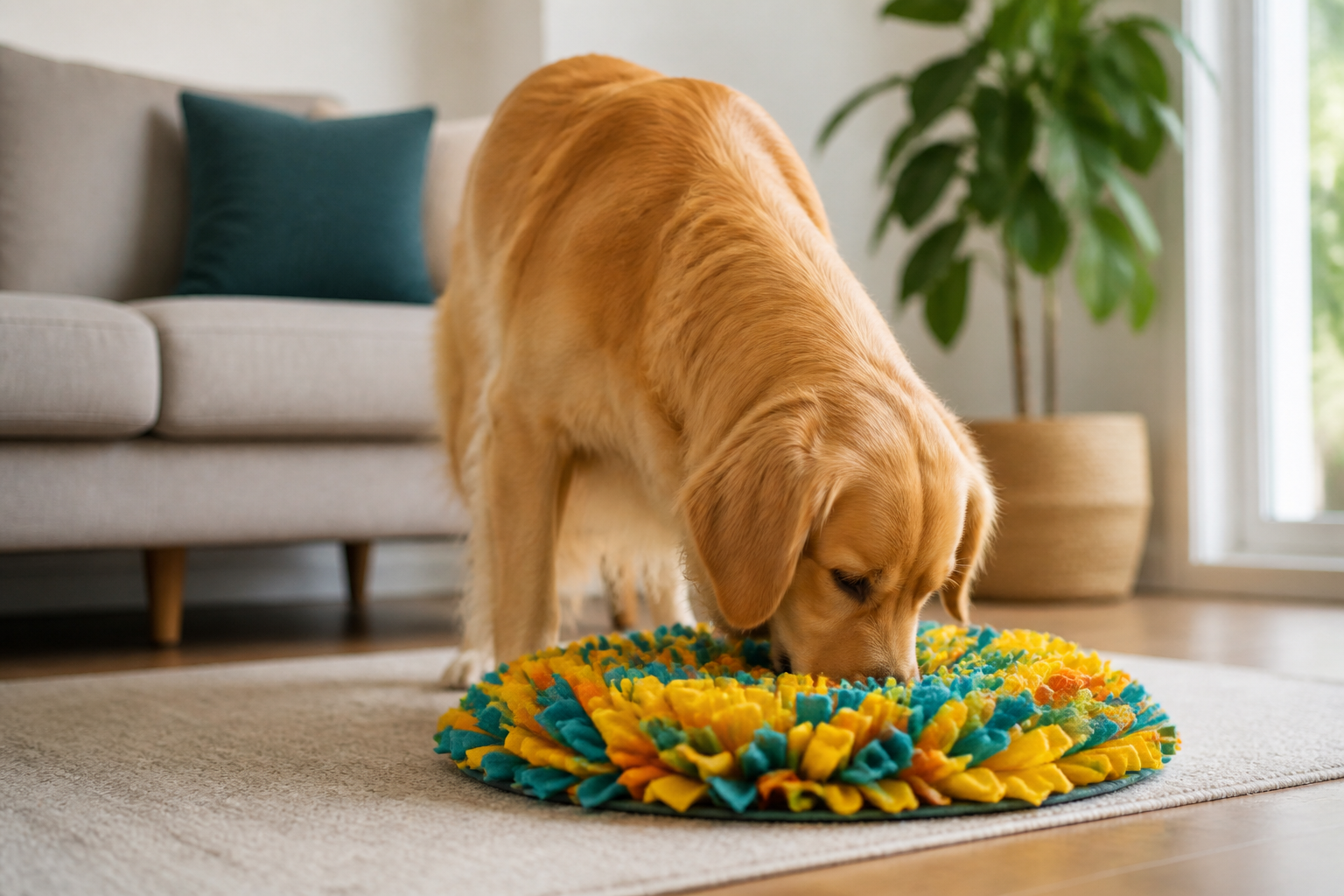
It is a rainy Tuesday and your high-energy pup is pacing the hallway with a tennis ball. You have already played three rounds of tug, but those puppy eyes are still searching for something to do. Physical exercise is great, but many owners forget that mental exercise is just as exhausting for a dog. This is where a snuffle dog mat becomes a vital part of your tool kit. At BaxterBoo, we see these mats as more than just toys. They are sensory puzzles that tap into a dog’s natural foraging instincts. This post covers the benefits of scent work, how to choose the best mat, and tips for introducing it to a fast eater. Using a mat can turn a stressful afternoon into a calm, focused session for your furry friend.
The Science of Sniffing and Mental Enrichment
Dogs experience the world through their noses. While humans rely heavily on sight, a dog’s brain is wired to process a massive amount of olfactory data. The part of the brain that analyzes smells is about 40 times larger in dogs than in humans. When your dog puts their nose to the ground, they are not just smelling. They are gathering information, solving problems, and engaging their cognitive faculties.
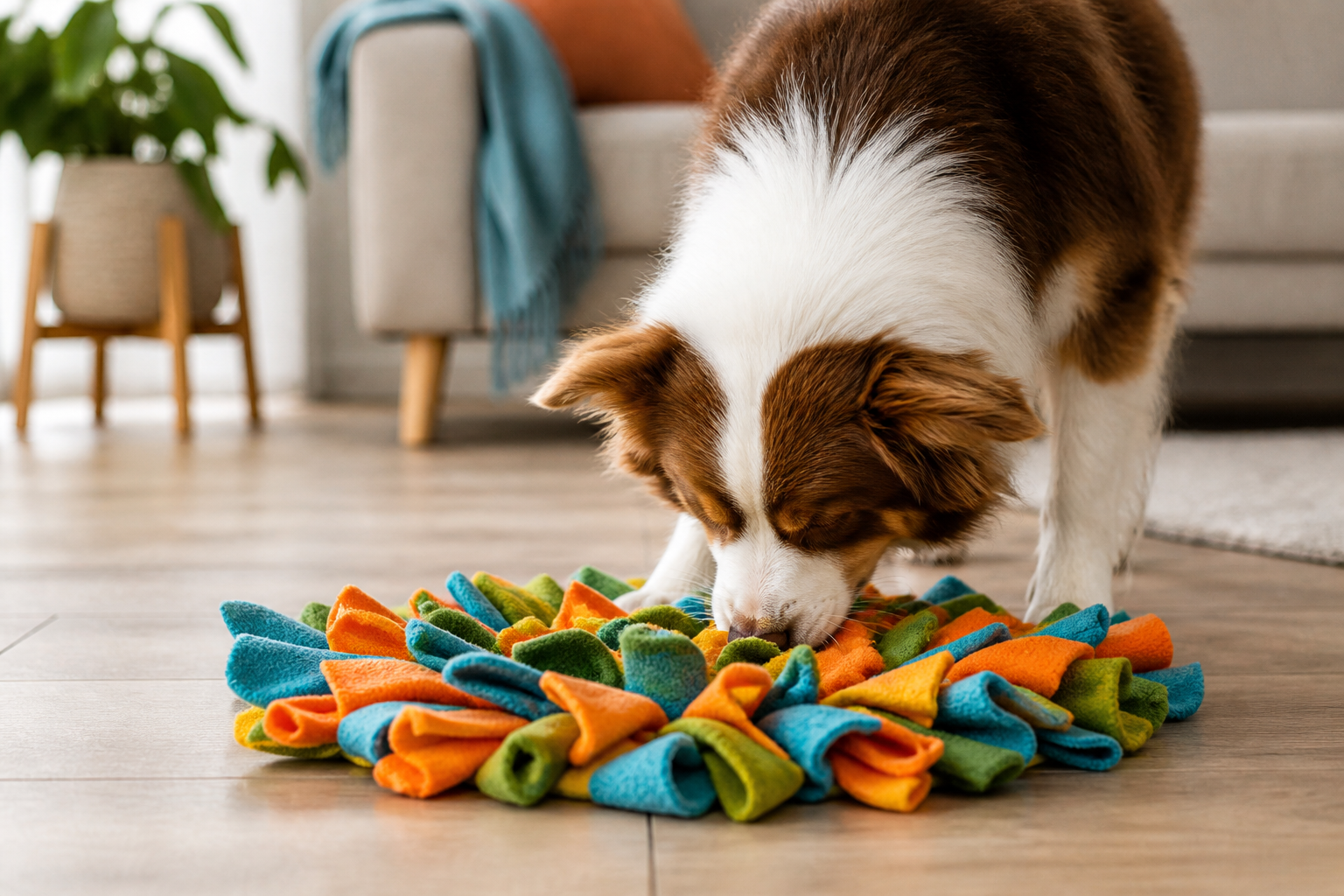
A snuffle dog mat mimics the experience of foraging in long grass. By hiding small dry treats or kibble inside layers of fabric, you force your dog to work for their reward. This type of mental stimulation is incredibly effective for burning energy. Experts often note that 15 minutes of intense sniffing can be as tiring as an hour-long walk. This makes enrichment mats perfect for senior dogs with limited mobility or puppies who need a calm way to spend their energy. For more ideas, explore these dog brain games for mental stimulation.
Quick Answer: A snuffle mat is an enrichment toy made of fabric strips attached to a sturdy backing. It encourages dogs to use their sense of smell to find hidden treats, providing mental stimulation and slowing down fast eaters.
The Concept of Contrafreeloading
Most animals actually prefer to work for their food rather than having it handed to them in a bowl. This behavior is called contrafreeloading. In the wild, dogs spent most of their waking hours searching for food. Modern life has simplified things to a ceramic bowl in the kitchen. While this is convenient, it leaves a void in their daily routine. A snuffle mat fills that gap by providing a "job" for your dog to perform.
Reducing Stress through Foraging
Sniffing has a physiological effect on dogs. It lowers their heart rate and triggers the release of dopamine. This is why you might see a dog start sniffing the ground when they feel slightly anxious in a new environment. By providing a structured outlet for this behavior, you help your dog self-regulate. It is a fantastic tool for dogs with separation anxiety or those who get nervous during thunderstorms. You can also find more ideas in this guide to creating indoor enrichment for pets.
Using a Snuffle Dog Mat for Weight Management and Better Digestion
Many owners use a snuffle dog mat as a replacement for a standard food bowl. If your dog inhales their dinner in under 30 seconds, they are at a higher risk for digestive upset. Scarfing food often leads to gas, gagging, or even a dangerous condition called bloat. When you scatter kibble into the deep folds of a mat, you extend mealtime from seconds to minutes.
This slow-feeding approach is a key part of weight management. When a dog eats slowly, their body has time to register that it is full. It also makes a smaller portion of food feel like a more substantial meal because of the effort involved. For owners managing a pet’s weight, this can be a helpful strategy to prevent begging between meals. Our dog bowls and feeders for digestive health include enrichment-focused options for mealtime.
At BaxterBoo, we prioritize products that support long-term wellness. If your dog is on a specific prescription diet for weight or digestion, using a mat can make that diet more successful. Our pet pharmacy carries a wide range of prescription pet foods through our partnership with Pet's Choice. You can easily manage these health needs while using enrichment tools to keep your dog happy and satisfied with their portions.
Vet Tip: For dogs prone to Gastric Dilatation-Volvulus (bloat), slowing down consumption is essential. Consult your veterinarian about using a snuffle mat or slow feeder to reduce the amount of air your dog swallows during meals.
Benefits for Picky Eaters
On the opposite end of the spectrum, some dogs are disinterested in their food. If you have a picky eater, the game-like nature of a snuffle mat might pique their interest. The challenge of finding the food can trigger a predatory drive that makes the meal more appealing. If a dog thinks they are "hunting" for their kibble, they are often more likely to eat it.
How to Introduce a Snuffle Mat to Your Dog
Introducing a new puzzle toy should be a positive experience. You do not want your dog to feel frustrated or think the mat is a giant chew toy. Following a few simple steps ensures they understand the goal of the game.
Step 1: Start easy.
Place the mat on the floor and sprinkle a few high-value treats right on top. Do not hide them in the folds yet. You want your dog to associate the mat with immediate rewards.
Step 2: Add a cue.
Use a consistent command like "find it" or "search" when you put the mat down. This helps your dog understand when it is time to work.
Step 3: Increase the difficulty.
Once your dog is excited to see the mat, start tucking the treats slightly under the first layer of fabric. Gradually move them deeper into the pockets and folds as your dog becomes more proficient.
Step 4: Supervise the session.
Always watch your dog while they use the mat. If they start pawing at it aggressively or try to pick it up and shake it, gently redirect them. You want them using their nose, not their teeth.
Step 5: End on a high note.
When the treats are gone, pick up the mat and put it away. This keeps the mat "special" and prevents your dog from chewing on the fabric once the food reward is missing.
Key Takeaway: Proper introduction prevents frustration and toy destruction. Always supervise your dog to ensure they are sniffing rather than chewing the fabric strips.
Training Tips for Success
- Use dry, crumbly treats or kibble to keep the mat clean.
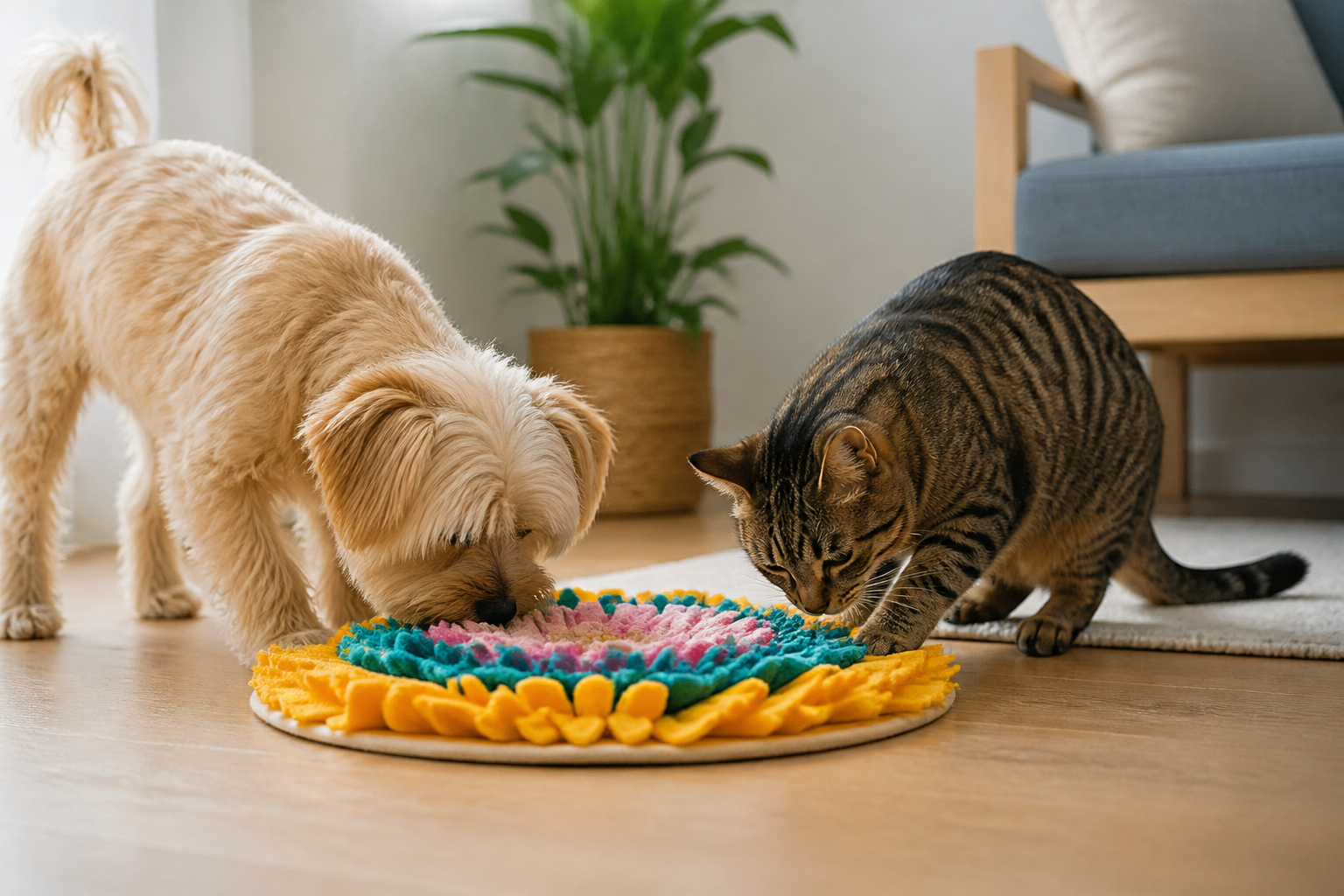
- If you have multiple dogs, give them each a mat in separate rooms to avoid resource guarding.
- Keep sessions short at first. Five to ten minutes is plenty of mental work for a beginner.
- Use the mat during high-stress times, like when you are making dinner or when guests arrive.
Choosing the Right Snuffle Mat for Your Pet
Not all mats are created equal. Since we handpick every item we carry, we look for specific features that ensure safety and longevity. When you are shopping for a snuffle dog mat, consider the following factors. Our interactive dog toys offer additional enrichment options for different play styles.
Material and Durability
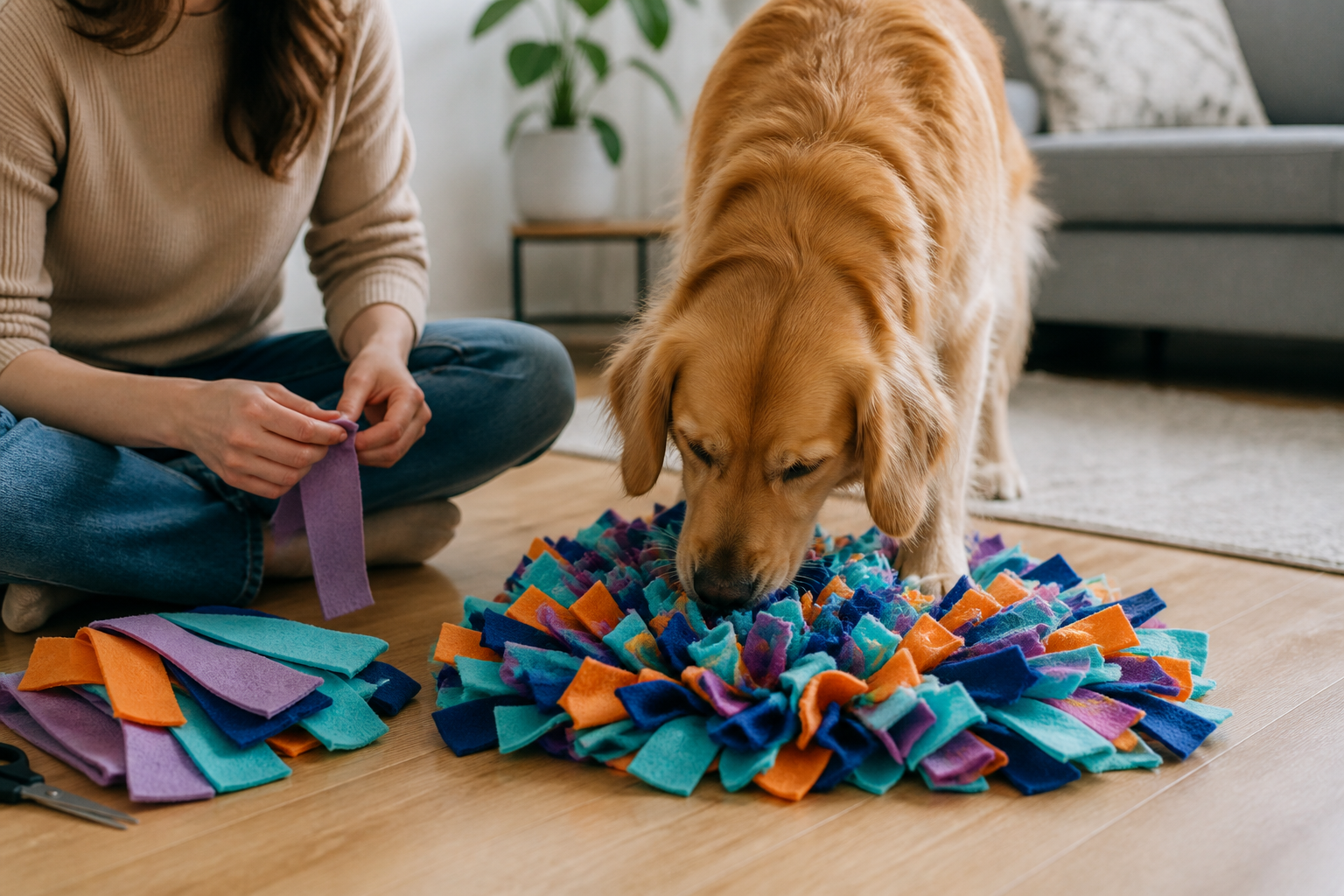
Most mats use felt or fleece because these materials are soft on a dog’s nose. A dog’s snout is very sensitive. Rough fabrics can cause "rug burn" or irritation if they are sniffing vigorously. Look for "non-toxic" and "AZO-free" labels on dyes to ensure the fabric is safe if your dog happens to lick it.
The Base of the Mat
A good mat needs a heavy or non-slip base. If the mat is too light, your dog will simply flip it over to get the treats out. Look for bases with rubber grip dots or those made from heavy silicone. Some mats even come with suction cups or straps that allow you to tether the mat to a chair leg or the floor.
Complexity and Design
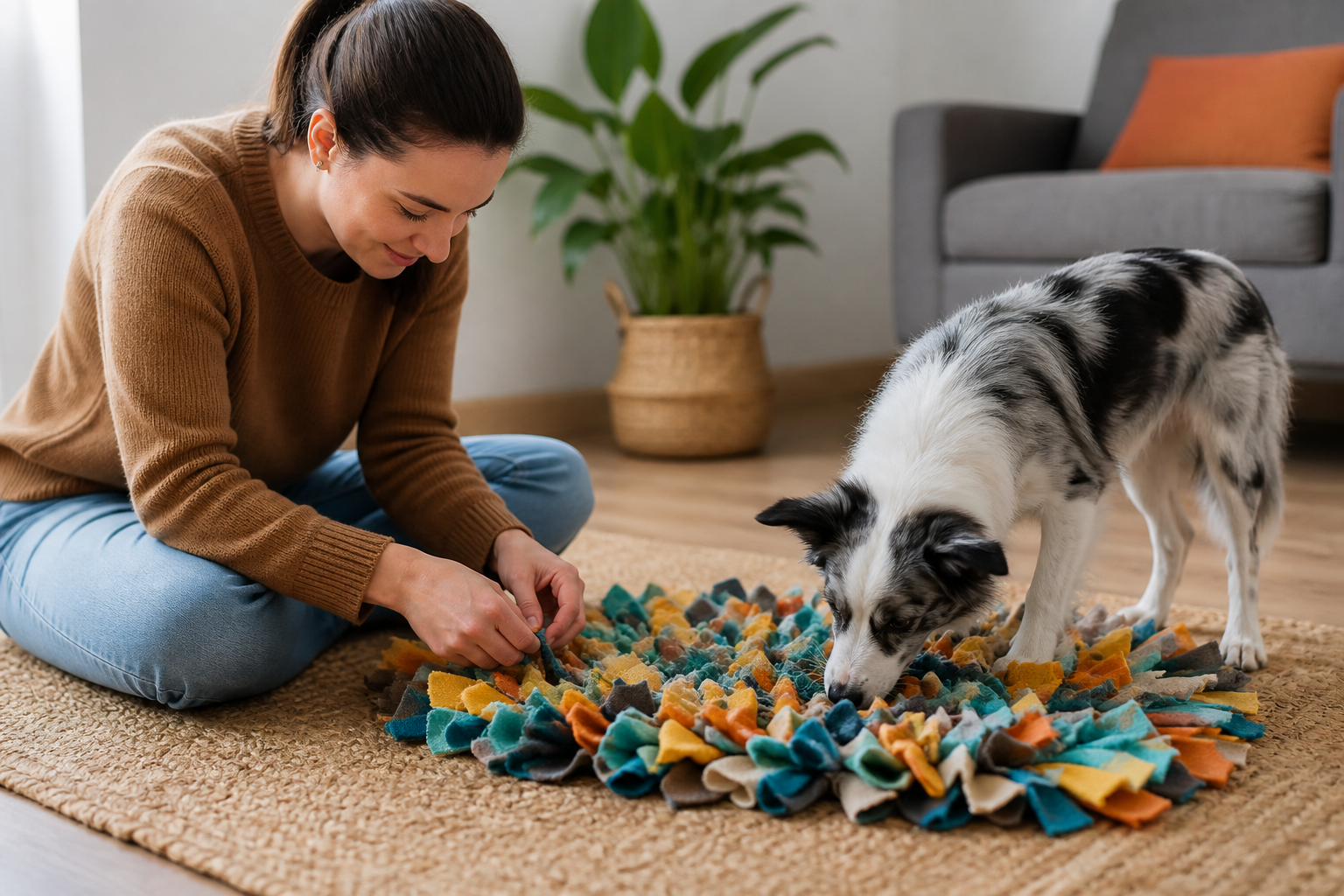
Some mats look like a simple shag carpet. Others have complex shapes like flowers, grass patches, or even "breakfast" themes with felt eggs and bacon.
- For beginners: A simple, dense felt strip mat is best.
- For experts: Look for mats with different textures, such as pockets, cups, and tightly rolled fabric "logs."
- For travel: Choose a mat that can be cinched into a bowl shape or rolled up tightly with a velcro strap.
Size Matters
A Great Dane will find a small mat frustrating, while a Chihuahua might get lost in a massive one. Choose a size that allows your dog to stand over the mat comfortably. Larger mats generally take longer to "clear," providing a more extended period of enrichment.
Bottom line: Quality materials and a non-slip base are the two most important features when choosing a snuffle mat for a dog of any size.
Cleaning and Maintenance for Long Term Use
Because snuffle mats involve food and saliva, they can become a breeding ground for bacteria if left uncleaned. A dirty mat can also develop a sour smell that might discourage your dog from using it. Hygiene is a major factor in keeping your pet's environment healthy.
How to Wash a Snuffle Mat
Most high-quality mats are machine washable. You should check the care label first, but generally, a gentle cycle with cold water is best.
- Use a pet-safe, unscented detergent. Strong perfumes can be overwhelming for a dog’s sensitive nose.
- Place the mat in a mesh laundry bag to prevent the fabric strips from getting tangled in the washing machine agitator.
- Air drying is usually safer than using a dryer. High heat can melt the non-slip rubber backing or cause the felt to pill and harden.
Daily Upkeep
After every session, give the mat a good shake over a trash can or outside. This removes any leftover crumbs or saliva-soaked bits of kibble. If the mat feels damp, let it air dry completely before folding it up and storing it. Storing a wet mat in a dark cupboard can lead to mold and mildew.
Safety Precautions and Smart Snuffling
While snuffle mats are generally safe, they are not indestructible. No fabric toy is 100 percent safe if a dog is determined to eat it. For dogs who need a different type of challenge, interactive and treat toys offer alternative enrichment formats.
Aggressive Chewers
If your dog is a "shredder" who loves to de-stuff plush toys, you must be extra vigilant. The felt strips on a snuffle mat are easy to tear off and swallow. Swallowing fabric can lead to intestinal blockages, which are serious medical emergencies. If you know your dog cannot be trusted with soft toys, a rubber puzzle toy might be a safer alternative for enrichment.
Monitoring for Wear and Tear
Check the mat regularly for loose strips or fraying edges. If the base starts to crack or the fabric becomes thin, it is time to replace it. A well-loved mat will eventually show its age, but regular inspections keep playtime safe.
Caloric Intake
It is easy to lose track of how many treats you are feeding when you are "loading" a mat. If you use the mat for daily enrichment, subtract those treats from your dog’s total daily caloric intake. Obesity is a common health issue that can lead to joint pain and heart problems. Using their regular kibble for the mat is the easiest way to ensure you aren't overfeeding.
Conclusion
A snuffle dog mat is a simple yet powerful tool for improving your pet's quality of life. It provides the mental stimulation they crave while offering a practical solution for fast eaters and bored pups. By choosing a high-quality mat with safe materials, you can turn any indoor day into an adventure for your dog’s nose. Our team at BaxterBoo is dedicated to providing gear that stands up to real-world use. Whether you are managing a senior dog's cognitive health or trying to calm a wild puppy, scent work is a rewarding path forward.
- Select a mat based on your dog's size and chewing habits.
- Introduce the mat slowly to build confidence and focus.
- Wash the mat regularly to keep it hygienic and fresh.
- Monitor your pet's calorie intake by using kibble for enrichment.
Key Takeaway: Mental stimulation is just as important as physical exercise. A snuffle mat provides a safe, indoor way to tire out your dog and support their natural instincts.
If you are ready to start your enrichment journey, explore our collection of dog toys and feeding accessories. For pets with specific dietary needs, remember that our pharmacy is available for all your prescription food and medication requirements.
FAQ
Can I use wet food in a snuffle dog mat?
It is generally not recommended to use wet food in a fabric snuffle mat because it creates a significant mess and can lead to mold growth. Wet food is better suited for silicone lick mats or rubber puzzle toys that can be easily sanitized in a dishwasher. Stick to dry kibble or hard treats for fabric mats to ensure they stay clean and last longer.
How often should I let my dog use a snuffle mat?
Most dogs can enjoy a snuffle mat session once or twice a day. Many owners use it as a way to feed breakfast and dinner, providing two consistent periods of enrichment. However, if your dog seems frustrated or loses interest, you can scale back to a few times a week to keep the activity feeling fresh and exciting.
Are snuffle mats safe for puppies?
Yes, snuffle mats are excellent for puppies as they provide a calm way to explore new scents and textures. They are particularly helpful during the teething phase or when a puppy has "the zoomies" and needs a focused task to settle down. Just be sure to supervise closely to ensure the puppy does not try to chew or swallow the fabric strips.
What should I do if my dog just tries to chew the mat?
If your dog starts chewing, gently remove the mat and say "no" or use a redirection cue. Wait a few minutes for them to calm down before offering it again. If the behavior continues, it may mean your dog is frustrated because the treats are hidden too deeply, so try making the game easier by placing treats right on top.