
 Save 15% on your 1st Autoship learn more

 Email us
 Live Chat
 FAQs
FAQs





Introduction
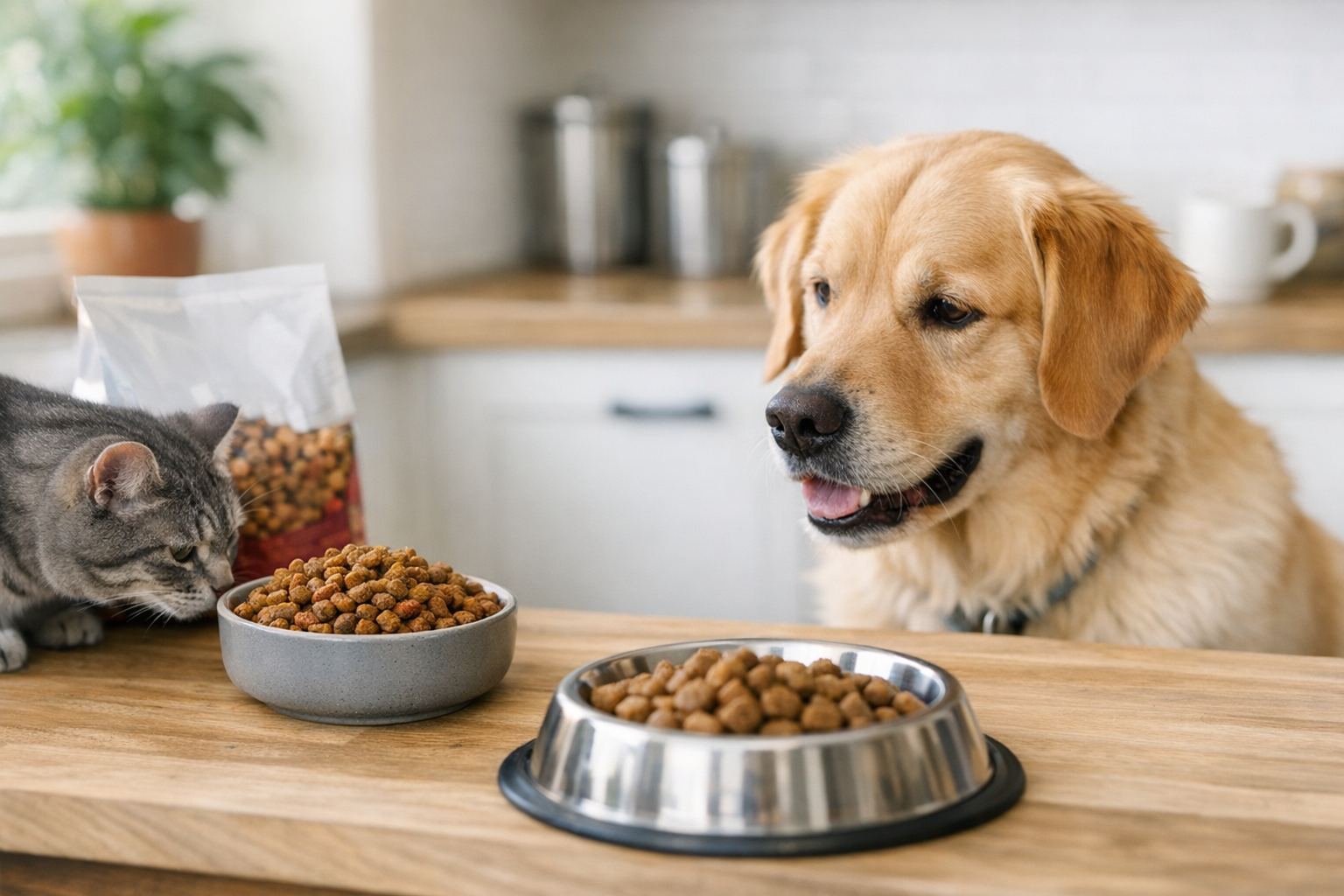
You turn your back for a single minute to pour your own coffee. In that short window, you hear the telltale crunching coming from the cat's corner. Your dog has successfully pulled off a breakfast heist, leaving the cat's bowl licked clean. This is a scene played out in multi-pet households across the country every single day. At BaxterBoo, we understand the immediate panic that follows a stolen snack. You might wonder if a vet visit is necessary or if your dog will face long term health consequences. This guide explains the nutritional differences between species, the risks of high-fat kibble, and how to keep your pets in their own lanes at mealtime. While a few stolen bites are rarely an emergency, making cat food a staple in a dog's diet can lead to significant health complications.
Quick Answer: A small amount of dry cat food will not typically hurt a healthy dog immediately. However, cat food is much higher in protein and fat than dog food, which can cause stomach upset, weight gain, or even pancreatitis if eaten regularly.
The Core Differences Between Dog and Cat Nutrition
To understand why cat food is not ideal for dogs, we have to look at how these animals are built. Dogs and cats have very different biological requirements. Dogs are classified as omnivores. This means they can derive nutrients from both animal and plant sources. They are scavengers by nature and their bodies are designed to process a variety of ingredients.
Cats are obligate carnivores. This is a fancy way of saying they must eat meat to survive. Their bodies cannot properly process certain plant-based nutrients and they require specific amino acids that are only found in animal tissue. Because of this, cat food is formulated to be a dense, high-protein, and high-fat fuel source. For a closer look at feline formulas, you can browse our cat food category.
Protein and Fat Levels
The Association of American Feed Control Officials (AAFCO) sets the standards for pet food in the United States. When you look at the minimum requirements for each species, the gap becomes clear.
| Nutrient | Adult Dog Minimum | Adult Cat Minimum |
|---|---|---|
| Crude Protein | 18% | 26% |
| Crude Fat | 5.5% | 9% |
In reality, many premium dry cat foods contain protein levels well above 30% and fat levels nearing 20%. For a dog, this is like eating a diet consisting entirely of rich, fatty appetizers. While it tastes great to them, it is not a balanced way to live.
Essential Amino Acids and Vitamins
Cats require a specific amino acid called taurine to be added to their food because they cannot produce enough of it on their own. While dogs do need taurine for heart health, they are generally able to synthesize it from other proteins.
Cats also require pre-formed Vitamin A and arachidonic acid, which is an essential fatty acid. Dog food is formulated with the assumption that a dog's body can convert certain precursors into these vitamins. If a dog eats only cat food, they are getting a massive dose of nutrients their body is already capable of making. This can eventually lead to a nutrient imbalance or even vitamin toxicity over a long period.
Key Takeaway: Dogs and cats have different biological classifications. Dogs are omnivores who need a balance of protein and carbohydrates, while cats are obligate carnivores who require high levels of animal-based fats and proteins.
Short Term Effects of Eating Cat Food
If your dog just finished off a bowl of kitty kibble, the most likely result is a simple case of dietary indiscretion. This is the medical term for "my dog ate something they should not have."
Most healthy adult dogs will experience mild gastrointestinal upset. You might notice your dog is a bit more gassier than usual. They may have a loose stool or even a single bout of vomiting. This happens because the high fat content is very rich for a dog's digestive system. It is similar to a human eating a very greasy fast-food meal after weeks of eating healthy salads.
Monitoring Your Dog
After a cat food heist, keep a close eye on your dog for the next 24 to 48 hours. If they are acting like their normal, happy selves, you probably do not need to worry. However, if the vomiting persists or if they refuse their regular meal, it is time to take notice. If your dog is prone to digestive issues, our dog health category is a helpful place to start.
For dogs with very sensitive stomachs, even a small amount of dry cat food can cause a flare-up. If your dog is already prone to GI issues, you may want to feed them a slightly smaller portion of their regular food for the next meal to let their stomach settle.
Vet Tip: If your dog consumes a large amount of cat food and begins vomiting repeatedly or acting lethargic, contact your veterinarian. Dogs with a history of digestive issues or those on specific prescription diets are at a higher risk for complications.
Long Term Health Risks
The real danger lies in making cat food a regular part of a dog's diet. Some owners use cat food as a "topper" to encourage picky eaters. Others might think it is a convenient way to feed both pets from the same bag. This is where the risks become serious.
Pancreatitis
This is the most significant acute risk. Pancreatitis is an inflammation of the pancreas. The pancreas is responsible for producing enzymes that help digest food. When a dog eats a meal that is extremely high in fat, the pancreas can become overworked and inflamed.
Pancreatitis is incredibly painful and can be life-threatening. Symptoms include:
- Hunched back or signs of abdominal pain
- Persistent, severe vomiting
- Loss of appetite
- Fever
- Dehydration
If your dog develops these symptoms, they require immediate veterinary care. Our dog pharmacy can help support prescription needs when your veterinarian recommends them. We also carry brands like Orijen and Royal Canin that offer specialized formulas for managing these delicate conditions.
Obesity and Weight Gain
Because cat food is so calorie-dense, dogs who eat it regularly tend to put on weight very quickly. Obesity in dogs leads to a host of other problems, including joint stress, heart disease, and a shortened lifespan. A single cup of cat kibble can have significantly more calories than a cup of dog kibble. If you are not adjusting your dog's intake, the extra weight will pile on fast.
Kidney and Liver Strain
Processing high levels of protein puts extra work on the kidneys and the liver. For a young, healthy dog, this might not be an immediate issue. However, for senior dogs or those with underlying organ issues, the "protein load" in cat food can be dangerous. It can accelerate the progression of chronic kidney disease or cause liver enzymes to spike.
Bottom line: Cat food is a "hot" food for dogs, meaning it is too dense in fat and protein for their long-term health, potentially leading to organ strain or painful inflammation.
Why Dogs Crave Cat Food
It is no secret that most dogs prefer cat food over their own. If you put a bowl of each side-by-side, the dog will almost always go for the cat's bowl first. There are a few reasons for this.
First, the high fat content makes cat food very palatable. Fat is a flavor carrier. Because cat food has so much more fat than dog food, it smells and tastes much more like a treat than a standard meal.
Second, the protein sources in cat food are often very concentrated. This creates a strong, meaty aroma that appeals to a dog's primal instincts. To a dog, cat kibble is essentially a bowl full of bite-sized treats.
Third, dogs are natural scavengers. They are biologically programmed to seek out the most calorie-dense food available. In their minds, cat food is a high-value resource that is worth the effort of a heist.
How to Prevent the Heist
If you have a "counter-surfer" or a dog that is obsessed with the cat's bowl, you need a plan. Constant monitoring is exhausting, so physical barriers are usually the best solution. We recommend a few practical steps to keep the peace at mealtime. For more everyday feeding ideas, our blog on how many cups of dry dog food per day is a useful companion read.
Step 1: Elevate the Cat Food
Cats are natural climbers. Most dogs are not. By moving the cat's feeding station to a sturdy counter, a high table, or a tall cat tree, you put the food out of reach for most dogs. This allows your cat to eat in peace without having to guard their bowl.
Step 2: Use Physical Barriers
Baby gates are a classic solution for a reason. You can use a gate with a small pet door built into it. This allows the cat to pass through to a "cat-only" room while keeping the dog on the other side. This is particularly useful if your cat likes to graze on their dry food throughout the day.
Step 3: Scheduled Feedings
If you currently "free feed" your cat, consider switching to scheduled meal times. This allows you to supervise the feeding. You can feed the dog in one room and the cat in another, closing the door between them. Once the cat is finished, pick up the bowl so there are no leftovers for the dog to find later.
Step 4: High-Tech Solutions
Microchip pet feeders are a modern answer to this problem. These feeders only open when they sense a specific pet's microchip or an RFID tag on their collar. When the cat approaches, the lid slides open. As soon as the cat walks away, the lid closes, locking the dog out. You can find gear like this and more at BaxterBoo, where we handpick products that solve real problems for pet owners. If your dog is a fast eater, our dog health supplies can also help support better mealtime routines.
- Invest in a microchip feeder for specialized access.
- Install a gate with a cat-sized pass-through.
- Use a slow-feeder for your dog to keep them occupied longer during their own meal.
- Store all pet food in airtight, dog-proof containers.
Key Takeaway: Prevention is much easier than treating a sick dog. Using height, gates, or microchip technology can eliminate the stress of mealtime heists entirely.
When to Consult Your Veterinarian
If your dog's habit of eating cat food is a frequent occurrence, it is worth mentioning at your next vet visit. Your vet can check for any signs of weight gain or organ strain. However, you should call the vet immediately if you notice any of the following after a large intake of cat food:
- Repeated Vomiting: If your dog cannot keep water down, they are at risk for dehydration.
- Lethargy: If your dog is usually bouncy but suddenly seems depressed or refuses to move.
- Abdominal Pain: If your dog yelps when touched near the belly or stays in a "play bow" position (front paws down, rear end up) to relieve pressure.
- Bloat: If you notice a visible swelling in the abdominal area.
For dogs that require ongoing support for digestive health or weight management, we are here to help. Through our pet pharmacy, we offer a wide range of prescription medications and specialized diets. This makes it easy for you to get the specific nutrition your vet recommends delivered right to your door.
Transitioning Your Dog Back to Success
If you have been using cat food as a topper or treat, it is time to make a change. To avoid further stomach upset, do not just stop cold turkey if it has been a major part of their diet. Instead, slowly decrease the amount of cat food while increasing a high-quality dog food.
To make their own food more enticing, try adding a splash of warm water or a dog-safe bone broth. This creates a gravy that provides the aroma dogs crave without the dangerous fat levels found in kitty kibble. You can also look for high-protein dog foods like those from Orijen or Acana, which provide the meaty flavor dogs love but with the balanced nutrition they actually need. Our dog food category makes it easy to browse those options.
We also offer Autoship that ensures you never run out of your dog's favorite food. Running out of dog food is a common reason owners reach for the cat's bag. With Autoship, you get a discount on your orders and a free MVP Rewards membership, so the right food is always in your pantry.
Final Thoughts on Multi-Pet Households
Managing a household with both dogs and cats is a balancing act. It requires understanding that while they might be best friends, they are not the same species. Feeding your dog cat food might seem like a small thing, but it can have a big impact on their long-term health.
Focus on providing species-specific nutrition for both pets. Keep the cat's food elevated or behind a gate, and make sure your dog is getting a high-quality kibble that satisfies their hunger. By taking these small steps, you can keep your dog healthy and your cat's breakfast safe from thievery.
- Dry cat food is too high in fat and protein for dogs.
- Occasional small amounts are usually fine for healthy dogs.
- Long-term consumption can lead to obesity and pancreatitis.
- Use physical barriers like gates or elevated bowls to prevent stealing.
Bottom line: While a stolen bite of cat kibble is not an immediate emergency, you should never intentionally feed cat food to your dog. Stick to balanced dog food to avoid painful and expensive health issues down the road.
FAQ
Can a dog die from eating cat food?
While it is very rare for a single meal to be fatal, it is possible for a dog to develop a severe case of pancreatitis from eating a large amount of high-fat cat food. Pancreatitis is a life-threatening condition that requires emergency veterinary care. If your dog has a history of health issues, any sudden dietary change can be dangerous.
My dog ate a bowl of cat food, should I skip their next meal?
If your dog seems fine but has just consumed a large amount of cat food, skipping their next scheduled meal can give their digestive system a chance to rest. This helps prevent the stomach from becoming overloaded. Monitor them closely for vomiting or diarrhea before returning to their regular feeding schedule the next day.
Why does my dog's breath smell like cat food?
Dog breath often reflects what they have recently eaten. If your dog's breath has a strong, fishy, or meaty scent similar to cat food, they have likely been sneaking snacks from the cat's bowl. If the smell persists even when they haven't eaten cat food, it could indicate dental issues, so a check-up might be necessary.
Is wet cat food worse for dogs than dry cat food?
Both wet and dry cat food are too high in protein and fat for dogs. However, wet cat food is often even more rich and palatable, which can lead to more immediate stomach upset or diarrhea. Neither should be used as a substitute for a balanced dog diet, and both carry the same long-term risks like weight gain and organ strain.






