
 Save 15% on your 1st Autoship learn more

 Email us
 Live Chat
 FAQs
FAQs





Introduction
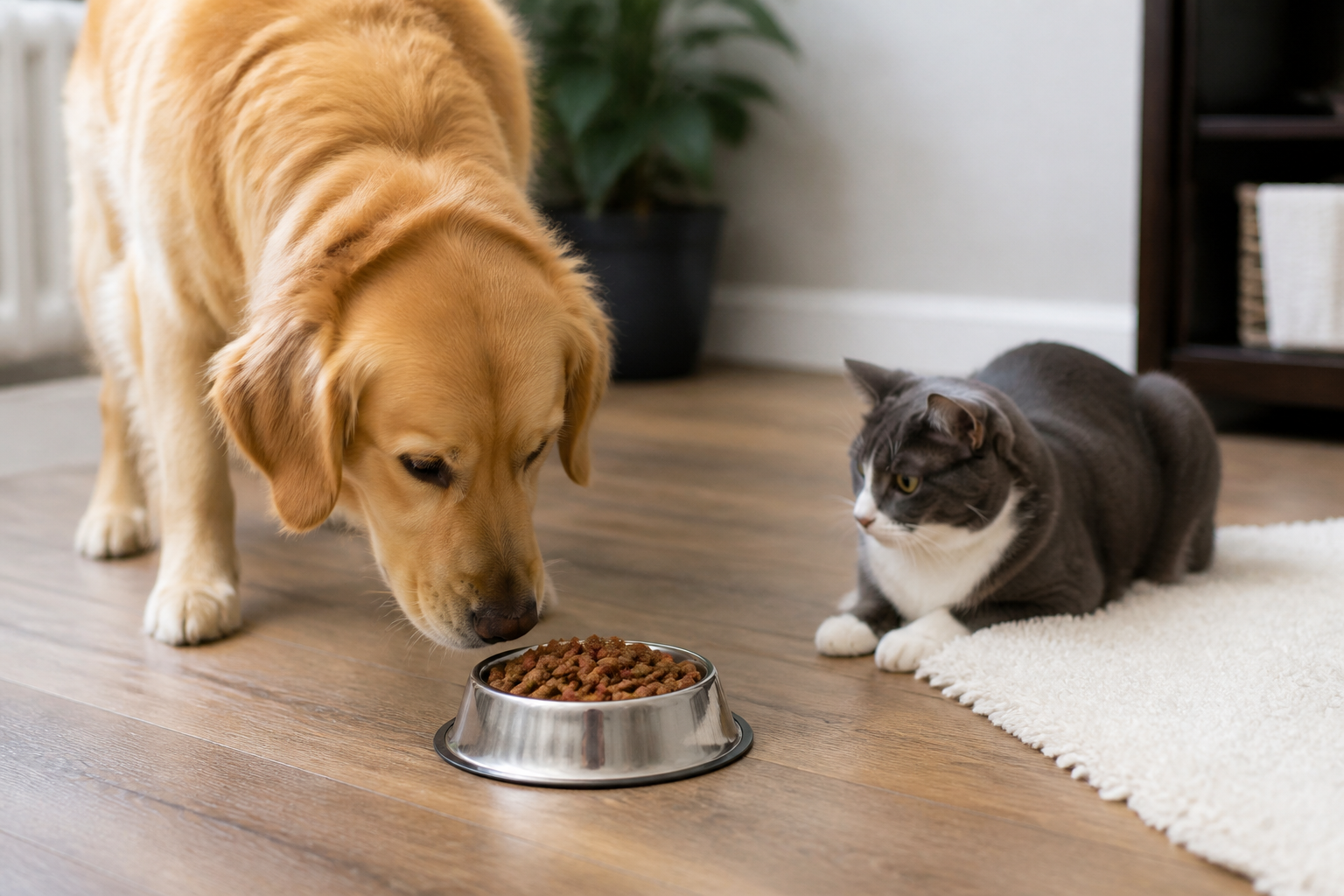
It is a familiar scene for many multi-pet owners. You fill the cat's bowl with kibble and walk away, only to find your dog hovering over it a moment later. Many dogs seem to think cat food is a gourmet treat that is much more exciting than their own meal. At BaxterBoo, we talk to many owners who worry after their dog snatches a few bites of kitty kibble. You might wonder if it is a harmless snack or a reason to call the vet. This post covers why dogs crave cat food, the nutritional risks of letting them eat it, and how to protect your dog's health. While a few pieces usually will not cause an emergency, making it a habit can lead to serious health concerns.
Quick Answer: A few pieces of dry cat food will not usually hurt a healthy adult dog. However, cat food is too high in fat and protein for a dog's long-term needs. Regular consumption can cause obesity, stomach upset, or serious conditions like pancreatitis.
Why Dogs Crave Cat Food
Dogs are naturally attracted to the smell and taste of cat food. Because cats are obligate carnivores, their food is packed with animal proteins and fats. This makes the kibble smell much stronger and more savory than standard dog food. A dog's nose can pick up those high-fat aromas from across the room.
The texture of dry cat food is also often different. The smaller, crunchier pieces can feel like a special treat to a dog. Most dogs are opportunistic eaters. If they find a bowl of calorie-dense food sitting at floor level, they will take the chance to eat it. This behavior is usually about instinct and flavor rather than a nutritional deficiency in their own diet. Comparing species-specific formulas in our cat food category can help you keep each pet's meals separate.
The Nutritional Breakdown: Dogs vs. Cats
Dogs and cats have very different dietary requirements. Dogs are omnivores, meaning they can thrive on a mix of animal and plant-based ingredients. Cats must have meat to survive. This fundamental difference is why their foods are formulated with different ratios.
The following table shows the minimum nutrient requirements set by the Association of American Feed Control Officials (AAFCO). These levels are for adult maintenance.
| Nutrient | Adult Dog (AAFCO Minimum) | Adult Cat (AAFCO Minimum) |
|---|---|---|
| Crude Protein | 18% | 26% |
| Crude Fat | 5.5% | 9% |
| Taurine | Not Required | 0.1% (Dry Food) |
| Vitamin A | 5,000 IU/kg | 3,332 IU/kg |
| Calcium | 0.5% | 0.6% |
As the table shows, cat food is much denser in protein and fat. While this is perfect for a cat's high-protein metabolism, it can be "too much of a good thing" for a dog. At BaxterBoo, we carry over 500 brands that specifically balance these levels for each species. Feeding a dog a diet designed for cats is like a human eating nothing but rich, fatty desserts. Choosing a balanced option from our dog food category can help you provide nutrition formulated for canine needs.
Key Takeaway: Cat food is designed for a carnivore's metabolism. It contains higher levels of fat, protein, and specific amino acids like taurine that dogs do not need in such high concentrations.
Short-Term Risks of Eating Cat Food
If your dog sneaks a few bites, the most likely result is a mild stomach ache. However, the high fat content can be a shock to a dog's digestive system. This is especially true for dogs that usually eat a sensitive skin or stomach formula.
Common short-term symptoms include:
- Loose stools or diarrhea
- Occasional vomiting
- Abdominal gas and bloating
- Temporary loss of appetite for their own food
If your dog eats a large amount of cat food at once, they may experience more severe distress. A dog that finishes a whole bowl of cat kibble might be very uncomfortable. They may pace, whine, or have a distended belly. In these cases, it is a good idea to monitor them closely for the next 24 hours. For broader wellness supplies, browse our dog healthcare category.
Vet Tip: If your dog experiences persistent vomiting or seems very lethargic after eating cat food, contact your veterinarian. Dogs with a history of a sensitive pancreas are at much higher risk for complications from high-fat meals.
Long-Term Health Consequences
The real danger comes when a dog eats cat food regularly. Over months or years, the nutritional imbalance can lead to chronic health issues.
Obesity and Weight Gain
Because cat food is so calorie-dense, it is very easy for a dog to overeat. Even small amounts of cat kibble added to their daily intake can lead to rapid weight gain. Obesity in dogs puts extra strain on their joints and increases the risk of heart disease.
Kidney and Liver Stress
The high protein levels in cat food can be hard on a dog's organs. The kidneys and liver have to work harder to process the excess protein and nitrogen. This is particularly dangerous for senior dogs who may already have declining organ function.
Pancreatitis
This is the most serious risk. Pancreatitis is an inflammation of the pancreas often triggered by high-fat foods. It is extremely painful and can be life-threatening. Symptoms include a hunched back, severe vomiting, and a painful abdomen.
If your pet develops a condition that requires a specialized diet, we can help. Our pet pharmacy offers FDA-approved medications and prescription pet foods through our partnership with Pet's Choice. This includes therapeutic diets for kidney support or weight management that your vet might recommend after a health scare.
Bottom line: While one-off snacking is rarely fatal, a consistent diet of cat food can lead to obesity and organ damage.
How to Stop Your Dog from Stealing Cat Food
Prevention is the best way to keep your dog safe. You do not have to rely on constant supervision if you set up the right environment. Most solutions involve taking advantage of a cat's agility or a dog's size.
Step 1: Move the bowl to a high surface. / Place the cat's food on a sturdy counter, a cat tree, or a dedicated feeding shelf. This keeps the food out of reach for most dogs while giving the cat a quiet place to eat.
Step 2: Use a pet gate with a small door. / Install a baby gate that has a small, built-in pet opening. This allows the cat to pass through to a separate room while the dog is blocked.
Step 3: Invest in a microchip feeder. / These feeders only open when they detect your cat's specific microchip or RFID collar tag. When the dog approaches, the lid stays closed.
Step 4: Establish scheduled meal times. / Instead of leaving dry food out all day, feed your pets at the same time in different rooms. Pick up any leftover cat food after 20 minutes to remove the temptation.
We carry a variety of tools at BaxterBoo to help with this, including tall cat trees and pet gates. Using these items creates a clear boundary that protects your dog's health and your cat's peace of mind.
Can Cat Food Ever Be Used as a Treat?
Some trainers use dry cat food as a "high-value" treat during training sessions. Because it is small and smells very strong, it can keep a dog's focus. For a healthy dog with no history of stomach issues, using a few pieces of cat kibble for a difficult training task is generally safe.
However, this should be done sparingly. If you are doing an hour-long training session, those calories add up. It is usually better to find a high-quality dog treat that mimics that strong scent. Look for freeze-dried liver or salmon treats made specifically for dogs. These provide the same motivation without the risk of nutritional imbalance.
If you do use cat food as a treat, make sure it is a high-quality brand. Avoid brands with lots of artificial colors or fillers. We stock premium options like Orijen and Acana that use whole animal ingredients. Even as a treat, quality matters for your dog's digestion. If your dog is holding out for stronger flavors, our guide to getting dogs to eat dry food offers another perspective on mealtime preferences.
What to Do If Your Dog Cleans Out the Cat Bowl
If you come home and find the cat's bowl licked clean, do not panic. First, determine how much they actually ate. A small dog eating a large cat's portion is more concerning than a large dog eating a few crumbs.
- Skip the next meal: If the dog ate a full serving of cat food, they have already consumed plenty of calories. Skipping their next scheduled meal can help prevent an upset stomach.
- Provide plenty of water: High-protein food can make dogs thirsty. Ensure they have a full bowl of fresh water.
- Monitor behavior: Watch for signs of discomfort. If they are acting like their normal, happy selves, they will likely be fine.
- Check the stool: You might see some loose stool for a day or two. This is a normal reaction to the rich food.
If your dog seems to be in pain or cannot stop vomiting, it is time to call the vet. They can provide medications to settle the stomach or fluids if the dog is getting dehydrated. For ongoing care or medications prescribed by your vet, remember that our pharmacy provides a convenient way to get what you need delivered to your door.
Key Takeaway: Most incidents of a dog eating cat food result in nothing more than a temporary stomach upset, but monitoring for signs of pain or distress is essential.
Conclusion
Sharing a home with both dogs and cats requires a bit of strategy at mealtime. While your dog might think they are getting away with something great when they steal cat food, they are actually consuming an unbalanced meal. Dry cat food is simply too rich in fat and protein for a dog's long-term health. By using elevated feeding stations or microchip feeders, you can ensure every pet gets the nutrition they deserve. Trust BaxterBoo to provide the high-quality food and gear you need to keep your whole pack healthy. For those who want to stay stocked up and save, our Autoship program is a great way to ensure you never run out of the right food for the right pet.
FAQ
Can a dog die from eating cat food?
While it is very unlikely for a dog to die from eating a small amount of cat food, it can happen in extreme cases. The high fat content in cat food can trigger a severe case of pancreatitis, which is a life-threatening emergency. Dogs with existing kidney or liver issues are also at higher risk of complications from the high protein levels.
Is wet cat food worse for dogs than dry cat food?
Both wet and dry cat foods are nutritionally inappropriate for dogs as a primary diet. However, wet cat food is often even richer and higher in fat than dry kibble. This makes it more likely to cause immediate diarrhea or vomiting if a dog eats a significant amount.
Why does my dog prefer the cat's food over their own?
Cat food is formulated with higher levels of animal fat and protein to satisfy a cat's carnivorous needs. This results in a much stronger, meatier aroma that dogs find irresistible. To a dog, cat food smells like a concentrated, high-value treat compared to their more balanced omnivore kibble.
Can I feed my dog cat food if I run out of dog food?
In a pinch, a single meal of cat food is unlikely to harm a healthy adult dog. However, you should only do this as a last resort. It is better to feed a bland meal of plain boiled chicken and rice if you are out of dog food, as this is easier on their digestive system.






