
 Save 15% on your 1st Autoship learn more

 Email us
 Live Chat
 FAQs
FAQs





Introduction
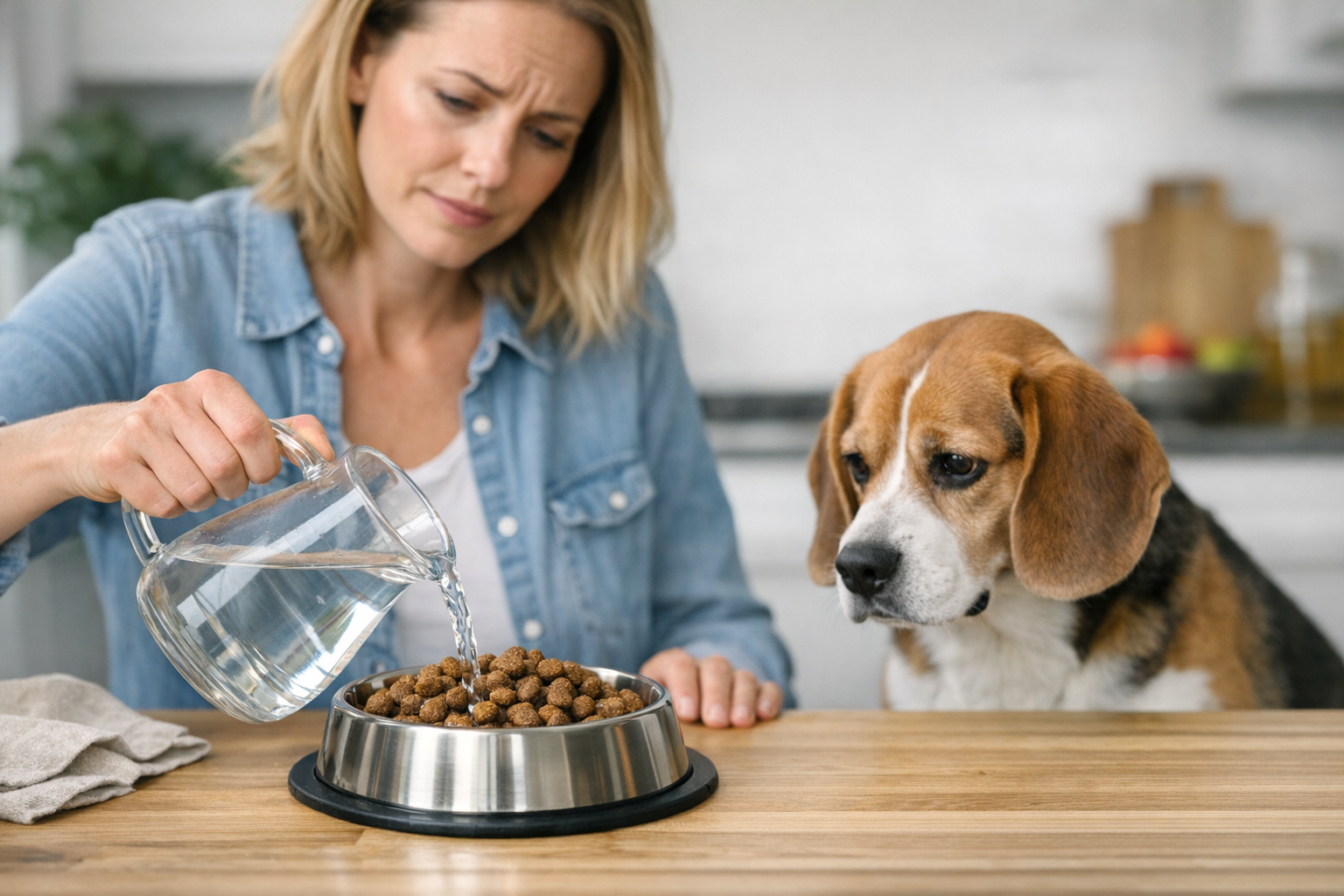
You are standing in the kitchen, bowl in hand, looking at a mound of dry kibble. It looks crunchy and perhaps a bit uninspiring. You consider adding a splash of water to make it more like a real meal or to help your dog stay hydrated. Many owners at BaxterBoo ask us if this simple kitchen hack is safe or if it might lead to a messy cleanup later. The short answer is that adding water is usually a great idea. However, if done incorrectly, it can indeed lead to digestive upset or diarrhea. If you want to compare options, start with our dog food collection.
This post covers the benefits of moistening dry food, the potential risks of improper preparation, and how to transition your dog safely. We will also discuss when loose stools are a sign of a deeper issue that might require a trip to the veterinarian or a visit to our pharmacy.
Quick Answer: Adding clean, room-temperature water to dry dog food generally does not cause diarrhea and actually aids digestion. If your dog experiences loose stools, the cause is typically bacterial growth from food left out too long, a sudden change in routine, or contaminated water.
Understanding Why We Add Water to Kibble
Most dry dog food is produced through a process called extrusion. This involves high heat and pressure to create shelf-stable nuggets. The final product usually contains only about 10 percent moisture. For many dogs, especially those who do not visit the water bowl often, this can be quite dehydrating. Adding water brings the meal closer to the moisture levels found in fresh or raw diets.
There are several practical reasons to moisten your dog's meal. For senior dogs with dental issues or missing teeth, softened kibble is much easier to chew. It also enhances the aroma of the food. Dogs rely heavily on their sense of smell to enjoy their meals. When water hits the kibble, it releases fats and scents that were previously locked inside the dry biscuit. This makes the food much more enticing for picky eaters.
Pre-hydrating the food can also help with digestion. When a dog eats dry kibble, their body must provide the moisture to break it down. By adding water beforehand, you are essentially pre-digesting the food to a degree. This allows the stomach enzymes to get to work faster. It can prevent the food from expanding rapidly in the stomach, which some experts believe helps reduce the risk of discomfort or gas. If you want a deeper dive, see Are You Supposed to Mix Dry Dog Food with Water?.
Can Adding Water to Dry Dog Food Cause Diarrhea?
While the act of adding water is not inherently harmful, certain variables can trigger a bout of diarrhea. The most common reason is a sudden change in the food's texture or volume. Dogs have a delicate gut microbiome. This is the community of beneficial bacteria that helps them digest specific types of food. Even if the ingredients are the same, a sudden shift from dry and crunchy to soft and mushy can confuse the digestive system.
Another factor is the dilution of digestive juices. If you turn the meal into a soup with excessive amounts of water, it may dilute the stomach acid. This can slow down the breakdown of proteins. When food moves through the intestines without being properly processed in the stomach, it can pull excess water into the colon. This results in the loose, watery stools we know as diarrhea.
Temperature also plays a role. Adding ice-cold water to a meal can shock the stomach lining. This can lead to rapid transit, where the food moves through the digestive tract too quickly to be absorbed. On the other hand, very hot water can damage the probiotics or vitamins that many manufacturers spray onto the kibble after extrusion. Always aim for lukewarm or room-temperature water.
Key Takeaway: Water itself is rarely the cause of diarrhea. The issue usually stems from how the water is added, the temperature of the liquid, or how long the moistened food sits in the bowl.
The Primary Culprit: Bacterial Growth
The biggest risk of adding water to dry food is not the water itself, but the bacteria it can invite. Dry kibble is shelf-stable because it lacks moisture. Bacteria like Salmonella and Listeria need water to multiply. Once you add moisture to the bowl, you have created a perfect petri dish for pathogens.
Many dogs are "grazers" who like to nibble on their food throughout the day. If you add water to a bowl and leave it out for several hours, it will begin to ferment. This is especially true in warm weather. If your dog comes back two hours later and eats that soggy, bacteria-laden food, they are very likely to experience gastrointestinal distress. For more tips on avoiding this problem, read How to Wet Dry Dog Food for Better Digestion and Hydration.
To prevent this, you must follow the 20-minute rule. If your dog does not finish their moistened meal within 20 minutes, pick up the bowl and discard the leftovers. Never leave moistened kibble out all day. The hygiene of the bowl also becomes more important. A dry kibble bowl might look clean after a meal, but a moistened bowl will have a film of starch and protein that bacteria love. Wash the bowl with hot, soapy water after every single feeding.
The Importance of Water Quality
We often forget that our dogs are sensitive to the same contaminants we are. If you live in an area with heavily chlorinated tap water or high mineral content, your dog’s stomach might react to it. If you would not drink the water from your kitchen faucet, do not give it to your pet.
Some owners use water from a garden hose or a rain barrel to moisten food while outside. These sources can contain parasites like Giardia or harmful bacteria from bird droppings. Always use fresh, filtered water. If the diarrhea coincides with a move to a new home or a change in your local water supply, the water quality might be the culprit. If loose stools keep happening, it may be time to check our pet pharmacy.
Step-by-Step Guide to Safely Moistening Kibble
- Start with a small ratio. Begin by adding just a tablespoon or two of water to ensure your dog likes the new texture.
- Use lukewarm water. This helps release the aromas without scalding the dog's mouth or destroying nutrients.
- Let it soak. Allow the bowl to sit for about three to five minutes. This process is called "blooming" and ensures the kibble is soft all the way through.
- Monitor the response. Watch your dog's stool consistency for the next 48 hours before increasing the amount of water.
- Clean up immediately. Wash the bowl as soon as your dog is finished to prevent bacterial colonies from forming.
When to Be Concerned About Loose Stools
A single instance of soft stool after adding water is usually not an emergency. It often means you added too much water too quickly. However, if the diarrhea is persistent, severe, or accompanied by other symptoms, it is time to look deeper.
Check for these warning signs:
- Blood or mucus in the stool.
- Lethargy or a refusal to eat.
- Vomiting along with the diarrhea.
- Signs of dehydration, such as dry gums or a loss of skin elasticity.
- Diarrhea that lasts more than 24 to 48 hours despite returning to dry food.
In these cases, the issue might not be the water. Your dog could have an underlying food allergy, a parasitic infection, or a more serious condition like Pancreatitis. When these symptoms arise, we always recommend a consultation with your veterinarian for a proper diagnosis.
For dogs with chronic digestive sensitivities, a change in diet may be necessary. Our dog healthcare digestive health category carries a variety of options that may help support sensitive stomachs. You will need a prescription from your vet to order some specialized foods, but they can be a lifesaver for dogs who cannot handle standard commercial kibble.
Vet Tip: If your dog has persistent diarrhea, do not try to "fix" it by adding more water or switching foods again immediately. Provide plenty of fresh drinking water in a separate bowl and contact your vet to rule out infections or parasites.
Alternatives to Plain Water
If your dog is not a fan of plain water in their food, or if you want to add more nutrition, there are several healthy alternatives. These can provide the moisture your dog needs while also offering a boost of flavor.
Low-Sodium Broth Unsalted chicken or beef broth is a classic choice. It is highly aromatic and very enticing. However, you must be careful to avoid broths that contain onions or garlic, as these are toxic to dogs. Many commercial broths for humans also contain high levels of sodium, which can be hard on a dog's kidneys. Look for broths specifically made for pets.
Goat Milk Goat milk is often called "universal milk" because it is much easier for dogs to digest than cow's milk. It is packed with probiotics and enzymes that can actually help settle a sensitive stomach. Many owners find that a splash of goat milk helps firm up stools while providing essential hydration.
Wet Food Toppers Mixing a small amount of high-quality wet food into the kibble is a great way to add moisture. Our food topper collection offers options with high moisture content. This provides a variety of textures and flavors that can keep a dog interested in their meal.
The Honest Kitchen Dehydrated Food If you like the idea of a moist meal but worry about the consistency of soaked kibble, consider The Honest Kitchen Wholemade Limited Ingredient Dehydrated Dog Food - Chicken. These meals are designed to be mixed with water and have a predictable, balanced texture every time.
Creating a Consistent Feeding Ritual
Dogs thrive on routine. Their digestive systems actually prepare for food at the same time every day by releasing enzymes and stomach acid. If you decide to add water to their food, try to make it a permanent part of the ritual rather than a random occurrence.
Consistency helps the gut microbiome stay stable. If you add water on Monday, give dry food on Tuesday, and broth on Wednesday, you are essentially putting your dog's digestive system on a roller coaster. Pick a method that works for your lifestyle and stick with it.
If you are a busy pet owner, consider our Autoship programme. It ensures you never run out of your dog's favorite food or the toppers they love. Consistency in what they eat is just as important as how they eat it. Plus, you save on every order, making it easier to afford the high-quality brands that support better gut health.
Bottom line: Adding water is a healthy habit that supports hydration and kidney function, provided you maintain strict bowl hygiene and transition slowly.
Conclusion
Adding water to dry dog food is a simple and effective way to improve your dog’s health. It helps with hydration, makes food more palatable, and can even aid in nutrient absorption. While it can cause diarrhea if the water is contaminated or if the food is left out to spoil, these risks are easy to manage with good hygiene. Always use clean, room-temperature water and serve the meal immediately.
If your dog struggles with frequent digestive upset despite your best efforts, it may be time to consult a professional. Whether you need a prescription diet from our pharmacy or a new set of slow-feed bowls to prevent gulping, we are here to help. Caring for a dog's digestion is a long-term commitment, but the reward is a happy, energetic pet with a healthy gut.
To make sure you are always stocked up on the best nutrition for your dog, consider signing up for the MVP Rewards programme. You can earn points on every purchase of food, toppers, and health supplies to use on future orders.
FAQ
Does adding water to kibble cause bloat?
There is no definitive evidence that adding water causes bloat. In fact, many veterinarians suggest that moistening food may reduce the risk of bloat by slowing down fast eaters and preventing the kibble from expanding rapidly inside the stomach. However, you should avoid adding large amounts of water to a dog that already "gulps" their food very quickly.
Can I use boiling water to soften dog food faster?
You should never use boiling water for your dog's food. High heat can destroy sensitive nutrients like vitamins and probiotics that are added to the food. It also poses a serious risk of burning your dog's mouth or throat. Always use lukewarm or room-temperature water and let it sit for a few minutes to soften naturally.
Will adding water to food hurt my dog's teeth?
Dry kibble is often credited with helping to scrape plaque off teeth, but this effect is often overstated. Most dogs swallow kibble whole or break it into only a few pieces. While softened food doesn't provide any "crunch," the benefits of hydration and improved digestion usually outweigh the minor loss of dental abrasion. Regular brushing and dental treats are much more effective for oral health.
How much water should I add to a cup of dog food?
A common starting point is a 1:4 ratio, which means one part water to four parts kibble. For a standard cup of food, that is about a quarter cup of water. You can adjust this based on your dog's preference. Some dogs like a thick gravy, while others prefer their kibble to be fully submerged and soft. Always start small and increase the amount gradually.






