
 Save 15% on your 1st Autoship learn more

 Email us
 Live Chat
 FAQs
FAQs





Introduction
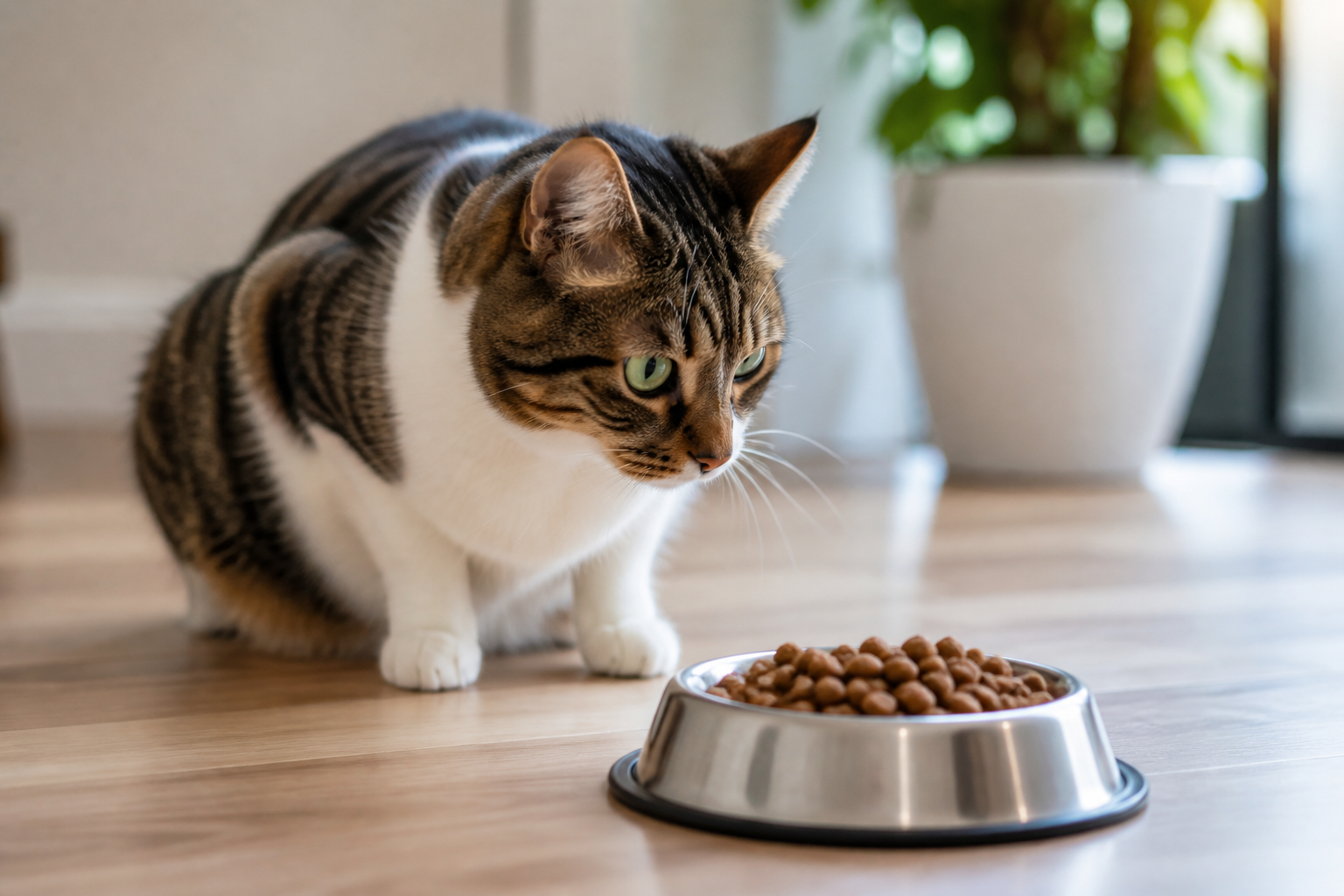
You walk into the kitchen and find your cat crouched over the dog’s bowl, happily munching on oversized kibble. It is a common sight in multi-pet households. You might wonder if those crunchy brown bits are basically the same thing. At BaxterBoo, we hear this question from worried pet parents every week. While a few stolen bites likely will not cause an emergency, the long-term answer is much more serious. Dog food and cat food are formulated for two entirely different species with very different biological requirements. This guide explains why cats cannot live on dog food, the health risks of nutritional gaps, and how to keep your pets in their own bowls. Understanding these differences is the first step toward ensuring your cat lives a long and healthy life.
Quick Answer: Cats can safely eat a few pieces of dry dog food as an occasional snack, but it cannot be their primary diet. Dog food lacks essential nutrients like taurine and arachidonic acid. Without these, cats can develop life-threatening heart and vision problems.
The Biological Divide: Carnivores vs. Omnivores
The biggest reason cats cannot eat dog food stems from their basic biology. Cats are obligate carnivores. This means their bodies are biologically designed to process animal tissue. They require specific nutrients that are only found in meat. Their digestive systems are shorter and more specialized for protein and fat rather than plant matter.
Dogs are different because they are omnivores. Like humans, dogs can thrive on a diet that includes a mix of meat, grains, and vegetables. Their bodies are much better at synthesizing certain vitamins and amino acids from plant sources. Because of this, dog food often contains more carbohydrates and plant-based proteins than a cat can properly use.
If a cat eats dog food regularly, they are essentially trying to fuel a high-performance engine with the wrong type of gas. They might feel full, but their cells are not getting the specific building blocks they need. Over time, this leads to a slow decline in health that might not be visible until a serious problem arises.
Critical Nutritional Gaps in Dog Food
Pet food manufacturers follow guidelines to ensure each species gets the right balance of nutrients. For cats, these requirements are strict. Dog food is not "bad" food, but it is incomplete for a feline. There are four major areas where dog food fails to meet cat standards.
The Importance of Taurine
Taurine is an amino acid that is vital for cats. Most mammals, including dogs and humans, can create their own taurine from other amino acids. Cats cannot. They must get it directly from their food, specifically from animal proteins.
Most dog foods do not have high levels of added taurine because dogs do not need it in the same way. If a cat eats dog food for several months, their taurine levels will drop. This can lead to a condition called Dilated Cardiomyopathy (DCM), where the heart becomes enlarged and weak. It can also cause central retinal degeneration, which eventually leads to permanent blindness.
Vitamin A Requirements
Dogs are great at converting beta-carotene from plants into Vitamin A. You see this in dog foods that include carrots or sweet potatoes. Cats lack the enzyme to make this conversion. They need "preformed" Vitamin A, which is found in animal livers and fats. Cat food is heavily supplemented with this version of the vitamin. Dog food usually relies on plant-based precursors that do nothing for a cat’s vision or skin health.
Arachidonic Acid
This is an essential fatty acid that cats must consume. Dogs can produce it on their own within their bodies. Because dogs make it, manufacturers rarely add it to dog kibble. Cats use this fatty acid to trigger inflammatory responses and maintain their skin and coat. A deficiency leads to poor skin health, slow healing, and reproductive issues.
Protein Density
Cats require much higher levels of protein than dogs. Protein provides the nitrogen and amino acids cats need for energy. Dog food is often bulked up with grains and vegetables to meet an omnivore’s needs. While this is healthy for a dog, it leaves a cat protein-starved. Even a "high protein" dog food may not meet the minimum requirements for a healthy adult cat.
For species-appropriate alternatives, explore our cat food selection and compare dry, wet, and specialty formulas.
Key Takeaway: Cat food is a highly specialized fuel. Dog food is missing taurine, preformed Vitamin A, and arachidonic acid, all of which are mandatory for feline survival.
Short-Term vs. Long-Term Risks
If your cat steals a few pieces of kibble today, you likely do not need to call the vet. Most cats will handle a small amount of dog food without any immediate trouble. However, some cats have sensitive stomachs.
Immediate Symptoms
In the short term, a cat eating dog food might experience:
- Mild diarrhea or soft stool.
- Occasional vomiting.
- Decreased interest in their own, more nutritious food.
- Bloating or gas.
These symptoms usually clear up within 24 hours. If your cat continues to vomit or refuses to eat their own food, you should consult your veterinarian.
Chronic Health Issues
The real danger is the "silent" damage. If a cat eats dog food for weeks or months, the nutritional deficiencies start to take a toll. You might notice their coat looks dull or they seem more tired than usual. Inside their body, their heart muscle could be thinning and their retinas could be degrading. These changes are often irreversible by the time they are diagnosed.
For another look at species-specific food concerns, read whether dry cat food is bad for dogs.
Why Do Cats Want to Eat Dog Food?
It can be frustrating when you buy premium cat food and your cat still chooses the dog’s bowl. It usually is not about the quality of the food. Cats are naturally curious and territorial. They see the dog eating and want to see what the fuss is about.
The smell of dog food can also be very enticing. Dog food is often coated in fats to make it tasty for dogs. Since cats have fewer taste buds than dogs, they rely heavily on smell. If the dog food has a strong, meaty aroma, the cat might think it is a treat.
In some cases, it is a power move. Cats may eat from the dog's bowl to establish dominance in the household. If the dog is submissive, the cat may decide they own both bowls. This is a behavioral issue that needs management to ensure the dog gets their full meal and the cat stays healthy.
What to Feed Your Cat in an Emergency
We have all been there. It is late at night, the bag is empty, and the stores are closed. You might be tempted to reach for the dog’s bag to get through the night. While one meal of dog food won't kill your cat, there are better emergency options in your kitchen.
- Plain Cooked Chicken: Boil or bake some chicken breast without any salt, onions, garlic, or seasoning.
- Canned Tuna or Salmon: Use fish packed in water, not oil. Drain it well and only offer it as a one-time fix.
- Scrambled Eggs: Cook them plain without butter or milk. Eggs are a great source of protein and amino acids.
- Plain Lean Beef: Cooked ground beef or steak bits are safe as long as they are unseasoned.
If you must use dog food in a true emergency, try to make it only one meal and get back to cat food as soon as possible. To avoid these emergencies, we recommend our Autoship program. It ensures your cat’s favorite food arrives at your door before the bag runs out. Plus, it gives you a free MVP Gold membership for extra savings.
Vet Tip: If your cat has an underlying health condition like kidney disease or diabetes, do not use dog food even in an emergency. Contact an emergency vet or use plain cooked chicken instead. A sudden shift in protein or mineral levels can be very dangerous for these cats.
Managing a Multi-Pet Household
Keeping a cat out of the dog's food requires a plan. Most dogs will vacuum up their food in minutes, but cats like to graze. This "free feeding" style for cats makes it easy for them to wander over to the dog's dish.
Step 1: Establish Separate Feeding Zones
Feed your pets in different rooms or on different levels of the house. If your dog is a "gobbler," feed them in a crate or behind a baby gate. Cats often feel safer eating in high places. Try feeding your cat on a sturdy counter or a tall cat tree where the dog cannot reach.
Step 2: Use Technology
Microchip feeders are a great investment for multi-pet homes. These bowls only open when they detect the specific microchip or collar tag of the assigned pet. This prevents the cat from ever touching the dog's food and vice versa. It also helps you track exactly how much each pet is eating.
Step 3: Set a Schedule
Stop leaving food out all day. If you feed your dog at 7:00 AM and 6:00 PM, give them 15 minutes to eat and then pick up the bowl. This removes the temptation for the cat to snack on leftovers later in the day.
Step 4: Supervise Mealtimes
Stay in the room while your pets eat. If you see the cat moving toward the dog’s bowl, gently redirect them to their own area. Positive reinforcement works well here. Praise your cat when they eat from their own dish.
For related multi-pet feeding guidance, see strategies for keeping dogs away from cat food.
The Role of the BaxterBoo Pharmacy
Sometimes, a cat’s interest in dog food or a sudden change in appetite is a sign of a health issue. If your cat has been eating dog food for a while, they might need a specialized recovery diet to replenish their nutrient levels. Our pet pharmacy offers FDA-approved prescription foods through our partnership with Pet's Choice.
If your veterinarian discovers a taurine deficiency or heart issues, they may prescribe a therapeutic diet or specific supplements. These are not available over the counter and require a valid prescription. Using our pharmacy allows you to get these essential health products delivered right to your home in Vernon Hills or anywhere else in the country.
Bottom line: Preventing access to dog food is much easier than treating the long-term health consequences of a poor diet.
Comparing Cat and Dog Nutrient Needs
| Nutrient | Cat Requirement | Dog Requirement | Why it Matters |
|---|---|---|---|
| Protein | High (Min 26%) | Moderate (Min 18%) | Cats use protein for energy; dogs use carbs more easily. |
| Taurine | Mandatory | Optional | Essential for feline heart and eye health. |
| Vitamin A | Preformed only | Can convert plants | Cats cannot use carrots for Vitamin A. |
| Arachidonic Acid | Mandatory | Optional | Necessary for feline skin and coat health. |
| Fat | High | Moderate | Cats need more energy-dense meals. |
Recognizing Signs of Malnutrition
If you are worried that your cat has been sneaking too much dog food, watch for physical changes. A healthy cat should have a shiny coat, clear eyes, and plenty of energy.
Common signs of nutritional gaps include:
- Poor Coat Quality: The fur may feel greasy, thin, or look very dull.
- Lethargy: The cat sleeps more than usual and stops playing.
- Weight Loss: Even if they are eating, they might lose muscle mass because the dog food lacks the right protein.
- Night Blindness: The cat might start bumping into furniture or seem hesitant to jump in low light.
- Digestive Upset: Frequent soft stools or flatulence can indicate they aren't processing the dog food well.
If you see these signs, a vet visit is necessary. They can run blood work to check for deficiencies. If your cat needs ongoing medication or a prescription diet to recover, we can help fulfill those needs through the Pet's Choice pharmacy partnership.
When to Contact Your Veterinarian
You should always involve a professional if you suspect your cat is not getting the right nutrition. Nutrition is the foundation of feline health. A vet can provide a body condition score and tell you exactly how many calories your cat needs.
If your cat is showing severe symptoms like a distended abdomen, persistent vomiting, or a complete refusal to eat their own food, call your vet immediately. These can be signs of more than just a food mix-up. They could indicate pancreatitis or an obstruction.
We are proud to carry over 500 trusted brands at BaxterBoo, including premium cat foods like Farmina, Orijen, and Stella and Chewy’s. These brands focus on the high-protein, meat-first philosophy that cats need. Providing a variety of textures, like mixing wet food with dry kibble, can often stop a cat from looking for variety in the dog’s bowl.
Conclusion
While cats are masters of finding snacks where they don't belong, dry dog food should never be a regular part of their diet. A few stolen bits might be a harmless habit today, but the long-term lack of taurine, Vitamin A, and proper protein can lead to devastating health problems. Keeping your pets on species-appropriate diets is one of the easiest ways to ensure they stay by your side for years to come.
- Cats are obligate carnivores and need meat-based nutrients.
- Dog food lacks the taurine required to prevent feline heart disease.
- Management through separate feeding areas is the best way to prevent bowl-swapping.
- In an emergency, plain cooked meats are better than dog kibble.
Bottom line: Stick to high-quality feline formulas to protect your cat's heart and vision. If you need help staying stocked or managing a health condition, our Autoship program and pharmacy partnership are here to support you.
FAQ
Can a cat die from eating dog food?
A cat will not die from eating a small amount of dog food once or twice. However, if a cat is fed only dog food for several months, they can die from taurine deficiency, which leads to heart failure. They may also suffer from severe malnutrition and organ damage.
Why does my cat prefer the dog's food over their own?
Your cat might like the different smell or texture of the dog's food. Cats are also very curious and often want what another animal is having. In some cases, the high fat content used to flavor dog food is very attractive to a cat's sense of smell.
What should I do if my cat ate a large bowl of dog food?
Monitor your cat for signs of digestive upset, such as vomiting or diarrhea. Make sure they have plenty of fresh water to help their system process the extra carbohydrates and different ingredients. If they seem lethargic or the vomiting continues for more than 24 hours, contact your veterinarian.
Is wet dog food safer for cats than dry dog food?
Neither wet nor dry dog food is balanced for a cat’s nutritional needs. While wet dog food might be more palatable, it still lacks the essential taurine and vitamins that cats require. You should only feed food specifically labeled for cats to ensure they receive a complete and balanced diet.






