
 Save 15% on your 1st Autoship learn more

 Email us
 Live Chat
 FAQs
FAQs





Introduction
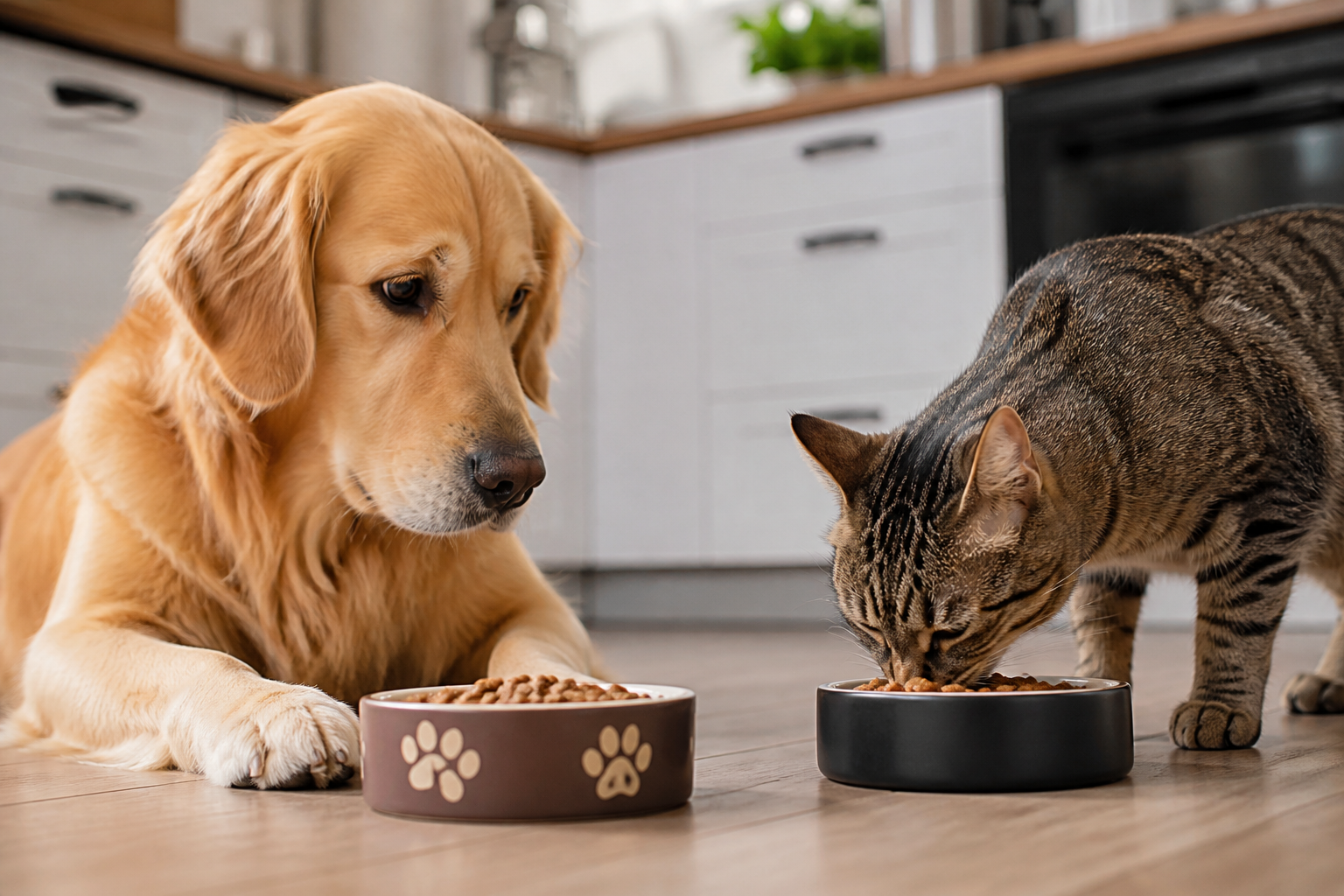
You hear the familiar crunching sound coming from the laundry room. You find your dog with their head buried deep in the cat's bowl, happily polishing off the dry kibble. Most of us at BaxterBoo have faced this exact scene in our own homes. While it might seem like a harmless snack, you probably wonder if that feline-focused formula is safe for your canine companion.
This article explains the nutritional differences between the two types of food and the potential health risks of sharing. For a broader look at species-specific feeding, our dog food category and our cat food category are good places to compare formulas. We will also look at practical ways to keep your pets in their own bowls. While a single stolen bite usually is not a crisis, understanding the long-term impact on your dog's health is essential for every pet owner.
Is It Safe for Dogs to Eat Dry Cat Food?
The short answer is that a few pieces of dry cat food will not harm most healthy dogs. If your dog sneaks a mouthful while you are not looking, you generally do not need to rush to the emergency clinic. However, you should not make it a regular part of their diet.
Quick Answer: Most dogs can handle a small amount of cat food without immediate danger. It is not toxic, but it is not nutritionally balanced for a dog's specific needs. Frequent consumption can lead to weight gain or digestive upset.
Cat food is designed for obligate carnivores. This means cats must eat meat to survive and thrive. Dogs are omnivores. They have a more flexible digestive system that requires a balance of proteins, fats, and plant-based nutrients. When a dog eats cat food, they are getting a concentrated dose of nutrients that their body is not built to handle in large quantities.
Why Your Dog Craves Cat Kibble
There is a simple reason your dog treats the cat's bowl like a five-star restaurant. Cat food is significantly higher in protein and fat than dog food. These ingredients create a very strong, meaty aroma and a rich flavor that dogs find nearly irresistible.
Manufacturers design cat kibble to be highly palatable because cats can be notoriously finicky. Dogs are often scavengers by nature. The high fat content in dry cat food signals to their brain that they have found a high-value energy source. This is why many dogs will ignore their own balanced meal in favor of the cat's dinner.
Nutritional Differences You Should Know
While the bags of kibble might look similar on our warehouse shelves at BaxterBoo, the formulas are worlds apart. The Association of American Feed Control Officials (AAFCO) sets different standards for each species. If you are shopping for a complete daily diet, our dog food selection makes it easier to stay species-specific.
Protein and Fat Levels
Dry cat food usually contains a much higher percentage of protein and fat. Adult dog food typically requires a minimum of 18 percent protein. Adult cat food requires at least 26 percent. The fat minimums follow a similar pattern. For a dog, eating cat food is like a human eating a diet consisting entirely of rich steak and butter.
Specific Nutrients
- Taurine: This is an essential amino acid for cats. Most dogs can produce their own taurine, but cats must get it from their food.
- Vitamin A: Cats cannot convert beta-carotene into Vitamin A like dogs can. Their food contains higher levels of pre-formed Vitamin A.
- Arachidonic Acid: This is a fatty acid that cats require but dogs can often synthesize themselves.
Key Takeaway: Dogs and cats have unique biological requirements. Feeding a dog cat food long-term can lead to nutrient imbalances or an overabundance of certain vitamins that can be taxing on a dog's organs.
Potential Health Risks of Feeding Cat Food to Dogs
While an occasional snack is fine, regular consumption of dry cat food can lead to serious health issues. The richness of the food is the primary culprit. If your dog already has a sensitive stomach, our dog healthcare category is a helpful place to explore supportive products.
Digestive Upset
The most immediate sign of trouble is often a sensitive stomach. Because cat food is so rich, it can cause vomiting or diarrhea. This is especially true for dogs with existing food sensitivities or gastrointestinal issues.
Weight Gain and Obesity
The high calorie count in cat kibble adds up quickly. Even a small handful can significantly increase a dog's daily caloric intake. Over time, this leads to obesity. Excess weight puts stress on a dog's joints and increases the risk of heart disease. If you want more context on portion control and body condition, our pet weight management guide is a useful companion read.
Pancreatitis
This is a serious condition where the pancreas becomes inflamed. It is often triggered by eating high-fat foods. Symptoms include severe abdominal pain, hunched back, and repeated vomiting. Pancreatitis is a medical emergency.
Vet Tip: If your dog accidentally eats a large amount of cat food and starts vomiting or acting lethargic, contact your veterinarian immediately. For dogs prone to pancreatitis or kidney issues, we recommend checking our pet pharmacy for prescription diets designed to manage these conditions.
Through our partnership with Pet's Choice, the BaxterBoo pharmacy provides FDA-approved medications and prescription foods. If your vet determines your dog needs a specific therapeutic diet due to a health condition, our pharmacy can help fulfill those needs.
How to Prevent the Food Snatching
Keeping your dog out of the cat's bowl requires a mix of training and environmental changes. You do not have to watch them every second if you set up the right system.
Step 1: Use elevated feeding. / Place your cat's food on a counter, sturdy table, or a high cat tree. Most cats enjoy jumping to a high spot to eat, while most dogs cannot reach it.
Step 2: Create a restricted area. / Use a baby gate with a small pet door built in. This allows the cat to pass through to a dedicated feeding room while keeping the dog out.
Step 3: Try a microchip feeder. / These specialized bowls only open when they detect your cat's specific microchip or collar tag. This is the most effective way to ensure the dog never gets a single bite.
Step 4: Establish set meal times. / Instead of leaving food out all day, feed both pets at the same time in separate rooms. Remove any leftover cat food as soon as the cat is finished. If you prefer regular delivery for your dog's own meals, our Autoship programme can help keep fresh food arriving on schedule.
When Cat Food Might Be Used Intentionally
In very rare cases, a veterinarian might suggest using cat food for a dog. This usually happens when a dog is suffering from a severe lack of appetite due to illness or cancer. The high aroma and calorie density can sometimes encourage a sick dog to eat.
However, you should never make this switch without professional guidance. If your dog is a picky eater, it is better to look at high-quality dog toppers or wet foods. We carry over 500 trusted brands to help you find a formula your dog loves without compromising their health. For a related look at alternative formats, our freeze-dried dog food guide explains another nutrient-dense option.
Bottom line: Cat food is a tempting but unhealthy habit for dogs that can lead to long-term medical complications.
Summary of Key Points
Keeping your dog's diet species-specific is one of the best ways to ensure a long, healthy life. While the occasional stolen kibble is not a reason to panic, it should not be encouraged.
- Cat food is too high in protein and fat for the average dog.
- Regular consumption can lead to obesity and dangerous conditions like pancreatitis.
- Nutritional requirements for Vitamin A and taurine differ significantly between the two species.
- Prevention through elevated feeding or microchip bowls is the most effective solution.
If your dog has managed to snag a large amount of cat food and seems unwell, please consult your veterinarian. Our pharmacy team is here to support you with any prescription needs or specialized diets your vet may recommend. You can also join our MVP Rewards programme to earn points on the high-quality dog food and supplements your pet needs to stay healthy. For budget-friendly feeding ideas, our discounted dog food guide is another smart next step.
FAQ
Can a dog get sick from eating dry cat food once?
Most dogs will not get seriously ill from a single encounter with cat food. They might experience mild gas or a soft stool due to the high fat content. If your dog has a very sensitive stomach or a history of pancreatitis, even a small amount could cause more noticeable discomfort.
Why does my dog prefer the cat's food over their own?
Dogs are attracted to the high levels of animal fat and protein found in cat food. The scent is much stronger and more appealing to their scavenging instincts. It is essentially the "junk food" equivalent for dogs because it is so calorie-dense and flavorful.
Is it okay to use cat treats as dog treats?
Using cat treats occasionally is generally safe, but it is not ideal. Cat treats are often very small and even higher in protein than their kibble. It is better to use treats specifically formulated for dogs to ensure they are getting the right balance of nutrients.
What are the signs that cat food is bothering my dog?
Common signs of distress include vomiting, diarrhea, a bloated abdomen, or a sudden loss of energy. If you notice your dog stretching in a "play bow" position frequently, they might be experiencing abdominal pain. Always contact your vet if these symptoms persist for more than 24 hours.






