
 Save 15% on your 1st Autoship learn more

 Email us
 Live Chat
 FAQs
FAQs





Introduction
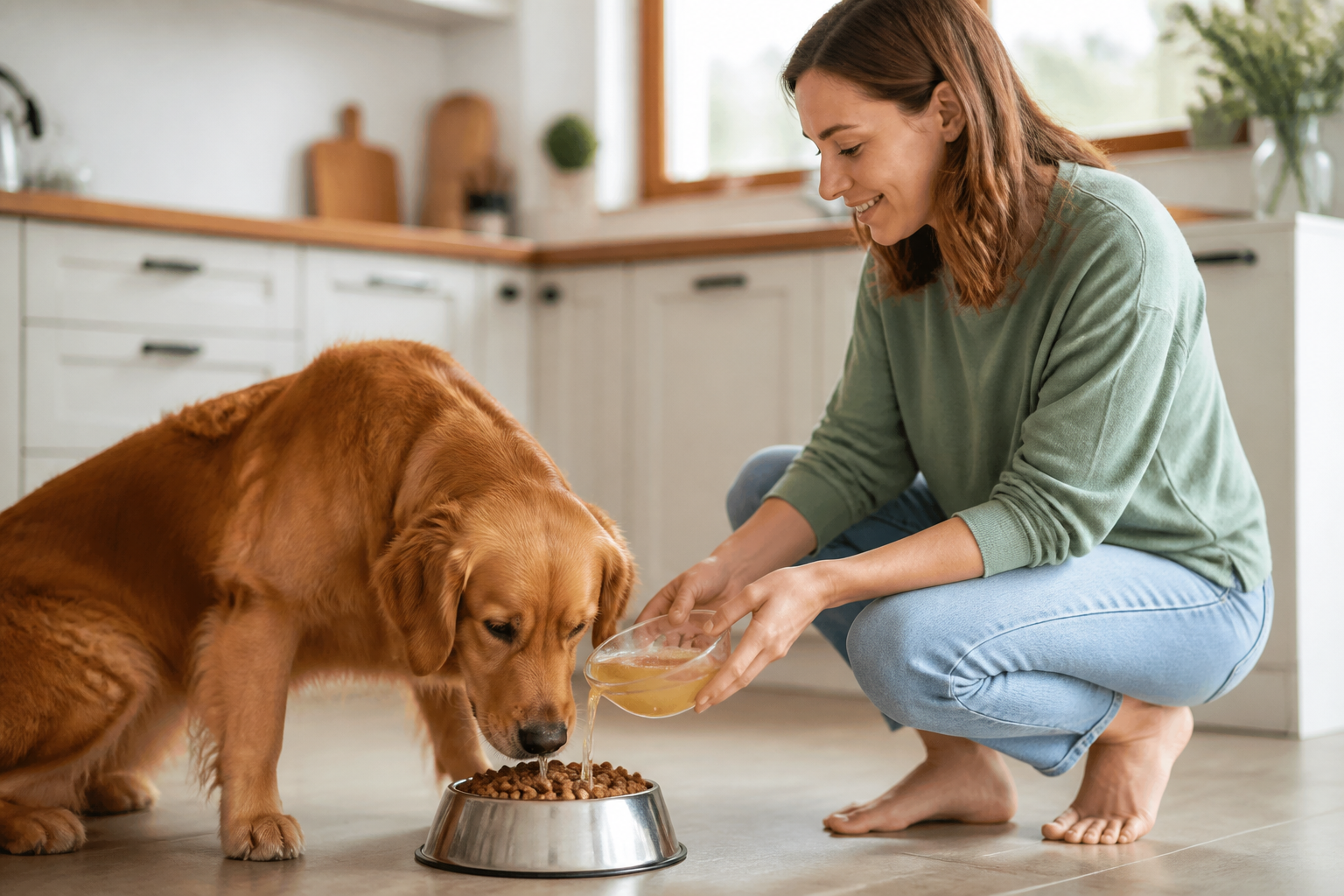
You stand in the kitchen while your dog looks down at a bowl of dry kibble with zero interest. Maybe your pup is getting older and finding the crunchy bits harder to chew. Perhaps they are recovering from a stomach bug and need extra hydration. In these moments, reaching for a carton of chicken broth feels like a natural way to help. At BaxterBoo, we know that adding a little extra flavor can turn mealtime around for a picky or struggling pet. Adding chicken broth to dry food is a common practice that offers several health benefits when done correctly. This post covers which broths are safe, the nutritional advantages of adding liquid to kibble, and how to avoid common grocery store ingredients that could harm your pet. Knowing the difference between a healthy topper and a hidden health risk is the key to a better bowl.
Quick Answer: Yes, dogs can eat chicken broth with dry food as long as it is low-sodium and free from onions, garlic, and chives. It is an excellent way to improve hydration, entice picky eaters, and soften kibble for senior dogs.
Why Add Chicken Broth to Your Dog's Dry Food?
Mixing broth into kibble is more than just a culinary upgrade for your pet. It serves several practical purposes that support their daily wellness. Many dogs do not drink enough standing water from their bowls. Since dry kibble usually contains only about ten percent moisture, adding a liquid topper helps bridge the hydration gap. This is especially helpful during hot summer months or for dogs that are highly active.
The scent of warmed broth also acts as a powerful appetite stimulant. A dog's sense of smell is significantly more advanced than their sense of taste. When you pour warm broth over dry nuggets, it releases savory aromas that can convince even the most stubborn eater to dive in. For senior dogs, the benefits are often physical. Broth softens the hard texture of the food. This makes it much easier to manage for pets with dental disease, missing teeth, or sensitive gums.
If you are comparing different meal options, browse our dog food category for dry and wet recipes.
The Nutritional Boost
Beyond hydration, high-quality broths provide a small but meaningful boost of nutrients. Bone broths are particularly rich in collagen and amino acids like glycine. These components support gut health and can help maintain the integrity of the intestinal lining. While broth should never replace a balanced meal, it acts as a functional supplement that adds variety to a repetitive diet.
For another perspective on adding moisture to kibble, read our guide to wetting dry dog food for better digestion and hydration.
Key Takeaway: Chicken broth is a multi-purpose tool that improves hydration, helps picky eaters, and makes dry food easier for senior dogs to chew.
Identifying Safe Chicken Broth Ingredients
Not all broths are created equal. The most important rule when choosing a product is to read the entire ingredient label. Many products sold for human consumption contain additives that are toxic to dogs. You must be an advocate for your pet when navigating the soup aisle.
The "No" List: Toxic Aromatics
Onions and garlic are staples in human cooking, but they are dangerous for dogs. They belong to the Allium family. These plants contain compounds that can damage a dog's red blood cells. Over time, this lead to a condition called hemolytic anemia. Even powdered versions of these ingredients are concentrated and harmful. You must avoid any broth that lists onion, garlic, leeks, or chives.
Avoiding the Sodium Trap
Standard commercial broths are often loaded with salt to enhance flavor for humans. Dogs are much more sensitive to sodium than we are. Excessive salt intake can lead to increased thirst, dehydration, and high blood pressure. In severe cases, it can cause sodium ion poisoning. Look for labels that specifically state "no salt added." Labels that say "low sodium" can still contain more salt than a small dog should consume in one sitting.
Other Additives to Watch For
Check the label for MSG, artificial colors, and yeast extract. Some cheaper broths use these to mimic a richer flavor. You should also be cautious of xylitol. While rare in broth, this artificial sweetener is sometimes found in processed foods and is extremely toxic to dogs. A clean broth should ideally contain only water, chicken, and perhaps a few dog-safe vegetables like carrots or celery.
- Avoid: Onion and garlic (in any form)
- Avoid: High sodium or added table salt
- Avoid: Artificial preservatives or colors
- Avoid: Xylitol or unusual sweeteners
The Benefits of Dog-Specific Broths
If reading human food labels feels overwhelming, the safest route is to choose a broth formulated specifically for pets. We carry trusted brands like Stella and Chewy's and Brutus Bone Broth that are guaranteed to be safe. These products are made without the toxic aromatics found in human soup.
You can compare options in our dog food topper collection, including broths and meal mixers.
Many pet-specific broths go a step further by adding functional ingredients. For example, some are fortified with glucosamine and chondroitin to support joint health. Others might include turmeric for its anti-inflammatory properties. Using a product designed for dogs ensures that the caloric count and mineral balance are appropriate for their size and needs. This takes the guesswork out of meal prep and provides peace of mind.
For a more targeted selection, explore our bone broth toppers for dogs.
How to Properly Mix Broth with Dry Food
Adding broth is simple, but following a consistent routine ensures your dog gets the most out of it without causing digestive upset. You do not need to drown the food for it to be effective.
Finding the Right Ratio
A common starting point is a 1:4 ratio. This means for every cup of dry kibble, you add one-quarter cup of broth. If you are only looking to entice a picky eater, a simple splash might be enough. If the goal is to soften the food for a senior dog, you may want to use more liquid and let it sit for five to ten minutes. This allows the kibble to absorb the moisture and expand.
For additional guidance, read our article on mixing dry dog food with water.
Managing Temperatures
Most dogs prefer their food at room temperature or slightly warm. If you store your broth in the refrigerator, do not pour it ice-cold onto the kibble. This can be jarring for their stomach and may even discourage them from eating. You can gently warm the broth on the stove or in the microwave. Always stir it and test the temperature with your finger to ensure there are no hot spots that could burn your dog's mouth.
Cleanup and Safety
Once you add liquid to dry food, it becomes a perishable meal. Bacteria grow quickly in moist environments. You should never leave a bowl of moistened kibble out all day. If your dog does not finish the meal within twenty to thirty minutes, you must discard the leftovers. Wash the bowl thoroughly with soap and water after every wet meal to prevent biofilm buildup.
Vet Tip: If your dog refuses to eat even when you add broth, it may be a sign of an underlying medical issue. Contact your veterinarian if your pet shows a sudden loss of appetite or lethargy.
Making Homemade Chicken Broth for Dogs
Making your own broth is an excellent way to control every ingredient. It is also a great way to use up chicken scraps or bones from your own meals, provided they have not been seasoned with salt or garlic.
Step-by-Step Instructions
Step 1: Prepare the chicken. Use plain chicken pieces or a carcass. Ensure you have removed all skin and visible fat to prevent digestive upset.
Step 2: Add dog-safe vegetables. Toss in a few carrots or stalks of celery for extra vitamins. Avoid any spices or seasonings.
Step 3: Simmer. Place the ingredients in a large pot and cover with water. Bring it to a boil, then reduce the heat to low. Let it simmer for at least two hours. For bone broth, you can simmer for much longer to extract more collagen.
Step 4: Strain thoroughly. This is the most important step. You must remove every single bone and vegetable scrap. Cooked bones are brittle and can splinter, causing life-threatening internal injuries if swallowed.
Step 5: Cool and skim. Let the broth cool in the refrigerator. Once cold, a layer of fat will often harden on the top. Skim this off and throw it away. High-fat treats can trigger pancreatitis in some dogs.
Bottom line: Homemade broth is the gold standard for safety, provided you strain it carefully and remove all fat and bones.
When Broth Might Not Be the Best Choice
While broth is generally healthy, there are specific situations where you should hesitate. Every dog has unique nutritional requirements.
Managing Weight and Calories
Even though broth is mostly water, it does contain calories. If you are adding a significant amount every day, you may need to slightly reduce the amount of kibble you serve. For dogs on strict weight-management plans, these extra calories can add up over time. If your dog is overweight, consult your vet about how to balance their caloric intake.
Allergies and Sensitivities
Chicken is one of the most common food allergens for dogs. If your dog has a history of itchy skin, ear infections, or chronic diarrhea, they may be sensitive to chicken protein. In these cases, you should look for beef, turkey, or vegetable-based broths instead. Always monitor your dog for any new symptoms when introducing a new topper.
Chronic Health Conditions
If your dog has kidney disease or heart issues, their mineral intake is critical. Even "no salt" broths contain natural minerals that might be restricted by your vet. For these pets, a prescription diet is often necessary. Our BaxterBoo pharmacy offers a wide range of FDA-approved prescription pet foods through our partnership with Pet's Choice. If your veterinarian has prescribed a specific diet for a medical condition, we can help you get those meals delivered to your door.
Transitioning Your Dog to a Broth Routine
If your dog has a sensitive stomach, do not switch from dry kibble to a broth-soaked meal overnight. Sudden changes in diet can cause gas or diarrhea. Start by adding just a tablespoon of broth to their usual portion. If their stool remains firm and they seem to enjoy the addition, you can gradually increase the amount over several days.
Consistency is helpful for a dog's digestive tract. Once you find a broth and a ratio that works, try to stick with it. This creates a predictable routine that your dog can look forward to. If you are using store-bought broth, try to buy the same brand each time to avoid variations in ingredients.
- Day 1-2: Add 1 tablespoon of broth to the dry food.
- Day 3-4: Increase to 2-3 tablespoons.
- Day 5-7: Move toward your target 1:4 ratio.
If you are feeding a puppy, our puppy supplies section can help you find age-appropriate essentials.
Storing Your Broth Properly
Freshly opened or homemade broth has a short shelf life. Most commercial cartons must be used within seven to ten days of opening. If you have a small dog and cannot use a whole carton that quickly, you have other options.
The Freezer Method
One of the best ways to preserve broth is to freeze it in silicone ice cube trays. This creates perfectly portioned "broth cubes." You can take out one or two cubes at mealtime and melt them over the food. This prevents waste and makes the process very convenient. In the summer, these frozen cubes also make a great hydrating treat for your dog to enjoy outside.
Refrigerator Safety
Always store opened broth in a sealed container in the fridge. Do not leave the carton on the counter. If the broth starts to smell sour or develops a cloudy appearance, throw it out immediately. Feeding spoiled broth can lead to food poisoning and severe vomiting.
Summary Checklist for Broth Toppers
Before you pour that next bowl, run through this quick checklist to ensure a safe experience for your pup.
- Check for toxicity: Is it free from onion and garlic powder?
- Check the salt: Is it labeled as "no salt added"?
- Monitor the temperature: Is it lukewarm rather than boiling or ice-cold?
- Observe the reaction: Does your dog show any signs of an upset stomach?
- Maintain cleanliness: Have you washed the bowl after the previous meal?
By following these steps, you can safely turn a boring meal into a hydrating, nutritious feast. Whether you are helping a senior dog eat more comfortably or just giving your best friend a little extra love, chicken broth is a fantastic addition to a dry food diet.
Conclusion
Adding chicken broth to dry food is a simple way to boost hydration and help picky eaters enjoy their meals. At BaxterBoo, we emphasize the importance of high-quality ingredients, which is why we recommend choosing broths specifically made for pets to avoid dangerous additives like onions or salt. If your dog is dealing with more complex health issues like kidney disease or allergies, remember that our pharmacy is here to help with prescription diets and medications through our partnership with Pet's Choice. Always consult your veterinarian before making major changes to a dog with a chronic condition. For a convenient way to keep your pantry stocked with healthy toppers, consider signing up for our Autoship program. It ensures you never run out of your pet's favorites while saving you time and money.
You can also explore the MVP Rewards programme for additional value on eligible pet purchases.
FAQ
Can I use regular store-bought chicken broth for my dog?
You can use store-bought broth only if it is completely free of onions, garlic, and added salt. Most standard broths for humans contain these ingredients, which are toxic to dogs or can cause high blood pressure. Always read the label carefully for "no salt added" and check the vegetable ingredients before serving.
How much chicken broth should I add to my dog's kibble?
A general rule is to use a 1:4 ratio, which is about one-quarter cup of broth for every cup of dry food. If you are only using it for flavor, a small splash may be enough. If you need to soften the food for a senior dog, you can add more and let it soak for several minutes.
Does chicken broth help dogs with an upset stomach?
Chicken broth can be very soothing for a dog with a mild stomach upset because it provides hydration and gentle nutrients. It is often served with plain white rice as part of a bland diet. However, if your dog is vomiting or has severe diarrhea, you should consult your veterinarian before offering any food or broth.
Can puppies have chicken broth with their food?
Yes, puppies can have small amounts of low-sodium chicken broth. It can be especially helpful during the transition from milk to solid food as it helps soften the kibble. Make sure the broth is plain and introduce it slowly to ensure it does not cause any digestive issues for their developing systems.






