
 Save 15% on your 1st Autoship learn more

 Email us
 Live Chat
 FAQs
FAQs





Introduction
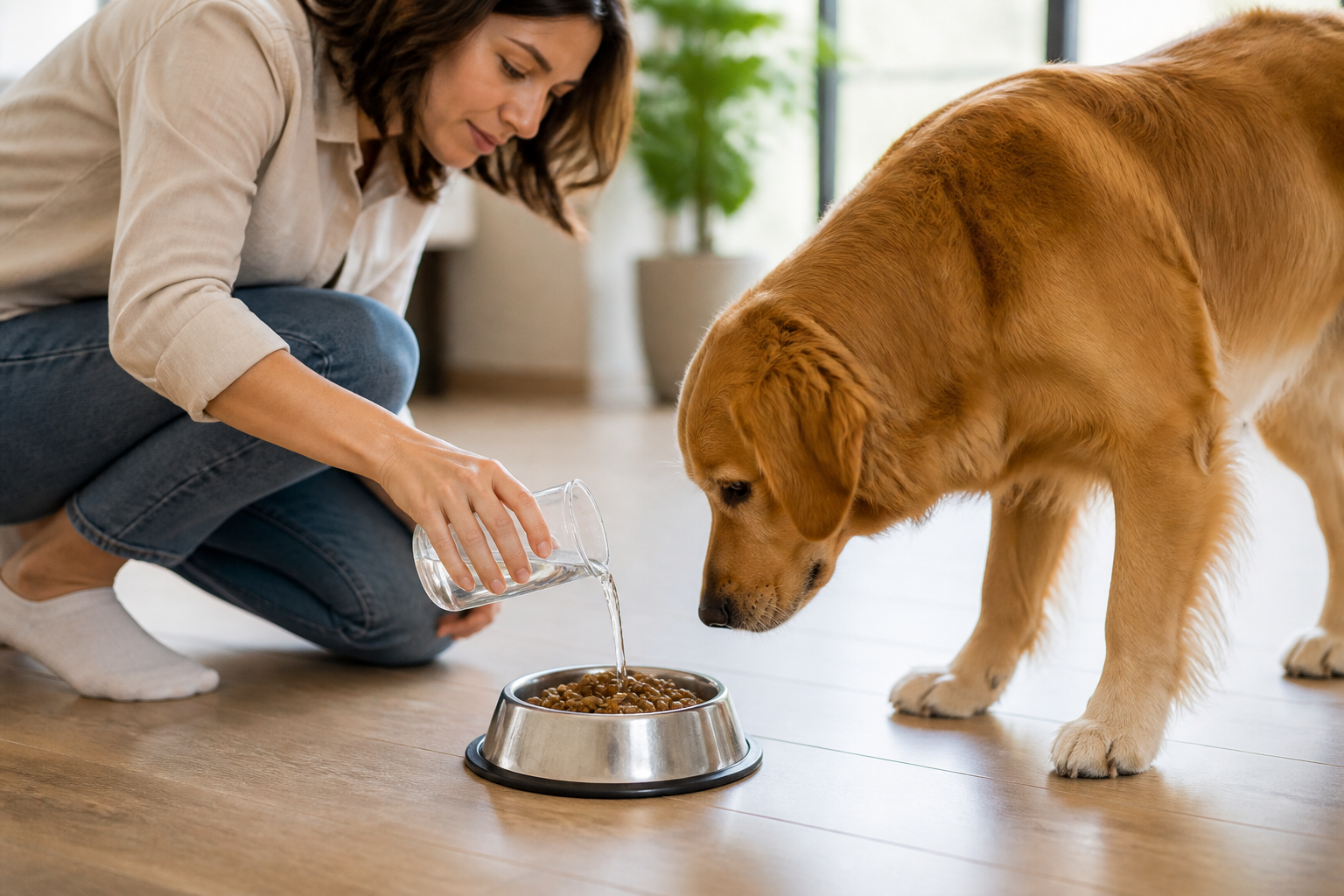
You are standing in your kitchen, watching your dog sniff their bowl and walk away with a sigh. Or perhaps you have a senior dog who seems to struggle with the hard, crunchy texture of their daily meal. These are the moments when many pet owners ask if they can simply add a splash of water to the bowl. At BaxterBoo, we hear this question frequently from people who want to improve their dog’s appetite or health without switching foods entirely. Adding water to dry dog food is generally a safe and effective way to boost hydration and make meals more enticing. This article covers the benefits of moistening kibble, the potential risks of spoilage, and how to do it correctly for your dog's specific needs.
Quick Answer: Yes, you can safely add water to dry dog food. It is an excellent way to improve hydration, enhance the natural aroma of the kibble, and make the food easier for puppies or senior dogs to chew.
The Immediate Benefits of Adding Water
Adding moisture to a bowl of dry kibble does more than just change the texture. For many dogs, it transforms a boring meal into something much more appealing. The most obvious benefit is hydration. Many dogs are "lazy drinkers" who do not visit their water bowl as often as they should. This can be a concern during hot summer months or for dogs who are very active. When you add water directly to the food, you ensure your dog takes in fluids with every bite.
Proper hydration supports almost every system in a dog's body. It helps the kidneys filter toxins and keeps the digestive tract moving smoothly. If your dog has a history of urinary tract issues or crystals, extra moisture is often recommended by veterinarians. By adding water to the food, you are providing a steady stream of hydration that supplements what they get from their water dish.
Another benefit is the release of aroma. Dry dog food is often coated in fats and flavor enhancers that stay "locked" in the hard pellet. When you add warm water, these fats begin to melt and the scent of the proteins becomes much stronger. Dogs experience the world primarily through their noses. A stronger smell often leads to a more excited eater. This is particularly helpful for dogs recovering from an illness who may have a diminished sense of smell or a low appetite. For more ideas, read our guide to dry dog food for picky eaters.
Key Takeaway: Adding water is a simple, cost-effective way to ensure your dog stays hydrated while making their meal smell and taste better.
Supporting Seniors and Puppies
The physical texture of dry kibble can be a barrier for certain dogs. Senior dogs often suffer from dental disease, missing teeth, or sensitive gums. Crunching down on hard pellets can be painful for them. When you soften the food with water, you remove that physical obstacle. This allows them to focus on getting the nutrition they need without the discomfort.
Puppies also benefit from softened food, especially during the weaning process or when they are losing their baby teeth. Their jaws are not yet strong enough to handle very hard kibble for every meal. Softening the food makes it manageable and prevents them from gulping down large, hard pieces that could cause choking or indigestion. If you are shopping for a young dog, visit our Puppy Shop for age-appropriate essentials.
It is also worth noting that softened food can help prevent "scarfing and barfing." Some dogs eat so fast that they swallow significant amounts of air along with their hard kibble. This often leads to the dog regurgitating their meal shortly after eating. Softened food is harder to gulp rapidly and can settle in the stomach more easily. Our article on mixing dry dog food with water offers additional serving tips.
Potential Downsides and Safety Risks
While adding water is generally beneficial, it is not without risks. The most significant concern is bacterial growth. Dry kibble is processed to have a very low moisture content, which makes it shelf-stable. Once you add water, you create a perfect environment for bacteria to multiply. This is why you should never leave moistened kibble sitting out for hours.
If your dog is a "grazer" who likes to take a few bites and return later, adding water may not be the best choice. Any food that has been moistened should be picked up and discarded after about 30 to 60 minutes. Leaving it out longer, especially in a warm kitchen, increases the risk of mold and harmful bacteria like Salmonella or Listeria.
There is also the debate regarding dental health. Many people believe that dry kibble helps "scrape" plaque and tartar off a dog’s teeth. While this effect is often overstated, softening the food definitely removes any abrasive benefit the kibble might have provided. If you choose to feed softened food, you may need to be more diligent about brushing your dog’s teeth or providing dental chews like Greenies to maintain their oral hygiene.
The Right Way to Add Water
To get the best results, you should follow a few simple steps. The temperature of the water and the ratio you use can change how well your dog accepts the meal. You do not want to turn the bowl into a soup, but you want enough moisture to soak into the center of the pellets.
Step 1: Measure the kibble. / Start with your dog's standard portion of high-quality food, such as NutriSource or Open Farm. You can compare formulas in our dog food category.
Step 2: Add warm water. / Use filtered water that is warm to the touch but not boiling. Boiling water can destroy some of the heat-sensitive vitamins and probiotics in premium dog foods.
Step 3: Use the correct ratio. / A good starting point is one part water to four parts kibble. For example, if you feed one cup of food, add a quarter cup of water.
Step 4: Wait and stir. / Let the bowl sit for 5 to 10 minutes. This allows the water to penetrate the hard outer shell of the kibble. Stir it once before serving to ensure the moisture is distributed evenly.
Vet Tip: If your dog has a history of bloat or deep-chested anatomy, talk to your vet about the best way to hydrate their food. While moisture usually helps, some theories suggest very rapid expansion of food in the stomach can be a risk factor for certain breeds.
Using Mixers and Bone Broths
If your dog is not interested in plain water, you can use other liquids to add moisture. Bone broth is a popular choice among our customers because it adds a massive punch of flavor along with collagen and amino acids. We carry several brands, like The Honest Kitchen and Zesty Paws, that make broths specifically for pets. These are different from human broths because they do not contain onions, garlic, or excessive salt, all of which can be toxic to dogs.
Goat milk is another excellent option for adding moisture. It is packed with probiotics that support gut health and is often easier for dogs to digest than cow’s milk. You can find dehydrated goat milk that you simply mix with water and pour over the kibble. This is especially helpful for dogs with sensitive stomachs who need a little extra digestive support.
You can also mix in a small amount of canned wet food. Brands like Royal Canin and Farmina offer canned versions of their popular dry formulas. For more ideas about choosing between textures, read our guide to wet and dry dog food.
Special Considerations for Prescription Diets
If your dog is on a therapeutic or prescription diet for a specific health condition, you must be more careful. These foods are precisely balanced by veterinary nutritionists to manage issues like kidney disease, urinary stones, or food allergies. Adding too much water or mixing in broths can sometimes dilute the specific nutrient levels required for the diet to work.
Our pharmacy provides many of these FDA-approved prescription diets through our partnership with Pet's Choice. If your dog is eating a Farmina Vet Life or Royal Canin Veterinary Diet formula, we always recommend a quick call to your vet before you start adding water or toppers. They can tell you if a specific moisture level is beneficial for your dog's condition. For instance, dogs with kidney issues often thrive on extra moisture, but those on specific dental diets may lose the benefit of the food if it is softened.
Bottom line: Prescription diets are medicine in food form, so check with a professional before changing how they are served.
Maintaining Your Dog's Equipment
When you start adding water to dry food, you will notice that the food bowl gets dirty much faster. Dry kibble leaves behind a bit of dust and oil, but wet kibble leaves a sticky residue that can quickly turn into a biofilm. This thin layer of bacteria is slippery to the touch and can make your dog sick if it is not cleaned regularly.
Switching to stainless steel or ceramic bowls is a good move if you plan to feed moistened food. These materials are non-porous and easier to sanitize than plastic. Make it a habit to wash your dog's bowl with hot, soapy water after every single meal. If you use a slow feeder or a Kong toy to serve moistened food, ensure you use a bottle brush to get into all the crevices where old food might hide.
Monitoring Your Dog's Progress
As you begin adding water to your dog's diet, keep an eye on their digestion and energy levels. Most dogs handle the transition easily, but some may have slightly softer stools for a day or two as their system adjusts to the increased hydration. If you notice persistent diarrhea or if your dog suddenly refuses the food, stop adding the water and consult your veterinarian.
You should also monitor their weight. While water has zero calories, sometimes making food more palatable leads to a dog eating more than they actually need. Use a standard measuring cup for every meal to keep their portions consistent. If your dog is a "picky eater" who is now finishing every bowl, you might find they start putting on weight.
Conclusion
Adding water to dry dog food is a simple way to improve your dog's daily life. It provides essential hydration, makes meals smell more appetizing, and helps dogs with dental issues eat without pain. We recommend starting with warm water and a small ratio to see how your dog reacts. Remember to pick up any uneaten food promptly to avoid spoilage and keep those bowls clean.
- Hydration is the biggest benefit, especially for active or senior dogs.
- Warm water releases aromas that entice picky eaters.
- Softened food is safer for puppies and seniors with dental pain.
- Always wash bowls after moistened meals to prevent bacterial growth.
If your dog has a chronic health condition and requires a specific diet, our pharmacy is here to help. We offer a wide range of prescription foods and medications through our partnership with Pet's Choice. Talk to your vet today about whether a moistened prescription diet is right for your pet, and visit our pharmacy section to see our full selection of supported brands. For convenient repeat ordering, you can also explore our Autoship programme.
FAQ
How much water should I add to a cup of dog food?
A common ratio is one-quarter cup of water for every one cup of dry kibble. This provides enough moisture to soften the food and create a light gravy without making it too soupy. You can adjust this based on your dog's preference, as some dogs enjoy more liquid than others.
Does adding water to kibble help with digestion?
Yes, it can aid digestion by helping the food move more easily through the digestive tract. The extra moisture helps the body break down the nutrients in the kibble and can prevent constipation. For dogs that eat too fast, the softened texture may also reduce the amount of air they swallow during mealtime.
Can I leave moistened dog food out all day?
No, you should never leave moistened dog food out for more than an hour. Once water is added to the kibble, it becomes a breeding ground for bacteria and mold. If your dog does not finish the meal within 30 to 60 minutes, discard the leftovers and wash the bowl thoroughly.
Should I use hot or cold water to soften the food?
Warm water is the best choice because it helps release the food's natural aromas and softens the pellets faster than cold water. Avoid using boiling or very hot water, as it can cause burns to your dog's mouth and may damage some of the sensitive nutrients or probiotics found in the food.






