
 Save 15% on your 1st Autoship learn more

 Email us
 Live Chat
 FAQs
FAQs





Introduction
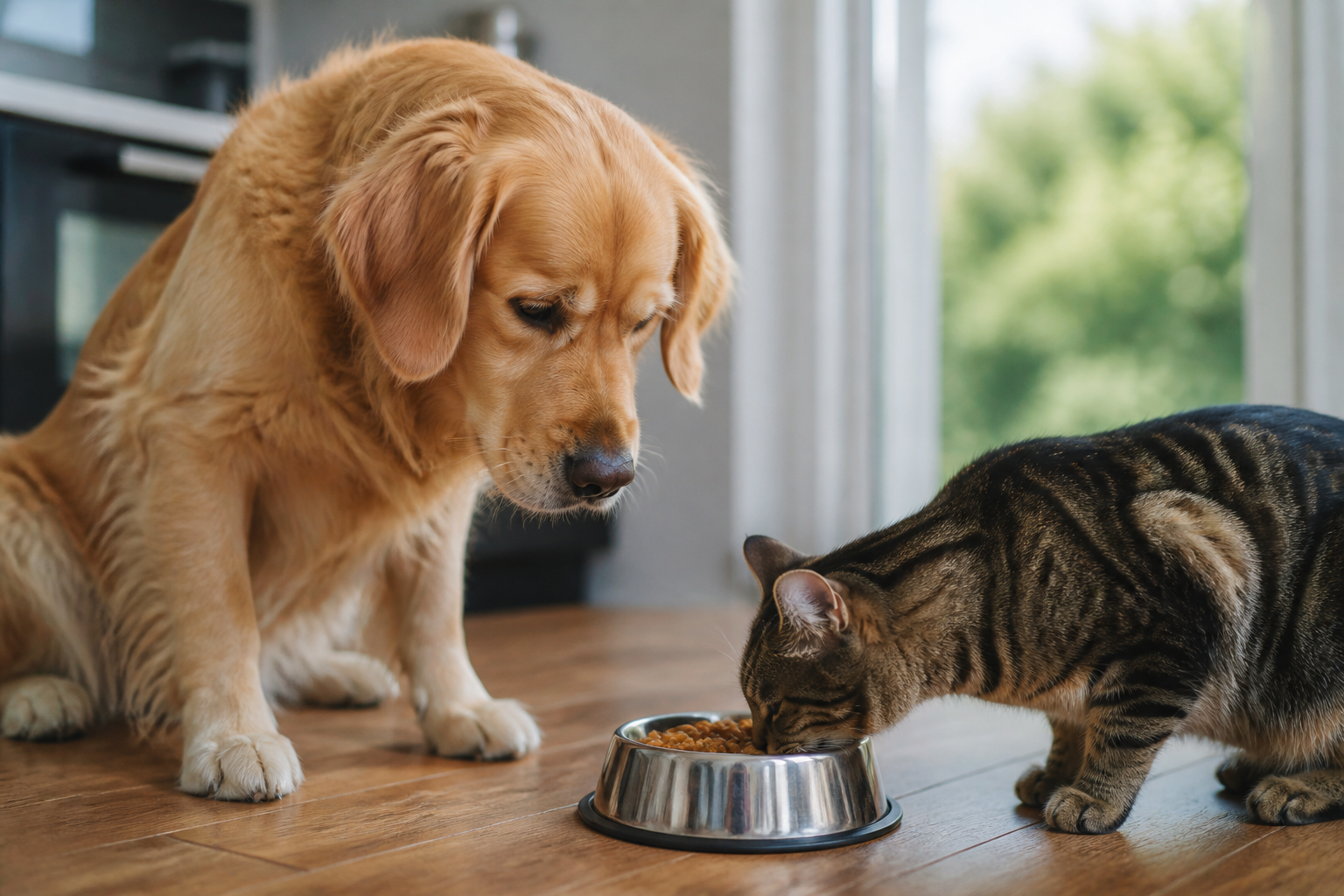
You hear a rhythmic crunching coming from the laundry room. When you investigate, you find your dog head-first in the feline feeding station. This is a common scene in multi-pet households across the country. Many dogs find the rich smell of kitty kibble far more enticing than their own dinner. At BaxterBoo, we talk to plenty of pet owners who wonder if they can just let their dogs indulge this habit. This article covers the nutritional differences between the two species and why cat food is not a long-term solution for dogs. We will also look at the health risks of high-fat diets and how to keep your pets eating from their own bowls. While a few stolen bites might not cause immediate harm, feeding cat food regularly can lead to serious health complications for your dog.
Quick Answer: Dogs can technically eat cat food in an emergency, but it is not recommended as a regular diet. Cat food is too high in protein and fat for most dogs. Consistent feeding can cause obesity, digestive upset, or even dangerous conditions like pancreatitis.
Why Dogs Crave Cat Food
Most dogs view cat food as a high-value treat. It smells stronger and tastes richer than standard dog kibble. This is because cats are obligate carnivores. Their bodies require a much higher concentration of animal protein and fat to function.
Manufacturers formulate cat food with high levels of meat-based ingredients to meet these feline needs. To a dog, this smells like a gourmet meal. Dogs are omnivores, meaning they evolved to eat a mix of animal and plant material. While they enjoy the fatty taste of cat food, their digestive systems are not designed to process it as a primary fuel source every day.
Critical Nutritional Differences
The Association of American Feed Control Officials (AAFCO) sets different nutrient standards for dogs and cats. These standards ensure each animal gets the specific vitamins and minerals they need.
- Protein: Adult cat food usually contains at least 26 percent protein. Dog food minimums are lower, around 18 percent.
- Fat: Cat food is significantly higher in fat to support feline energy needs.
- Taurine: Cats must get this amino acid from their food. Most dogs can produce it internally, though some breeds require supplementation.
- Vitamin A: Cats cannot convert beta-carotene into Vitamin A like dogs can. Their food contains pre-formed Vitamin A in much higher doses.
If a dog eats cat food exclusively, they receive an oversupply of protein and fat. At the same time, they may miss out on the fiber and specific carbohydrate balances found in premium dog foods. Brands like Royal Canin and NutriSource create life-stage-specific formulas for a reason. Each recipe matches the unique metabolic rate of the animal on the label. You can compare life-stage formulas in our adult dog food category.
Key Takeaway: Dogs and cats have distinct metabolic needs. Feeding cat food to a dog provides too much of some nutrients and not enough of others. This imbalance can lead to long-term health issues.
The Health Risks of Cross-Species Feeding
Feeding your dog cat food is not just a matter of poor nutrition. It can lead to acute medical emergencies. The most significant concern is the high fat content.
Pancreatitis Risks
Pancreatitis is the inflammation of the pancreas. This organ helps with digestion and regulates blood sugar. When a dog consumes a meal with excessive fat, the pancreas can become overworked and inflamed. This condition is painful and potentially life-threatening.
Symptoms of pancreatitis include:
- Severe vomiting
- Abdominal pain (the dog may hunch their back)
- Lethargy
- Diarrhea
- Loss of appetite
Some breeds are more prone to this than others. Miniature Schnauzers and English Cocker Spaniels often have a higher sensitivity to dietary fat. If your dog shows these signs after eating cat food, seek veterinary care immediately.
Weight Gain and Obesity
The caloric density of dry cat food is much higher than dog food. Even small amounts can lead to rapid weight gain. Obesity in dogs puts extra strain on joints and can lead to diabetes. For senior dogs already managing mobility issues, those extra pounds significantly impact their quality of life.
Organ Strain
High protein levels can be hard on the kidneys and liver. If your dog has underlying health issues, the extra work required to process feline-level protein can worsen their condition. Older dogs especially need carefully balanced protein to maintain muscle mass without overtaxing their organs.
Vet Tip: If your dog accidentally consumes a large amount of cat food, monitor them closely for 24 hours. Watch for vomiting or signs of stomach pain. If they have a history of kidney disease or pancreatitis, call your veterinarian right away to discuss next steps.
For additional guidance about serious symptoms after eating cat food, read what to do if your dog eats dry cat food.
Managing a Multi-Pet Household
The best way to protect your dog is to prevent access to the cat's bowl. This requires a few changes to your home environment.
- Elevate the cat food. Cats are natural climbers. Place their bowl on a sturdy counter, a cat tree, or a dedicated feeding shelf that the dog cannot reach.
- Use a microchip feeder. These bowls only open when they detect the specific microchip of your cat. They are an excellent investment for stopping food theft.
- Set specific meal times. Instead of leaving dry food out all day, feed your pets at the same time in separate rooms. Close the door until both are finished.
- Utilize physical barriers. Baby gates with small pet doors allow cats to pass through while keeping larger dogs out of the feeding area.
Our warehouse at BaxterBoo stocks a variety of gates and feeding solutions to help you manage these household dynamics. Creating a "cat-only" zone is often the simplest fix for a dog who cannot resist the lure of kitty kibble.
Bottom line: Prevention is easier than treating the digestive upset caused by food theft.
For another perspective on separating meals, see strategies for managing feeding in a multi-pet household.
What to Do in an Emergency
Sometimes you realize the dog food bag is empty at 10:00 PM on a Sunday. In this specific scenario, a single meal of dry cat food is generally safe for a healthy adult dog. It is better than letting them go hungry, provided they do not have a history of a sensitive stomach.
Step 1: Check the ingredient label. Ensure the cat food does not contain any specific triggers your dog is allergic to.
Step 2: Feed a smaller portion. Since cat food is more calorie-dense, your dog needs less of it than their usual kibble.
Step 3: Monitor for gas or loose stools. The rich ingredients may cause mild gastrointestinal upset.
Step 4: Get back to dog food as soon as possible. Use our Autoship programme to help ensure you never run out of your dog’s favorite formula again.
Support for Pets with Special Needs
If your dog is constantly seeking out cat food, they might be bored with their current diet or lacking certain nutrients. Some dogs become "picky eaters" and hold out for the tastier cat food. In these cases, we recommend looking at high-quality dog foods that use real meat as the first ingredient. Brands like Stella and Chewy's or The Honest Kitchen offer high-protein options that satisfy that meat craving while remaining balanced for dogs. Our guide to dry dog food for picky eaters offers additional ideas.
For dogs who have already developed health issues from dietary indiscretion, specialized nutrition is vital. Through our partnership with Pet's Choice, we offer our pet pharmacy that carries FDA-approved medications and prescription diets. If your veterinarian has prescribed a low-fat or kidney-support diet, our pharmacy can help you manage those ongoing health needs easily.
Conclusion
While dry cat food is not toxic to dogs, it is far from an ideal diet. The high fat and protein levels are designed for a hunter's metabolism, not an omnivore's digestive system. Stolen bites now and then are usually fine, but regular consumption can lead to obesity and painful inflammation. Focus on high-quality dog food and use physical barriers to keep the cat's dinner safe.
- Keep cat bowls in elevated or restricted areas.
- Stick to dog-specific treats and meals.
- Watch for signs of lethargy or vomiting if theft occurs.
- Consult your vet if your dog is a habitual cat food thief.
If you need help finding the right gate, feeder, or a more enticing dog food brand, we are here to help. Our MVP Rewards programme also lets you earn points on every purchase as you keep your pets healthy and happy.
FAQ
Can a dog get sick from eating cat food just once?
Most healthy dogs will be fine if they eat a small amount of cat food once. They might experience some mild gas or a loose stool because the food is much richer than they are used to. However, dogs with very sensitive stomachs or those prone to pancreatitis could have a more severe reaction even from a single high-fat meal.
Why does my dog prefer the cat's food over their own?
Cat food is designed to be highly palatable for obligate carnivores. It usually has a higher meat content and more fat, which translates to a stronger smell and a more intense flavor. To a dog, cat food tastes like a concentrated version of their own treats, making it very hard to resist.
Is wet cat food worse for dogs than dry cat food?
Both wet and dry cat food carry the same risks regarding high protein and fat content. Wet cat food is often even more enticing because of its strong aroma and moisture content. Neither should be a regular part of a dog's diet, as both lack the fiber and specific nutrient balance dogs need for long-term health.
For more information about food textures, read the differences between wet and dry dog food.
How do I know if my dog has pancreatitis after eating cat food?
Common signs of pancreatitis include repeated vomiting, a painful or bloated abdomen, and a lack of energy. You might notice your dog standing in a "prayer position" with their front legs down and rear end up to relieve pressure on their belly. If you see these symptoms, you should contact your veterinarian immediately for a professional evaluation.






