
 Save 15% on your 1st Autoship learn more

 Email us
 Live Chat
 FAQs
FAQs





Introduction
You fill your dog's bowl with high quality kibble and set it down. Your dog sniffs it, looks up at you, and walks away. Or perhaps you have a senior dog who seems to struggle with the hard texture of those crunchy bits. These moments make every pet owner wonder if there is a better way to serve a meal. At BaxterBoo, we have helped pet parents navigate these exact feeding challenges since 2006. Adding water to dry dog food is a simple and effective technique to improve hydration and appeal. If you want to browse options while you plan mealtime, start with our dog food category. This post covers why you might want to moisten your dog's food, the correct way to do it, and the safety steps you must take. By the end, you will know exactly how to turn a boring bowl of kibble into a hydrating feast.
Quick Answer: Yes, you can mix water with dry dog food. This practice improves hydration, makes the food easier to chew for seniors or puppies, and enhances the natural aromas of the kibble to entice picky eaters.
Why Adding Water to Kibble Makes Sense
Most dry dog food contains only about 10 percent moisture. In the wild, a dog's natural diet would consist of much higher water content. When a dog eats strictly dry food, they must make up for that lack of moisture by drinking a lot from their water bowl. Some dogs are excellent at staying hydrated on their own. Others, however, simply do not drink enough.
Adding water directly to the food ensures that your dog takes in extra liquid with every single bite. This is especially helpful for dogs that are prone to urinary tract issues or kidney stones. Proper hydration helps the kidneys flush out toxins and keeps the entire urinary system functioning smoothly. It also helps regulate body temperature, which is vital during hot Illinois summers or after a long session of fetch.
The texture of kibble can also be a barrier for some dogs. Dry food is hard. While this crunch is often touted for dental benefits, it can be difficult for certain dogs to manage. Moistening the food changes the texture from a hard pebble to a soft, mashable consistency. This makes the meal much more accessible for many pets.
Improving Digestion and Nutrient Absorption
Many commercial dog foods are made through a process called extrusion. This involves high heat and pressure to create those uniform shapes. Because kibble is so dry and dense, it can sometimes be a challenge for the stomach to break down quickly. When a dog eats dry kibble, their body has to pull moisture from other tissues to help the digestion process along.
By adding water before the dog eats, you are essentially pre-digesting the food. The water begins to break down the starches and proteins in the kibble. This means the stomach does not have to work quite as hard. For dogs that experience frequent gas or bloating, this small change can make a significant difference. It allows the nutrients to be more readily available for absorption in the digestive tract.
Key Takeaway: Adding water to kibble mimics a more natural moisture level for dogs. It aids the kidneys, supports digestion, and helps prevent the dehydration that can sometimes occur with a strictly dry diet.
Enticing the Picky Eater
If you have a dog that turns their nose up at dinner, the problem might be the lack of aroma. Dogs have an incredible sense of smell. Dry kibble often has a muted scent because the fats and flavors are locked inside the hard structure. If picky mealtimes sound familiar, our guide on how to choose dry food for picky eaters can help you compare options.
When you add warm water to dry food, it releases the oils and aromas within the kibble. The scent becomes much more intense and appealing to a dog. This is often enough to convince a reluctant eater to finish their meal. We see this often with dogs that are recovering from an illness or those that are simply bored with their daily routine.
Tips for Picky Eaters
- Use warm water to maximize the scent release.
- Let the food sit for a few minutes so the water can soak in.
- Consider using a flavored topper or bone broth instead of plain water.
- Switch up the temperature to see what your dog prefers.
Benefits for Different Life Stages
The needs of a dog change as they move from puppyhood into their senior years. Adding water to food can solve different problems at each stage of life. If you are feeding a growing pup, our puppy dog food category is a helpful place to start.
For Puppies
Puppies have small, sensitive teeth. When they are transitioning from mother's milk or a soft puppy mousse to solid food, hard kibble can be intimidating. Adding water allows you to create a "gruel" or "mash" that is much easier for them to handle. You can gradually decrease the amount of water as their adult teeth come in and they become more confident chewers.
For Senior Dogs
Senior dogs often face dental challenges such as missing teeth, gum sensitivity, or dental disease. Crunching down on hard kibble can actually be painful for them. Moistening the food allows them to eat without discomfort. Older dogs also tend to have a decreased sense of thirst. They may not realize they are becoming dehydrated until it becomes a medical issue. If this sounds like your dog, take a look at our senior dog food category for age-appropriate options.
Vet Tip: If your senior dog suddenly stops wanting to eat dry food, it is important to consult your veterinarian. While adding water can help, a sudden change in appetite can indicate underlying dental pain or other health conditions that need professional diagnosis.
The Right Way to Mix Water and Kibble
You might think that you just need to pour some water in the bowl and walk away. However, there is a bit of a technique to doing it correctly. You want to create a consistency that your dog enjoys without turning the meal into a soup that is hard to eat.
Step 1: Measure the food. / Use your dog's standard serving size of high quality kibble.
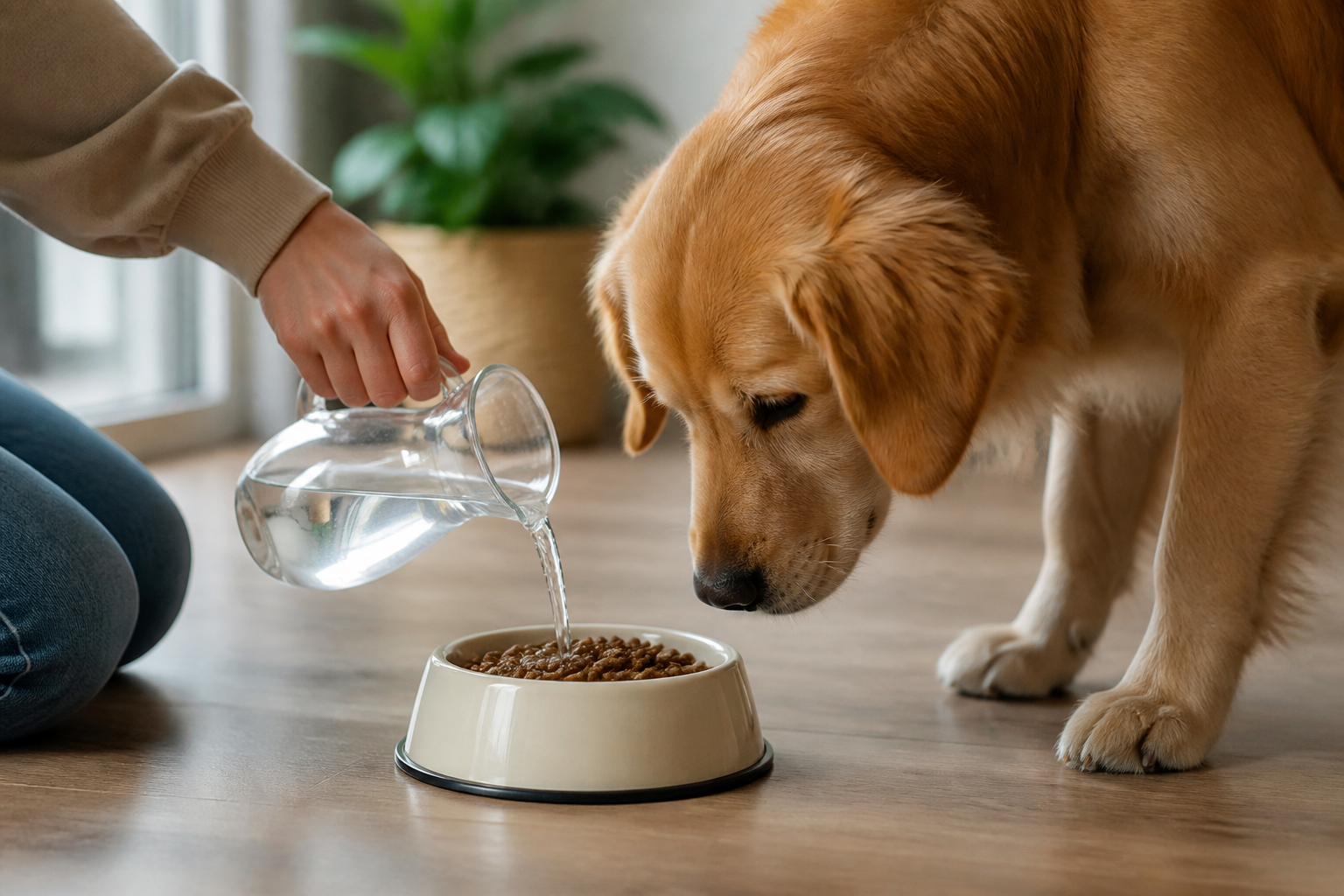
Step 2: Add the water. / A good starting ratio is one part water to three or four parts kibble. This usually works out to about a quarter cup of water for every cup of food.
Step 3: Choose the temperature. / Use filtered, warm water. It should be warm to the touch but never hot or boiling. Boiling water can destroy some of the vitamins in the food and can burn your dog's mouth.
Step 4: Let it soak. / Wait about five to ten minutes. This gives the kibble time to absorb the moisture and soften.
Step 5: Stir and serve. / Give the mixture a quick stir to ensure the moisture is distributed evenly before giving it to your dog.
Safety and the Risk of Bacteria
The most important thing to remember when adding water to dry food is the "one hour rule." Dry kibble is shelf stable because it lacks moisture. The moment you add water, you create a perfect breeding ground for bacteria. If you want a deeper look at food freshness and storage, our post on how long dry dog food stays fresh is a good next read.
Mold and bacteria like Salmonella or Listeria can grow quickly in moist food, especially in warm environments. If your dog is a "grazer" who likes to take a few bites and come back later, you cannot add water to their food. Once you add moisture, the food must be eaten immediately.
Bottom line: Any moistened food that has not been eaten within 60 minutes should be thrown away to prevent the risk of foodborne illness.
The Dental Health Debate
Many people believe that dry dog food is necessary to keep a dog's teeth clean. The idea is that the hard kibble scrapes away plaque and tartar as the dog chews. While there is some truth to this, the benefit is often overstated. Most kibble is small enough that dogs swallow many pieces whole. Even when they do crunch, the kibble often crumbles before it can do much scraping.
If you are worried about your dog's dental health, adding water to their food is not likely to make a massive difference in their oral hygiene. The best way to keep a dog's teeth clean is through regular brushing and professional veterinary cleanings. You can also provide dental treats or toys specifically designed for plaque removal.
Alternatives to Plain Water
If you want to provide even more nutrition or flavor, you do not have to stick to plain water. There are several liquids you can use to moisten kibble that offer additional health benefits.
Bone Broth
Bone broth is a fantastic option for dogs. It is packed with collagen, amino acids, and minerals that support joint health and digestion. If you are looking for a familiar topper brand, our selection of Brutus Broth products is a natural place to browse. Unlike human broths, these do not contain onions, garlic, or excessive salt, all of which can be dangerous for dogs.
Goats Milk
Goats milk is often called a "universal milk" because it is very easy for most dogs to digest. It is rich in probiotics, which can help dogs with sensitive stomachs. Adding a splash of goats milk to kibble provides moisture along with a boost to the immune system.
Mixing with Wet Food
Another common strategy is to mix a small amount of canned food with dry kibble. This provides a variety of textures and a boost of flavor. If you want a ready-made topper idea, The Honest Kitchen Bone Broth Pour Overs Wet Dog Food Topper - Turkey & Salmon Stew is one option to consider. Many owners use this "topper" method to keep their dogs interested in their meals. Just be sure to adjust the total calorie count so you are not overfeeding your pet.
- Check that the liquid is dog-safe (no xylitol, onions, or high sodium).
- Account for the extra calories if using broth or milk.
- Store opened containers of broth or milk in the refrigerator.
- Warm up the liquid slightly before adding it to the kibble.
Managing Special Diets and Medications
If your dog is on a therapeutic or prescription diet for a condition like kidney disease, diabetes, or food allergies, you must be careful. These foods are precisely balanced. If your dog needs prescription support, our pet pharmacy is the right place to start.
Before adding water, broth, or any other mixer to a prescription diet, check with your vet. Adding extra ingredients can sometimes dilute the effectiveness of the therapeutic formula. However, for many conditions, the extra moisture from plain water is actually encouraged by veterinarians.
We also know that many owners use food to hide medications. Softening the kibble with water can make it much easier to hide a pill or mix in a powdered supplement. If your dog needs ongoing medication for chronic conditions, our pet pharmacy can help you get exactly what your vet has prescribed.
Maintaining Your Routine
Whatever you decide, consistency is key for a dog's digestive system. If you choose to start adding water to your dog's food, do it gradually. Start with just a tablespoon or two to see how their stomach reacts. Most dogs transition easily, but a few might have loose stools if the change is too sudden.
Also, consider the mess factor. Wet kibble can be a bit more "splashy" than dry food. If your dog is a messy eater, you might want to place a waterproof mat under their bowl. If your dog has long ears or a beard, they might end up with some of the softened food on their fur. A quick wipe after a meal will keep them clean and prevent the food from drying and crusting on their coat.
Conclusion
Adding water to dry dog food is a practical way to support your dog's health. It boosts hydration, aids digestion, and can make mealtimes much more enjoyable for picky or senior dogs. Just remember to follow the safety rules regarding spoilage and keep your tools clean. We carry a wide variety of high quality foods and mixers at BaxterBoo to help you create the perfect meal plan.
- Start with a 1:4 ratio of water to kibble.
- Use warm, filtered water for the best results.
- Throw away any uneaten portions after one hour.
- Consult your vet for dogs on specialized prescription diets.
Bottom line: Moistening kibble is a simple, low cost way to improve your dog's daily wellness and mealtime satisfaction.
If your dog has specific health needs that require a specialized diet or ongoing medication, our pet pharmacy is here to help. Through our partnership with Pet's Choice, we provide a wide range of prescription pet foods and FDA approved medications to keep your companion healthy. You can also save on your regular food and treat orders by signing up for our Autoship programme, which ensures you never run out of your dog's favorites. For everyday savings, the MVP Rewards programme is another smart way to stretch your budget.
FAQ
Does adding water to dog food cause bloat?
There is no definitive evidence that simply adding water to kibble causes bloat. In fact, softening food can sometimes prevent a dog from eating too quickly, which is a known risk factor for bloat. However, you should avoid using very hot water and ensure your dog does not engage in heavy exercise immediately after a large, moist meal. If you have a deep chested breed prone to bloat, always discuss your feeding routine with your veterinarian.
Can I add cold water to my dog's dry food?
Yes, you can add cold water to dry dog food. While warm water is better for releasing aromas and softening the food quickly, cold water still provides the same hydration benefits. Some dogs actually prefer the refreshing feel of cold water in their food during the summer months. Just keep in mind that the kibble will take significantly longer to soften if the water is cold.
How long should I let the water soak in the kibble?
Most kibble will begin to soften within five minutes of adding warm water. If you want a very soft, mash-like consistency for a senior dog or a puppy, you may want to let it sit for ten to fifteen minutes. Do not let it sit for more than an hour at room temperature, as this increases the risk of bacterial growth and spoilage. If your dog hasn't eaten it within that timeframe, it should be discarded.
Will adding water to my dog's food make their poop soft?
A small amount of extra moisture usually does not cause diarrhea, but it can lead to slightly softer stools if your dog is not used to it. Most dogs' digestive systems adjust to the increased hydration within a few days. If your dog develops persistent diarrhea or seems to have an upset stomach after you start adding water, you should stop the practice and consult your vet to rule out any other issues.






