
 Save 15% on your 1st Autoship learn more

 Email us
 Live Chat
 FAQs
FAQs





Introduction
You finally found a high quality kibble your dog actually enjoys. You might be tempted to buy the largest bag available to save a few dollars and trips to the store. However, once you break that seal, the clock starts ticking on freshness and nutritional value. Many pet owners wonder exactly how long that bag stays safe and healthy for their pup. At BaxterBoo, we see this question often from neighbors visiting our Vernon Hills warehouse. It is not just about the crunch of the kibble. It is about preventing rancid fats and ensuring your dog gets the vitamins they need. This article covers how to identify spoiled food, the best storage practices, and the actual timeline for both opened and unopened bags. Understanding these basics helps keep your dog healthy and your pantry organized. If you want to compare options, start with our dry dog food category.
Quick Answer: An unopened bag of dry dog food is typically shelf-stable until the best by date printed on the package. Once opened, you should aim to use the food within six weeks for the best nutritional quality.
Does Dry Dog Food Expire?
Every bag of dog food we stock comes with a best by date. This date is not just a suggestion from the manufacturer. It represents the point where the food can no longer be guaranteed to provide full nutritional value. While kibble is processed to be shelf-stable, the ingredients inside are still biological material. Over time, the vitamins and minerals begin to break down.
The most sensitive ingredients in dry dog food are the fats. Manufacturers use preservatives to keep these fats from going rancid. Many premium brands use natural preservatives like tocopherols (Vitamin E) or rosemary extract. These are excellent for your dog, but they do not last as long as synthetic chemicals. If you want a deeper look at spoilage signs, see our blog post on dry dog food storage tips.
It is also important to note that the best by date assumes the bag is factory sealed. The packaging is designed to keep out oxygen and moisture. Once that seal is broken, the environmental factors in your home begin to change the chemistry of the food.
How Long Does an Opened Bag Last?
Once you open a bag of kibble, the general consensus among pet nutritionists is to finish it within four to six weeks. While some bags might technically remain safe for up to two or three months, the quality drops significantly after the six-week mark. If you want to keep a fresh bag on hand without overbuying, our Autoship programme can help you time deliveries more closely to your dog’s actual consumption.
Oxygen is the primary enemy of fresh dog food. When air hits the kibble, a process called oxidation begins. This process breaks down the fats and reduces the potency of the vitamins. If your dog is a slow eater, buying a 40-pound bag might seem like a value, but you could be feeding them stale and nutrient-depleted meals by the end of the month.
Environmental factors like humidity can also shorten this window. In a damp basement or a humid kitchen, the food might lose its crunch or even develop microscopic mold much faster than in a climate-controlled pantry.
Factors That Affect Longevity
- The type of preservatives used (natural vs. synthetic)
- The fat content of the food (puppy and performance foods often have more fat)
- The humidity levels in your storage area
- How often the container is opened and closed
Key Takeaway: Aim to buy a bag size that your dog can realistically finish within six weeks. This ensures every bowl provides the maximum nutritional benefit promised on the label.
Identifying Spoiled Dry Dog Food
Dogs have an incredible sense of smell, and they can often tell the food is off before we can. If your normally enthusiastic eater suddenly turns their nose up at the bowl, do not assume they are just being picky. They might be detecting rancid fats or mold that you cannot see yet.
Rancid dog food often has a distinct sour or paint-like odor. It might smell like old oil or even chemicals. If the bag usually smells like roasted meat and suddenly smells sharp or metallic, it is time to toss it. You should also look for physical changes. Kibble that has been exposed to moisture may feel tacky, greasy, or soft.
In extreme cases, you might see visible mold or signs of a pest infestation. Storage mites are tiny insects that thrive in grain-based products. They are often too small to see individually, but you might notice a fine dust at the bottom of the container that seems to move. For more help spotting spoilage, our blog post on how long dry dog food stays fresh once opened covers the warning signs in more detail.
Signs Your Dog Food Has Gone Bad
- A strong, sour, or "off" odor
- Visible mold or fuzzy growth on the kibble
- Clumping of the food inside the bag
- An oily or greasy film on the surface of the nuggets
- Signs of insects or larvae
- Your dog refuses to eat or acts hesitant
The Best Way to Store Dry Dog Food
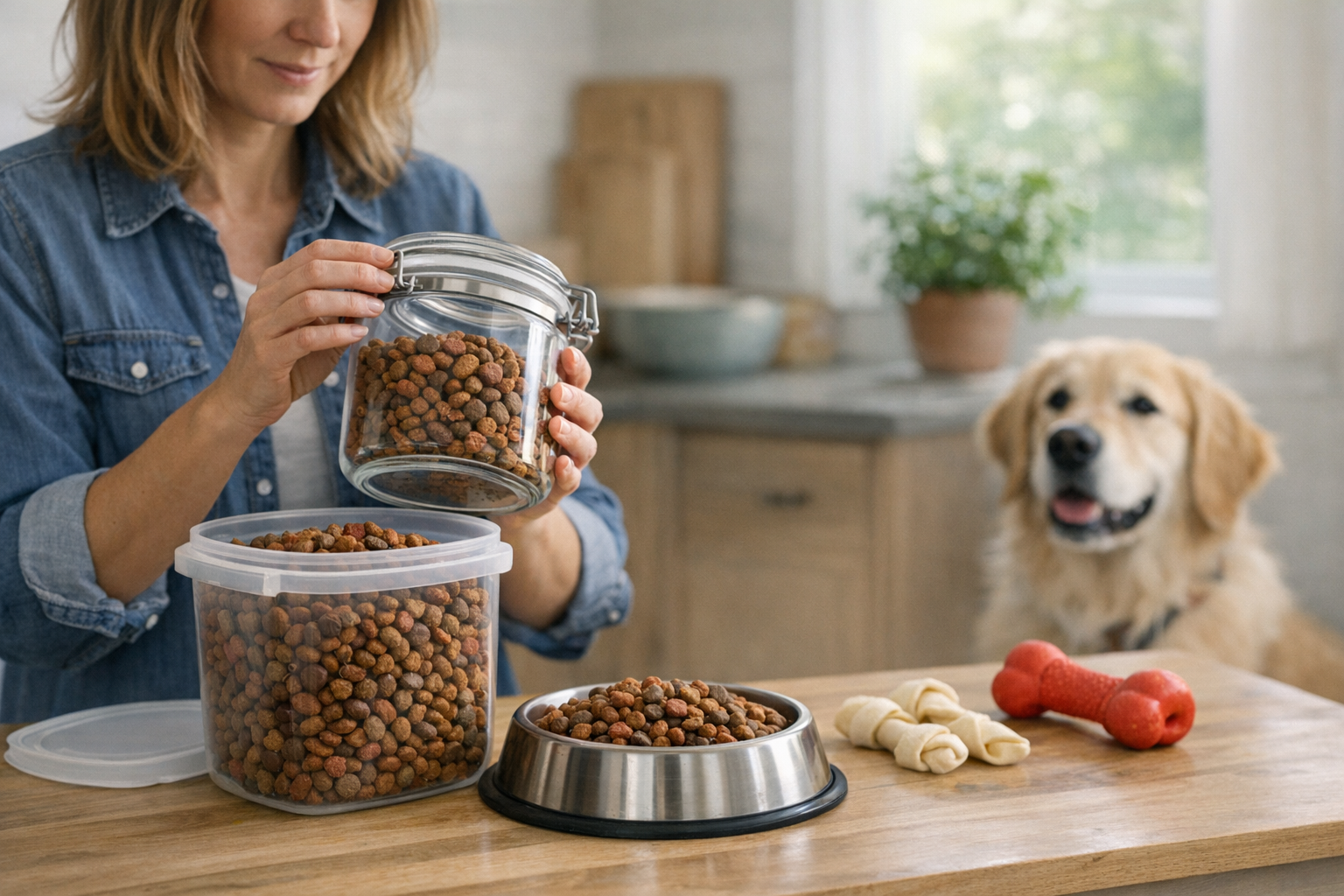
The way you store your dog's food is just as important as the food itself. A common mistake many owners make is pouring the kibble out of the bag and directly into a plastic bin. This seems like a great way to stay organized, but it can actually cause the food to spoil faster. If you need storage gear, our dog food storage solutions are a natural next stop.
Plastic containers can have tiny pores that trap fats and oils from previous batches of food. These old oils can go rancid and contaminate the new food you just poured in. Instead, we recommend the bag-in-a-bin method. Keep the food in its original packaging, roll the top down tightly, and place the entire bag inside an airtight plastic or metal container.
The original bags are high-tech packaging. They are designed with specialized liners to act as a barrier against oxygen and moisture. By keeping the food in the bag, you add an extra layer of protection. You also keep the lot number and expiration date handy in case there is ever a product recall.
Step-by-Step Storage Guide
Step 1: Keep the food in its original bag. / Do not pour the kibble directly into a storage bin. Step 2: Squeeze out excess air. / Roll the top of the bag down as far as possible after every meal. Step 3: Secure with a heavy-duty clip. / Use a large chip clip or a dedicated bag sealer to keep it tight. Step 4: Place the bag in an airtight container. / This protects the food from pests and secondary oxygen exposure. Step 5: Store in a cool, dry place. / Keep the bin off the floor and away from direct sunlight or heat sources.
Health Risks of Feeding Expired Food
Feeding spoiled or expired food is not just about a bad taste. It can lead to real health problems for your dog. When fats go rancid, they can cause upset stomachs, vomiting, and diarrhea. Over time, consuming rancid fats can lead to more serious issues like vitamin deficiencies or cellular damage.
Mold is another significant concern. Certain types of mold produce mycotoxins, which are invisible and extremely dangerous for pets. If moisture gets into the bag, mold can grow quickly. Even if you cannot see a fuzzy green layer, the toxins could still be present.
If your dog develops chronic digestive issues or skin irritations, their food freshness is one of the first things you should check. Always consult with your veterinarian if your dog shows persistent signs of illness. For prescription diets or veterinary food questions, our pet pharmacy information explains how those orders are handled.
Vet Tip: If your dog has a sensitive stomach or chronic health condition, food freshness is critical. For those on a prescription diet, our pharmacy offers a range of specialized foods through our partnership with Pet's Choice. These diets are formulated for specific medical needs and require careful storage to remain effective.
Common Storage Mistakes to Avoid
Many people store their dog food in the garage or a laundry room to save space. While this is convenient, these areas often experience extreme temperature swings. Heat is a major catalyst for oxidation. If your garage reaches 90 degrees in the summer, the fats in that dog food are going to break down much faster than they would inside the house.
Another common error is topping off the container. If you have a few inches of old food left in the bottom and you pour a new bag on top, you are mixing old, oxidizing kibble with fresh food. This can accelerate the spoilage of the new bag. Always wait until the container is empty, wash it with warm soapy water, and let it dry completely before adding a new bag.
Storage Habits to Break
- Storing food in the garage or near a water heater
- Leaving the bag open between feedings
- Using a dirty scoop that hasn't been washed in weeks
- Buying massive bags for a single small dog
- Discarding the original packaging and the lot number
Choosing the Right Bag Size
It is tempting to grab the biggest bag to save money. However, if that bag lasts your dog four months, you are not actually saving money. You are paying for food that will be stale and less nutritious for more than half of the time you own it.
For small breeds, it is almost always better to buy smaller bags more frequently. You can also look at our discounted dog food guide if you are trying to balance freshness with value.
If you have multiple large dogs, a 30 or 40-pound bag might be perfectly fine because you will likely finish it in three weeks. The goal is to match the bag size to your dog's caloric needs. If you find yourself frequently throwing away the last quarter of a bag because it smells off, that is a clear sign to size down.
Managing Multiple Bags and Rotation
If you like to stock up when your favorite brand goes on sale, you need a rotation system. Always use the "first in, first out" method. Check the best by dates on every bag you purchase and arrange them so the oldest dates are in the front.
When you bring a new bag home, take a permanent marker and write the date of purchase or the date of opening on the front of the bag. This takes the guesswork out of how long it has been sitting in your pantry. It is easy to lose track of time, but a date written in bold black ink is hard to ignore.
This is especially important if you rotate between different flavors or brands. Some dogs do well with a rotational diet, but this can lead to several open bags at once. Try to finish one bag before opening another to ensure you are not letting multiple bags go stale at the same time. If you want extra value on repeat purchases, the MVP Rewards programme is worth a look.
Moisture and Pest Prevention
Moisture is the friend of mold and the enemy of kibble. Even small amounts of condensation can cause problems. This is why we recommend keeping food bins off the floor, especially on concrete surfaces in basements. Concrete can "sweat" or hold cold temperatures that cause moisture to form inside a plastic bin.
Pests like ants, weevils, and mice are also attracted to the protein and fat in dog food. An airtight container is your best defense. A simple clip on a bag might stop an ant, but a hungry rodent can chew right through the original paper or plastic packaging. A sturdy, secondary outer bin creates a barrier that keeps your dog's dinner safe from uninvited guests.
If you do find pests in your dog food, do not try to sift them out. The food is contaminated and should be discarded immediately. Wash the storage area and the container thoroughly before bringing any new food into the house.
The Role of Preservatives
Understanding what keeps your dog's food fresh can help you choose the right brand. Manufacturers use two main types of preservatives: natural and synthetic. Natural preservatives like mixed tocopherols (Vitamin E), citric acid, and rosemary extract are popular in premium brands like our selection of NutriSource products, our selection of Farmina products, and our selection of Orijen products.
These natural options are generally preferred by owners looking for a clean label, but they are less stable than their synthetic counterparts. They work by sacrificing themselves to oxygen to protect the fats. Once they are "used up," the fats begin to spoil.
Synthetic preservatives like BHA, BHT, and ethoxyquin are extremely effective and can keep food shelf-stable for a very long time. However, many owners choose to avoid them due to concerns about long-term health effects. If you choose a brand with natural preservatives, you simply have to be more diligent about your storage habits and the six-week timeline.
Special Considerations for Specific Diets
Not all dry foods are created equal when it comes to shelf life. High-fat diets, such as those designed for active working dogs or growing puppies, are more prone to oxidation. Fats are the first things to spoil, so a bag with 20% fat will generally go off faster than a weight-management formula with 8% fat.
Freeze-dried or air-dried foods that come in kibble-like forms also have specific needs. These are often less processed and can be more sensitive to light and air. Always check the specific manufacturer instructions for brands like Stella and Chewy's or Ziwi Peak Beef with Pumpkin Steam-Dried Dog Food, as their freshness windows might be even shorter than standard kibble.
If your dog is on a prescription diet for kidney health, allergies, or digestive issues, the integrity of the ingredients is paramount. These foods often contain specific fatty acids like EPA and DHA that are highly sensitive to light and heat. Our pharmacy staff can help you understand the specific requirements for any prescription food you order through our Pet's Choice partnership.
Cleaning Your Storage Gear
How often do you wash your dog's food bin? If the answer is "never" or "once a year," it is time to change that routine. Every bag of food leaves behind crumbs and oils. These residues sit at the bottom of the bin and can go rancid. When you pour fresh food in, those old oils can transfer to the new kibble.
You should also wash your food scoop regularly. Think of it like a kitchen utensil. You wouldn't use the same spoon for a month without washing it, and your dog's scoop should be treated the same way. A quick run through the dishwasher once a week is usually enough to keep it clean.
Wait until the bin is completely dry before putting a new bag inside. Even a tiny bit of trapped water can lead to a mold outbreak. If you use the bag-in-a-bin method, you don't have to wash the bin as often, but it is still a good idea to wipe it down every few months to remove any dust or stray kibble that might have fallen out.
Key Takeaway: Proper hygiene for bins and scoops prevents old, rancid oils from contaminating fresh food. A clean storage environment is the best way to ensure every meal is safe.
Using Technology for Freshness
If you struggle to remember when you opened a bag, there are simple ways to use your phone to help. Take a photo of the bag when you first open it. The photo will be timestamped, giving you an exact record of when the six-week clock started.
You can also set a recurring reminder on your phone to check the food supply. This is also a great time to check for any recalls. While we stay on top of any quality issues at our warehouse, it is always a good habit for owners to be aware of the lot numbers on their current bags.
For those who want to be even more precise, some storage bins now come with vacuum-seal technology. These bins use a pump to remove the air from the container every time you close it. While not strictly necessary for everyone, these can be a life-saver if you live in a very humid environment or if you must buy larger bags for a single pet.
Summary of Freshness Best Practices
Maintaining the freshness of your dog's food does not have to be a chore. It is mostly about building small, consistent habits. By keeping the food in its bag, using a secondary container, and monitoring the calendar, you can feel confident that your dog is getting the best possible nutrition.
Remember that the goal is quality, not just safety. Your dog might be able to eat three-month-old kibble without getting an immediate stomach ache, but they won't be getting the full benefit of the expensive ingredients you paid for. Fresh food tastes better, smells better, and supports your dog's health from the inside out.
- Keep it in the original bag to protect nutrients.
- Seal the bag with a clip and use an airtight outer bin.
- Store in a climate-controlled area, never the garage.
- Use all opened dry food within six weeks.
- Wash scoops and bins regularly to prevent oil buildup.
Bottom line: Fresh kibble is more nutritious and palatable, so treat your dog's food storage with the same care you would your own groceries.
Conclusion
Taking the time to store your dry dog food correctly is one of the easiest ways to support your dog’s long-term health. By respecting the six-week window and using the bag-in-a-bin method, you prevent the loss of essential vitamins and keep fats from going rancid. These simple steps ensure your dog looks forward to every meal and gets the most out of their diet. If your dog has specific health needs or requires a prescription diet, our pharmacy through Pet's Choice is here to help. You can also sign up for our Autoship program to ensure a fresh bag arrives at your door just as the old one is running low.
FAQ
Can I feed my dog food that is a few days past the best by date?
The best by date is a measure of quality and nutritional potency rather than an exact safety expiration. If the bag is unopened and has been stored in a cool, dry place, the food is likely safe for a short period after the date. However, the vitamins may have begun to degrade, so it is best to transition to a fresh bag as soon as possible.
Is it okay to store dry dog food in the refrigerator?
While the refrigerator is cold, it is also a very humid environment. Storing dry kibble in the fridge can introduce moisture every time you open the container, which increases the risk of mold growth. It is much better to store dry food in a cool, dark pantry where the humidity is low and the temperature is stable.
Why shouldn't I pour the food directly into a plastic storage bin?
Plastic bins can develop tiny scratches and pores over time that trap residual fats and oils from the food. These oils go rancid and can spoil the next batch of fresh food you pour in. Keeping the food in its original bag provides a clean, factory-sealed barrier that protects the kibble and makes the bin much easier to keep clean.
What should I do if my dog stops eating their food suddenly?
First, check the food for any signs of spoilage, such as an off smell or moisture. If the food seems fresh, the refusal could be a sign of a health issue. It is always best to consult your veterinarian to rule out dental problems or digestive upset, especially if the behavior continues for more than a day.






