
 Save 15% on your 1st Autoship learn more

 Email us
 Live Chat
 FAQs
FAQs





Introduction
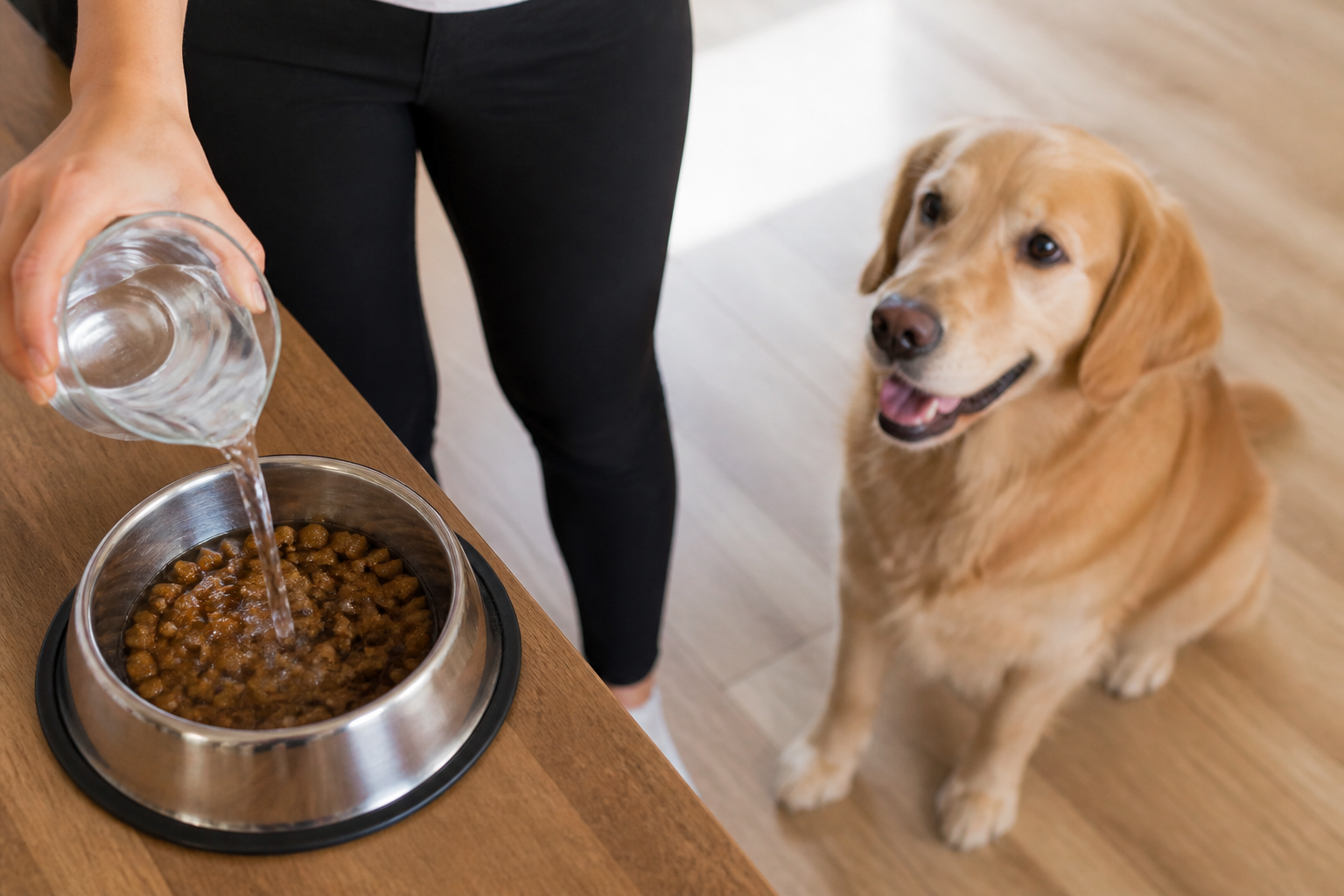
You might be standing in your kitchen right now, looking at a bowl of hard kibble and wondering if your dog would enjoy it more with a little moisture. Perhaps your senior dog is struggling to crunch through their dinner, or your new puppy seems disinterested in dry pellets. Many pet owners ask us if adding water is safe or if it ruins the nutritional value of the food. At BaxterBoo, we see this question often from customers looking to improve their pet's mealtime experience. Adding water to dry dog food is not only safe but can also offer significant health benefits like better hydration and easier digestion. This guide covers when to soak kibble, the best methods for doing it, and the safety precautions you need to take to keep your dog healthy.
Quick Answer: Yes, you can soak dry dog food in water. It helps with hydration, improves palatability for picky eaters, and makes the food easier to chew for senior dogs or puppies. Just ensure you serve it immediately to prevent bacterial growth.
The Primary Benefits of Soaking Dry Dog Food
Dry kibble is a convenient and nutrient dense way to feed your dog. However, its low moisture content can sometimes be a drawback. Most dry dog foods contain only about 10 percent water. By adding liquid, you are changing the texture and the nutritional delivery in a way that often aligns better with a dog's biological needs. You can explore our dog food category when comparing formulas for your dog's routine.
Improved Hydration for All Life Stages
Many dogs do not drink enough standing water from their bowls. This can lead to minor dehydration, which puts stress on the kidneys and urinary tract. When you soak kibble, you ensure your dog consumes a significant amount of water during their meal. This is particularly helpful for dogs prone to urinary crystals or those who live in hot climates.
Enhancing Flavor and Aroma
Dogs experience food primarily through their sense of smell. Dry kibble straight out of the bag does not give off much scent. Adding warm water to the bowl helps release the fats and aromas within the food. This makes the meal much more enticing for picky eaters or dogs that have lost some of their sense of smell due to age. We often suggest this trick to owners whose dogs have suddenly become "bored" with their standard diet.
Satiety and Weight Management
If your dog is always acting hungry, soaking their food might help them feel full. When kibble absorbs water, it expands to nearly double its size. This increased volume fills the stomach more effectively without adding extra calories. For a dog on a weight loss plan, a bowl of soaked food looks and feels like a much larger meal than a handful of dry pellets.
Key Takeaway: Soaking kibble turns a dry meal into a hydrating, aromatic experience that helps dogs feel fuller while supporting kidney health.
Helping Senior Dogs and Puppies
Different life stages come with unique dental and digestive challenges. Soaking food is an excellent tool for managing these transitions without switching to a completely new diet. If you are preparing meals for a young dog, our puppy shop includes puppy food and other age-appropriate essentials.
Support for Senior Dental Health
As dogs age, they often develop dental issues like gum sensitivity, missing teeth, or fractured molars. Crunching down on hard kibble can become painful. Instead of struggling to chew, some seniors may swallow the kibble whole, which leads to digestive upset. Softening the food removes the need for heavy chewing. This allows senior dogs to enjoy their meals without discomfort.
Weaning Puppies onto Solid Food
Puppies transitioning from milk to solid food have tiny, sensitive teeth. Their digestive systems are also still learning how to process complex proteins and fibers. A "kibble mush" created by soaking dry puppy food makes this transition much easier. It provides a familiar texture while introducing the nutrients found in adult-grade ingredients.
Vet Tip: If your senior dog suddenly stops eating hard kibble, consult your veterinarian to rule out abscesses or severe dental disease. While soaking food helps with comfort, it does not treat the underlying cause of dental pain.
Digestion and the Question of Bloat
One of the most common reasons owners soak food is to help with digestion. When a dog eats dry kibble quickly, that food eventually hits the stomach and begins to expand as it absorbs digestive juices. For some dogs, this rapid expansion can cause discomfort or gas. For another perspective on the subject, read how to wet dry dog food for better digestion and hydration.
Reducing Digestive Strain
By soaking the food before it enters the dog, you are essentially pre-expanding the kibble. This means the stomach does not have to work as hard to break down the hard pellets. It can also be a helpful strategy for "scarfers" who bolt their food. Since soaked food is heavier and more substantial, it can sometimes slow down a fast eater, though using a slow feeder bowl alongside soaking is even more effective.
The Connection to Bloat
Bloat, or Gastric Dilatation-Volvulus (GDV), is a life-threatening condition where the stomach fills with gas and twists. While the exact causes of bloat are still studied, many owners of large breed dogs soak kibble to prevent the food from expanding rapidly inside the stomach. While soaking is not a guaranteed preventative, many experts believe that feeding pre-moistened food reduces the risk of the stomach becoming overly distended by dry food expansion.
How to Properly Soak Your Dog's Food
Soaking kibble is simple, but there is a right way to do it to ensure the food remains appetizing and safe. Following a consistent routine helps your dog know what to expect at mealtime. For an additional walkthrough, see how to mix dry dog food with water.
Step-by-Step Soaking Method
Step 1: Measure your dog's standard portion of dry food into their clean bowl.
Step 2: Add warm water. Use a ratio of roughly one part water to two parts kibble.
Step 3: Let the bowl sit. For a slight crunch, wait 5 to 10 minutes. For a soft consistency, wait 20 to 30 minutes.
Step 4: Stir the mixture to ensure the moisture is distributed evenly before serving.
Choosing the Right Temperature
Always use warm water rather than boiling water. Boiling water can destroy some of the heat-sensitive vitamins and probiotics added to premium kibble brands. Warm water is enough to trigger the release of aromas without damaging the nutritional integrity of the meal. Cold water works too, but it takes much longer for the kibble to soften and does not enhance the smell as effectively.
Using Mix-Ins for Added Nutrition
You do not have to limit yourself to plain water. Many owners at our Vernon Hills warehouse store like to use bone broth or goat milk to soak kibble. Brands like Open Farm or Caru offer dog-safe broths that are low in sodium and free of onions or garlic. These add extra collagen and amino acids to the diet while making the meal even more delicious. You can browse our selection of Open Farm products when looking for food and topper options.
Bottom line: Use warm water and a 15 minute soak time to get the best balance of aroma and texture for your dog.
Safety Precautions and Spoilage
The biggest risk of soaking dry dog food is the speed at which it can spoil. Dry kibble is shelf-stable because it has very little moisture. Once you add water, you create a perfect environment for bacteria to grow.
The One-Hour Rule
You should never leave soaked kibble out at room temperature for more than an hour. If your dog does not finish their meal within 30 to 60 minutes, you must throw the leftovers away. Unlike dry food, which can sit in a bowl all day, wet kibble will begin to ferment and attract flies or grow mold.
Clean Your Bowls Frequently
When you feed dry food, it is easy to forget to wash the bowl every day. With soaked food, washing becomes mandatory. The residue left behind by moistened kibble can become a breeding ground for bacteria like Salmonella or Listeria. We recommend washing your dog's bowl with hot, soapy water after every single feeding to ensure their health.
Transitioning Slowly
If your dog has a sensitive stomach, even a change in the texture of their food can cause a minor upset. Start by adding just a splash of water to their bowl. Over the course of a week, you can increase the amount of liquid until you reach the desired consistency. This allows the digestive enzymes in their gut to adjust to the higher moisture content.
Addressing the Dental Health Myth
A common concern is that soaking food will cause dental decay. There is a long-standing belief that dry kibble cleans a dog's teeth because of the abrasive "crunch." However, most dogs swallow kibble whole or in large chunks, meaning there is very little actual scrubbing happening on the surface of the teeth.
Nutrition and Oral Hygiene
Modern veterinary research suggests that the mechanical action of kibble is not a substitute for real dental care. If you are worried about your dog's teeth, it is better to rely on regular brushing, dental chews, or water additives. In fact, some senior dogs with painful gums benefit more from soft food because it encourages them to eat enough to maintain the immune health required to fight off oral infections.
Combining Soft and Crunchy
If you want to keep some of the texture, you do not have to soak the food until it is mushy. A short five-minute soak will soften the outer layer while keeping the center firm. This gives your dog the best of both worlds: the aroma of wet food and a bit of the texture they may enjoy from dry food.
Key Takeaway: Don't rely on dry kibble for dental health. Focus on brushing and professional cleanings while using soaked food for better overall nutrition and hydration.
Prescription Diets and Specialized Needs
Some dogs are on specific diets for health conditions like kidney disease, urinary stones, or food allergies. If your dog is eating a prescription diet, soaking the food can be especially helpful. Many of these conditions require the dog to stay as hydrated as possible. For prescription medications and related products, you can visit our pharmacy for dogs.
Our pharmacy at BaxterBoo offers a wide range of FDA-approved prescription pet foods through our partnership with Pet's Choice. If your veterinarian has prescribed a specific diet for weight loss or organ support, you can often find those formulas in dry versions. Soaking these specialized kibbles can make them more palatable for a dog that might be feeling unwell due to their condition.
Managing Chronic Conditions
For dogs with chronic health issues, consistency is key. If you decide to soak a prescription diet, do it every time. This ensures the calorie density and moisture intake stay the same, which helps your vet monitor your dog's progress accurately.
Vet Tip: Always check with your veterinarian before adding anything other than water to a prescription diet. Even low-sodium broths might contain minerals that could interfere with a specialized medical plan.
Why Quality Matters
Not all kibbles soak the same way. High-quality brands like Farmina, NutriSource, or Stella and Chewy's use dense, nutrient-rich ingredients that hold up well to soaking. Cheaper brands may turn into a grainy, unappealing paste that your dog might reject.
At BaxterBoo, we handpick the brands we carry to ensure they meet high standards for ingredient quality. When you soak a premium kibble, you can often see the actual pieces of vegetable or meat fibers as the pellet softens. This is a great way to see exactly what is going into your dog's body.
Variety in the Bowl
You can also use soaking as a base for adding fresh toppers. Once the kibble is softened, it is easy to mix in things like canned pumpkin, green beans, or a small amount of freeze-dried raw food. This variety keeps your dog excited about their meals and provides a wider range of micronutrients. For broth and topper choices, explore our dog food supplements.
Common Mistakes to Avoid
While soaking is beneficial, there are a few pitfalls that owners should avoid. Small mistakes can lead to a messy kitchen or a dog who refuses to eat.
Over-Soaking the Food
If you leave kibble in water for several hours, it can lose its structure entirely. Most dogs prefer a bit of texture. Aim for a "stew" consistency rather than a "soup" consistency. If there is too much liquid, the dog may lap up the water and leave the soggy bits of food behind.
Using Cold, Hard Water
If you live in an area with very hard water, the mineral taste might be off-putting to some dogs once it is warmed up. Using filtered water can help, especially for very picky eaters. Additionally, remember that cold water does not help the fats in the kibble "bloom," so you miss out on the aromatic benefits that make soaking so effective for picky dogs.
Neglecting the Clean-Up
Moistened food sticks to the sides of the bowl and dries into a hard crust. If you don't wash the bowl immediately, it becomes much harder to clean later. This crust can also hide bacteria that might make your dog sick during their next meal.
Conclusion
Soaking dry dog food is a simple, cost-effective way to improve your pet's quality of life. Whether you are helping a senior dog manage dental pain, encouraging a puppy to eat solids, or simply trying to keep your dog hydrated during a hot Illinois summer, adding water is a smart move. At BaxterBoo, we believe that small changes in how you feed your pet can lead to long-term health benefits. By choosing high-quality kibble and following safe soaking practices, you are providing your dog with a meal that is easier to digest and much more enjoyable to eat.
- Always use warm water to release healthy aromas.
- Discard any uneaten soaked food after one hour.
- Wash bowls thoroughly after every meal.
- Consider using dog-safe bone broth for extra flavor.
If you are looking for the best kibble to use for soaking, we invite you to browse our curated selection of premium dog foods. You can also take advantage of the MVP Rewards program to save on every bag. For those managing chronic health conditions, our pharmacy partnership with Pet's Choice is here to help you get the prescription diets your dog needs delivered right to your door. For repeat purchases, our Autoship programme can help you maintain a consistent supply.
FAQ
Does soaking dog food cause it to lose its nutritional value?
No, soaking dog food in warm water does not destroy its nutrients. Most vitamins and minerals are stable when exposed to moisture and moderate heat. However, avoid using boiling water, as extreme temperatures can break down certain delicate vitamins and probiotics.
Can I soak dog food overnight in the refrigerator?
While you can soak food in the fridge, it is usually not necessary. Kibble typically reaches its maximum softness within 30 minutes. If you do soak it overnight, ensure the bowl is tightly covered to prevent it from absorbing refrigerator odors, and never leave it at room temperature for more than an hour.
Will soaking kibble help my dog lose weight?
Soaking can be a helpful tool for weight management because it increases the volume of the food. The water causes the kibble to expand, which helps your dog feel full faster. This satiety can prevent them from begging for extra treats or feeling unsatisfied with their measured portions.
Is it okay to soak kibble if my dog has a sensitive stomach?
Yes, soaking can actually be easier on a sensitive stomach because the food is pre-softened and easier to break down. However, you should introduce moisture gradually. Start with a small amount of water to ensure the change in texture doesn't cause any digestive upset.






