
 Save 15% on your 1st Autoship learn more

 Email us
 Live Chat
 FAQs
FAQs





Introduction
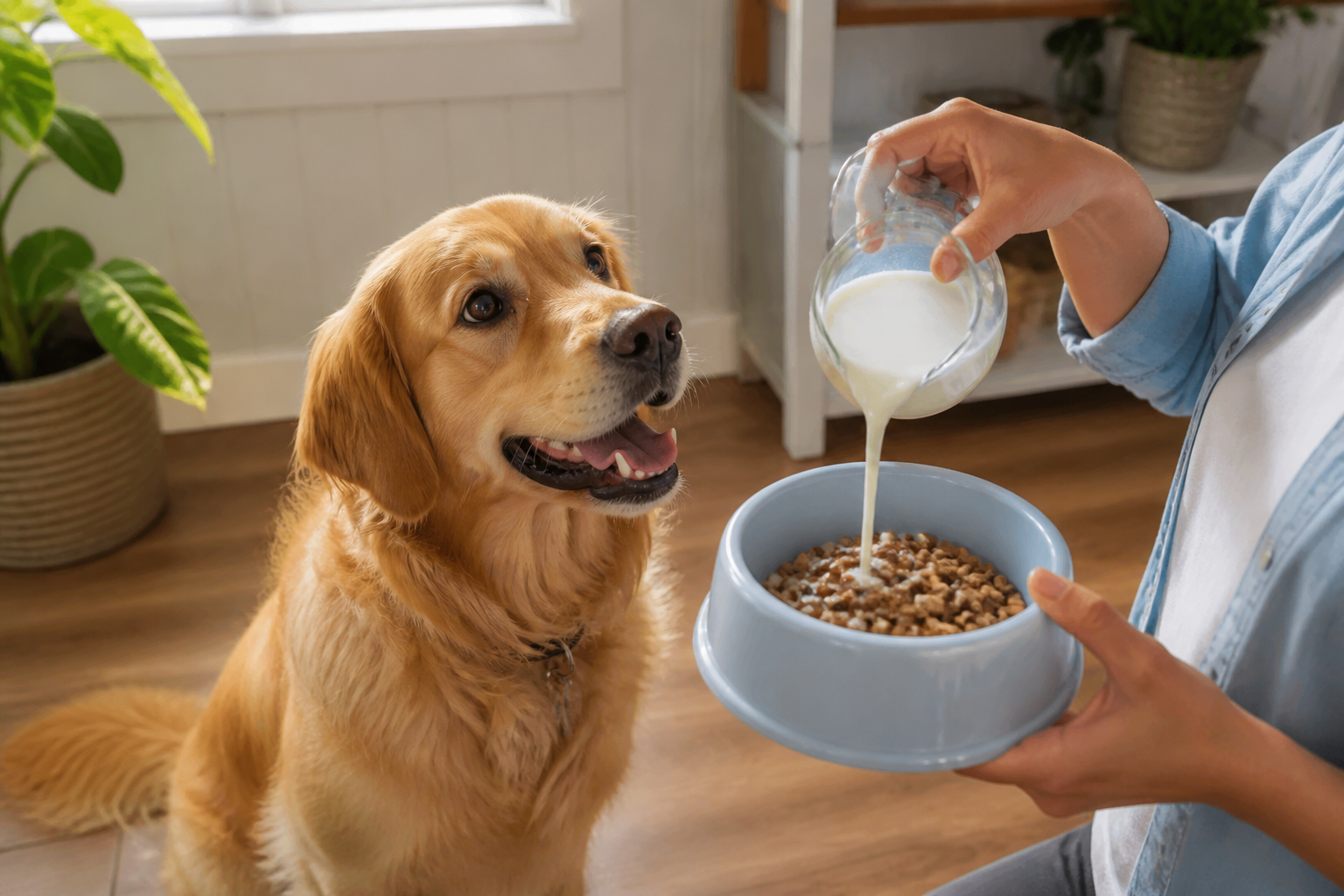
You are standing in the kitchen with a carton of milk in one hand and your dog’s bowl in the other. Your pup is staring at those dry, crunchy nuggets of kibble with less than total enthusiasm. It seems like a natural fix to pour a splash of milk over the top to add some flavor and moisture. Most of us grew up seeing images of pets lapping up saucers of milk, so it feels like a healthy treat. At BaxterBoo, we hear this question often from owners who want to spruce up mealtime for a picky eater or a senior dog. This post covers the science of how dogs process dairy, the risks of lactose intolerance, and much better ways to hydrate dry food. While milk is not strictly toxic, it often leads to more tummy trouble than it is worth for the average adult dog.
Quick Answer: You can technically add a small amount of milk to dry dog food, but it is not recommended for most dogs. Many adult dogs are lactose intolerant and will experience gas, bloating, or diarrhea after consuming dairy.
The Reality of Lactose Intolerance in Dogs
Most people are surprised to learn that dogs are not designed to drink milk once they are weaned. When puppies are nursing, their bodies produce a high amount of an enzyme called lactase. This enzyme is responsible for breaking down the sugars found in milk, known as lactose. As dogs grow up and move onto solid food, their bodies stop producing as much lactase.
Without enough of this enzyme, the lactose in milk cannot be properly digested. Instead of being broken down in the small intestine, it passes into the colon. There, it ferments and draws in water, which leads to the common symptoms of digestive upset. Every dog has a different tolerance level. Some might handle a tablespoon of milk just fine, while others will have an immediate reaction to a tiny lick.
Common Symptoms of Dairy Sensitivity
If you have already added milk to your dog's food, watch for these signs over the next 12 to 24 hours. They usually appear shortly after the meal as the milk moves through the digestive tract.
- Excessive gas or a gurgling stomach
- Bloating and abdominal discomfort
- Loose stools or liquid diarrhea
- Vomiting or lack of appetite
- Increased thirst due to dehydration from diarrhea
Vet Tip: If your dog experiences severe vomiting or diarrhea that lasts more than 24 hours, contact your veterinarian immediately. Persistent digestive issues can lead to dehydration or may signal a more serious underlying condition.
Nutritional Content vs. Digestive Risk
Milk does contain beneficial nutrients like calcium, protein, and Vitamin D. These are the same reasons why humans drink it. However, your dog should already be getting these essential nutrients from a high quality, balanced dry food. Adding milk provides "extra" nutrients that your dog does not actually need, along with a high dose of fats and sugars.
Standard cow's milk is quite high in fat. For some dogs, especially those prone to weight gain or breeds like Schnauzers that are predisposed to pancreatitis, this high fat content is dangerous. Pancreatitis is a painful inflammation of the pancreas that can be triggered by a single high fat meal. Even if your dog can handle the lactose, the calories in milk can quickly lead to obesity if used as a daily topper.
Key Takeaway: The nutritional benefits of milk are usually outweighed by the risks of digestive upset and unnecessary calorie intake.
Better Ways to Add Moisture to Kibble
If your goal is to make dry food more appealing or easier to chew, there are several alternatives that are much safer than cow's milk. We see many owners at BaxterBoo looking for ways to support senior dogs with dental issues or picky puppies. These options provide the moisture you want without the lactose risk.
For dogs who need a complete mealtime upgrade, our dog food category is a helpful place to compare dry formulas, wet options, and toppers that fit different feeding routines.
Warm Water
This is the simplest and safest option. Adding a splash of warm water to kibble releases the fats and aromas in the food, making it smell much more enticing to a dog. It also creates a bit of a "gravy" texture. Let the food sit for about ten minutes so the kibble absorbs the liquid and softens.
If you want a deeper look at hydration as a topper strategy, our guide to adding water to dry dog food is a natural next read.
Bone Broth
Bone broth is a powerhouse of nutrition. It is rich in collagen, which supports joint health, and it is incredibly easy on the stomach. You can find pre-made bone broths specifically formulated for pets that do not contain onions or garlic. These are much safer than the broth you find in the human grocery aisle.
For dogs who like soft, spoonable toppers, our food topper selection makes it easy to browse richer add-ins that can help make dinner more enticing.
Goat's Milk
If you really want to give your dog a dairy-based topper, goat's milk is often called "liquid gold" for pets. It contains much less lactose than cow's milk and has smaller fat globules, which makes it far easier for a dog's system to break down. Many brands like The Honest Kitchen offer dehydrated goat's milk that you can keep in your pantry and mix with water as needed.
If you prefer a trusted brand name when choosing toppers, our selection of The Honest Kitchen products is worth a look.
Bottom line: Goat's milk or bone broth are superior choices for adding moisture because they provide targeted health benefits without the common side effects of cow's milk.
Can Puppies Drink Milk?
It is a common misconception that because puppies nurse, they can drink cow's milk. While puppies do have more lactase in their systems, cow's milk is not a substitute for mother's milk. The nutritional profile is completely different.
Cow's milk is much higher in lactose and lower in the proteins and fats that puppies need to grow. If a puppy is orphaned or needs supplemental feeding, you must use a specific canine milk replacer. Giving a puppy regular store bought milk can cause severe diarrhea, which is life threatening for a small puppy due to how quickly they dehydrate.
If you are feeding a younger dog, our Puppy Shop is a good place to find age-appropriate essentials for growing pets.
Transitioning to Toppers
If you decide to add any new liquid or topper to your dog’s dry food, follow these steps to prevent an upset stomach:
Step 1: Start with a very small amount. / Add just one tablespoon of the new liquid to their regular meal. Step 2: Monitor for 24 hours. / Look for changes in their stool or energy levels. Step 3: Gradually increase the portion. / If they handle it well, you can slowly increase the amount over the next week.
The Truth About Cheese and Yogurt
You might wonder why your dog can eat a piece of cheese or a dollop of yogurt but struggles with liquid milk. The process of making these products changes the lactose content.
- Hard Cheeses: Varieties like cheddar or Swiss are very low in lactose because the whey is removed during the cheesemaking process.
- Yogurt: Plain, unsweetened yogurt contains active cultures and probiotics. These bacteria actually help break down the lactose, making it easier to digest.
- Ice Cream: This is the worst offender. It is packed with lactose, sugar, and often artificial sweeteners.
Vet Tip: Never give your dog "sugar-free" dairy products without checking the label for Xylitol (also called birch sugar). This sweetener is highly toxic to dogs and can be fatal even in small amounts.
Managing Chronic Digestive Issues
Some dogs have incredibly sensitive stomachs regardless of what you add to their food. If your dog frequently experiences gas, bloating, or loose stools, it might not be the milk. They may have a food allergy or a condition like Inflammatory Bowel Disease.
In these cases, your veterinarian might recommend a prescription diet or specific medications. Our pet pharmacy can help you explore prescription dog and cat medicines when your vet recommends a specialized path, and our pharmacy for dogs is a useful place to start looking at dog-focused options. If your vet prescribes a specialized diet like Farmina Vet Life, you can often find those targeted solutions through professional channels to help manage long term health needs.
Why Hydration Matters for Dry Food
Dry kibble generally only contains about 6% to 10% moisture. In the wild, a dog's natural diet would be much more hydrated. Dogs that eat only dry food are often in a state of mild dehydration and have to drink significantly more water to compensate.
Adding liquid to the bowl helps:
- Support kidney and urinary tract health by flushing the system.
- Aid in digestion by helping the body break down the hard kibble.
- Prevent bloat by allowing the food to expand in the bowl rather than in the stomach.
- Make the meal more satisfying, which can help with weight management.
If you are comparing feeding styles, this is also a good moment to browse our dry dog food collection alongside other textures to see what fits your routine best.
Tips for Picky Eaters
If you were looking into milk because your dog refuses to eat dry kibble, consider rotating your toppers. Using the same thing every day can lead to boredom or even more pickiness.
Try alternating between:
- A spoonful of plain, canned pumpkin (not pie filling).
- A few crumbles of freeze-dried raw toppers like those from Stella and Chewy's.
- A splash of wild-caught salmon oil for skin and coat health.
- Small pieces of steamed green beans or carrots for fiber.
Our freeze-dried food hub is a helpful place to find meal mixers and topper options for picky dogs.
We have found that variety is the best way to keep a dog interested in their bowl. You do not need to rely on dairy to make a meal special.
The Myth of Dry Food and Dental Health
One reason people hesitate to add liquid to dry food is the belief that crunchy kibble cleans a dog's teeth. This is largely a myth. Most dogs swallow their kibble whole or break it into just a couple of pieces. The "crunch" is not enough to scrape away plaque at the gum line where dental disease starts.
Adding water or broth to the food will not make your dog's teeth worse. The best way to manage dental health is through regular brushing and specific dental treats like our selection of Greenies products. Do not let the fear of "soggy" food stop you from providing the hydration your dog needs.
For more everyday oral-care ideas, our dog grooming category can also point you toward routine care essentials that support a healthier mouth and coat.
Bottom line: Adding moisture to food provides significant internal health benefits that far outweigh the minimal dental benefits of dry kibble.
Conclusion
While a tiny splash of milk is unlikely to be toxic, most dogs are better off without it. The risk of lactose intolerance and the high sugar and fat content make it a poor choice for a daily meal topper. Instead, reach for warm water, pet-safe bone broth, or goat's milk to add moisture and flavor to dry food. These alternatives support your dog's digestion and hydration without the risk of an upset stomach. Our team at BaxterBoo is always here to help you find the right toppers and supplements to make your pet's mealtime both healthy and exciting. If your dog is struggling with ongoing allergies or digestive sensitivities, consider looking into the specialized options available through the BaxterBoo pharmacy to get them back on track.
If you like to keep a favorite topper or food on hand, our Autoship programme can make repeat purchases easier, and our MVP Rewards programme can help you save while you shop.
FAQ
Can I give my dog lactose-free milk?
Lactose-free milk is generally safer for dogs because the problematic sugar has been removed or broken down. However, it still contains calories and fats that may not be necessary for your dog's diet. If you use it, treat it as an occasional snack rather than a daily meal addition.
Why does my dog like milk if it is bad for them?
Dogs are scavengers by nature and are attracted to the high fat and protein content in dairy. They do not associate the creamy taste with the stomach ache that happens several hours later. As a pet owner, it is up to you to make the healthy choice even if they seem to want the treat.
Can milk help a dog with constipation?
Some people think the laxative effect of milk can help a constipated dog, but this is not a good idea. The diarrhea caused by milk can lead to dehydration, which actually makes constipation worse in the long run. If your dog is constipated, try adding plain canned pumpkin or consult your vet for a safer solution.
Is almond milk or soy milk better for dogs?
Non-dairy milks like almond or soy are not recommended as regular food toppers. They often contain thickeners, added sugars, or sweeteners like Xylitol that can be dangerous. Stick to water or animal-based broths that align better with a dog's natural nutritional needs.
If you want to keep exploring practical feeding ideas, our blog post on wet and dry food choices is a helpful next step.






