
 Save 15% on your 1st Autoship learn more

 Email us
 Live Chat
 FAQs
FAQs





Introduction
You are standing in the kitchen with a scoop of kibble in one hand and your dog watching every move. You might wonder if that dry, crunchy meal could use a little boost. Many owners ask if they should hydrate their pet's food to help with pickiness or health. Adding water to dry food is a common practice that can offer surprising benefits for hydration and digestion. At BaxterBoo, we see thousands of pet parents looking for ways to improve mealtime. We want to help you understand when this simple addition is a great idea and when you should stick to the crunch. This guide covers the pros, the cons, and the best ways to serve a hydrated meal. Adding moisture can be a simple way to support your dog's overall wellness.
The Benefits of Adding Water to Kibble
Most commercial dry dog foods are produced through a process called extrusion. This involves high heat and pressure to create those shelf-stable nuggets we call kibble. While convenient, this process leaves the food with only about 10 percent moisture. Adding water back into the bowl can change the entire nutritional experience for your dog.
Improved Hydration Levels
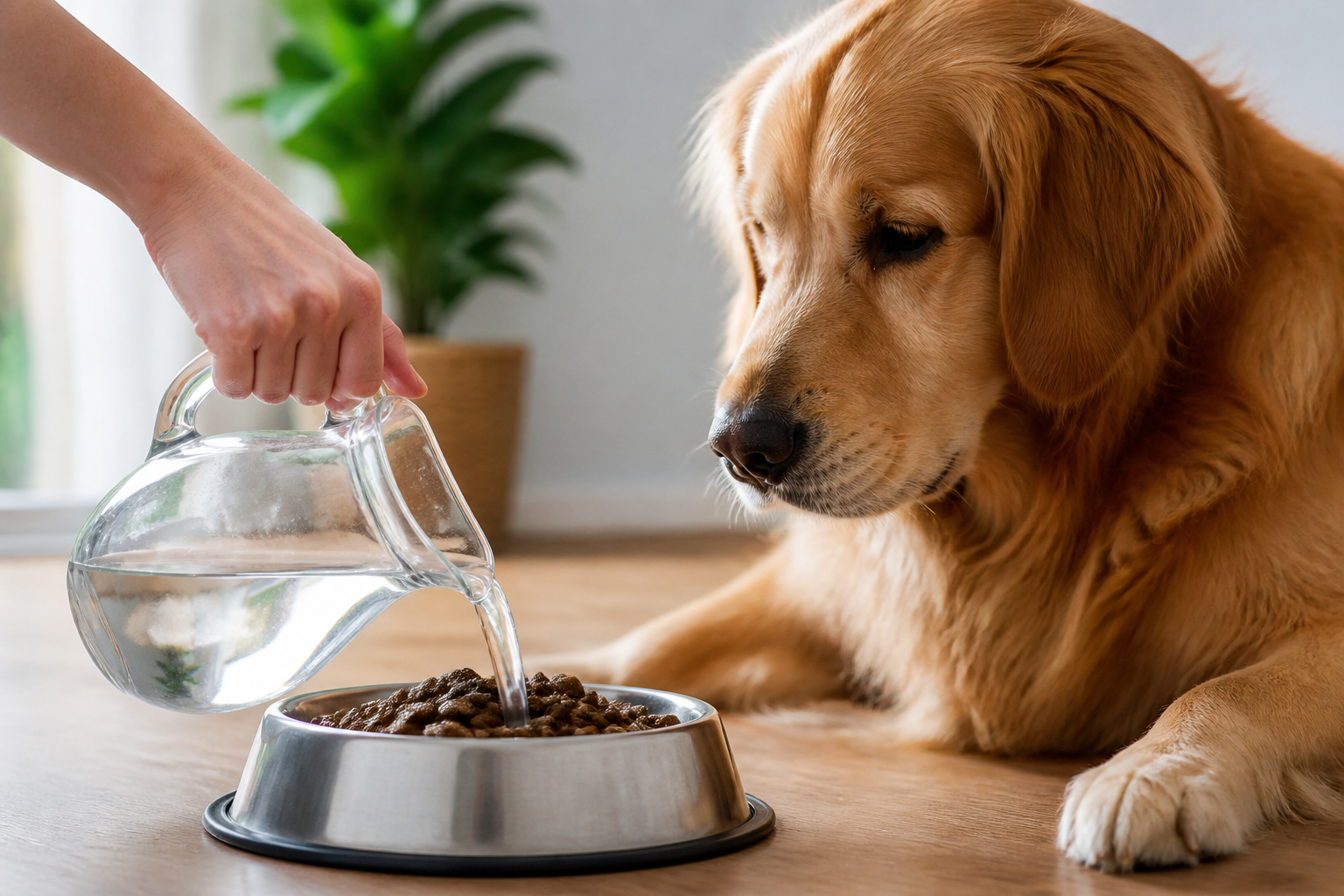
Hydration is the most obvious benefit. Many dogs are "lazy drinkers" who do not visit the water bowl often enough. This is especially true for certain breeds or older dogs. By adding water directly to the food, you ensure they take in moisture with every bite. This helps the kidneys flush out toxins and maintains healthy blood volume.
Better Digestion and Nutrient Absorption
Dry kibble is very dense. When a dog eats it dry, their body must pull moisture from the surrounding tissues and blood supply to break it down. This can slow down digestion. Adding water before serving helps the food begin to break down sooner. This often leads to better nutrient absorption in the small intestine. It also helps the food move more smoothly through the digestive tract.
Weight Management and Satiety
If you have a dog that always feels hungry, water is your best friend. Adding liquid increases the volume of the meal without adding any calories. The bowl looks fuller, and your dog's stomach feels fuller too. This sensation of fullness, known as satiety, can reduce begging and help with weight loss plans.
Quick Answer: Yes, you can add water to dry dog food. It helps with hydration, makes the food more aromatic for picky eaters, and can assist with digestion by softening hard kibble.
Supporting Senior Dogs and Puppies
The texture of dry food is not always ideal for every life stage. Puppies and seniors often have specific physical needs that make hard kibble a challenge.
Helping Puppies Transition to Solid Food
Puppies have small, sensitive teeth and developing jaws. When they are transitioning from milk to solid food, hard kibble can be intimidating. Adding warm water creates a "mush" that is much easier for them to manage. It bridges the gap between liquid and solid nutrition.
Comfort for Senior Dogs
Senior dogs often deal with dental disease, missing teeth, or sensitive gums. Crunching down on hard pellets can be painful for them. Softening the food with water allows them to eat without discomfort. Additionally, many senior dogs experience a decline in their sense of smell. Warm water releases the fats and aromas in the kibble, making the meal smell much more appealing to an aging nose. For more guidance, read about warning signs of dental problems in dogs.
Vet Tip: If your senior dog suddenly stops eating dry food, consult your veterinarian to check for dental pain or underlying health issues. While softening food helps, it is important to rule out infections or broken teeth that may require medical treatment.
When Moisture Becomes a Medical Necessity
In some cases, adding water to food is more than just a preference. It can be part of a health management plan. This is where our dog pharmacy becomes a valuable resource for pet owners.
Urinary Tract and Kidney Health
Dogs prone to urinary tract infections (UTIs) or bladder stones often need increased water intake. More water leads to more frequent urination, which helps flush bacteria and minerals out of the bladder. If your vet has prescribed a specific diet for these conditions, we carry many of those options. Through our partnership with Pet's Choice, the BaxterBoo pharmacy offers prescription pet foods and medications that support urinary health.
Preventing Bloat in Fast Eaters
Some dogs "inhale" their food. This rapid eating can lead to a dangerous condition called bloat or Gastric Dilatation-Volvulus (GDV). When a dog gulps dry kibble, they often gulp air too. Dry kibble also tends to expand in the stomach. Pre-soaking the food prevents it from expanding rapidly inside the dog and can slow down the eating process.
Potential Downsides to Consider
While there are many pros, adding water to kibble is not a perfect solution for every household. There are hygiene and health factors to keep in mind.
The Risk of Bacterial Growth
Moisture and warmth are the perfect ingredients for bacteria like Salmonella or Listeria. Dry kibble is designed to stay shelf-stable because it is dry. Once you add water, the clock starts ticking. If your dog is a "grazer" who leaves food in the bowl for hours, adding water is a bad idea. Any moistened food left out for more than 30 to 60 minutes should be thrown away. You can also review our dry dog food freshness guide for additional storage guidance.
Dental Health Considerations
There is a long-standing belief that dry kibble cleans a dog's teeth through abrasion. While this effect is often exaggerated, some dental-specific diets are designed to "scrub" the teeth. Adding water removes this mechanical cleaning action. However, most experts agree that kibble is no substitute for regular tooth brushing. If you choose to soften your dog's food, you must be even more diligent about their oral hygiene routine.
The "Mess Factor"
Wet kibble is simply messier. It can stick to long fur around a dog's mouth or get flicked onto the floor. It also requires you to wash the food bowl thoroughly after every single meal. Dried-on wet kibble can become very hard to remove and can harbor bacteria if the bowl is not cleaned properly.
Key Takeaway: Adding water to kibble is excellent for hydration but requires strict cleaning habits. Never leave moistened food out for more than an hour to prevent dangerous bacterial growth.
How to Properly Hydrate Dry Food
If you decide to try this, there is a right way and a wrong way to do it. Follow these steps to ensure the meal is safe and delicious.
Step 1: Use the Right Water Temperature
Use warm water, not boiling water. Boiling water can actually destroy some of the heat-sensitive vitamins and probiotics added to high-quality foods. Warm water is best because it helps release aromas and softens the kibble faster than cold water.
Step 2: Get the Ratio Right
A good starting point is one part water to two parts kibble. For example, if you feed one cup of food, add a half cup of water. You can adjust this based on your dog's preference. Some dogs like a "soup," while others prefer just a light coating.
Step 3: Allow for Soaking Time
Do not serve the bowl immediately if you want the kibble softened. Let it sit for about 5 to 10 minutes. This gives the water time to penetrate the center of the kibble. If you are just doing it for a flavor boost, you can serve it right away.
Step 4: Discard Leftovers
If your dog does not finish the meal within an hour, toss it. Do not put moistened kibble back in the fridge or save it for later. The risk of contamination is too high.
Bottom line: Use warm water in a 1:2 ratio and let it soak for 10 minutes for the best results.
Alternatives to Plain Water
Plain filtered water is the easiest and cheapest option. However, if you are looking to add even more nutrition, there are other liquids you can use.
Bone Broth for Dogs
Bone broth is packed with collagen and amino acids. It is excellent for joint health and skin support. Ensure you use a broth specifically made for dogs. Human versions often contain onions, garlic, or excessive salt, all of which are toxic or unhealthy for dogs. We carry various options in our dog food topper and broth collection that are perfect for this purpose.
Goat Milk
Goat milk is often called a "universal milk" because it is very easy for dogs to digest. It is loaded with probiotics that support gut health. This is a fantastic option for dogs with sensitive stomachs or those recovering from an illness.
Canned Food Mix-ins
If you want the benefits of moisture without the "mushy" texture of soaked kibble, try mixing in a bit of wet canned food. This adds variety and a massive boost in palatability. Many owners use our Autoship programme to ensure they always have a mix of dry and wet food on hand while saving money on every order.
High-Quality Foods That Work Well With Water
Not all kibbles are created equal when it comes to hydration. Some brands use higher quality proteins and fats that create a much better "gravy" when water is added.
- Farmina: Their formulas often use high-quality fats that smell wonderful when warm water is added. Explore our selection of Farmina products.
- Stella and Chewy's: Their freeze-dried raw coated kibbles are designed to be fed dry or rehydrated. Browse our selection of Stella & Chewy's products.
- The Honest Kitchen: While they make traditional kibble, they are famous for their dehydrated whole-food clusters that are meant to be mixed with water. See our selection of The Honest Kitchen products.
- NutriSource: A great value-conscious choice that holds its shape well even when moistened. Shop our selection of NutriSource products.
Our warehouse in Vernon Hills stays stocked with over 500 brands, so we can help you find a formula that reacts well to hydration. If you are shopping for a dog with a specific health condition, remember that we also carry premium lines like Farmina Vet Life for specialized nutritional needs.
When to Talk to Your Veterinarian
Changing how you feed your dog is usually safe, but there are times when professional advice is necessary. If you are adding water because your dog seems unwell, a vet visit is the first step.
- Sudden Pickiness: If a dog who usually loves dry food suddenly refuses it, they may have an underlying health issue.
- Excessive Thirst: If you are adding water because your dog is drinking constantly, this could be a sign of diabetes or kidney issues.
- Chronic Diarrhea: While water helps digestion, a sudden change in stool consistency after adding water might mean the ratio is off or your dog has a sensitive stomach.
If your vet determines your dog needs a prescription diet or medication for a digestive or urinary condition, our pharmacy can help. We provide FDA-approved medications and prescription foods through Pet's Choice. This ensures your pet gets the exact support they need with the convenience of home delivery.
Summary of Feeding Strategies
Deciding whether to add water depends on your dog's individual needs. For many, it is a simple way to improve their daily life.
- For the picky eater: Use warm water to release aromas.
- For the senior dog: Soak thoroughly to protect sensitive teeth.
- For the fast eater: Use water to slow down consumption and prevent bloat.
- For the active dog: Use water to boost hydration after exercise.
Adding moisture to your dog's diet is a small change that can have a big impact on their long-term health. Whether you use plain water, a nutritional bone broth, or a prescription wet food from our pharmacy, you are taking a proactive step in their care.
Key Takeaway: Hydrating dry food is a versatile tool for pet owners. It addresses everything from dehydration to senior dental pain, provided you maintain good bowl hygiene.
Conclusion
Adding water to dry dog food is a simple, effective way to support your dog’s health. It helps with hydration, makes meals more appealing, and can even aid in weight management. While you have to be careful about bacteria and cleaning the bowl, the benefits usually outweigh the extra effort. At BaxterBoo, we are committed to providing the best food, treats, and health supplies to keep your pets thriving. Whether you are visiting our warehouse in Vernon Hills or ordering online, we have the expertise to help you choose the right products. If your dog has specific health needs that require more than just a splash of water, remember our pharmacy partner, Pet's Choice, for all your prescription needs.
For more ways to upgrade your dog's mealtime, explore our dog food category.
FAQ
Will adding water to kibble cause it to spoil?
Yes, if it is left out too long. Moistened dry food becomes a breeding ground for bacteria within about an hour. You should always serve the food immediately and discard any leftovers that your dog does not eat within 60 minutes to ensure they stay safe.
Does soaking dry food help with a dog's digestion?
It can help by starting the breakdown process before the food even reaches the stomach. This allows the body to absorb nutrients more efficiently and helps the food move through the digestive system more easily. It is particularly helpful for dogs that tend to have harder stools or struggle with staying hydrated.
Is warm water better than cold water for dog food?
Warm water is generally better because it helps to release the fats and aromas in the kibble, making it smell better to your dog. It also softens the hard pellets much faster than cold water. Just make sure the water is warm to the touch and not hot, as boiling water can damage delicate vitamins.
Can I add water to my dog's food every day?
Yes, you can make this a permanent part of your feeding routine. Many owners find that their dogs are more excited about meals and better hydrated when they add water consistently. Just be sure to maintain a regular dental care routine, as you will be losing the minor abrasive benefits of dry kibble.






