
 Save 15% on your 1st Autoship learn more

 Email us
 Live Chat
 FAQs
FAQs





Introduction
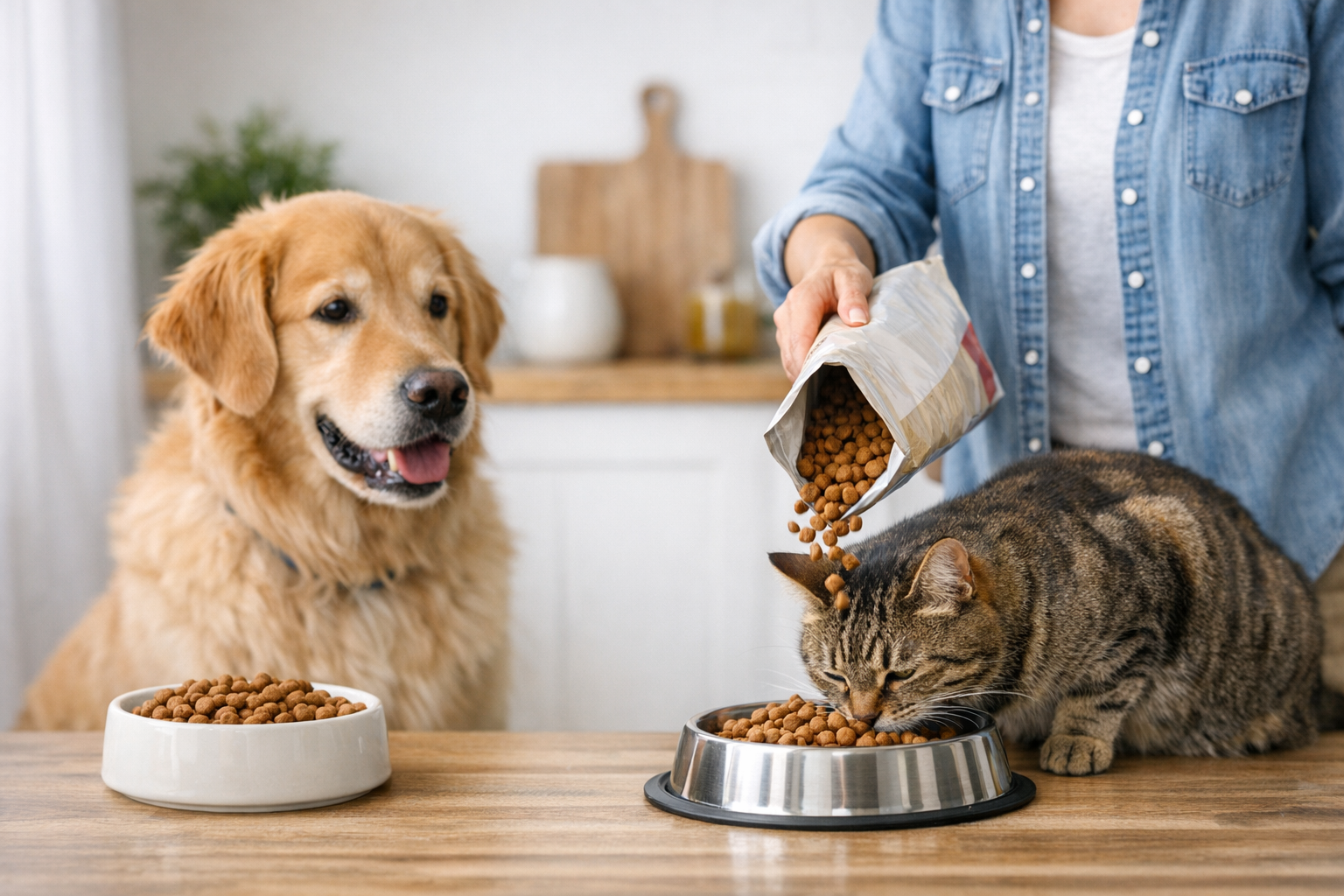
You are in the kitchen and hear a familiar crunching sound coming from the laundry room. You realize your dog has found the cat’s bowl again. It is a common scene in many multi-pet households across the country. You might wonder if it is okay to let your dog finish the bowl or if you should be worried about their health. While a few bites of kibble likely will not cause an immediate crisis, there are significant nutritional reasons why these two foods are not interchangeable. At BaxterBoo, we see this question often from owners trying to manage a busy household. This article explains the biological differences between canine and feline diets and the risks of long-term sharing. We also provide practical steps to keep your dog focused on their own dinner.
The Biological Divide Between Dogs and Cats
To understand why cat food is not ideal for dogs, you have to look at the biology of the animals themselves. Dogs are classified as omnivores. This means their bodies are designed to process nutrients from both animal and plant sources. They can thrive on a diet that includes a balance of grains, vegetables, and meats. If you are comparing formulas, our dog food category is a good place to see what balanced canine nutrition looks like.
Cats are obligate carnivores. This biological classification means they must eat animal tissue to survive. Their bodies cannot manufacture certain essential nutrients that dogs can. Because of this requirement, cat food is formulated with much higher concentrations of animal proteins and fats. It is also packed with specific amino acids that a dog’s body simply does not need in such high volumes. For a direct comparison, our cat food category shows how feline formulas are built differently.
Quick Answer: While dry cat food is not toxic to dogs, it is not a healthy long-term substitute. It contains too much protein and fat for a dog's digestive system and lacks the fiber they need.
Comparing Nutritional Profiles
When you look at the back of a bag of kibble, the differences become clear. The Association of American Feed Control Officials (AAFCO) sets different minimum standards for each species. Cat food is significantly richer and more calorie-dense than dog food.
| Nutrient | Adult Dog Minimum | Adult Cat Minimum |
|---|---|---|
| Crude Protein | 18 percent | 26 percent |
| Crude Fat | 5.5 percent | 9 percent |
| Taurine | Not Required | 0.1 to 0.2 percent |
| Vitamin A | 5,000 IU/kg | 3,332 IU/kg |
Cat food often exceeds these minimums by a large margin. Many premium cat foods contain 35 percent protein or more. For a dog, this is like eating a double cheeseburger every day instead of a balanced meal. The excess calories and minerals can put a strain on a dog’s organs over time.
The Role of Taurine and Vitamin A
Cats cannot produce their own taurine, an essential amino acid for heart and eye health. Therefore, all cat food must be supplemented with it. Dogs can usually synthesize their own taurine from other amino acids. While extra taurine is generally safe for dogs, the imbalance of other vitamins is a bigger concern. If you want to explore a more digestible feeding approach, our freeze-dried dog food guide covers another high-protein option made for dogs.
Dogs can convert beta-carotene into Vitamin A. Cats cannot. This means cat food contains pre-formed Vitamin A that is easily absorbed. If a dog eats cat food exclusively, they can eventually suffer from Vitamin A toxicity. This can lead to joint pain, brittle bones, and skin problems.
Why Dogs Find Cat Food So Appealing
If you have ever noticed your dog begging for cat kibble, there is a good reason for it. Since cat food is much higher in fat and animal protein, it smells and tastes much stronger than dog food. To a dog, cat food is essentially a bowl full of treats. If you are looking for safer reward options, our dog treats category has plenty of dog-specific choices.
This high palatability makes it a tempting snack, but it also makes it dangerous. Dogs that get used to the rich taste of cat food may start to refuse their own balanced kibble. This creates a picky eater and leads to a cycle of nutritional deficiencies. We often suggest keeping these foods strictly separate to prevent your dog from developing a preference for the "forbidden" bowl.
Key Takeaway: Dogs love cat food because it is higher in fat and protein, but this richness is exactly what makes it a health risk for them.
Short-Term Risks of Eating Cat Food
If your dog sneaks a few pieces of cat food, the most common result is a simple upset stomach. Because the food is so rich, it can be a shock to the dog’s digestive tract. You might notice your dog acting slightly lethargic or having a noisy stomach.
Common short-term symptoms include:
- Loose stools or diarrhea
- Occasional vomiting
- Increased flatulence
- Excessive thirst due to high sodium content
Most of these issues will resolve within 24 hours if the dog returns to their normal diet. However, for dogs with sensitive stomachs, even a small amount can cause significant discomfort.
Vet Tip: If your dog eats a large amount of cat food and begins vomiting repeatedly or seems to be in pain, consult your veterinarian immediately. These can be signs of more serious complications like acute pancreatitis.
The Danger of Pancreatitis
The most serious immediate risk of a dog eating cat food is pancreatitis. This is an inflammation of the pancreas that occurs when the organ is overwhelmed by high levels of fat. Since cat food is naturally very high in fat, it is a common trigger for this painful condition. For dogs with digestive or prescription needs, our dog pharmacy is a better place to start than raiding the cat bowl.
Symptoms of pancreatitis include a hunched back, severe abdominal pain, persistent vomiting, and fever. This condition can be life-threatening if not treated by a professional. Some dog breeds, like Miniature Schnauzers, are genetically more prone to pancreatitis and should never be allowed to touch cat food.
Our pharmacy at BaxterBoo offers various prescription diets for dogs recovering from digestive issues. Through our partnership with Pet's Choice, we provide FDA-approved medications and therapeutic foods that help manage chronic conditions like pancreatitis or sensitive stomachs.
Long-Term Health Consequences
Feeding cat food to a dog as a regular meal will lead to chronic health problems. Even if your dog does not get sick immediately, the internal toll adds up.
Obesity and Weight Gain
Because cat food is so calorie-dense, it is very easy for a dog to overeat. A dog eating the same volume of cat food as they would dog food is consuming nearly double the calories in some cases. Obesity in dogs leads to a shorter lifespan, increased risk of diabetes, and massive strain on the joints.
Kidney and Liver Strain
The high protein levels in cat food are not easily processed by a dog’s kidneys over a long period. The kidneys must work harder to filter out the waste products of protein metabolism. For senior dogs or those with underlying kidney issues, this can accelerate the progression of organ failure.
Digestive Imbalance
Dog food is formulated with fiber sources like beet pulp or brown rice to keep the digestive tract moving. Cat food is very low in fiber. A dog eating cat food regularly will likely suffer from chronic constipation or irregular bowel movements.
When Can Dogs Eat Cat Food?
There are very few instances where a dog might actually benefit from cat food, and these should only happen under veterinary supervision.
Step 1: Consult your veterinarian. Never switch a dog to cat food without a professional recommendation.
Step 2: Use it for weight gain if directed. Sometimes, a dog that is severely underweight due to illness or surgery may be prescribed a high-calorie supplement. In rare emergencies, a vet might suggest a small amount of wet cat food to entice a dog to eat.
Step 3: In a pinch. If you run out of dog food late at night and the stores are closed, a single serving of cat food is better than an empty stomach. However, this should not happen more than once.
Bottom line: Cat food is for emergencies only and should never be a staple of a dog's diet.
How to Prevent Your Dog from Stealing Cat Food
In a multi-pet home, management is the key to success. You cannot blame a dog for wanting a tasty snack. It is up to us to create a feeding environment that prevents theft. If your routine keeps getting interrupted, our Autoship programme can help make sure your dog’s own food arrives on schedule.
- Elevate the Cat's Bowl: Cats are natural climbers. Place their food on a sturdy counter, a cat tree, or a dedicated feeding shelf. If the dog cannot reach it, they cannot eat it.
- Use a Pet Gate: Install a gate with a small "cat door" built-in. This allows the cat to enter a laundry room or spare bathroom to eat while keeping the dog out.
- Microchip Feeders: These smart bowls only open when they sense the specific microchip of the assigned pet. They are an excellent investment for stopping food theft.
- Scheduled Feedings: Instead of "free feeding" or leaving bowls out all day, give your pets 20 minutes to eat and then pick the bowls up.
- The "Leave It" Command: Spend time training your dog to ignore the cat's bowl. This reinforces your role as the leader and helps with overall impulse control.
BaxterBoo carries a variety of gates and training tools to help you manage your multi-pet household. Using these tools makes mealtime much less stressful for everyone involved. If you want a similar routine-focused training read, helping your dog transition during a move is a helpful companion post.
Better Treats for Dogs
If you find yourself reaching for cat kibble as a training treat because it is small and tasty, consider better alternatives. There are many dog-specific treats that are just as enticing but formulated for a dog’s needs. Premium brands can also help when you need a more appealing bowl, including our selection of Stella & Chewy's products and our selection of Open Farm products.
- Freeze-Dried Liver: This provides the high-protein scent dogs love without the nutritional imbalance of cat food.
- Small Training Treats: Look for treats labeled as "low calorie" or "training sized."
- Lean Meats: A small piece of plain, boiled chicken is a much safer high-value treat than cat kibble.
Key Takeaway: Proper dog treats provide the motivation your dog wants without the risk of pancreatitis or obesity.
What to Do If Your Dog Ate a Large Amount
If you come home to find an empty bag of cat food and a very full dog, do not panic, but do take action. First, remove any remaining food so they cannot eat more. Check the ingredient list for any unusual additives like xylitol, though this is rare in cat food.
Monitor your dog for the next 24 hours. If they seem bloated or uncomfortable, you may want to skip their next scheduled meal to give their stomach time to settle. Ensure they have plenty of fresh water available, as the high salt content in cat food will make them thirsty. If you are looking for a broader savings approach while stocking up on dog essentials, our discounted dog food guide is a useful next read.
Vet Tip: For dogs with a history of kidney disease or liver issues, even a one-time binge of cat food warrants a call to the vet. The sudden protein spike can be very hard on their compromised systems.
Transitioning Back to Dog Food
If your dog has been sneakily eating cat food for a while, they might be stubborn about going back to their own bowl. You may need to transition them back slowly. Mix a very small amount of a high-quality, flavorful dog food with their kibble to make it more appealing. Our MVP Rewards programme can help make those premium swaps more affordable.
Consider a brand that focuses on high-quality ingredients like Stella and Chewy's or Open Farm. These brands often use whole meats and organ meats that provide the aroma dogs crave from cat food but in a balanced canine formula. We offer a wide selection of these premium brands at BaxterBoo to help even the pickiest dogs stay healthy. For shoppers who prefer repeat purchases, the Frequent Buyer Program is another smart way to save on qualifying favorites.
Our MVP Rewards program is a great way to save on these premium foods. You can earn points on every bag of dog food you buy, which helps make high-quality nutrition more affordable.
Summary of Feeding Habits
Managing a home with both dogs and cats requires a bit of strategy. While the occasional stolen kibble is not a reason for major alarm, it should not be encouraged. By understanding the nutritional needs of both species, you can ensure that your pets live long, healthy lives.
Keep these points in mind for a safe kitchen:
- Dogs need fiber and moderate protein; cats need high protein and fat.
- Pancreatitis is a real risk for dogs eating fatty cat food.
- Elevated feeding is the simplest way to stop food theft.
- Always have a bag of dog-specific treats ready for training.
At BaxterBoo, we have been helping pet owners find the right solutions since 2006. Whether you need a pet gate to separate your furry friends or a prescription diet from our pharmacy, we are here to support your journey as a pet parent. Our goal is to provide the expert guidance you need to keep your home happy and your pets healthy. If you want another practical nutrition read, how to make freeze-dried dog food is a useful follow-up.
Bottom line: Keep the cat food for the cats and the dog food for the dogs to avoid long-term health complications and expensive vet visits.
FAQ
Can my dog eat wet cat food instead of dry?
Wet cat food is often even higher in fat and protein than dry varieties, making it more likely to cause an upset stomach or diarrhea. It is also very calorie-dense and can lead to rapid weight gain if fed regularly. While a small lick of wet food is usually fine, it should never replace a dog's regular meal. If you need to entice a sick dog to eat, your vet can recommend specific high-calorie dog foods instead.
Will one bowl of cat food hurt my dog?
For a healthy dog with no history of digestive issues, a single bowl of cat food is unlikely to cause lasting damage. They may experience some gas, bloating, or loose stools as their body processes the rich ingredients. However, if your dog is a small breed or has a history of pancreatitis, even one bowl can be dangerous. Always monitor your pet closely after they eat something they should not have.
Why is my dog obsessed with the cat's food?
Dogs are attracted to the high fat content and strong meaty smell of cat food. Because cats are obligate carnivores, their food is packed with animal tissues that smell much more intense to a dog's nose than standard dog kibble. To your dog, the cat's bowl smells like a gourmet steak dinner compared to their own balanced meal. This is why training and physical barriers are so important in multi-pet homes.
Can I mix a little cat food into my dog's kibble to make them eat?
It is better to use dog-safe toppers like plain pumpkin, unsalted bone broth, or a small amount of boiled chicken. Mixing in cat food can lead to your dog becoming a "finicky" eater who refuses to eat anything else. It also adds unnecessary fat and calories that can lead to weight gain. If your dog is consistently refusing their food, it is best to consult a vet to rule out dental issues or other health concerns.






