
 Save 15% on your 1st Autoship learn more

 Email us
 Live Chat
 FAQs
FAQs





Introduction
You might be standing in your kitchen with a bag of high-quality kibble in one hand and a container of fresh raw food in the other. Perhaps you want to give your dog the nutritional boost of raw ingredients but need to stay within a specific monthly budget. Many pet owners wonder if mixing these two very different styles of feeding will cause digestive upset or health issues. At BaxterBoo, we believe that adding even a small amount of fresh food to a dog's diet can make a meaningful difference in their overall wellness.
This article covers the safety of mixing food types, how to transition your dog without causing a bellyache, and the best ways to balance nutrients. We will look at the science of digestion and provide practical steps for your daily routine. Our goal is to help you feel confident as you upgrade your dog's bowl.
The Benefits of a Mixed Diet
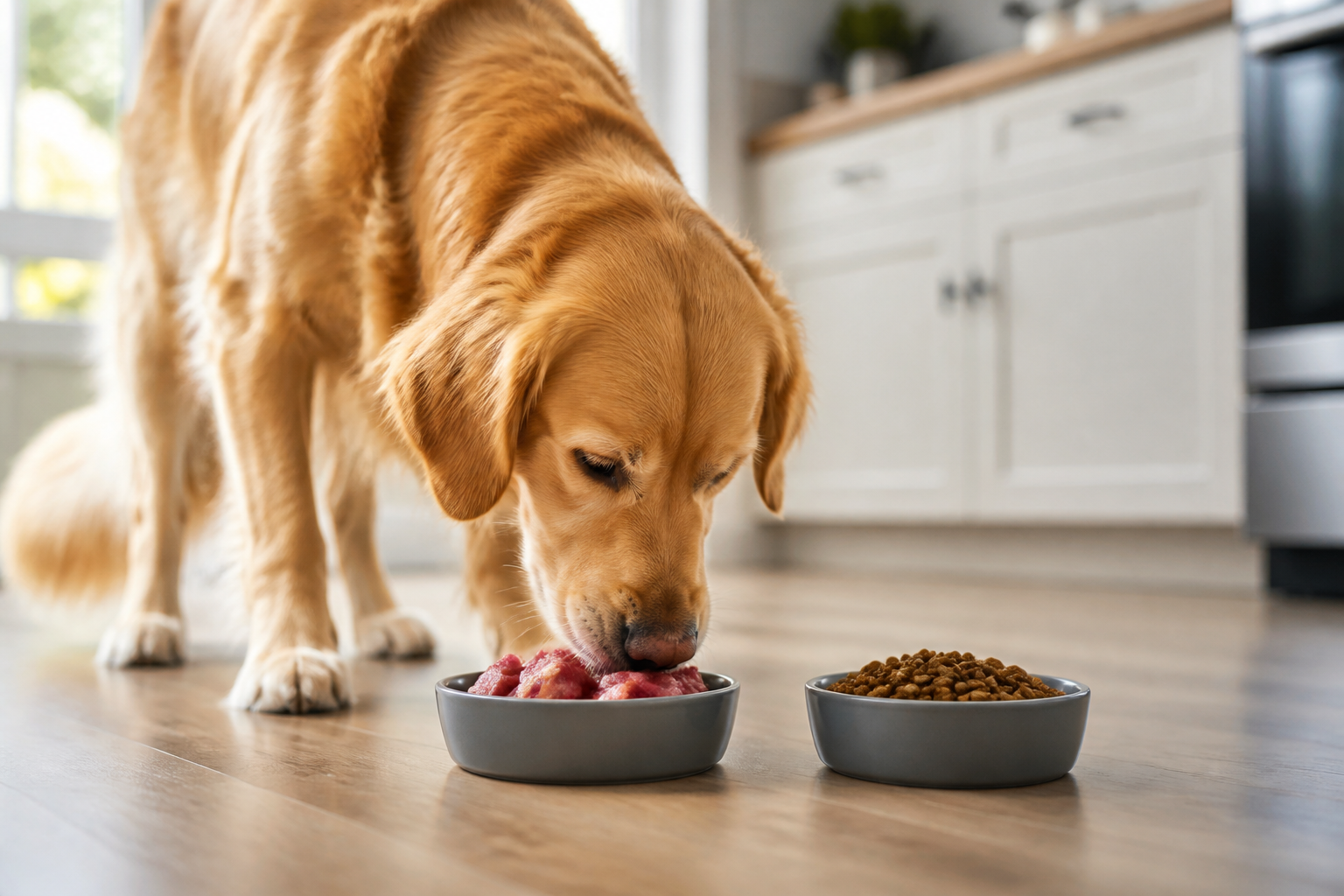
Feeding a combination of raw and dry food is a popular choice for many families. It offers a middle ground between the convenience of kibble and the nutrient density of raw meat. For many, the primary reason is cost. A fully raw diet for a large breed dog can be expensive. By mixing in a premium kibble, you can extend your budget while still providing the enzymes and vitamins found in fresh food.
Another benefit is variety. Dogs can get bored eating the same brown pellets every single day. Adding a raw topper or a small portion of raw meat provides different textures and flavors. This variety can be especially helpful for picky eaters who have lost interest in their standard meals.
Beyond flavor, the nutritional boost is significant. Raw food contains natural enzymes and moisture that are often lost during the high-heat processing of kibble. These elements support healthy skin, a shiny coat, and better energy levels. Even replacing 10 percent of your dog's kibble with fresh food can lead to noticeable improvements in their vitality.
Key Takeaway: Mixing raw and dry food is an effective way to improve your dog's nutrition without the high cost of a 100 percent raw diet.
Addressing the Digestion Myth
A common concern in the pet community is that raw and dry food digest at different rates. Some people worry that the kibble will slow down the raw food. They fear this "traffic jam" in the gut could lead to bacterial overgrowth or gas. While it is true that different ingredients process at different speeds, a healthy dog's digestive system is built to handle complex meals.
Think about what a wild canine might eat. They do not just consume one single protein source. They might eat meat, bone, fur, and fermented stomach contents all at once. Their bodies are designed to sort through different food structures simultaneously. Most healthy dogs can process a meal containing both kibble and raw meat without any issues.
However, the pH level of the stomach does matter. A dog's stomach is naturally very acidic, which helps them break down raw bone and kill off harmful bacteria. Some argue that the high starch content in kibble can raise the stomach's pH, making it less acidic. If you are concerned about this, you can focus on grain-free or low-starch kibbles to keep the digestive environment optimal.
How to Start Mixing Safely
If you decide to try a mixed diet, the most important rule is to go slowly. A sudden change in diet is the most common cause of diarrhea and vomiting. Your dog's gut bacteria need time to adjust to the new enzymes and protein levels. For additional guidance, see this dog food transition advice.
Step 1: Choose your ratios. / Decide how much raw food you want to add. A common starting point is 25 percent raw and 75 percent kibble.
Step 2: Introduce the raw food gradually. / Start by adding just a spoonful of raw food to their regular kibble. Do this for two or three days.
Step 3: Monitor their stool. / Keep an eye on your dog's bathroom habits. If the stool remains firm, you can slightly increase the raw portion and decrease the kibble.
Step 4: Reach your target ratio. / Over the course of 7 to 10 days, continue adjusting the portions until you reach your desired mix.
Vet Tip: If your dog has a history of pancreatitis, kidney disease, or a sensitive stomach, consult your veterinarian before adding raw food. Our pharmacy at BaxterBoo carries prescription diets through our partnership with Pet's Choice for dogs with specific medical needs.
Hygiene and Food Safety
Handling raw meat requires a higher level of caution than handling dry kibble. When you mix the two, you must maintain strict hygiene to protect both your pet and your family. Bacteria like Salmonella or Listeria can be present in raw meat, even in high-quality commercial raw brands.
Always wash your hands thoroughly after handling raw food or the food bowl. Stainless steel or ceramic bowls are better than plastic because they are easier to sanitize and do not develop tiny scratches where bacteria can hide. You should wash your dog's bowl with hot, soapy water after every single meal.
If you have young children, elderly family members, or someone with a compromised immune system in your home, be extra careful. Dogs eating raw food can shed bacteria in their saliva and feces. Avoid letting your dog lick faces immediately after a raw meal, and always clean up backyard waste promptly.
- Use a dedicated scoop for kibble and a separate utensil for raw food.
- Store raw food in a leak-proof container in the refrigerator.
- Never leave raw food out in the bowl for more than 20 minutes.
- Sanitize countertops and prep areas after every meal.
Separate Meals vs. Mixed Bowls
There are two main ways to feed a mixed diet. You can either put both types of food in the same bowl at the same time or feed them as separate meals. Both methods have pros and cons.
Mixing both in one bowl is the most convenient method. It allows the dog to eat everything at once and can help a picky dog accept the kibble because it is coated in the tasty raw juices. Most dogs do perfectly fine with this method.
Feeding separate meals involves giving kibble in the morning and raw in the evening. This approach is often recommended for dogs with sensitive stomachs. It gives the digestive system time to focus on one food structure at a time. For example, you might find that your dog is more active in the morning and does better with a lighter kibble meal, while the nutrient-heavy raw meal is better for their evening "rest and digest" period.
Quick Answer: You can safely mix raw and dry food in the same bowl. If your dog has a very sensitive stomach, feeding them as separate meals (kibble in the morning, raw at night) may be easier on their digestion.
Selecting the Right Brands
Not all kibbles and raw foods are created equal. When you are mixing, the quality of the ingredients matters more than ever. You want to look for a kibble that is high in animal protein and low in fillers like corn, wheat, or soy. We carry several trusted brands that pair well with a raw diet, including our selection of Open Farm products and our selection of Stella & Chewy's products.
Brands like NutriSource and Open Farm offer high-quality dry options that focus on gut health. For the raw portion, you might consider freeze-dried options if you are not ready for frozen raw meat. Stella & Chewy's and Vital Essentials offer freeze-dried patties and morsels that provide the benefits of raw food with the convenience of a shelf-stable product. You can also explore our freeze-dried dog food selection.
Freeze-dried raw is an excellent "bridge" for owners who are nervous about handling raw meat. You simply add a little water to rehydrate the food before mixing it with kibble. This also adds much-needed moisture to your dog's diet, which is beneficial for kidney and bladder health.
Using Supplements to Bridge the Gap
When you mix diets, you are creating a custom nutritional profile for your dog. Sometimes, adding specific supplements can help the body process this variety more effectively. Probiotics and digestive enzymes are the most helpful additions for a dog on a mixed diet.
Probiotics help maintain a healthy balance of good bacteria in the gut. This is crucial when introducing raw meat, as the good bacteria help crowd out any potential pathogens. Digestive enzymes help the body break down the starches in kibble and the proteins in meat more efficiently.
You might also consider adding a splash of organic apple cider vinegar to the water or food. The acidity can help maintain the low pH in the stomach that is necessary for processing raw proteins. However, always start with a very small amount to ensure your dog likes the taste.
- Probiotics: Support immune health and stabilize the gut.
- Digestive Enzymes: Assist in breaking down complex carbohydrates.
- Omega-3 Fatty Acids: Often found in fish oils to support skin health.
- Bone Broth: Adds hydration and joint-supporting collagen.
Bottom line: Adding probiotics and enzymes to a mixed diet can help prevent digestive upset and ensure your dog gets the most nutrition out of every bowl.
Managing Weight on a Mixed Diet
One challenge of a mixed diet is calculating the correct number of calories. Raw food is often more calorie-dense than kibble. If you simply add raw food on top of a full serving of kibble, your dog will likely gain weight. Obesity in dogs can lead to joint pain, diabetes, and a shorter lifespan.
To prevent weight gain, you must reduce the amount of kibble when you add raw food. This is not always a one-to-one swap by volume. For example, a quarter cup of raw food might have significantly more calories than a quarter cup of kibble. Look at the calorie counts on both packages to find the right balance.
If your dog needs to lose weight while on a mixed diet, focus on leaner raw proteins like turkey or rabbit. Avoid high-fat options like duck or certain beef blends. Our inventory includes specialized foods like Farmina Vet Life for weight management, which can be part of a plan developed with your veterinarian. You can browse our selection of Farmina products.
Transitioning Puppies and Seniors
Puppies and senior dogs have unique nutritional requirements. Puppies need a very specific balance of calcium and phosphorus to ensure their bones grow at the correct rate. If you mix raw and dry food for a puppy, you must ensure the total diet remains "complete and balanced" for growth.
For senior dogs, digestion often slows down. They may produce fewer digestive enzymes naturally as they age. A mixed diet can be great for seniors because the raw portion provides easy-to-absorb nutrients and high moisture levels. However, you should be very careful with raw bone content for seniors, as their teeth may be more brittle, and their digestion may not be as robust as it once was.
Vet Tip: Always consult your vet before changing a puppy's diet, especially for large and giant breeds. They can help you calculate the exact mineral ratios needed for safe bone development.
The Role of Our Pharmacy
At BaxterBoo, we know that some dogs have health conditions that make diet changes more complicated. Some pets require prescription diets for allergies, urinary stones, or gastrointestinal disease. Our pet pharmacy provides access to FDA-approved medications and prescription foods through our partnership with Pet's Choice.
If your veterinarian recommends a specific prescription kibble, you may still be able to use raw toppers or supplements, but you must check with them first. Some raw ingredients can interfere with the purpose of a prescription diet. For example, adding raw meat to a low-protein kidney diet could be dangerous. Our pharmacy team is here to help fulfill those essential orders once you have your vet's guidance.
Common Mistakes to Avoid
Many owners are enthusiastic about starting a mixed diet but fall into a few common traps. Avoiding these mistakes will make the process much smoother for you and your dog.
First, do not guess the portions. Use a kitchen scale or a standard measuring cup. "Eyeballing" the food often leads to overfeeding. Second, do not ignore the transition period. Even if your dog has an "iron stomach," a sudden switch can cause issues that take days to clear up.
Third, avoid cheap, grocery-store kibbles when mixing with raw. If you are investing in raw food for your dog's health, do not undercut those benefits by using a kibble filled with artificial dyes and chemical preservatives. Aim for the highest quality dry food your budget allows. Finally, do not forget to account for treats. If you are adding calorie-dense raw food to the bowl, you may need to cut back on the biscuits during training sessions.
Signs Your Dog is Thriving
Once you have successfully transitioned to a mixed diet, you should look for signs that the new plan is working. Most owners report seeing changes within three to four weeks.
One of the first things you will notice is the stool. Dogs on a mixed diet often have smaller, firmer, and less smelly stools than those on a 100 percent kibble diet. This is because their bodies are absorbing more of the nutrients and producing less waste.
You should also see a change in their coat. It should become shinier and softer. Their breath might improve, and their energy levels should be more consistent throughout the day. If your dog seems itchy or has red skin, the mixed diet might be helping to reduce inflammation, though you should always rule out environmental allergies with your vet. For more discussion of sensitive digestion, read about easy diets for dogs with sensitive stomachs.
Key Takeaway: Success is measured by firm stools, a shiny coat, and consistent energy levels.
Keeping it Practical
We understand that life is busy. Some days, you might not have time to thaw a frozen raw patty or prep a complicated bowl. The beauty of the mixed diet is its flexibility. If you are running late, it is perfectly okay to feed a meal of 100 percent kibble.
The goal is consistency over the long term, not perfection in every single meal. If you travel with your dog, you might find that feeding 100 percent kibble is easier while on the road. You can always return to the mixed diet when you get back home. Your dog's digestive system will remain adaptable as long as you use high-quality ingredients.
Using our Autoship programme can help keep your supplies consistent. You can set up recurring deliveries for your favorite kibble and freeze-dried raw toppers. This ensures you never run out of the essentials, and you get the added benefit of a free MVP Gold membership.
Summary of the Mixed Diet Approach
Mixing raw and dry dog food is a practical way to provide superior nutrition. It bridges the gap between cost and quality. By following a slow transition and maintaining high hygiene standards, you can safely offer your dog the best of both worlds.
Remember to prioritize high-quality brands and monitor your dog's weight. Use supplements like probiotics to support the change and keep an eye on your dog's overall condition. Most importantly, work with your veterinarian to ensure the diet meets your pet's specific health needs.
- Start slow with a 7 to 10 day transition.
- Maintain strict cleanliness with bowls and surfaces.
- Adjust calorie intake to prevent weight gain.
- Use probiotics to support gut health.
- Consult your vet for dogs with chronic health issues.
Bottom line: Feeding a mix of raw and dry food is a safe and beneficial choice for most healthy dogs when done with care and quality ingredients.
Conclusion
Deciding what to put in your dog's bowl is one of the most important choices you make as a pet owner. Whether you are looking to save money or simply want to add some fresh nutrients to a standard diet, mixing raw and dry food is a fantastic option. We have seen many dogs thrive on this balanced approach, enjoying the taste of raw food and the crunch of kibble.
At BaxterBoo, we are committed to providing the products and the knowledge you need to care for your pets. From our wide selection of premium foods to our pharmacy services, we are here to support your journey toward better pet health. Start exploring our raw dog food collection and high-protein kibbles today to find the perfect match for your dog.
Quick Answer: Yes, you can feed raw and dry dog food together. The best approach is to transition slowly over 10 days and use high-quality brands to ensure a balanced, safe, and nutritious diet.
FAQ
Can mixing raw and kibble cause my dog to get sick?
If you transition too quickly, any change in diet can cause temporary digestive upset like diarrhea or gas. However, the mix itself is not inherently dangerous for healthy dogs. To minimize risks, use high-quality commercial raw food and maintain strict hygiene when handling the meat and cleaning the bowls.
Do I need to feed raw and dry food at different times of the day?
While you can mix them in the same bowl, some owners prefer feeding kibble in the morning and raw in the evening. This can be helpful if your dog has a sensitive stomach, as it allows the digestive system to focus on one food type at a time. Both methods are generally considered safe for healthy adult dogs.
How do I know if the ratio of raw to kibble is correct?
There is no single "perfect" ratio, as every dog has different caloric and nutritional needs. Many owners find success with a 25/75 or 50/50 split. The key is to monitor your dog's weight, coat quality, and energy levels, and adjust the portions based on their specific response and your budget.
Is it safe to mix raw food with prescription kibble?
You should always consult your veterinarian before adding anything to a prescription diet. These diets are carefully formulated to manage specific medical conditions, and adding raw meat could alter the nutrient balance. If your vet gives the green light, our pharmacy can help you manage your prescription needs alongside your other pet supplies.






