
 Save 15% on your 1st Autoship learn more

 Email us
 Live Chat
 FAQs
FAQs





Introduction
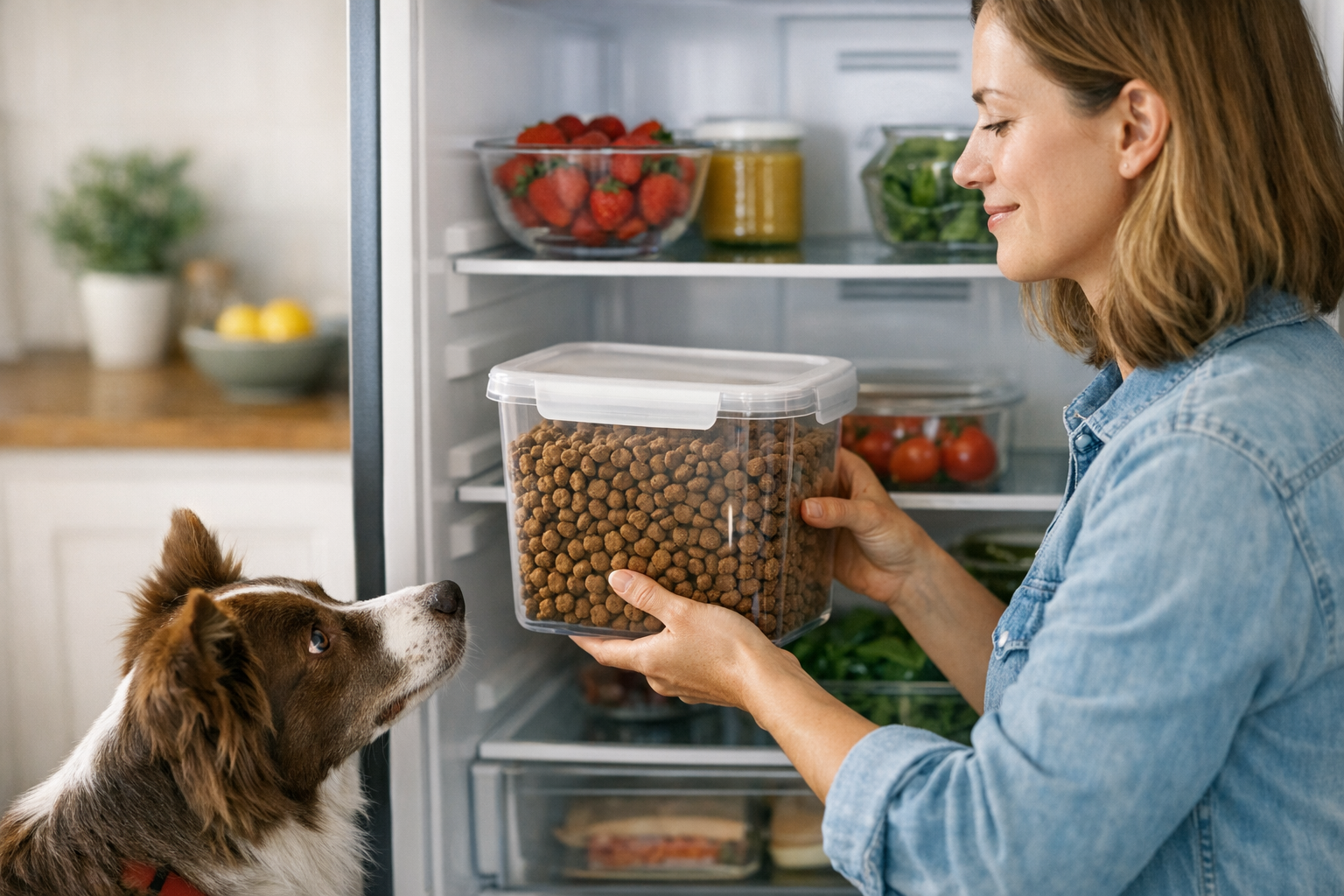
You just hauled a forty pound bag of premium kibble into your kitchen. It is a hot, humid summer day, and you worry that the heat in your pantry might turn those expensive fats rancid. You might look at your refrigerator and wonder if sticking the kibble next to the milk is a smart move for freshness. It is a common question we hear at BaxterBoo from proactive owners who want to protect their investment and their dog’s health.
This article covers the pros and cons of refrigerating dry dog food and the risks of moisture. We also explain the best ways to keep kibble fresh using its original packaging. While the short answer involves a few caveats, the goal is to ensure your dog’s meals stay safe and nutritious from the first scoop to the last.
Quick Answer: You can keep dry dog food in the refrigerator, but it is generally not recommended. Cold temperatures can cause condensation to form inside the bag, which leads to mold growth and spoilage. It is much better to store kibble in its original bag inside an airtight container in a cool, dry place.
The Problem with Refrigerating Dry Dog Food
The primary reason people consider the fridge is to stop fats from spoiling. High quality dog foods often contain omega fatty acids and animal fats that are sensitive to heat. However, the refrigerator introduces a new set of problems. The biggest issue is humidity.
Every time you take the bag out of the fridge to scoop a meal, warm air hits the cold kibble. This creates condensation. Tiny droplets of water form on the surface of the food and inside the bag. This moisture is the perfect breeding ground for mold and bacteria.
Dry dog food is designed to have a very low moisture content. This low moisture level is what keeps it shelf stable at room temperature. When you add water through condensation, you bypass the natural preservation of the product. This can lead to invisible mold spores that make your dog sick before you even notice a change in the food. For a place to compare options, start with our dry dog food category.
Understanding Oxidation and Heat
Oxidation is the chemical process that happens when fats are exposed to oxygen. This process causes the fats to turn rancid. Heat speeds up this reaction. This is why many owners think the cold temperature of a refrigerator is a good solution.
While cold does slow down oxidation, the moisture risk usually outweighs the benefit. Most dry dog foods are formulated with natural preservatives like tocopherols. These are forms of Vitamin E that protect the fats for several months in a stable environment. As long as your home stays below 80 degrees Fahrenheit, these preservatives do their job well without the need for refrigeration.
If your home regularly gets hotter than 80 degrees and you do not have air conditioning, refrigeration might seem like the only option. In this specific case, you must be extremely careful. You would need to divide the food into very small, airtight portions. This prevents you from opening the main supply and exposing it to temperature swings every day. For more on portion planning, see our blog post on how much dry food to feed a dog.
The Role of the Original Packaging
We often see owners dump a fresh bag of food directly into a plastic bin. We suggest keeping the food inside its original bag. Pet food manufacturers spend a lot of money developing their packaging. These bags are not just paper or plastic.
Most high quality bags have a specialized liner. This liner is designed to keep moisture out and seal the fats and oils inside. It acts as a barrier against oxygen. When you pour the food into a plastic bin, the oils from the kibble can soak into the plastic walls.
Over time, these oils turn rancid. Even if you wash the bin, the porous plastic can hold onto those old fats. When you pour a new bag of food in, the old oils can contaminate the fresh kibble. Keeping the food in the bag and then placing the entire bag inside a container is the best way to ensure safety. For a deeper look at spoilage warning signs, see our blog post on how dry dog food goes bad.
Key Takeaway: The original bag is designed to protect kibble from oxygen and moisture. Always keep the food in the bag, even if you use a secondary storage container.
Best Practices for Dry Food Storage
If the refrigerator is not the best spot, where should the food go? The ideal environment is a cool, dark, and dry location. A kitchen pantry or a dedicated closet inside the house is usually perfect.
Avoid storing dog food in the garage or a garden shed. These areas experience massive temperature swings. High heat in the summer can destroy the vitamins and minerals in the food. In the winter, the cold is not the issue, but the dampness of a garage can lead to soggy kibble and pest problems.
Step 1: Keep the kibble in its original bag. Step 2: Roll the top of the bag down tightly after every feeding to squeeze out excess air. Step 3: Secure the bag with a heavy duty clip. Step 4: Place the clipped bag inside an airtight plastic or metal container. Step 5: Store the container off the floor in a climate controlled room.
How Long Does Opened Dry Food Last?
Many owners assume that the "best by" date on the bag applies even after the bag is open. This is a mistake. The "best by" date is only for unopened, sealed bags. Once you break the seal and expose the kibble to air, the clock starts ticking much faster.
Most experts recommend using a bag of dry dog food within six to eight weeks of opening. After this point, the nutritional value begins to decline significantly. The fats may start to smell "off," and the vitamins lose their potency.
If you have a small dog and buy a massive bag to save money, you might be feeding stale food by the time you reach the bottom. It is often better to buy smaller bags that you can finish within two months. At BaxterBoo, we offer various bag sizes so you can match the volume to your dog's actual eating habits. You can also browse our dog food collection when you are comparing bag sizes.
The Risks of Spoiled Dog Food
Feeding spoiled or rancid food is not just about a bad taste. It can lead to serious health issues. Rancid fats can cause digestive upset, including vomiting and diarrhea. In the long term, consuming oxidized fats can contribute to more serious cellular damage.
Mold is an even bigger concern. Some molds produce mycotoxins, which are highly toxic to dogs. These can cause liver failure or neurological issues. If you ever see a fuzzy growth on the kibble or notice a musty smell, throw the entire bag away immediately. Do not try to scoop out the "clean" parts, as mold spores are often invisible and spread throughout the container.
Vet Tip: If your dog suddenly refuses to eat their usual food, do not force it. They can often smell spoilage or mold that humans cannot detect. Check the bag for an off odor or signs of moisture and consult your veterinarian if your dog shows signs of lethargy or stomach distress.
When to Consider the Pharmacy
If your dog is on a prescription diet for a medical condition, storage is even more critical. Many therapeutic foods, like those for kidney disease or skin allergies, have unique nutrient profiles. These formulations are sometimes more sensitive to environmental factors than standard kibble.
Our pharmacy at BaxterBoo provides prescription diets through our pet pharmacy. Whether your vet has prescribed a limited ingredient diet or a weight management formula, these foods represent a significant part of your dog's medical plan. Proper storage ensures the medication or specific nutrient balance in the food remains effective.
Always check with your vet about the specific storage needs for prescription kibble. Some specialized formulas might have shorter shelf lives once opened. If you notice any changes in the texture or smell of a prescription diet, contact us or your vet to ensure it is still safe to feed.
Cleaning Your Storage Containers
If you do choose to use a storage bin, you must clean it regularly. Many owners simply pour a new bag on top of the crumbs of the old bag. This is a recipe for spoilage. The crumbs and oils at the bottom of the bin are the oldest. They are the most likely to be rancid.
Every time you finish a bag of food, wash the container with hot, soapy water. Let it dry completely before putting a new bag inside. Any lingering moisture will be trapped when you close the lid, which can lead to mold growth on the new food.
- Wash the bin every time it is empty.
- Use a mild dish soap and avoid harsh chemicals.
- Check the seal on the lid for cracks or wear.
- Ensure the bin is bone dry before refilling.
Dealing with Pests and Contaminants
Proper storage is also about keeping uninvited guests out of your dog's dinner. Flour mites, grain beetles, and even rodents are attracted to the smell of kibble. A simple bag clip might not be enough to stop a determined mouse or a persistent ant colony.
An airtight container is your best defense. Look for bins with a rubber or silicone gasket in the lid. This creates a true seal that keeps smells in and bugs out. If you store food in a laundry room, keep it off the floor on a shelf. This prevents moisture from the floor from seeping into the bag and makes it harder for crawling insects to find the food.
Can You Freeze Dry Dog Food?
Freezing is a much better alternative to refrigeration if you must store food long term. Unlike the fridge, a freezer stops the clock on oxidation and prevents mold growth. If you find a great deal on a large bag but know you cannot finish it in two months, the freezer can help.
To freeze kibble correctly, you should portion it out into airtight freezer bags. Squeeze out as much air as possible. When you are ready to use a portion, move it to the counter and let it reach room temperature before opening the bag. This prevents condensation from forming on the food as it thaws.
Keep in mind that freezing can change the texture of some kibble. It may become more brittle. Most dogs will not mind the change, but picky eaters might notice. Only freeze what you cannot use within the recommended eight week window.
Bottom line: Freezing is safer than refrigeration for long-term storage, provided you use airtight bags and thaw the food completely before opening.
Comparing Storage Methods
| Method | Freshness Duration | Primary Risk | Best For |
|---|---|---|---|
| Pantry (In Bag) | 6–8 Weeks | Heat/Oxygen | Daily feeding in most homes. |
| Airtight Bin | 6–8 Weeks | Rancid oil buildup | Keeping out pests and moisture. |
| Refrigerator | Not Recommended | Condensation/Mold | Only for extreme heat in small batches. |
| Freezer | 6+ Months | Texture changes | Long-term storage of extra stock. |
Transitioning to a Fresh Bag
When you reach the end of a bag, you might be tempted to mix the last few scoops with the new bag. If the old food is nearly two months old, it is better to keep them separate. If your dog has a sensitive stomach, a sudden change in freshness can sometimes cause issues.
Most of the time, you can simply finish the old bag and start the new one. If you notice the new bag has a much stronger smell or a different color, it might just be because it is fresher. Always keep the lot number and "best by" date from your old bag for a few days after starting a new one. This is helpful information to have if your dog has an adverse reaction.
Managing Wet Food Leftovers
While this guide focuses on dry food, many owners mix in wet food. Unlike dry kibble, wet food must be refrigerated once opened. There is no debate on this point. Once the seal on a can is broken, the moisture and protein content make it highly perishable.
Cover the can with a tight-fitting plastic lid or move the food to a glass container. Use opened wet food within three days. If your dog does not finish the can in that time, you can freeze wet food in ice cube trays for a cold treat later. Never leave wet food out in the bowl for more than two hours, especially in warm weather. If you are comparing feeding styles, our blog post on wet and dry food is a helpful next step.
Signs of Spoiled Food Checklist
Before you fill your dog's bowl, take a quick look and sniff. It only takes a second to ensure the meal is safe. If you notice any of the following, it is time to replace the bag:
- A sour, metallic, or "old paint" smell (signs of rancid fats).
- Visible white, green, or black fuzz on the kibble.
- A damp or sticky texture when you reach into the bag.
- Small insects or larvae crawling in the food.
- Your dog, who usually loves mealtime, suddenly turns their nose up at the bowl.
Final Thoughts on Kibble Freshness
Taking care of your dog means taking care of their food. While the refrigerator might seem like a safe haven, the risk of moisture and mold makes it a poor choice for dry kibble. Stick to the gold standard: keep the food in its original bag, clip it tight, and store it in an airtight bin in a cool part of your home.
We want to help you make the best choices for your pets. Whether you are looking for high quality food brands like our selection of Farmina products and our selection of Royal Canin products or need a specialized diet from our pet pharmacy, we are here to support your pet's wellness journey. If you find a food your dog loves, consider our Autoship programme to ensure you always have a fresh bag arriving exactly when you need it. This prevents the need for overstocking and keeps your dog's nutrition at its peak. You can also explore the MVP Rewards programme for more ways to save on everyday pet essentials.
Key Takeaway: Proper storage protects your dog's health and saves you money by preventing food waste. Avoid the fridge and trust the original bag.
FAQ
How long can dry dog food stay in the refrigerator?
If you must refrigerate dry dog food, it should only stay there in small, airtight portions for a week or two. Longer storage increases the risk of condensation and mold growth every time the container is opened. It is much safer to store the bulk of your kibble in a cool pantry at room temperature.
Is it better to store dog food in plastic or glass?
For dry kibble, keeping the food in its original bag inside a plastic or metal bin is the best option. For wet food leftovers, glass is superior because it does not absorb odors and provides a better seal in the fridge. Always ensure whatever container you use is food-grade and airtight.
Can I pour the kibble directly into a plastic storage bin?
It is not recommended to pour kibble directly into a bin because the fats can seep into the plastic and turn rancid over time. This can contaminate future batches of food even after washing. Keeping the food inside its original lined bag provides an extra layer of protection against oxygen and chemical leaching.
Does freezing dry dog food kill the nutrients?
Freezing does not significantly damage the nutrients in dry dog food and is a safe way to extend its shelf life. The main concern with freezing is the potential for freezer burn or texture changes if the food is not sealed in an airtight bag. Always thaw the food to room temperature before opening the bag to prevent moisture from ruining the kibble.






