
 Save 15% on your 1st Autoship learn more

 Email us
 Live Chat
 FAQs
FAQs





Introduction
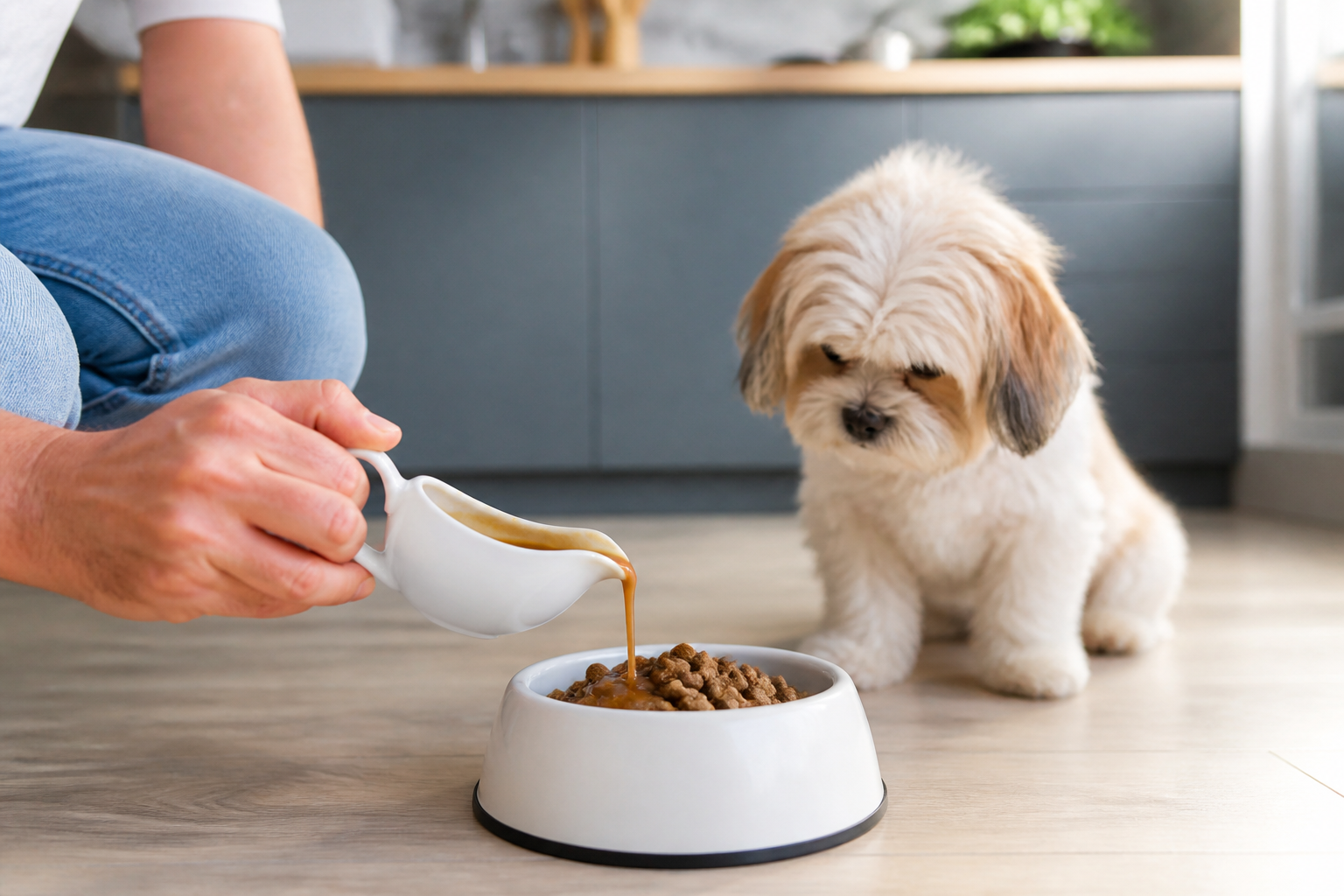
You are standing in the kitchen after a long day of cooking. Your dog is sitting by their bowl of dry kibble, looking up at you with those hopeful eyes while you hold a boat of savory gravy. It is a common scene for many pet owners who want to make a meal more exciting or help a picky eater finish their dinner. You might wonder if a quick splash of that sauce is a harmless treat or a health risk. At BaxterBoo, we know that mealtime is one of the most important parts of your dog's day. We want to help you make it both delicious and safe. This article covers the risks of human gravy, the benefits of adding moisture to kibble, and the best dog-safe alternatives. Adding liquid to dry food can be a great way to boost hydration and interest if you do it correctly.
Quick Answer: You can put gravy on dry dog food, but it should never be standard human gravy. Most human recipes contain high salt, onions, and garlic which are toxic to dogs. Use a dedicated dog gravy, bone broth, or a homemade version without seasonings to keep your pet safe.
Why Pet Owners Consider Adding Gravy
Dry kibble is a convenient and nutritionally complete way to feed your dog. However, it can sometimes be unappealing to certain pets. You might have a senior dog who struggles with the hard texture of dry nuggets. You might also have a puppy who seems bored with the same flavor every single day. Adding a topper like gravy provides a new aroma and a softer texture that can encourage a reluctant eater to dive in.
Moisture is another significant factor. Many dogs do not drink enough water throughout the day. By adding a liquid topper to their food, you are helping them stay hydrated. This is especially helpful during hot summer months or for dogs with a history of urinary tract issues. Adding liquid also allows the kibble to expand before it reaches the stomach. This can sometimes help with digestion for dogs that tend to gulp their food too quickly. For more ideas, read our guide to wetting dry dog food for better digestion and hydration.
The Dangers of Using Human Gravy
While it is tempting to share your leftovers, human gravy is rarely safe for dogs. The primary concern is the ingredient list. Most store-bought mixes and homemade recipes rely heavily on onions and garlic for flavor. Both of these belong to the Allium family. They contain compounds that can damage a dog's red blood cells and lead to a condition called hemolytic anemia. Even small amounts of onion powder or garlic salt found in gravy can be dangerous over time.
Sodium is another major problem. Human gravy is designed for human taste buds, which means it is often packed with salt. Dogs require much less sodium than humans do. Excessive salt intake can lead to dehydration, increased blood pressure, or even sodium ion poisoning in severe cases. For a small dog, even a tablespoon of salty gravy can be a significant health risk.
Finally, consider the fat content. Gravy is often made from meat drippings which are high in saturated fats. This can lead to digestive upset or more serious conditions like pancreatitis. Pancreatitis is a painful inflammation of the pancreas that often requires veterinary intervention. If your dog has a sensitive stomach, even a small amount of rich gravy can cause diarrhea or vomiting.
Vet Tip: If your dog accidentally consumes gravy containing onions or garlic, watch for symptoms like lethargy, pale gums, or dark-colored urine. It is always best to consult your veterinarian immediately if you suspect your pet has eaten a toxic ingredient, as some symptoms do not appear for several days.
Common Store-Bought Gravy Risks
Many people ask about specific brands or styles of gravy they have in their pantry. It is important to look at these with a critical eye.
Gravy Granules and Instant Mixes
Products like Bisto or other supermarket brands are highly processed. They contain stabilizers, thickeners, and preservatives that are not intended for canine consumption. Many of these mixes use wheat flour as a thickener, which can be an issue for dogs with grain sensitivities. They also almost always contain onion and garlic extracts. Even if the label says "reduced salt," the sodium levels are usually still far too high for a pet.
Fast Food Gravy
It is common to wonder if a bit of gravy from a place like KFC is okay. The answer is a firm no. Fast food gravy is incredibly high in sodium and hidden seasonings. These recipes are designed for maximum flavor for humans and are not formulated with animal safety in mind. The fat content in these gravies is also significantly higher than what a dog should consume in a single sitting.
Canned Gravies
Canned versions of turkey or beef gravy found in the baking aisle are similar to instant mixes. They are convenient for us but carry the same risks of toxicity and high caloric density. Using these regularly can lead to rapid weight gain and obesity in dogs.
Bottom line: Human-grade gravy is a recipe for digestive distress and potential toxicity for dogs.
Healthy Alternatives for Your Dog
If you want to give your dog that savory experience without the risk, there are several excellent options. Many of these are available at BaxterBoo and are specifically designed for a dog's nutritional needs. You can browse our dog food and topper selection for broths, meal mixers, and other add-ins.
Bone Broth for Dogs
Bone broth is one of the most popular ways to add "gravy" to a bowl of kibble. Unlike human broth, dog-specific bone broth is simmered without onions or salt. It is rich in collagen, glucosamine, and chondroitin. These nutrients support joint health, which is especially beneficial for senior dogs. It also provides a punch of protein and a very enticing scent. Brands like Open Farm or Stella and Chewy's offer high-quality broths that you can pour right over the bowl. One available option is Brutus Bone Broth Dog Food Topper - Chicken.
Commercial Food Toppers
Many brands now make "stews" or "gravy toppers" in pouches. These are balanced to be fed alongside kibble. They often include chunks of real meat like chicken, beef, or lamb in a thick, savory sauce. Because these are formulated for dogs, they provide extra vitamins and minerals rather than just empty calories.
Goat Milk
While not a traditional gravy, goat milk is a fantastic liquid topper. It is often referred to as "universal milk" because it is highly digestible for most dogs. It contains probiotics that support gut health and provides a creamy texture that many dogs find irresistible.
Rehydrating Dehydrated Food
If you use brands like The Honest Kitchen or Dr. Marty's, you are already adding water to create a gravy-like consistency. You can also take a small amount of this dehydrated food and mix it with extra water to create a sauce for standard kibble. This adds high-quality nutrition and flavor without the risks of human seasonings. Our article on what to add to dry dog food for better nutrition covers additional topper ideas.
How to Make Homemade Dog Gravy
If you prefer to cook at home, you can easily make a safe gravy for your dog. This allows you to control every ingredient. Use this as a special treat or a way to encourage a sick dog to eat.
Step 1: Choose your protein base. / Use lean ground turkey, chicken breast, or beef. Avoid using fatty scraps or meat with skin.
Step 2: Simmer with water. / Place the meat in a pot and cover it with water. Do not add salt, pepper, onions, or garlic. You can add dog-safe vegetables like carrots or celery for extra flavor.
Step 3: Create a thickener if desired. / If you want a thicker consistency, you can use a tiny amount of cornstarch mixed with cold water. Whisk it into the simmering liquid until it thickens slightly.
Step 4: Cool and strain. / Remove any large chunks of meat or vegetables if your dog has a sensitive stomach. Allow the liquid to cool completely before pouring it over the food.
Step 5: Store properly. / You can keep this homemade gravy in the refrigerator for up to three days. You can also freeze it in ice cube trays for easy portioning later.
Key Takeaway: Homemade dog gravy should be simple, unseasoned, and focused on high-quality protein to avoid health complications.
Managing Picky Eaters and Health Conditions
Sometimes a dog stops eating their dry food because of an underlying health issue. If your dog suddenly becomes picky, it is important to rule out dental pain, nausea, or other medical problems. Adding gravy might hide the symptom, but it will not fix the cause.
For dogs with chronic conditions like kidney disease or heart failure, diet is a critical part of their treatment. These dogs often need very specific levels of protein, phosphorus, and sodium. Adding even a "safe" homemade gravy could throw off their nutritional balance.
Our pet pharmacy offers a variety of prescription diets, such as Royal Canin or Farmina Vet Life, through our partnership with Pet's Choice. If your veterinarian has prescribed a specific diet for weight management or kidney support, always ask them before adding any toppers. Prescription foods are carefully formulated, and adding extras can sometimes interfere with how the food is intended to work.
Transitioning to Toppers Safely
Whenever you introduce something new to your dog's diet, you should go slowly. Even the healthiest bone broth can cause an upset stomach if your dog is not used to it.
- Start with a small amount. / Begin with just a tablespoon of the liquid over their normal meal.
- Monitor their stool. / Watch for any signs of diarrhea or gas over the next twenty-four hours.
- Check the calories. / Toppers add calories to the daily total. You may need to slightly reduce the amount of kibble you feed to prevent weight gain.
- Keep it consistent. / If your dog does well, you can make it a regular part of their routine.
For repeat purchases of food and toppers, our Autoship programme can help make regular deliveries easier.
Hydration and Senior Dog Care
Senior dogs often benefit the most from adding liquid to their dry food. As dogs age, their sense of smell can diminish, making dry kibble less appealing. A warm, smelly gravy can reignite their interest in eating. Older dogs also frequently suffer from dental disease or missing teeth. Softening the kibble makes it much easier for them to chew and swallow.
Adding moisture also supports kidney function, which is a common concern for aging pets. If you notice your senior dog is reluctant to drink from their water bowl, a moisture-rich topper is a practical solution. We carry a wide range of medical and mobility supplements, such as Cosequin, that can be mixed directly into a gravy-topped meal for easy administration. Explore our dog healthcare category for supplements and other care products.
Key Takeaway: Toppers and gravies are more than just treats; they are functional tools for supporting senior dog health and hydration.
Using Toppers for Medication
One of the most practical uses for a dog-safe gravy is hiding medication. Many dogs are experts at spitting out pills or eating around them in a bowl of dry kibble. A thick gravy or a savory topper can mask the scent and taste of a tablet.
If your dog is on long-term medication for allergies or joint pain, making it a positive experience is essential. Mixing the dose into a small amount of delicious gravy can turn a chore into a treat. Always check with your vet or our pharmacy team to ensure the medication can be taken with food. Some medications need to be taken on an empty stomach for maximum absorption. For another medication-friendly option, consider Greenies Canine Pill Pockets.
Conclusion
Adding gravy to dry dog food can be a wonderful way to enhance your pet's mealtime experience. It provides hydration, encourages picky eaters, and helps senior dogs manage hard kibble. However, the safety of the gravy is the most important factor. You must avoid human gravies that contain salt, onions, and garlic to prevent serious health issues like anemia or pancreatitis. Stick to dog-specific bone broths, commercial toppers, or simple homemade recipes without seasoning.
We are here to support your dog's health journey with expert-curated products and a dedicated pharmacy for your pet's medical needs. For more ways to make your dog's meals better, check out our collection of food toppers and high-quality broths.
Bottom line: Choose dog-safe liquids like bone broth or specialized toppers to keep your dog's tail wagging safely.
FAQ
Can I give my dog gravy if it is grain-free?
Even if a gravy is grain-free, it can still be dangerous if it contains onions, garlic, or high levels of sodium. Most human grain-free gravies still use these ingredients for flavor. You should only use a gravy specifically labeled for dogs or a homemade version that you have made without any toxic seasonings or excessive salt.
Is it okay to mix water with dry dog food instead of gravy?
Yes, mixing warm water with dry kibble is a very safe and healthy way to add moisture to your dog's diet. It creates a natural "gravy" by drawing out the flavors and aromas of the kibble itself. This is often the best option for dogs with extremely sensitive stomachs or those on a strict prescription diet where extra ingredients must be avoided.
How much gravy should I add to my dog's food?
The amount depends on your dog's size and the caloric density of the gravy. Generally, two to three tablespoons are enough to coat the kibble and add interest for a medium-sized dog. Always remember to factor these extra calories into your dog's daily intake to prevent unhealthy weight gain, and start with a smaller amount to ensure it doesn't cause digestive upset.
Can gravy cause diarrhea in dogs?
Yes, gravy can cause diarrhea if it is too rich, high in fat, or contains ingredients your dog is sensitive to. Human gravies made from meat drippings are often very high in fat, which can trigger an upset stomach or even pancreatitis. If you notice loose stools after adding a topper, stop using it and consult your veterinarian to rule out any underlying issues.






