
 Save 15% on your 1st Autoship learn more

 Email us
 Live Chat
 FAQs
FAQs





Introduction
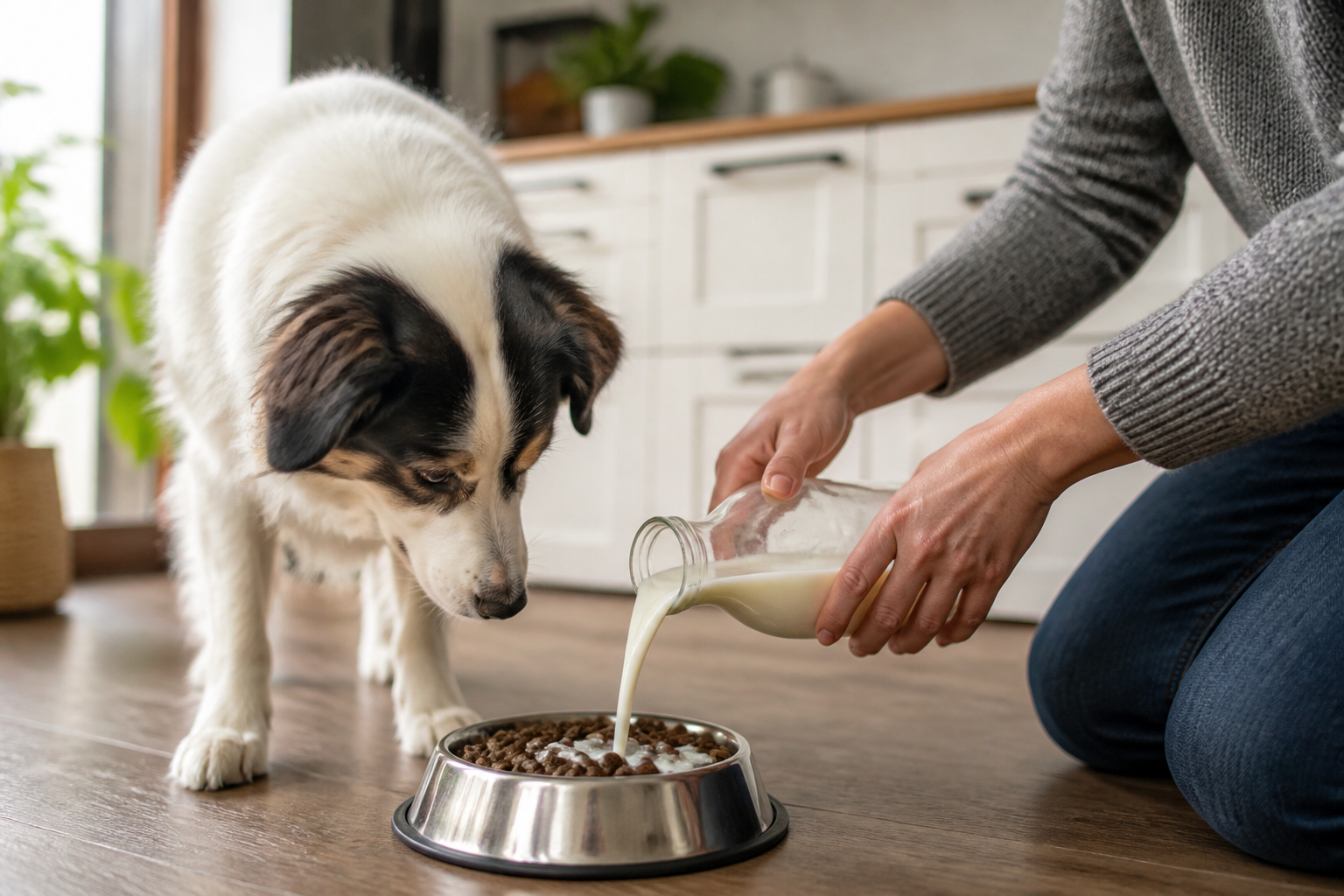
You are standing in the kitchen with a bag of dry kibble and a dog who seems unimpressed with their dinner. Maybe you want to soften the crunch for an older pet or simply add a bit of flavor to a boring meal. You reach for the milk carton in the fridge and wonder if a splash would make the meal more enticing. At BaxterBoo, we talk to pet parents every day who are looking for ways to improve their dog's nutrition and enjoyment. While milk is a staple in most human households, its place in a dog's bowl is often a subject of debate. This post explores whether you should mix dairy with kibble and how it might affect your dog's digestion. We will look at the risks of lactose intolerance and provide safer ways to hydrate your dog's dry food for a healthier mealtime.
Quick Answer: You can put a small amount of milk in dry dog food, but it is not recommended for most adult dogs. Many dogs lack the enzymes needed to digest dairy, which often leads to stomach upset, gas, or diarrhea.
Why People Consider Adding Milk to Kibble
The idea of adding milk to dry food usually comes from a place of care. For some, it is a way to encourage a picky eater to finish their bowl. The fats and sugars in milk are naturally appealing to dogs. The aroma of the milk can make the dry nuggets smell more interesting. For others, it is about texture. Senior dogs with dental issues or missing teeth often struggle with the hard texture of dry kibble. Adding a liquid helps soften the food, making it easier to chew and swallow.
There is also the nutritional aspect. Milk is famous for being a source of calcium and Vitamin D. Some owners believe they are giving their dog a healthy boost by adding these nutrients to a standard meal. While these intentions are good, the biological reality of how a dog processes milk often outweighs these minor nutritional gains. Most commercial dog foods are already balanced with the exact amount of calcium a dog needs.
The Science of Canine Lactose Intolerance
To understand why milk can be problematic, we have to look at how dogs digest sugar. Milk contains a specific type of sugar called lactose. For a body to break down lactose, it needs an enzyme called lactase. Puppies are born with high levels of lactase because they rely entirely on their mother's milk for survival. This enzyme allows them to process the sugars and turn them into energy.
As puppies grow and transition to solid food, their bodies naturally produce less lactase. By the time a dog reaches adulthood, many have very little of this enzyme left. This is a process called lactase persistence, or the lack thereof. Without enough lactase, the milk sugar passes through the small intestine undigested. It then sits in the colon, where it ferments and causes a variety of digestive problems.
Key Takeaway: Lactose intolerance is the norm for adult dogs rather than the exception. While puppies produce the enzymes to digest milk, most adult dogs lose this ability after weaning.
Signs Your Dog Cannot Handle Milk
If you decide to try adding a small amount of milk to your dog's dry food, you must watch them closely for the next 12 to 24 hours. Digestive issues usually show up relatively quickly. Some dogs have a very high tolerance and might only have a bit of extra gas. Others can experience severe distress from just a few tablespoons.
Keep an eye out for these common symptoms:
- Loose stools or watery diarrhea
- Excessive flatulence or a gurgling stomach
- Abdominal bloating or discomfort
- Vomiting shortly after eating
- A sudden loss of appetite or lethargy
If your dog experiences these symptoms frequently, it may be more than just a temporary upset. For dogs with chronic digestive issues or severe food sensitivities, we recommend consulting a veterinarian. Our pet pharmacy carries FDA-approved medications and prescription diets designed for dogs with sensitive stomachs or food allergies.
Vet Tip: If your dog has a severe reaction to dairy, such as persistent vomiting or bloody diarrhea, contact your vet immediately. They can help rule out more serious conditions like pancreatitis, which can be triggered by high-fat human foods.
The Hidden Dangers: Fat and Sugar
Lactose is not the only concern when you pour milk over kibble. Whole milk is surprisingly high in fat. While dogs need healthy fats in their diet, a sudden influx of dairy fat can be hard on the pancreas. Pancreatitis is a serious and painful inflammation of the pancreas that often requires emergency veterinary care. It is frequently triggered when a dog eats something much richer than their usual diet.
Milk also contains natural sugars. If you are regularly adding milk to a dog's meals, you are adding significant calories. Over time, this can lead to weight gain and obesity. Canine obesity is a growing problem that puts extra strain on a dog's joints and heart. At BaxterBoo, we carry a variety of dog food toppers and broths that provide flavor without the risk of packing on extra pounds.
Better Alternatives for Hydrating Dry Food
If your goal is to soften the kibble or add flavor, there are several options that are much safer than cow's milk. These alternatives provide moisture and nutrition without the high risk of digestive upset.
1. Warm Water
The simplest and cheapest option is plain water. Adding warm water to dry kibble releases the fats and aromas in the food, making it smell like a freshly cooked meal. It also softens the nuggets for dogs with sensitive teeth. Let the food sit for about ten minutes before serving so the water can fully soak in.
2. Low-Sodium Bone Broth
Bone broth is a powerhouse for dog health. It is rich in collagen, which supports joint health, and it is very easy on the stomach. You can find dog-specific broths from brands like The Honest Kitchen or Caru. These are formulated without onions or garlic, which are toxic to dogs.
3. Goat Milk
If you really want to stick with a dairy-like option, goat milk is often a better choice than cow's milk. The fat globules in goat milk are smaller, and it contains slightly less lactose. Many pet owners find that their dogs tolerate goat milk much better. We carry goat milk powders and toppers from brands like Native Pet that are specifically designed for pets.
4. Plain Yogurt or Kefir
Fermented dairy products like yogurt and kefir are different from straight milk. The fermentation process breaks down much of the lactose before the dog even eats it. These products also contain probiotics, which can actually help support a healthy gut. Just make sure you use plain, unsweetened varieties. Avoid any yogurt with artificial sweeteners like xylitol, which is deadly to dogs.
Comparison of Liquid Add-ins
| Liquid Type | Lactose Level | Calorie Count | Best Use Case |
|---|---|---|---|
| Cow's Milk | High | Moderate/High | Rare treats only |
| Warm Water | None | Zero | Hydration and picky eaters |
| Bone Broth | None | Low | Joint support and flavor |
| Goat Milk | Moderate | Moderate | Sensitive stomachs |
| Plain Yogurt | Low | Moderate | Probiotic boost |
Bottom line: While milk is the most common liquid in your fridge, water or dog-specific broths are almost always a safer and healthier choice for mixing with kibble.
How to Safely Transition to New Toppers
If you decide to introduce a new liquid to your dog's dry food, you should do it slowly. A sudden change in diet can cause an upset stomach even if the ingredient itself is safe. Follow these steps to ensure a smooth transition.
Step 1: Start with a very small amount. / Add only a tablespoon of the new liquid to their regular meal.
Step 2: Monitor for 24 hours. / Watch for any signs of loose stools or gas.
Step 3: Gradually increase the portion. / If they tolerate the small amount, you can add a bit more over the next few days.
Step 4: Keep it consistent. / Once you find a topper that works, try to stick with it rather than switching liquids every day.
For more ideas about introducing foods gradually, read our guide to adding healthy ingredients to dry dog food.
Special Considerations for Puppies
Puppies are the one group that can usually handle milk better than adults. However, you should still avoid giving them a bowl of cow's milk. The nutritional balance of cow's milk is very different from canine milk. It contains more sugar and less protein than a puppy needs for steady growth.
If you have a weaning puppy that needs extra calories or softer food, use a dedicated canine milk replacer. These products are formulated to mimic the mother's milk perfectly. Once a puppy is fully transitioned to dry food, it is best to move them onto water or puppy-safe broths to avoid developing a lactose sensitivity later in life.
Managing Picky Eaters Without Dairy
Many owners use milk because they feel their dog is bored with dry food. Before you reach for the dairy, consider why your dog might be picky. Sometimes, the kibble has gone stale. Buying smaller bags or using an airtight container can help keep the food fresh and crunchy.
You can also rotate through different protein sources. Many brands we carry, such as NutriSource or Acana, offer several flavors within the same product line. This allows you to switch from chicken to beef or fish without a long transition period. Adding a small amount of high-quality wet food, like Tiki Cat or Weruva, can also provide that "gravy" texture dogs love without the risks of cow's milk.
For additional strategies, explore our practical guide for picky dog eaters.
When to See a Veterinarian
Occasional gas after a treat is normal, but chronic digestive issues should not be ignored. If your dog consistently has soft stools or refuses to eat dry food without a specific topper, it is time for a checkup. They may have a food allergy or an underlying health condition that needs professional attention.
Your vet might recommend a prescription diet. These foods are specially formulated to be highly digestible. Our pharmacy makes it easy to get these prescription items delivered to your door. We work directly with your vet to verify prescriptions so you can focus on caring for your pet.
Conclusion
While the image of a dog lapping up a bowl of milk is a common one, the reality is that dairy is not a natural part of an adult dog's diet. Adding milk to dry food might make the meal more appealing in the short term, but it often leads to long term digestive discomfort. At BaxterBoo, we want to help you make choices that keep your dog's tail wagging and their stomach settled. By choosing safer alternatives like warm water, bone broth, or fermented yogurt, you can enhance your dog's mealtime without the risks of lactose intolerance.
- Most adult dogs are lactose intolerant and will struggle to digest cow's milk.
- Warm water is the safest and easiest way to soften dry kibble.
- Bone broth provides extra nutrition and joint support.
- Always introduce new food toppers gradually to avoid stomach upset.
Key Takeaway: Prioritize your dog's long term gut health over a momentary flavor boost by choosing lactose-free ways to hydrate their kibble.
If you are looking for healthy ways to spice up your dog's diet, our collection of meal toppers and broths is a great place to start. You can also sign up for our Autoship programme to save on your favorite healthy food and toppers while ensuring you never run out of the supplies your dog loves.
FAQ
Does milk help dogs with dry skin or a dull coat?
While milk contains some fats that support skin health, there are much more effective ways to help your dog's coat. Supplements containing Omega-3 fatty acids, like those from Zesty Paws or Honest Paws, provide targeted nutrition without the risk of diarrhea. These are generally a better choice for skin issues than dairy.
Can I use lactose-free milk in my dog's food?
Lactose-free milk is safer for dogs than regular milk because the problematic sugar has already been broken down. However, it is still high in fat and calories. It should be treated as an occasional treat rather than a daily addition to every meal.
Is almond milk or soy milk better for dogs?
Plant-based milks are generally not recommended for dogs. Many contain added sugars, thickeners, or artificial sweeteners like xylitol that can be toxic. Almond milk is also very high in fat, which can lead to weight gain or pancreatitis if fed regularly.
Will milk help a dog who is constipated?
Some people believe the laxative effect of milk can help with constipation. This is not a safe way to treat the issue, as it causes irritation to the intestinal lining. It is much better to use a fiber supplement or canned pumpkin, which helps move things along naturally without causing a painful upset stomach.






