
 Save 15% on your 1st Autoship learn more

 Email us
 Live Chat
 FAQs
FAQs





Introduction
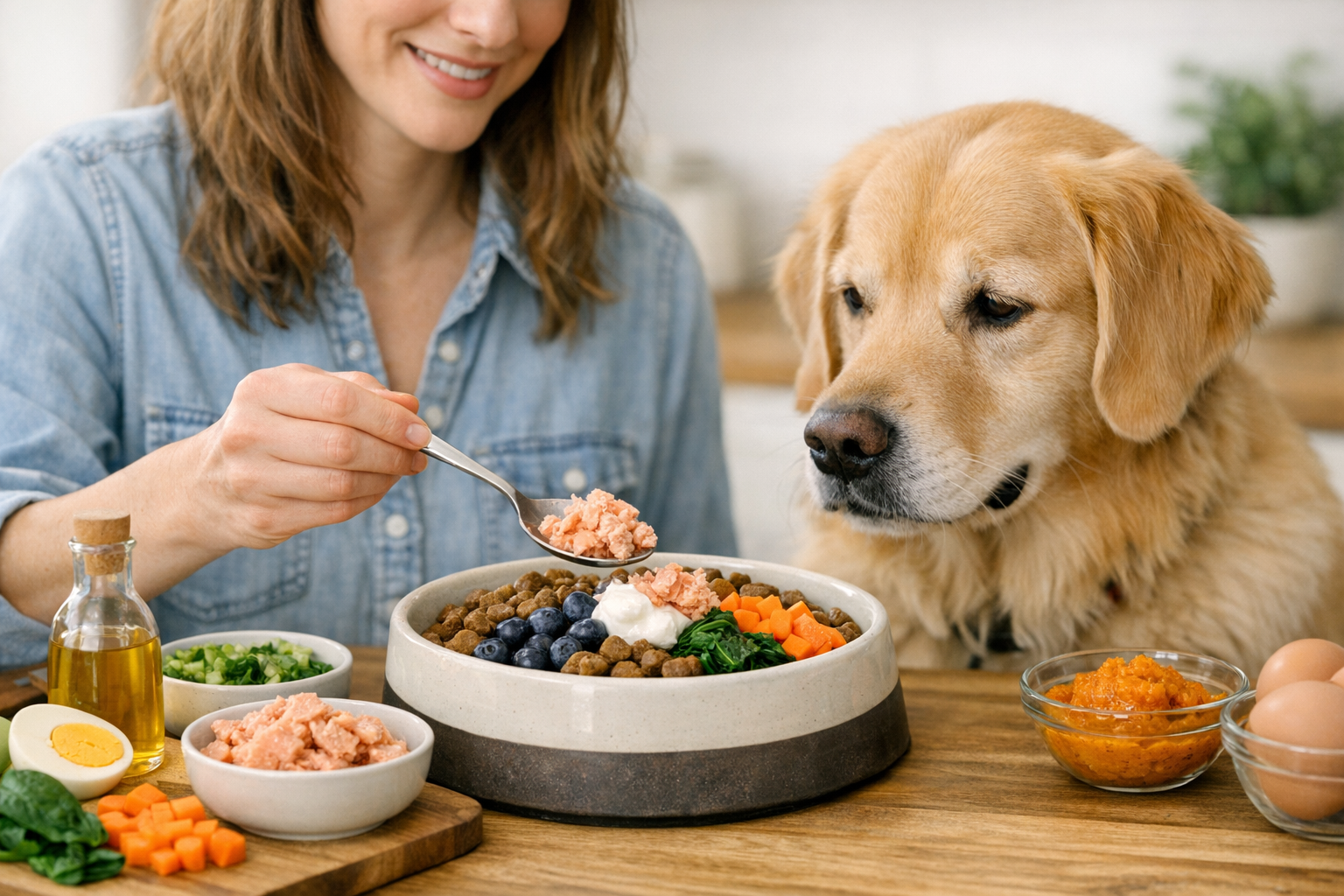
Your dog stands over their bowl of dry kibble and looks up at you with those familiar, expectant eyes. While high quality dry food provides a balanced foundation, eating the same crunchy brown nuggets every day can become repetitive for any pet. You might notice your dog losing interest in their meals or simply want to provide a little extra nutritional support for their skin, coat, and joints.
At BaxterBoo, we know that mealtime is often the highlight of a dog's day. Adding fresh, whole food toppers is an easy way to improve hydration, boost protein intake, and introduce variety. This article explores safe, healthy additions you can find in your kitchen or our food topper and broths category to turn a standard bowl of kibble into a nutrient dense feast. We will cover the best proteins, vegetables, and commercial mixers to keep your dog healthy and excited for every bite.
Quick Answer: You can add several healthy items to dry dog food, including plain cooked meats, raw or scrambled eggs, steamed vegetables like carrots, and moisture boosters like bone broth. These additions provide extra vitamins, minerals, and hydration while making the meal more palatable for picky eaters.
The Benefits of Adding Fresh Foods to Kibble
Dry dog food is a marvel of convenience and shelf stability. It is formulated to meet the basic nutritional requirements of your dog at various life stages. However, the high heat process used to create kibble can reduce the natural enzymes and moisture content found in fresh ingredients. Adding whole foods helps bridge that gap.
One of the primary benefits of adding "toppers" is hydration. Many dogs do not drink enough water on their own. Adding moisture through broths or wet foods can support kidney function and urinary tract health. Fresh additions also provide a variety of textures and aromas that stimulate a dog's natural foraging instincts.
A more diverse diet can also lead to a more resilient gut. When we introduce small amounts of different fibers and proteins, we support a healthy microbiome. This is particularly useful for dogs that might otherwise have sensitive stomachs when their food brand changes. If you want more ideas for switching textures, our guide on how to switch from dry to wet dog food is a helpful next step.
Understanding the 10 Percent Rule
Before you start raiding your refrigerator, it is important to understand balance. Most commercial dog foods are carefully calibrated to provide a specific ratio of calcium to phosphorus, as well as a full spectrum of vitamins and minerals. If you add too many extras, you risk unbalancing that delicate nutrition.
A common guideline is the 10 percent rule. This means that treats and toppers should make up no more than 10 percent of your dog's total daily calorie intake. For some owners looking to make a bigger impact, experts sometimes suggest replacing up to 25 percent of the meal, but this requires more careful planning.
Key Takeaway: Always reduce the amount of dry kibble you serve when you add calorie dense toppers. This prevents weight gain and ensures the main meal remains the primary source of essential nutrients.
Protein Boosters: Eggs and Meats
Protein is the building block of your dog's muscles, skin, and immune system. While kibble contains protein, adding fresh animal sources provides highly bioavailable amino acids that support lean muscle mass.
The Power of Eggs
Eggs are often called nature's multivitamin. They are affordable, easy to prepare, and packed with protein, iron, and fatty acids. You can serve them raw, scrambled, or hard boiled. If you choose to serve raw eggs, some owners include the crushed shell for an extra calcium boost, though this should be done in moderation.
Muscle and Organ Meats
Plain, unseasoned meat is a fantastic addition. Boiled chicken, lean ground beef, or turkey are favorites for most dogs. If you have leftovers from your own meal prep, ensure they are free of salt, onions, and garlic.
Organ meats like liver and heart are exceptionally nutrient dense. Heart is rich in taurine, which supports cardiac health. Liver is high in Vitamin A and copper. Because these are so potent, they should be fed in very small amounts. Too much liver can lead to digestive upset or an overabundance of certain vitamins.
Healthy Produce from the Garden
Vegetables and fruits provide antioxidants and fiber that help with digestion and long term health. However, dogs have a shorter digestive tract than humans. They cannot easily break down the cell walls of raw vegetables. To help your dog get the most nutrition, you should prepare produce properly.
Steamed or Pureed Vegetables
- Carrots: Great for beta carotene and a satisfying crunch.
- Green Beans: A low calorie filler that is perfect for dogs needing weight management.
- Broccoli: High in fiber and Vitamin C, but should be fed in small amounts to avoid gas.
- Zucchini: Easy to digest and very low in calories.
Vet Tip: Always steam, boil, or puree vegetables before adding them to the bowl. This "pre-digests" the plant material, allowing your dog to absorb the vitamins and minerals that would otherwise pass right through them.
Fruit Additions
Fruits should be treated as a sweet treat due to their sugar content. Blueberries are a top choice because they are small and loaded with antioxidants. Slices of apple (without the seeds) or bananas are also popular. Avoid grapes and raisins at all costs, as they are toxic to dogs and can cause kidney failure.
Moisture and Hydration Boosters
Dry food typically only contains about 10 percent moisture. Adding liquid to the bowl makes the food easier to chew and helps your dog stay hydrated throughout the day.
Bone Broth
Bone broth is one of the most popular toppers because it is rich in collagen and amino acids. It is excellent for senior dogs with joint stiffness. When buying bone broth, look for versions specifically made for pets. Human versions often contain high levels of sodium and onion powder, which are dangerous for canines. For a ready-made option, take a look at Brutus Bone Broth On The Go Powder Dog Food Topper - Beef.
Raw Goat's Milk
Goat's milk is often referred to as a universal milk. It is much easier for dogs to digest than cow's milk. It is packed with probiotics that support gut health. You can find frozen goat's milk at BaxterBoo that can be thawed and drizzled over kibble. If you prefer a shelf-stable topper, Native Pet Goat Milk Powder Dog Food Topper is another option.
Plain Water
If you are in a pinch, even a splash of warm water can help. It releases the aromas of the kibble, making it more appealing to a picky eater. Let the food sit for a few minutes to soak up the water before serving.
Dairy and Probiotic Additions
If your dog is not lactose intolerant, certain dairy products can provide a healthy boost of calcium and protein.
- Plain Yogurt: Look for unsweetened, non-fat, or low-fat varieties. The active cultures can help with digestion.
- Cottage Cheese: This is a great bland protein source, often used for dogs recovering from upset stomachs.
- Kefir: This fermented milk drink has even more probiotics than yogurt.
Always check labels for Xylitol. This artificial sweetener is found in some "fit" or "sugar-free" yogurts and is deadly to dogs.
Healthy Oils for Skin and Coat
If your dog has dry, itchy skin or a dull coat, adding healthy fats can make a significant difference.
- Fish Oil: Rich in Omega-3 fatty acids (EPA and DHA). It supports heart health, reduces inflammation, and makes the coat shine.
- Coconut Oil: Can help with skin health and may provide a quick energy source. Start with a very small amount to avoid loose stools.
- Olive Oil: A good source of phytonutrients and Vitamin E.
Key Takeaway: Oils are very high in calories. A teaspoon is often enough for a medium-sized dog. Overfeeding oils can lead to weight gain or even pancreatitis in sensitive breeds.
Specialized Toppers for Health Needs
Sometimes we add things to a dog's food to address specific health concerns like joint pain or anxiety. Our pet pharmacy carries several supplements and therapeutic foods that can be integrated into your dog's routine.
If your dog is managing a condition like kidney disease or severe allergies, always consult your veterinarian before adding anything to their prescribed diet. Some toppers can interfere with the efficacy of prescription kibble. You can also explore our pet pharmacy when your dog's diet needs are more specialized.
Commercial Toppers and Mixers
For those who do not have time for meal prep, there are many expertly curated options available. These products are designed to be shelf stable and nutritionally balanced.
Freeze-Dried Raw
Our freeze-dried food category includes plenty of easy meal-boosting options. Brands like our selection of Stella & Chewy's products offer freeze-dried raw "Meal Mixers." These are small nuggets of raw meat, bone, and organs that have had the moisture removed. You can crumble them over the food to add the benefits of a raw diet without the mess. They are highly palatable and often convince the pickiest dogs to finish their meal.
Wet Mixers and Pouches
Adding a spoonful of high quality canned food is a classic way to boost a meal. Brands like Open Farm or Weruva offer pouches that are specifically designed as "stews" or "shreds" to be mixed into dry food.
Bone Broth Powders
If you find liquid broth inconvenient, you can use a powder. Simply sprinkle it over the kibble and add a little water to create a savory gravy.
Bottom line: Commercial toppers offer a balanced way to add variety without the guesswork of calculating nutrients in home-cooked ingredients.
Foods to Avoid Adding to the Bowl
While many human foods are safe, some are strictly off-limits. Never add the following to your dog's dry food:
- Onions, Garlic, and Chives: These can damage a dog's red blood cells.
- Grapes and Raisins: Even small amounts can cause kidney failure.
- Macadamia Nuts: These can cause weakness, vomiting, and tremors.
- Chocolate and Caffeine: Both are toxic to the heart and nervous system.
- Xylitol: Found in sugar-free products, it causes a rapid drop in blood sugar and liver failure.
- Cooked Bones: Unlike raw bones, cooked bones become brittle and can splinter, causing internal punctures.
Step-by-Step: Introducing New Toppers
If you are ready to start enhancing your dog's meals, follow this simple process to ensure their stomach stays happy.
Step 1: Choose one ingredient. / Do not add multiple new foods at once. This allows you to see how your dog reacts to a specific item.
Step 2: Start with a tiny portion. / Give your dog a teaspoon of the topper mixed into their usual kibble amount.
Step 3: Monitor for 24 hours. / Watch for signs of an upset stomach, gas, or changes in stool. If they seem fine, you can slowly increase the amount.
Step 4: Rotate ingredients. / Once you have a few safe options, rotate them throughout the week to provide a wide range of nutrients.
Comparing Common Kibble Add-ins
| Topper Type | Primary Benefit | Best For | Preparation Tip |
|---|---|---|---|
| Raw/Cooked Egg | Protein & Biotin | Skin and coat health | Scramble without salt or butter |
| Bone Broth | Hydration & Collagen | Senior dogs, joint support | Use pet-safe, low sodium versions |
| Pureed Pumpkin | Fiber | Digestion, firming stools | Use 100% pure pumpkin, not pie filling |
| Sardines (in water) | Omega-3s | Heart health, shiny fur | Rinse to remove excess salt |
| Blueberries | Antioxidants | Immune support | Feed fresh or frozen |
Managing Picky Eaters
If you are adding toppers because your dog is refusing their kibble, it is important to rule out medical issues first. A sudden loss of appetite can be a sign of dental pain, nausea, or other underlying conditions. We always recommend a visit to your veterinarian if your dog's eating habits change abruptly.
For dogs that are just stubborn, try the "warm water trick." Adding warm water or warm broth to kibble releases fats and smells that are often enough to get a dog interested. You can also try "dusting" the food with a high-value treat crumbled into a fine powder. For more tips, our article on what dry dog food is best for picky eaters covers this in more detail.
Seasonal Toppers
You can change your dog's toppers based on the time of year to help them stay comfortable.
- Summer: Add frozen blueberries or "pupsicles" made of frozen goat's milk to help them cool down.
- Winter: Add warm bone broth or lightly warmed scrambled eggs to provide a comforting, calorie-dense meal during cold walks.
- Autumn: Freshly steamed squash or pumpkin fits the season and provides plenty of fiber.
Conclusion
Enhancing your dog's dry food does not have to be complicated or expensive. By using simple ingredients like eggs, steamed vegetables, or a splash of bone broth, you can significantly improve the nutritional profile of their daily meals. These small additions provide the moisture and fresh nutrients that kibble sometimes lacks.
Remember to keep your additions under 10 percent of their daily calories to keep their diet balanced. Always introduce new foods slowly and consult your vet if your dog has specific health needs or chronic conditions. Our team at BaxterBoo is here to help you find the perfect toppers, from freeze-dried raw mixers to healthy oils, ensuring every meal is both nutritious and delicious.
Key Takeaway: Variety is the spice of life for dogs too. Mixing up textures and flavors keeps them engaged with their food and supports better overall wellness.
Next Steps for Your Dog's Bowl:
- Browse our Dog Food Toppers section for convenient freeze-dried and wet options.
- Consider our Autoship programme to save on your dog's favorite mixers and ensure you never run out.
- Check our MVP Rewards programme if you want another way to save over time.
FAQ
Can I give my dog a raw egg every day?
Yes, most healthy dogs can handle a raw or cooked egg daily, provided it fits within their caloric needs. Eggs are highly nutritious, but they are also calorie-dense, so ensure you reduce their kibble slightly. Some owners prefer cooking the egg to eliminate the very small risk of salmonella and to make the egg whites easier to digest.
Is it okay to mix wet dog food with dry kibble?
Mixing wet and dry food is an excellent way to add moisture and flavor to your dog's diet. It is a common practice that helps with hydration and can make meals more appealing to picky eaters. Just be sure to calculate the total calories so you do not overfeed your pet.
Can I add milk to my dog's dry food?
Standard cow's milk is often difficult for dogs to digest because many are lactose intolerant. A better alternative is raw goat's milk or specially formulated "pet milk" found in pet stores. These options provide the creaminess and nutrients of milk without the digestive upset associated with cow's dairy.
How much pumpkin should I add to my dog's food?
For most medium-sized dogs, one to two tablespoons of plain canned pumpkin is a safe and effective amount to support digestion. It is high in fiber, so start with a small amount to see how your dog's system responds. Always ensure you are using 100% pure pumpkin puree rather than pumpkin pie filling, which contains toxic spices and sugar.






