Save 15% on your 1st Autoship learn more

 Email us
 Live Chat
 FAQs
FAQs





Introduction
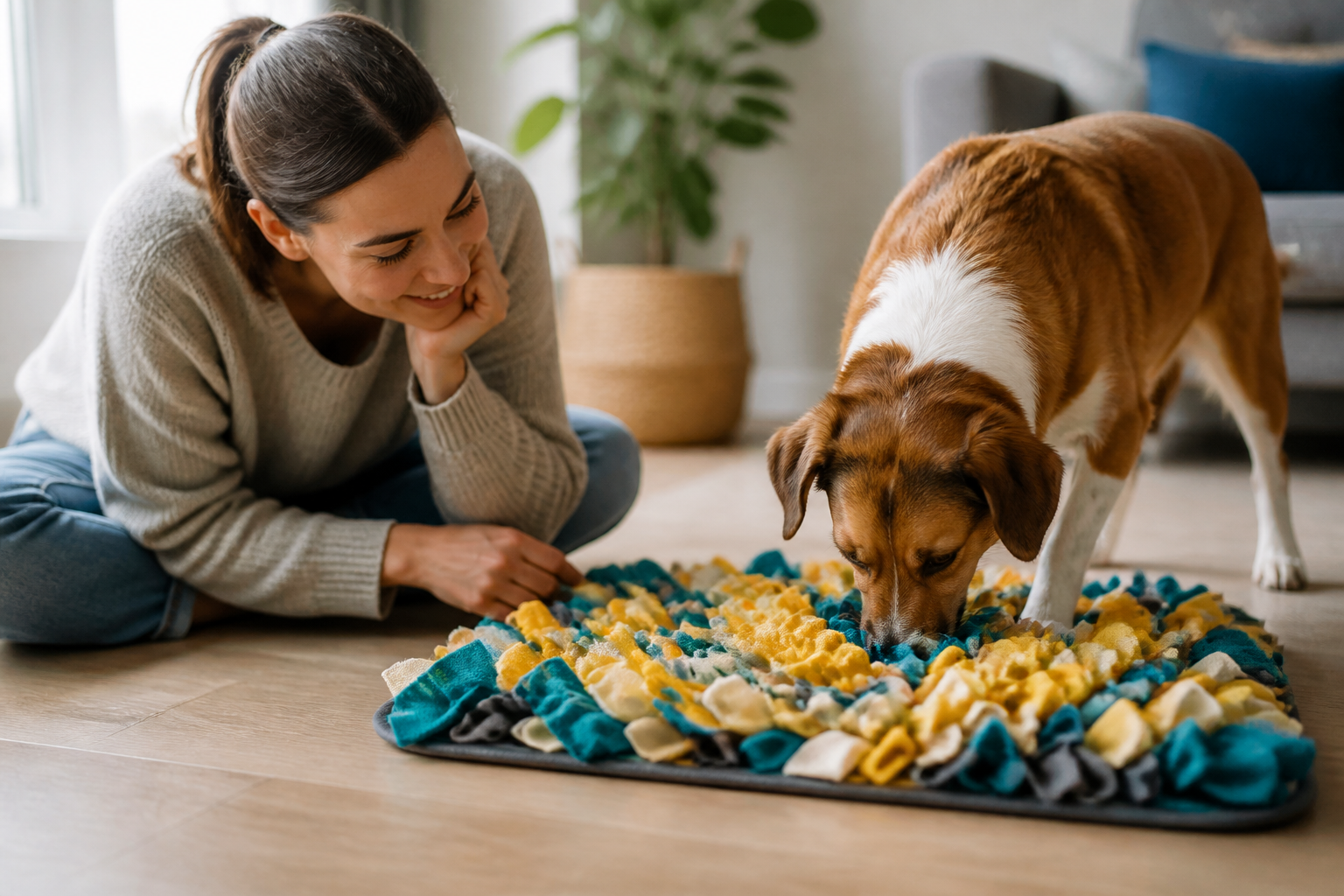
Your dog is finished with dinner in under thirty seconds. You barely set the bowl down before they are looking up at you, wondering where the rest of the meal went. This rapid eating is a common struggle for many owners. It often leads to digestion issues or a dog that stays restless throughout the evening. At BaxterBoo, we see many pet parents looking for ways to slow down mealtime and provide mental stimulation during rainy days or busy work hours. Using a snuffle mat pattern to create a DIY enrichment tool is one of the most effective ways to solve both problems. This post covers the specific materials you need, the various tying patterns for different difficulty levels, and how to maintain your mat for long term use. We will help you turn a simple piece of fleece into a brain-teasing puzzle that satisfies your dog's natural urge to forage.
The Science Behind the Sniff
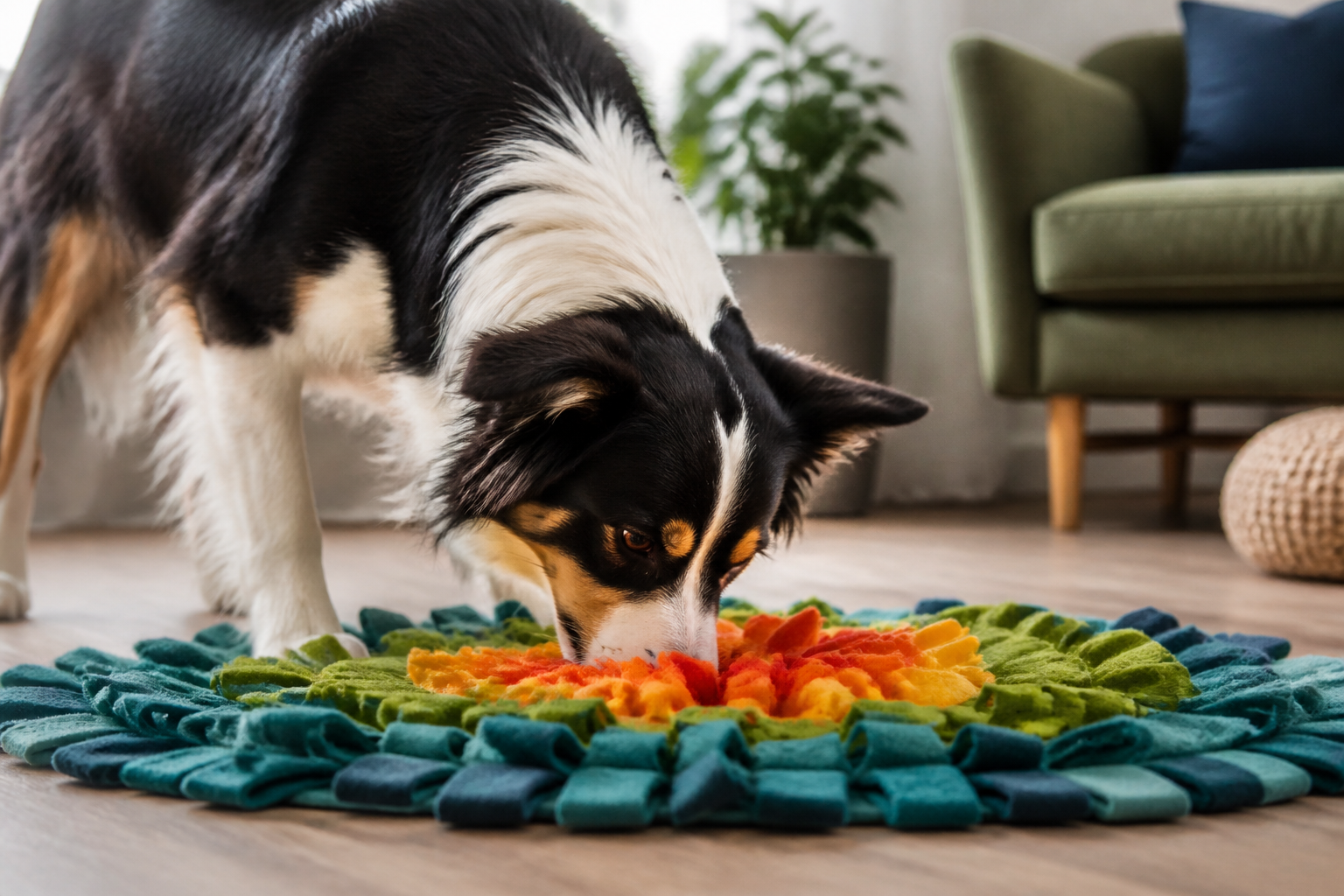
Dogs experience the world primarily through their noses. While humans rely heavily on sight, a dog’s olfactory system is incredibly sophisticated. When you provide a snuffle mat, you are not just feeding them. You are giving them a job. This activity is often called nose work. It mimics the natural behavior of ancestors who spent hours foraging for small scraps of food in the wild.
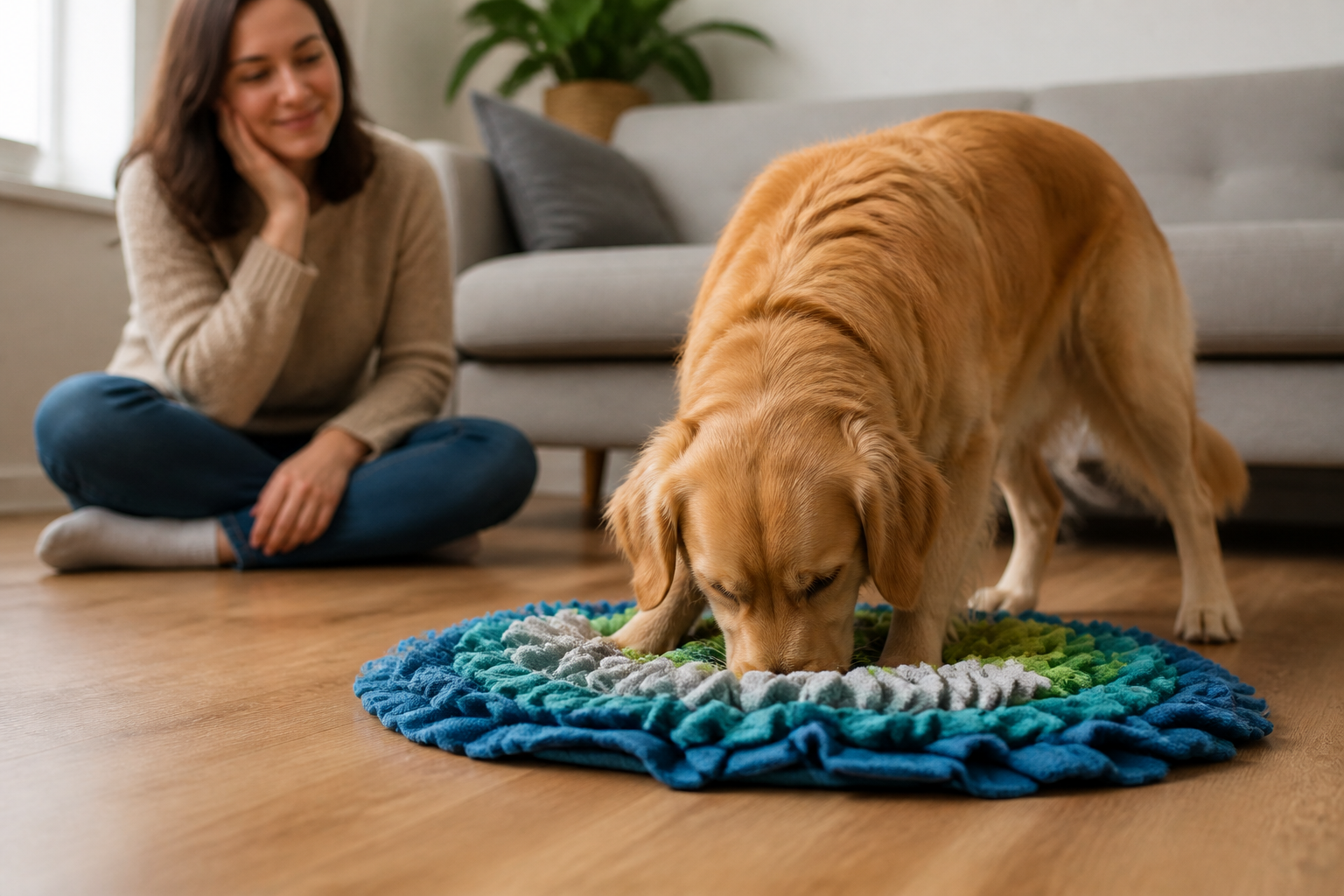
Engaging in ten minutes of sniffing can be as tiring for a dog as a long walk. This is because the brain has to process complex scent signals to locate every tiny piece of kibble hidden within the fabric. This mental heavy lifting lowers heart rates and reduces cortisol levels. It is a fantastic tool for dogs with high energy or those recovering from surgery who cannot participate in heavy physical exercise. For more ideas, explore these dog brain games and enrichment activities.
Quick Answer: A snuffle mat is an enrichment toy made of fabric strips tied to a sturdy base. It hides dry food or treats, forcing a dog to use their sense of smell to find their meal, which slows down eating and provides mental stimulation.
Choosing the Right Base for Your Pattern
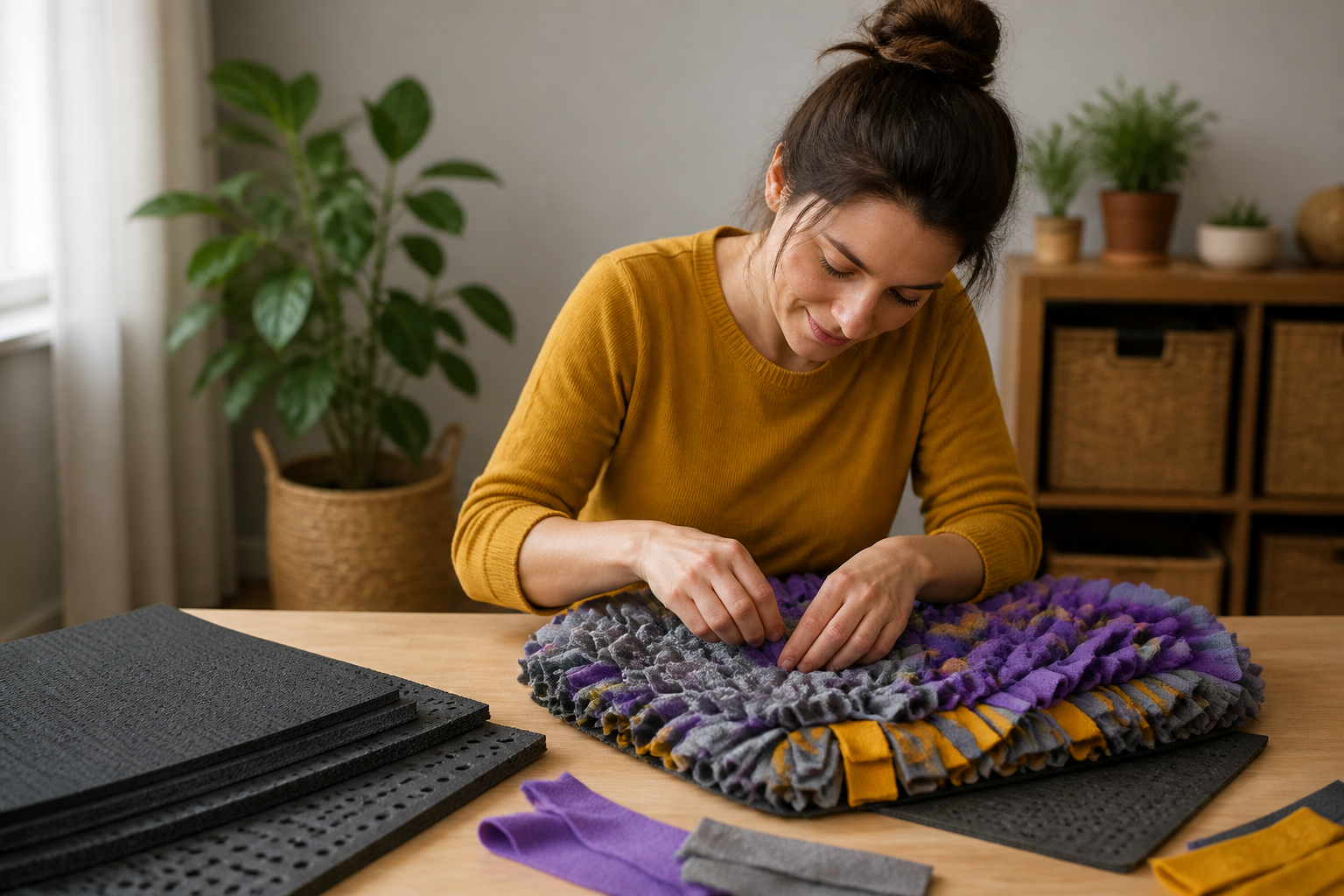
The foundation of any good snuffle mat pattern is the base. You need something that is durable, flexible, and full of holes. Most people choose a heavy duty rubber sink mat or a plastic anti-fatigue mat. These are ideal because they provide a grid that is easy to follow.
If you have a large dog, you might consider zip-tying two sink mats together to create a larger surface area. For a smaller puppy, a single small mat is usually enough. Avoid using cardboard bases if you want the mat to last. Cardboard cannot be washed and will quickly become soggy and dirty from saliva and food oils.
When selecting a plastic or rubber base, look for holes that are roughly half an inch to one inch apart. If the holes are too close together, the mat will become too dense to tie effectively. If they are too far apart, the fabric strips will be sparse, and the food will simply fall to the floor rather than being hidden.
Selecting Your Fabric
Fleece is the gold standard for snuffle mat patterns. There are several reasons why this material works better than cotton or denim. First, fleece does not fray when you cut it. This means you do not have to hem hundreds of tiny strips of fabric. Second, fleece is soft on a dog’s nose. Since they will be pushing their snout deep into the mat, you want a material that will not cause friction burns or irritation.
When buying fleece, look for "anti-pill" or "blizzard" varieties. These are usually thicker and hold their shape better. If the fleece is too thin, the strips will lay flat and fail to hide the treats. You will generally need about one and a half to two yards of fabric for a standard sized mat. This is a great chance to use up scraps from other sewing projects or to pick out colors that match your home decor.
Key Takeaway: Using high quality fleece and a sturdy rubber base ensures your snuffle mat is both effective at hiding food and safe for your dog's sensitive nose.
The Standard Tying Pattern
The most common snuffle mat pattern is the "Every Hole" method. This creates a very dense, forest-like environment for the treats to hide in. To start, you will need to cut your fleece into strips that are about one inch wide and six to seven inches long.
Step 1: Prepare the strips
Lay out your fleece and cut it into long ribbons. Once you have the ribbons, cut them into the individual seven inch lengths. You do not need a ruler for every single cut. Variations in length actually make the mat more interesting for the dog.
Step 2: The horizontal rows
Start at one corner of your mat. Take a strip of fleece and thread one end through the first hole and the other end through the second hole. Pull both ends up to the top and tie a single overhand knot. You do not need a double knot. The friction of the fleece against the rubber will keep it secure. Continue this across the entire row.
Step 3: The vertical rows
Once you have finished the horizontal rows, turn the mat ninety degrees. Now, tie strips through the holes in the vertical direction. This creates a cross-hatch pattern. This step is what gives the mat its volume. It fills in the gaps and ensures that the rubber base is completely covered.
Step 4: The diagonal rows (Optional)
If your mat still feels a bit thin, you can tie strips diagonally across the intersections of the holes. This is usually only necessary if you have a very large dog who is an "expert" at finding treats and needs a bigger challenge.
Variations for Different Difficulty Levels
Not every dog needs the same level of challenge. A puppy might get frustrated if the mat is too dense, while a clever border collie might solve a simple mat in seconds. You can adjust your snuffle mat pattern based on your dog's specific needs.
The Beginner Pattern
For dogs that are new to enrichment, use a "Skip a Hole" pattern. Only tie strips in every other hole across the mat. This makes the fabric less dense. The dog can see the treats more easily, which builds their confidence. As they get better at the game, you can go back and add strips to the empty holes to increase the difficulty.
The Color Coded Pattern
If you want to track where you are hiding treats, you can use different colors for different sections. For example, use blue fleece in the corners and red in the middle. Hide high-value treats like freeze-dried liver in the blue sections and standard kibble in the red sections. This forces the dog to discriminate between different scent strengths. You can find suitable options in our dog treats collection.
The Variable Length Pattern
Try cutting some strips at five inches and others at nine inches. Mix them randomly across the mat. The varying heights create a more complex landscape. The longer strips will flop over the shorter ones, creating deep pockets that are much harder to investigate.
Vet Tip: If your dog is prone to frustration or "gives up" on puzzles, start with a sparse pattern and place treats right on top of the fabric. Gradually hide them deeper as your dog learns that sniffing equals a reward.
Pattern for a Sewn Fabric Mat
If you prefer sewing over tying knots, you can create a patchwork snuffle mat. This version is often easier to toss into the laundry and can be more compact for travel. You will need a large square of heavy canvas or denim for the base and several different shapes of fleece for the top layers.
The Book Page Pattern
Cut several rectangles of fleece. Stack them on top of each other and sew a single line down the center of the stack, attaching them to your base. This creates "pages" that the dog can flip over with their nose. You can hide treats between the layers.
The Concentric Circle Pattern
Sew several circles of fleece onto the base, only stitching around the very edge of each circle. Then, cut a small "X" in the center of the top circle. The dog has to nuzzle through the hole to find the food hidden underneath the fabric layers.
Safety and Supervision
While snuffle mats are excellent tools, they are not chew toys. Some dogs may try to rip the fleece strips off the base or chew on the rubber mat itself. This can lead to the ingestion of fabric or plastic, which is a serious health risk.
Always supervise your dog during their first few sessions with a new mat. If you see them starting to paw at the mat aggressively or attempting to bite the base, gently redirect them to sniffing. Once the dog has finished finding all the food, pick the mat up and put it away. This keeps the mat "special" and prevents it from becoming a target for destructive chewing.
If your dog manages to tear off a piece of fleece, remove it immediately. For dogs that are known "shredders," a heavy duty store-bought puzzle might be a safer alternative to a DIY fleece mat. Our interactive dog toys and puzzle toys provide similar mental stimulation without the risk of loose fabric strips. You can also find additional ideas in this guide to creating indoor enrichment.
Cleaning and Maintenance
A snuffle mat can get dirty quickly. Saliva, food dust, and oils from treats will build up over time. If you used a rubber or plastic base with fleece, you can usually wash the mat.
Most DIY mats can be placed in a pillowcase and washed on a gentle cycle with cold water. Avoid using scented detergents, as the strong perfume can be overwhelming for a dog’s sensitive nose. Always air dry the mat. High heat in a dryer can melt the rubber base or damage the fleece fibers.
Before each use, give the mat a good shake outside to remove any leftover crumbs. Inspect the knots to make sure they are still tight. If the fleece starts to look matted or flat, you can "brush" it with your fingers to stand the strips back up. This restores the hiding places and keeps the game challenging.
Using Snuffle Mats for Weight Management
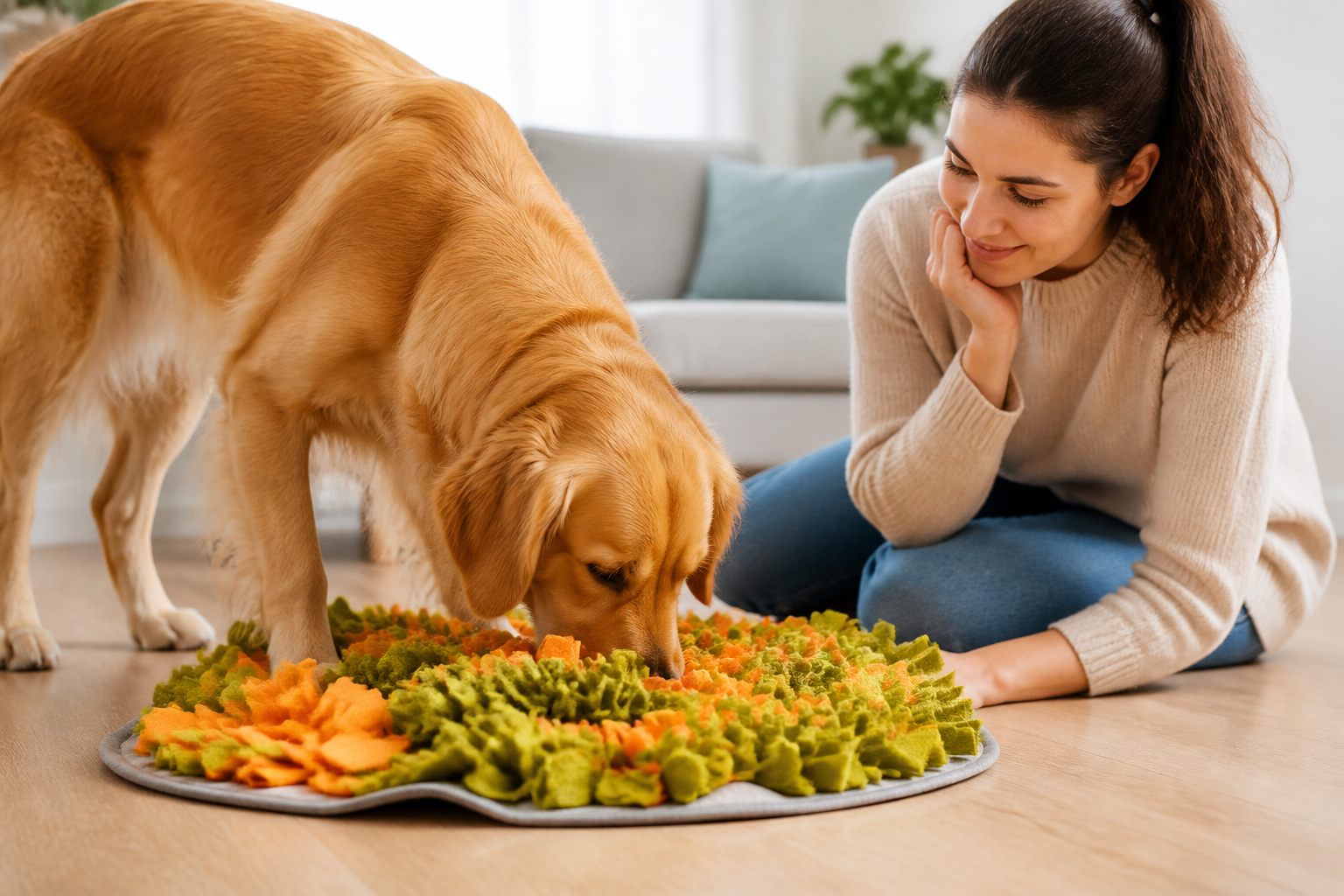
For dogs that need to lose a few pounds, mealtime is often the most stressful part of the day. They want more food, and they want it now. A snuffle mat is a great way to make a smaller portion of food last much longer. Instead of eating a cup of kibble in thirty seconds, it might take them fifteen minutes to forage for the same amount.
If your vet has recommended a specific weight loss plan, our pet pharmacy can help. Through our partnership with Pet's Choice, we offer FDA-approved prescription diets that are formulated specifically for weight management. These diets often have a larger kibble size or a specific fiber content that works perfectly in a snuffle mat pattern. Slowing down the intake of these specialized foods allows the dog to feel more satisfied with less.
Bottom line: Using a snuffle mat to feed meals is a practical way to manage weight and prevent the digestive upset often caused by rapid eating.
Transitioning to Advanced Enrichment
Once your dog has mastered the basic snuffle mat pattern, you can start combining it with other types of enrichment. You might place the snuffle mat inside a cardboard box, so the dog has to first get into the box before they can start sniffing. Or, you could hide the mat in a different room and use a "find it" command.
We also suggest rotating your enrichment tools. If your dog uses the same mat every day, they may eventually find it boring. Try switching between a tied mat, a sewn mat, and a hard plastic puzzle toy. This variety keeps their brain sharp and ensures they remain engaged with the activity. For more ideas, read about dog boredom busters and puzzle play.
Our MVP Rewards program is a great way to save money while building up your dog’s enrichment library. You can earn points on every purchase, which can be used toward new treats or different types of puzzles. This makes it easier to keep your dog’s routine fresh and exciting without breaking the budget.
Summary of the DIY Process
Creating a snuffle mat is a rewarding project that provides long-term benefits for your pet. To succeed, remember these key points:
- Use a heavy duty rubber base with plenty of holes.
- Cut fleece strips to roughly one inch by seven inches.
- Tie strips in both horizontal and vertical directions for maximum density.
- Supervise your dog and remove the mat once the food is gone.
- Wash the mat regularly to keep it hygienic and fresh.
At BaxterBoo, we are committed to helping you find the best ways to care for your pets. Whether you are crafting a DIY mat or looking for professional-grade enrichment gear, our team is here to support you. Providing these outlets for natural behavior is one of the kindest things you can do for your dog’s mental health.
FAQ
Can I use a snuffle mat for my cat?
Yes, cats can benefit from snuffle mats just as much as dogs. While cats are often more subtle in their foraging, they enjoy using their hunting instincts to find dry food or catnip treats hidden in the fleece. You may want to use a smaller mat and slightly shorter fleece strips to make it easier for their smaller paws and noses to navigate.
How often should I wash my snuffle mat?
You should wash the mat every two to four weeks depending on how often it is used and how "messy" your dog’s treats are. If you use greasy treats or your dog is a heavy drooler, you may need to wash it more frequently. Always check for loose strips or damage to the base after each wash to ensure it remains safe for use.
What is the best way to hide treats in the mat?
For beginners, simply sprinkle the treats on top of the fleece strips. For a more advanced challenge, push the treats deep down toward the rubber base and then "fluff" the fleece over the top. You can also give the mat a light shake to help the smaller bits of kibble settle into the lower layers of the fabric forest.
Is it okay to feed my dog's entire meal in a snuffle mat?
For most healthy dogs, feeding their entire dry kibble meal in a snuffle mat is a great idea. It prevents gulping and provides a significant amount of mental exercise. However, if your dog has any dental issues or physical limitations that make foraging difficult, consult your veterinarian first to ensure this method of feeding is appropriate for their specific health needs.