
 Save 15% on your 1st Autoship learn more

 Email us
 Live Chat
 FAQs





Introduction
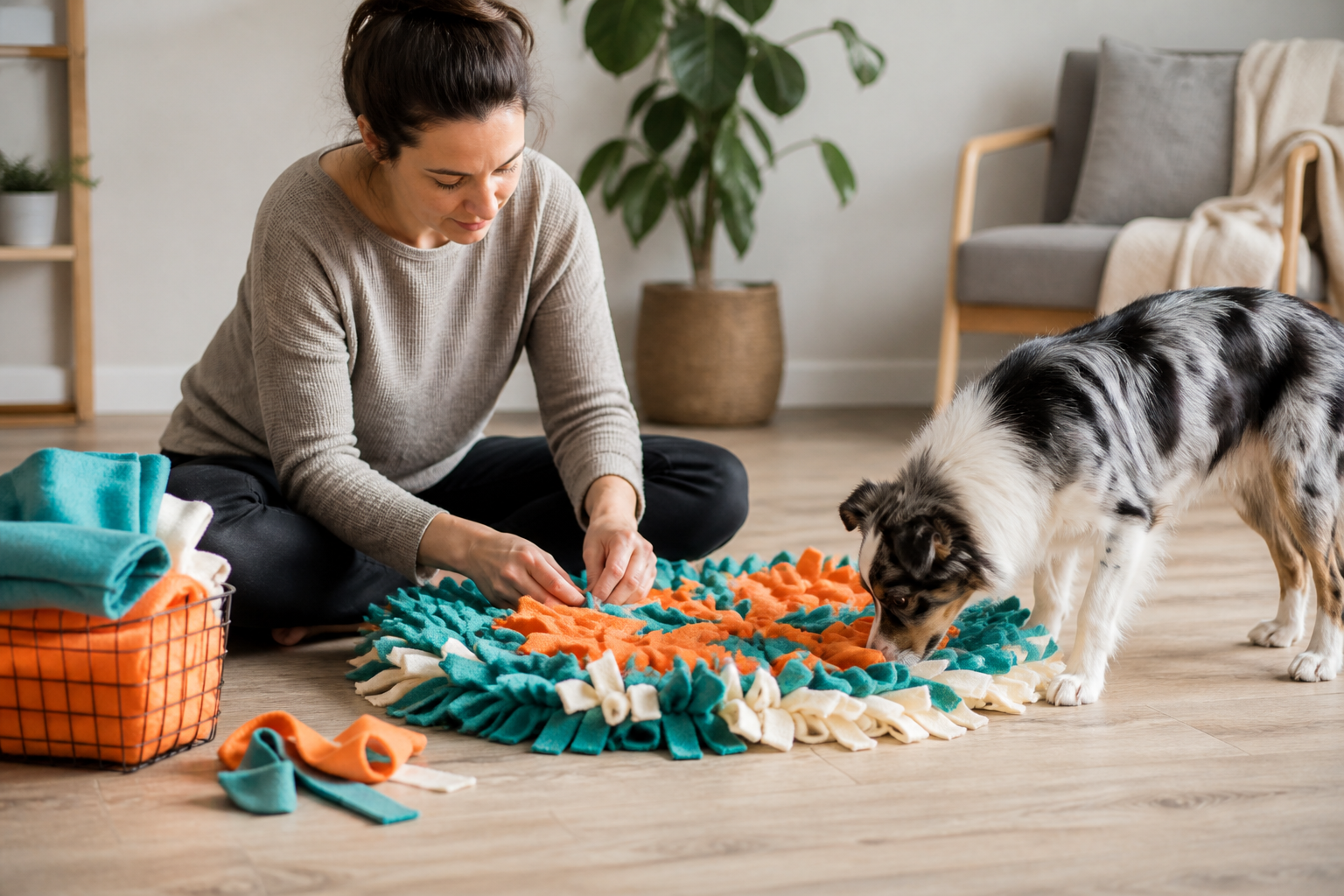
You just filled your dog's bowl, and thirty seconds later, the food is gone. Your dog is looking at you for more, but they have already inhaled their entire dinner. This fast eating often leads to digestion issues or weight gain. At BaxterBoo, we know that mental stimulation is just as important as physical exercise for a happy pet. This post covers the specific benefits of nose work and provides a simple guide for building your own enrichment tool. You will learn the exact steps to create a durable mat that slows down mealtime and keeps your dog's brain engaged. Building this tool is an affordable way to support your pet's natural instincts while managing their daily calorie intake.
Quick Answer: A snuffle mat is an enrichment toy made of fabric strips tied to a sturdy base. You hide dry food or treats inside the fabric to encourage your dog to use their sense of smell to find their meal.
What Exactly is a Snuffle Mat?
A snuffle mat is a tool designed to mimic the natural foraging behaviors of canines. In the wild, dogs spend a significant portion of their day searching for food. Modern house pets usually have their meals delivered in a bowl, which eliminates the need for any mental effort. This lack of stimulation can lead to boredom and behavioral issues like chewing or excessive barking.
The mat consists of a heavy base, usually made of rubber or plastic, with hundreds of fabric strips tied through the holes. These strips create a dense, grass-like texture. When you sprinkle kibble over the mat, the pieces fall deep into the fabric. Your dog must then use their nose to track each individual piece of food.
This activity is often called nose work. It is a low-impact exercise that is perfect for dogs of all ages. Senior dogs with limited mobility can still enjoy the mental challenge. Puppies with high energy can use it to burn off steam without overexerting their growing joints. For more indoor activity ideas, see our guide to DIY enrichment for pets.
Key Takeaway: Snuffle mats transform mealtime into a game of hide-and-seek that satisfies a dog's biological urge to forage and hunt.
Interactive and Treat Dog Toys








Why Your Dog Needs Mental Enrichment
Dogs experience the world primarily through their noses. Their sense of smell is thousands of times more sensitive than ours. Engaging this sense provides a level of exhaustion that a simple walk cannot always achieve. Ten minutes of sniffing is often compared to an hour of physical running in terms of mental fatigue. You can explore more brain games and enrichment ideas for dogs.
Using a snuffle mat can help lower stress levels in anxious pets. The repetitive motion of sniffing and searching has a calming effect on the canine nervous system. This makes it a great tool for rainy days when you cannot go outside or for pets recovering from surgery who need to stay quiet.
It also serves as a vital tool for weight management. When a dog eats too fast, their brain does not have time to register that the stomach is full. This often leads to begging and overfeeding. By making them work for every bite, you extend the meal from seconds to fifteen or twenty minutes. This gives the body time to signal satiety. For other considerations when managing your dog’s weight, read our practical guide to pet weight management.
Gathering Your Supplies
You do not need specialized tools to build a high-quality mat. Most of these items are available at local craft stores or through our selection at BaxterBoo. We focus on durability because dogs will be rooting through this mat daily.
The Base
The most common base is a rubber sink mat. These are usually found in the kitchen section of a department store. Look for a mat with holes that are large enough to thread fabric through but sturdy enough to hold its shape. A heavy rubber mat is better than a light plastic one because it stays in place on the floor while the dog works.
The Fabric
Fleece is the best material for this project. It does not fray when cut, which means you will not have small threads for your dog to ingest. It is also soft on a dog's nose and easy to wash. You will need approximately one to one and a half yards of fleece. You can use different colors to make it visually appealing, though your dog will primarily care about the scent.
Cutting Tools
A good pair of fabric scissors is essential. If you have a rotary cutter and a self-healing mat, the process will go much faster. A ruler or measuring tape will help you keep the strips uniform, though they do not need to be perfect.
| Supply Item | Purpose | Recommended Type |
|---|---|---|
| Base | Provides structure | Heavy rubber sink mat |
| Fabric | Hides the food | Anti-pill polar fleece |
| Scissors | Cutting strips | Sharp fabric shears |
| Measuring Tool | Consistency | Ruler or yardstick |
Step-by-Step Guide on How to Make a Snuffle Mat for Your Dog
Once you have your supplies, find a comfortable spot to work. This process is repetitive and can take one to two hours depending on the size of the mat.
Step 1: Prepare the fleece strips. / Cut your fleece into strips that are roughly one inch wide and seven to eight inches long. Do not worry about perfectly straight edges.
Step 2: Start at a corner. / Take one strip of fleece and thread it through the first two holes in the rubber mat. Pull the ends through so they are even on the top side.
Step 3: Tie the first knot. / Tie the two ends of the fleece strip into a single overhand knot. Pull it tight to ensure it does not come loose during play. There is no need for a double knot.
Step 4: Complete the first row. / Continue threading and tying strips through every pair of holes along the edge. Once the first row is done, move to the next set of holes.
Step 5: Fill in the gaps. / After filling every hole horizontally, go back and tie strips vertically or diagonally between the existing knots. This creates the density needed to hide small kibble.
Vet Tip: If your dog is a known "shredder" who likes to eat fabric, always supervise them during snuffle mat sessions. If they start chewing the mat itself, remove it immediately to prevent the ingestion of non-food items.
Using the Mat for Weight Management
For dogs struggling with obesity, a snuffle mat is a functional health tool. Fast eating is a major contributor to weight issues. If your dog needs a more structured approach to weight loss, we recommend looking into specialized nutrition.
Our pharmacy offers FDA-approved medications and prescription pet foods through our partnership with Pet's Choice. We carry brands like Farmina Vet Life and Royal Canin that offer specific weight management formulas. When you combine a high-quality prescription diet with the slow-feeding benefits of a snuffle mat, you give your dog the best chance at reaching a healthy weight. Explore our pet pharmacy for available products.
Always consult your veterinarian before starting a weight loss plan. They can help you determine the correct amount of food to put in the mat. You can then use our Autoship programme to ensure you never run out of the specific food your vet recommends.
Bottom line: A snuffle mat is an excellent way to implement a veterinarian-prescribed diet by slowing down consumption and increasing mental activity.
Selecting the Best Treats and Kibble
The effectiveness of the mat depends on what you put inside it. If you use a treat that is too large, it will sit on top of the fleece. If you use something too small and oily, it might stain the fabric.
Dry Kibble
For daily meals, standard dry kibble is perfect. Brands like NutriSource, Acana, or Stella and Chewy's offer various sizes that work well. The kibble should be dry and firm so it does not crumble into dust at the bottom of the mat. Browse our dog food selection for meal options.
Healthy Treats
If you are using the mat for a midday snack, choose low-calorie treats. Zesty Paws or Honest Paws offer options that provide nutritional benefits while keeping the calorie count low. You can also use freeze-dried treats from Vital Essentials, which have a strong scent that makes the game even more exciting for your dog. Find options in our freeze-dried dog treat selection.
Avoiding Mess
Avoid using wet food, peanut butter, or greasy treats in the mat. These will harbor bacteria and make the fleece difficult to clean. Stick to dry, shelf-stable options to keep the mat sanitary.
- Check for high scent profile to encourage sniffing.
- Ensure the pieces are small enough to fall between the fleece layers.
- Avoid crumbs that can get stuck in the base.
Training and Safety
Most dogs understand how to use a snuffle mat immediately. However, some dogs might get frustrated and try to flip the mat over to dump the food out.
When you first introduce the mat, place the food on top of the fleece strips where it is easily visible. As your dog begins to sniff and eat, praise them. Gradually push the food deeper into the fabric over several sessions. If your dog tries to pick up the mat and shake it, gently redirect them back to sniffing.
Supervision is vital, especially in the beginning. You want to make sure your dog is using their nose and not their teeth to get the food. Once they are finished, pick the mat up and put it away. This keeps the mat a special activity and prevents your dog from using it as a chew toy or a bed.
Key Takeaway: Proper introduction and consistent supervision turn the snuffle mat into a rewarding puzzle rather than a source of frustration.
Cleaning and Maintenance
Because your dog's nose and mouth are in constant contact with the mat, you must keep it clean. Saliva and food oils can build up over time. This can lead to mold or a sour smell if the mat is neglected.
Most DIY snuffle mats are machine washable if you used a rubber or plastic base. Place the mat inside a pillowcase or a laundry bag to prevent the strips from getting tangled in the washing machine agitator. Use a mild, pet-safe detergent and run a gentle cycle with cold water.
After washing, do not put the mat in the dryer. The high heat can melt the rubber base or damage the fleece fibers. Instead, hang it up or lay it flat to air dry. Make sure it is completely dry before you hide food in it again. We recommend having two mats on hand so you can rotate them while one is being cleaned. Using the MVP Rewards programme is a great way to save on materials if you decide to make multiple mats for your home.
Bottom line: Regular cleaning ensures your dog's enrichment time stays hygienic and free from bacteria buildup.
Conclusion
Creating a snuffle mat is a simple project that offers massive rewards for your dog's health and happiness. By following this guide on how to make a snuffle mat for your dog, you are providing a healthy outlet for their natural instincts. It helps manage weight, reduces anxiety, and makes mealtime a fun challenge. We are here to support your journey with the best supplies and expert advice. If your dog needs specialized support for weight management or other chronic conditions, visit our pharmacy section. Our partnership with Pet's Choice ensures you have access to the prescription diets and medications your vet recommends for a long, healthy life.
FAQ
Can I use a snuffle mat for a puppy?
Yes, snuffle mats are excellent for puppies because they provide a safe, low-impact way to burn energy. Puppies often have short attention spans, and the puzzle of finding food can help them develop focus. Just be sure to supervise them closely to ensure they do not chew on the fleece strips while they are teething.
How much food should I put in the mat?
You should put your dog's normal meal portion into the mat if you are using it for mealtime. If you are using it for enrichment between meals, use only a small handful of low-calorie treats. Always account for these treats in your dog's total daily calorie count to prevent unwanted weight gain.
What if my dog just tries to dig at the mat?
Digging is a natural part of the foraging process, but if it becomes destructive, you should intervene. Encourage your dog to use their nose by pointing to specific hidden treats. If they continue to dig aggressively, pick up the mat for a few minutes and try again when they are calmer.
How often should I wash the snuffle mat?
You should wash the mat at least once every two weeks if you use it daily. If your dog is a heavy drooller or if you use treats that are slightly oily, you may need to wash it once a week. Frequent washing keeps the mat smelling fresh and prevents the buildup of bacteria and allergens.


- Site & Contents BaxterBoo.com. BaxterBoo is located in the United States.
- Privacy & Security
- Terms of Use
- Accessibility Statement
