
 Save 15% on your 1st Autoship learn more

 Email us
 Live Chat
 FAQs
FAQs





Introduction
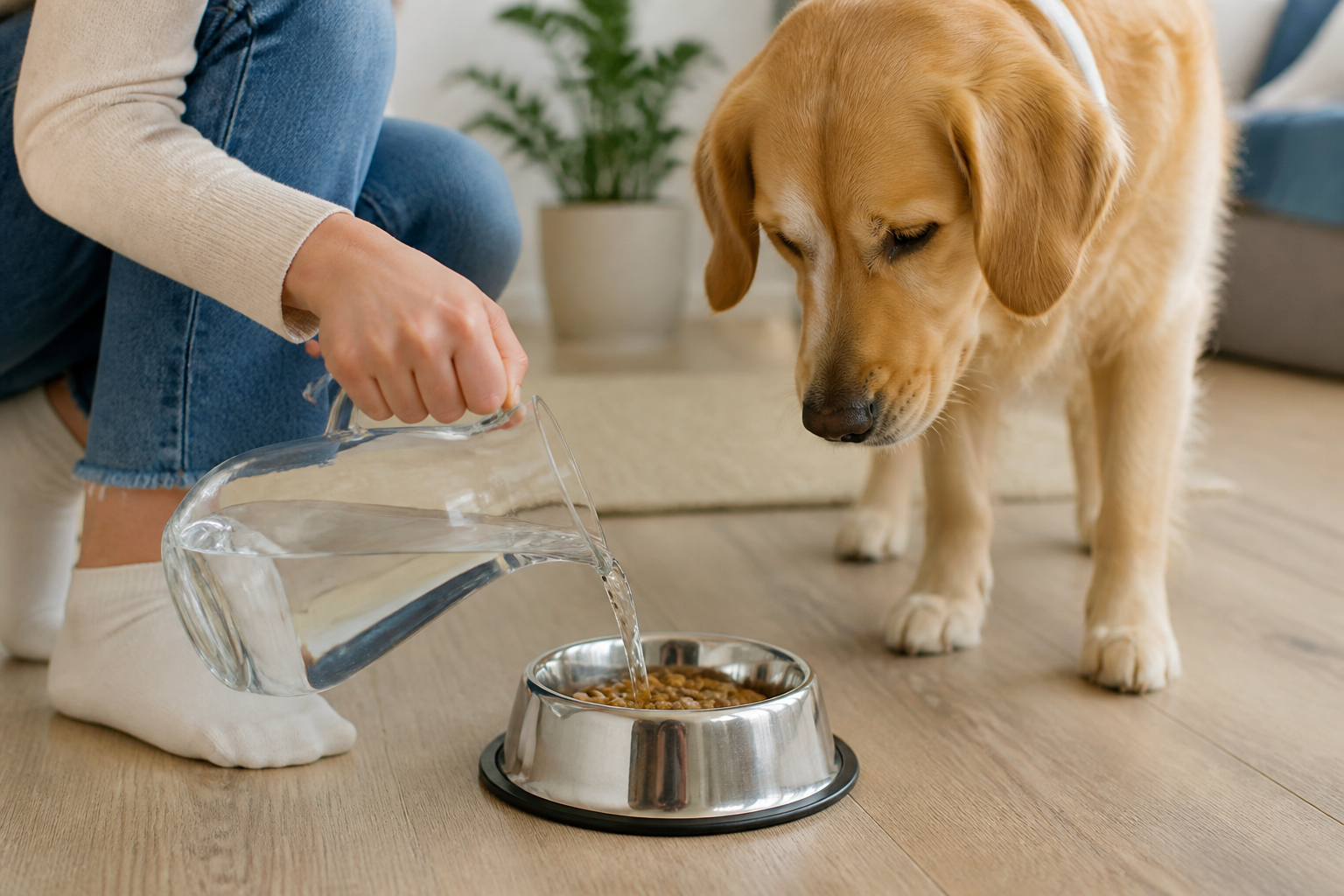
You stand at the kitchen counter with a scoop of kibble in one hand and the faucet handle in the other. Perhaps your dog has been acting picky lately. Maybe you are worried they are not drinking enough water during a hot summer week. Many pet owners wonder if a splash of water makes a meal better or if it just creates a soggy mess. At BaxterBoo, we hear this question frequently from customers looking to improve their dog's mealtime experience. Adding moisture to dry food can offer significant health benefits, but it also requires a few safety precautions to keep your pup's tummy happy. This guide covers everything you need to know about hydrating your dog's diet safely and effectively.
The Benefits of Adding Water to Kibble
Dry dog food is convenient and shelf-stable. However, the manufacturing process, called extrusion, removes most of the moisture to keep the pellets shelf-stable. Adding water back into the bowl changes the nutritional dynamic of the meal.
Improved Hydration
Many dogs do not have a strong thirst drive. They might not visit the water bowl as often as they should. This is especially true for senior dogs or those with certain health conditions. By adding water directly to the food, you ensure your dog gets a baseline of hydration with every meal. Proper hydration supports kidney function and helps flush toxins from the body. It also keeps the urinary tract healthy.
Better Digestion
Dry kibble can be hard for some dogs to break down. When a dog eats dry pellets, their body must draw moisture from surrounding tissues and the bloodstream to aid digestion. This can sometimes lead to a slightly dehydrated state after eating. Adding water before serving allows the kibble to begin expanding and softening outside the stomach. This pre-softened state can make the nutrients easier for the digestive tract to absorb.
Enhanced Aroma and Palatability
Dogs experience the world through their noses. Dry kibble does not have a very strong scent. When you add warm water to the bowl, it releases the fats and aromas within the food. This makes the meal much more enticing for a picky eater or a dog that has lost its appetite due to age or illness. For more ideas, read our guide to dry dog food for picky eaters.
Key Takeaway: Adding water to dry food is a simple way to boost hydration and make meals more appealing to picky eaters or senior dogs.
Texture and Dental Health Concerns
One of the biggest debates regarding wet versus dry food is dental health. For years, many people believed that the "crunch" of dry kibble acted like a toothbrush. The idea was that the hard texture scraped plaque and tartar off the teeth.
Modern veterinary research suggests this may not be entirely accurate. Most dogs swallow kibble whole or break it into only a few pieces. The kibble is often too small and brittle to provide significant mechanical cleaning. Furthermore, many dry foods are high in carbohydrates. These starches can stick to the teeth and actually contribute to plaque buildup.
Softening the food with water makes it much easier for dogs with dental pain or missing teeth to eat comfortably. If you have a senior dog with gingivitis or a puppy losing their baby teeth, soft food is often a relief. You can also compare other feeding formats in our guide to wet and dry dog food.
Vet Tip: While dry food provides minimal dental cleaning, regular brushing is the only way to truly prevent tartar. If your dog has persistent bad breath or red gums, consult your veterinarian for a professional dental assessment.
Potential Downsides of Mixing Water with Food
While there are many benefits, mixing water with dry food is not a "set it and forget it" strategy. You must change your feeding habits to ensure safety.
The Risk of Bacterial Growth
Dry kibble is designed to stay fresh at room temperature. Once you add water, you create a moist environment that is perfect for bacteria to grow. Salmonella and Listeria can thrive in wet kibble if it sits out too long. This is why you cannot leave "wet" kibble in the bowl all day for a grazer.
The Mess Factor
Adding water turns kibble into a bit of a gravy. If your dog is an enthusiastic eater, they might splash this mixture onto the floor or their own face. Long-eared breeds may end up with soggy ears. You will need to wash the food bowl thoroughly after every single meal to prevent a crusty, bacterial film from forming.
Transition Periods
Some dogs have very sensitive stomachs. A sudden change in the texture or moisture content of their food can cause loose stools. If you decide to start adding water, do it gradually over several days. Our guide to mixing wet and dry dog food offers another gradual approach to changing meal texture.
Quick Answer: Yes, you can mix water with dry dog food to improve hydration and taste. However, you must serve it immediately and discard any leftovers within 30 minutes to prevent bacterial growth.
How to Properly Mix Water and Dry Food
If you want to try this at home, do not just flood the bowl. Follow a consistent process to see how your dog reacts.
Step 1: Measure the kibble. / Use your standard measuring cup to ensure you are not overfeeding.
Step 2: Use warm water. / Warm water releases aromas better than cold water. Avoid hot or boiling water, as it can burn your dog's mouth and destroy some heat-sensitive vitamins.
Step 3: Aim for a specific ratio. / Start with one part water to three parts kibble. You can adjust this based on whether your dog prefers a slight crunch or a mushy texture.
Step 4: Let it sit. / Give the bowl two to five minutes to absorb the liquid. This prevents the "soup" effect where the dog just laps up the water and leaves the food.
Step 5: Serve and monitor. / Watch how your dog eats. If they finish the meal, wash the bowl immediately with soap and hot water.
Special Considerations for Specific Life Stages
Different dogs have different needs when it comes to moisture.
Puppies
Puppies are often transitioned from mother's milk to solids using a "gruel" made of water and kibble. Even after they can handle hard food, adding water can help prevent them from gulping their food too fast. This can reduce the risk of choking or regurgitation. For more guidance, see our puppy dry-food weaning timeline.
Seniors
Senior dogs often suffer from a decreased sense of smell and various dental issues. They may also experience cognitive decline that makes them "forget" to drink water. At BaxterBoo, we often suggest moisture-rich diets for older dogs to support their aging kidneys. Using warm water or a pet-safe bone broth can make a world of difference for a dog that has lost interest in their dinner.
Working or Active Dogs
If you have a dog that spends hours hiking or running, they lose a lot of moisture through panting. Mixing water into their post-activity meal can help jumpstart their recovery. It is a more efficient way to rehydrate than relying on them to drink from a bowl alone.
Alternatives to Plain Water
If you want to pack more punch into the meal, you do not have to stick to plain tap water. Many pet owners use other liquids to boost the nutritional profile of the bowl. You can browse our dog food selection when comparing kibble, toppers, and other meal options.
- Pet-Safe Bone Broth: This is packed with collagen and minerals that support joint health. Ensure it does not contain onions, garlic, or excessive salt.
- Goat's Milk: This is a great source of probiotics and is usually easier for dogs to digest than cow's milk.
- Canned Food Toppers: Mixing a spoonful of wet food with a bit of water creates a rich gravy that covers every piece of kibble.
Note: If your dog is on a prescription diet for a specific health condition, check with your vet before adding toppers or broths. These additions can change the balance of minerals like phosphorus or sodium.
When to Seek Veterinary Advice
Changing how you feed your dog is usually harmless, but sometimes a change in appetite is a sign of something more serious. If your dog suddenly refuses dry food but eagerly eats it when it is wet, they might have a tooth abscess or mouth injury.
If your dog is drinking excessively or seems constantly dehydrated despite your efforts, this could point to underlying issues like diabetes or kidney disease. Our pharmacy carries FDA approved medications and prescription diets. If your veterinarian prescribes a specific therapeutic diet for urinary or kidney health, you can often find those options through our pharmacy services. Always follow your vet's instructions when mixing anything into a therapeutic or prescription meal.
Bottom line: Adding water is a great tool for wellness, but it is not a substitute for a veterinary checkup if your dog’s eating or drinking habits change suddenly.
Summary of Best Practices
To keep your dog healthy while mixing water with dry food, remember these key points:
- Use warm, filtered water for the best results.
- Never leave soaked kibble out for more than 30 to 60 minutes.
- Clean the bowl thoroughly after every meal to stop bacteria.
- Monitor your dog's weight and stool consistency during the transition.
- Use the Autoship programme to ensure you never run out of your dog's favorite kibble.
FAQ
How much water should I add to my dog's dry food?
A good starting point is a 1:3 ratio, meaning one part water to three parts kibble. If your dog needs more hydration or has trouble chewing, you can increase this to a 1:1 ratio. Experiment to find the texture your dog prefers, whether they like a light "glaze" or a soft, mashed consistency.
Does adding water to kibble prevent bloat?
There is conflicting information on this topic. Some studies suggest that softening food helps prevent dogs from gulping air while eating, which can reduce the risk of bloat. However, others suggest that very small kibble particles might empty from the stomach differently. If you have a high-risk breed like a Great Dane or GSD, it is best to discuss feeding strategies with your veterinarian.
Can I mix water with kibble and leave it out all day?
No, you should never leave moistened kibble out for more than an hour. The moisture combined with the proteins and fats in the food creates a breeding ground for harmful bacteria. If your dog does not finish the meal within 30 to 60 minutes, discard the leftovers and wash the bowl.
Can I use boiling water to soften the food faster?
You should avoid using boiling water. Extremely high temperatures can degrade some of the vitamins and minerals added to the kibble during the manufacturing process. Furthermore, it takes a long time for boiling water to cool down to a safe temperature, and a hungry dog might burn their mouth or throat if they dive in too early. Use warm tap water instead.






