
 Save 15% on your 1st Autoship learn more

 Email us
 Live Chat
 FAQs
FAQs





Introduction
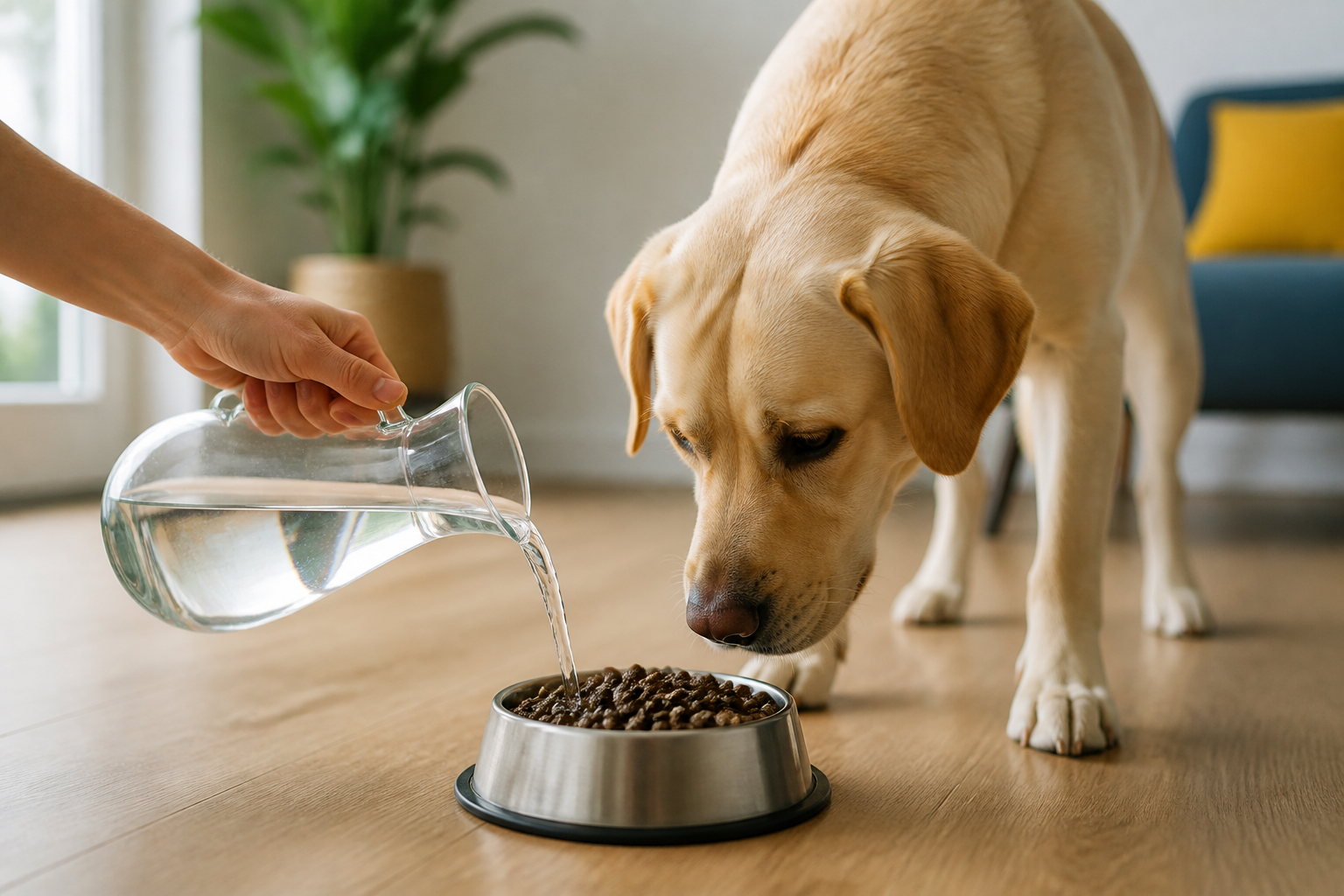
You fill the bowl with a measured scoop of kibble and set it down. Your dog might dive right in, or they might give you a look that suggests they were hoping for something a bit more exciting. Many pet owners find themselves standing at the kitchen counter wondering if a splash of water would make that dry meal better. It is a common question we hear at BaxterBoo from people who want to improve their dog's health without overcomplicating their routine.
This guide explains the benefits of hydrating dry food, from better digestion to improved kidney function. We will also cover the potential risks like bacteria growth and how to do it safely. Whether you have a picky eater or a senior dog with dental needs, understanding the "why" and "how" of adding water can transform mealtime. For more mealtime ideas, explore our dog food category.
Quick Answer: Adding water to dry dog food is a healthy practice that improves hydration and palatability. It helps dogs digest their meals more easily and can make dry kibble much safer for pets with dental issues or those who eat too quickly.
The Importance of Hydration in a Dry Diet
Most high quality dry dog foods contain very little moisture. Typically, kibble is only about 6 to 10 percent water. In the wild, a canine’s natural diet would consist of prey that is roughly 70 percent water. This means that dogs eating a strictly dry diet are often living in a state of mild, chronic dehydration. Even if you keep a fresh water bowl out, some dogs simply do not have a strong enough thirst drive to compensate for the dryness of their food.
Adding water directly to the bowl ensures that your dog takes in fluid with every bite. This is vital for maintaining healthy kidney function. The kidneys are responsible for filtering waste from the blood and excreting it through urine. When a dog is dehydrated, the kidneys have to work much harder to concentrate that urine. Over time, this stress can contribute to chronic kidney issues.
Proper hydration also supports the urinary tract. By increasing the amount of water your dog consumes, you help flush out the bladder more frequently. This can reduce the risk of urinary tract infections and the formation of painful bladder stones or crystals. If your veterinarian has recommended a specific prescription diet for urinary health, such as those from Royal Canin or Farmina, adding water can further support those medical goals.
Key Takeaway: Adding water to dry food mimics a more natural moisture content. This supports kidney health and helps prevent urinary tract issues by keeping fluids moving through the body.
Improving Digestion and Preventing Bloat
The way kibble is manufactured can sometimes make it difficult for a dog’s stomach to process quickly. Most dry foods are made through extrusion. This process involves high heat and pressure to create those uniform crunchy shapes. Because these pieces are so dense and dry, they require a significant amount of digestive juices to break down once they reach the stomach.
When you add water to the bowl, you essentially start the digestion process before the food even enters your dog's body. The kibble begins to soften and expand. If you have ever seen how much a single piece of kibble grows after sitting in water for ten minutes, it can be quite surprising. By letting that expansion happen in the bowl rather than in the stomach, you may reduce the risk of digestive discomfort. For additional guidance, read how to wet dry dog food for better digestion and hydration.
For large, deep-chested breeds, the speed of eating and the expansion of food are major concerns. Bloat, or gastric dilatation-volvulus, is a life-threatening condition where the stomach fills with gas and twists. While water alone is not a cure, it can help slow down "gulpers" who try to inhale their food. Softened food is harder to bolt down in one breath, encouraging a more measured pace.
Vet Tip: If your dog is a fast eater, consider using a slow-feeder bowl in combination with added water. This combination helps prevent them from swallowing excess air, which is a known risk factor for bloat and indigestion.
Making Meals More Palatable for Picky Eaters
We have all dealt with a dog who suddenly decides their favorite food is no longer up to their standards. Often, the issue is not the flavor itself but the lack of aroma. A dog’s sense of smell is much more powerful than their sense of taste. Dry kibble that has been sitting in a bag can lose its scent over time, making it less enticing.
Adding warm water to the bowl acts as an aromatic release. The heat helps the fats and oils in the food turn into vapors that your dog can smell from across the room. This simple trick can make a basic meal smell like a gourmet feast. It is particularly helpful for dogs who have a reduced appetite due to illness, age, or stress. You can also compare The Honest Kitchen products when looking for meal options and toppers.
For senior dogs, the benefits are even greater. As dogs age, their senses of smell and taste can dull. They might also experience dental sensitivity that makes crunching down on hard pellets painful. Softened kibble is much easier on sensitive gums and aging teeth. If your senior dog has had dental extractions, they may find it nearly impossible to chew dry food, leading them to swallow large pieces whole. Adding water solves this problem instantly. For more ideas, see how to choose the right dog food for senior pets.
Why Texture Matters
- Softened food feels more like "real" meat to many dogs.
- The gravy created by mixing water and kibble coats the tongue better than dry pellets.
- Moist food is easier for puppies to transition to as they move away from milk.
- It allows you to mix in supplements, like Cosequin for joints, more evenly.
The Truth About Dental Health and Kibble
There is a long standing belief that dry kibble acts as a toothbrush for dogs. The idea is that the crunching action scrapes plaque and tartar off the teeth. However, most veterinarians will tell you that this is largely a myth. Most dogs do not chew their kibble thoroughly. They often crack a piece once and swallow it, or swallow it whole.
Furthermore, kibble is often high in carbohydrates. When these starches mix with saliva, they can become a sticky paste that actually clings to the teeth and promotes the growth of bacteria. This is similar to a human eating a cracker. While it is crunchy, it does not clean your teeth. In fact, it might make them dirtier.
Adding water to the food does not significantly change this reality. Whether the food is dry or wet, the most effective way to manage your dog's dental health is through regular brushing and professional cleanings. If you are worried that softening the food will ruin their teeth, you can rest easy knowing that the nutritional and hydration benefits of wet kibble usually outweigh any minor "scraping" benefit they might have gotten from dry food. Support that routine with our dog dental and breath care collection.
Key Takeaway: Do not rely on dry kibble to keep your dog's teeth clean. The hydration benefits of adding water are far more impactful for their overall health than the mechanical action of dry food.
Managing Weight and Satiety
If your dog is always begging for more food, they might not be feeling "full" after their meals. Dry food is incredibly nutrient-dense. This means that the amount of food a dog needs for their calorie count is often quite small in volume. A half cup of kibble might contain 400 calories, but it does not take up much room in the stomach.
By adding a cup of water to that same half cup of food, you significantly increase the volume of the meal without adding a single calorie. This creates a physical sensation of fullness, also known as satiety. Your dog feels like they have eaten a much larger meal, which can stop them from pacing the kitchen or begging for scraps five minutes after breakfast.
For dogs on weight loss plans, this is a vital strategy. We carry weight management formulas like Farmina Vet Life that are designed to be low-calorie. Combining these specialized foods with extra water helps your dog lose weight without feeling hungry all the time. Our pharmacy also provides prescription weight loss diets through our partnership with Pet's Choice for dogs that need a more clinical approach to obesity management.
The Risks of Adding Water to Kibble
While adding water is generally beneficial, it does introduce a few risks that you need to manage. The primary concern is spoilage. Dry kibble is shelf-stable because it lacks moisture. Once you add water, you create a perfect environment for bacteria and mold to grow. This is especially true in warm weather or if the bowl is kept in a sunny spot.
You should never leave moistened kibble sitting out for more than 30 to 60 minutes. If your dog is a "grazer" who likes to take a few bites and come back later, adding water might not be the best strategy unless you can switch them to a scheduled feeding routine. Any food that has been wet and left out for an hour should be discarded to prevent digestive upset or food poisoning.
Another minor downside is the mess. Some dogs are messy drinkers, and adding water to their food can lead to "gravy" splattering on the floor or getting stuck in their facial hair. This is particularly common with breeds that have long beards or floppy ears. You may find yourself doing a bit more cleanup around the feeding station, but most owners find this a small price to pay for the health benefits.
Vet Tip: Always wash your dog's bowl with hot, soapy water after every meal involving moistened food. Bacteria can film over the surface of the bowl quickly, leading to odors and potential health risks.
How to Properly Hydrate Your Dog's Food
Adding water is simple, but following a consistent method will help your dog adjust to the change. You do not want to drown the food, but you want enough moisture to make a difference. The temperature of the water also plays a role in how well the food softens and how much it smells.
Step 1: Measure your dog's normal portion of dry kibble and place it in their bowl.
Step 2: Add warm water to the bowl. Warm water is better than cold because it releases aromas more effectively and softens the kibble faster. Do not use boiling water, as this can destroy some of the vitamins in the food and potentially burn your dog's mouth.
Step 3: Use a ratio of roughly one part water to two parts kibble. For example, if you feed one cup of food, add a half cup of water. You can adjust this based on your dog's preference.
Step 4: Let the food sit for 2 to 5 minutes. This gives the kibble enough time to soak up the liquid and expand. If your dog has severe dental issues, you may want to wait 10 to 15 minutes until the food is a mushy consistency.
Step 5: Stir the mixture to ensure the "gravy" is distributed evenly, then serve it immediately.
Bottom line: Using warm water and a short soaking period provides the best balance of flavor, texture, and safety.
Using Broths and Toppers as Alternatives
If your dog is not a fan of plain water in their food, you can use other liquids to provide the same hydration benefits while adding even more nutrients. Bone broth is one of the most popular options. It is packed with collagen, amino acids, and minerals that support joint health and digestion. Browse our dog food toppers and supplements for alternatives to plain water.
When using broth, ensure it is made specifically for dogs. Human grade store-bought broths often contain high levels of salt, onions, and garlic, all of which can be toxic or harmful to dogs. A dog-safe bone broth should be low in sodium and free of any seasonings. You can even find "gravy" style kibble that is designed to be mixed with water to create a sauce, such as certain varieties we carry from Redbarn.
Goat's milk is another excellent hydrating topper. It is often referred to as "universal milk" because it is highly digestible for most dogs. It provides probiotics that support gut health while adding a creamy texture that many picky eaters love. These toppers are a great way to use your MVP Rewards points to try something new for your dog’s mealtime routine.
When to Consult Your Veterinarian
Changing your dog's diet, even in a small way like adding water, is usually safe. However, there are times when you should talk to a professional first. If your dog has a history of severe bloat or is on a very specific therapeutic diet for a condition like pancreatitis, your vet may have specific instructions on how much moisture to add.
If you find that you are adding water because your dog is acting excessively thirsty or has a sudden loss of appetite, these could be signs of an underlying health issue. Conditions like diabetes or kidney disease often manifest as changes in thirst and eating habits. A quick check-up can help rule out these concerns.
For dogs with chronic conditions, our BaxterBoo pharmacy is a valuable resource. Through our partnership with Pet's Choice, we offer FDA-approved medications and prescription diets. If your vet prescribes a specific wet food or a medication to help with digestion or urinary health, our pet pharmacy can help you manage those ongoing needs with the convenience of home delivery.
Vet Tip: If your dog's eating habits change suddenly, do not just try to "fix" it with water or toppers. Schedule a vet visit to ensure there isn't a dental or internal health issue that needs professional attention.
Transitioning to a Hydrated Diet
If your dog has eaten dry food their entire life, they might be skeptical of a soggy bowl at first. Texture is a big deal for many pets. Some dogs love the crunch and might be confused by the change. To make the transition easier, start with just a tablespoon or two of water. This creates a little bit of moisture without turning the whole meal into mush.
Over the course of a week, you can slowly increase the amount of water until you reach the desired ratio. This slow approach also helps their digestive system adjust to the increased fluid intake. You might notice your dog needing to go outside to urinate more frequently at first. This is normal and is actually a sign that the extra hydration is working its way through their system. For another perspective on the topic, read are you supposed to mix dry dog food with water.
Bottom line: A slow transition helps prevent picky behavior and gives your dog's body time to adjust to the healthy increase in hydration.
FAQ
Can I use hot water to soak my dog's food?
You should avoid using boiling or very hot water because it can break down sensitive vitamins and nutrients in the kibble. Warm water from the tap is sufficient to release aromas and soften the food without the risk of burning your dog's mouth. Let the mixture cool for a minute or two if it feels hot to the touch before serving.
Will adding water to kibble cause it to mold?
If left out for several hours, moistened kibble can definitely grow mold or harmful bacteria. Because the moisture provides the perfect breeding ground for these organisms, you must discard any uneaten food after about an hour. Always start with a fresh bowl and fresh water for every meal to keep your pet safe.
Does soaking kibble help with my dog's stinky breath?
While soaking kibble itself doesn't cure bad breath, it can help if the odor is caused by dehydration or poor digestion. Better hydration leads to better saliva production, which helps wash away bacteria in the mouth. However, for chronic bad breath, you should look into dental treats or a professional cleaning.
Is it okay to add milk instead of water to dog food?
Most adult dogs are actually lactose intolerant and can experience diarrhea or gas if they consume cow's milk. If you want to add a creamy liquid, it is much better to use a specially formulated pet milk or goat's milk. These are much easier on their digestive systems and provide beneficial probiotics.






